• Skip to primary navigation
  • Skip to main content
  • Skip to primary sidebar
Grandview Kids Logo

Grandview Kids

Every Child And Youth Living Life At Their Full Potential

  • About Us
    • Vision, Mission and Values
    • The New Grandview Kids
      • Operational Readiness
      • Visiting Grandview Kids’ Ajax Headquarters
    • Our History
    • Leadership
    • Board of Directors and Committees
      • Join our Board of Directors and Committees
    • Annual Report
    • Strategic Plan
    • Policies
  • Calendar
  • Annual Report
    • Strategic Direction 1: Deliver meaningful, efficient client and caregiver outcomes and experiences
    • Strategic Direction 2: Foster a thriving, connected Team Grandview
    • Strategic Direction 3: Collaborate with partners to maximize impact, focusing on Durham Region
    • The New Grandview Kids – The Jerry Coughlan Building
    • 2024-25 Financial Statement
    • Grandview Kids Foundation update
    • Grandview School update
  • Contact
    • Contactez – nous
    • Ajax – Headquarters
    • Bowmanville Health Centre
    • Grandview School
    • Oshawa – Dwyer
    • Port Perry
    • Whitby – Abilities Centre
  • Careers
  • Register
  • Donate
  • Instagram
  • LinkedIn
  • Facebook
  • Services and Programs
    • Audiology
    • Autism Program
      • Autism Spectrum Disorder (ASD) Diagnostic Hub
      • Caregiver-Mediated Early Years Programs
      • OAP Core Clinical Services
      • Entry to School Program
      • Foundational Family Services
    • Blind-Low Vision Program
    • Extensive Needs Service
    • Family Engagement Program
      • Adolescent Transition Program
      • Family Leader Program
        • Family Advisory Council
        • Youth Advisory Council
    • Infant Hearing Program
    • Medical Services
      • Autism Spectrum Disorder (ASD) Diagnostic Hub
      • Complex Care Program
      • Grandview Anesthesia Procedure (GAP) Clinic
      • Hypertonia Clinic
      • Nutrition Services
      • Orthopaedic Clinic
    • Occupational Therapy
    • Physiotherapy
    • Preschool Outreach Program
    • School Programs & Resources
      • Resources for Educators
      • School-Based Rehabilitation
    • Service Navigation
      • SmartStart Hub: Parents
      • SmartStart Hub: Partners
    • Social Work
    • Speech-Language Pathology
      • Augmentative and Alternative Communication
    • Therapeutic Recreation
  • Purchased Services
    • Summer Camp 2026
    • OAP Core Clinical Services
      • Behaviour Services
  • Research
    • Get involved in research
    • IDEA Study
      • Building knowledge and understanding of the intersection of race and disability in accessing pediatric rehabilitation services.
    • Research Associate: Dr. Fiona Moola
    • Research Associate: Dr. Meghann Lloyd
  • Resources
    • Ability Acceptance Program
    • Arriving at Grandview Kids
    • Community Supports & Resources
    • Family Support Fund
    • Free to Read Program
    • Frequently Asked Questions
    • Gather by Grandview Kids
    • News and Updates
    • Privacy
    • Resources for Parents and Caregivers
    • Visiting Grandview Kids
  • Support Us
    • Ways to support
    • Host a fundraiser
    • Participate in an event
      • Golf Fore Grandview Kids
      • Sponsor the Drum
      • Dream Big, Dream Brighter Awards Gala
    • Leave a legacy
      • Gifts of securities
      • Gifts of bequests
      • Gifts of life insurance
    • Your impact
    • Building a Legacy: Honouring Jerry Coughlan
  • I Want To…
    • Connect with Grandview Kids
    • Donate
    • Refer a child or youth
    • Register via My Community Hub
    • Schedule an Appointment
    • Volunteer at Grandview Kids
    • Work at Grandview Kids
  • Grandview School
    • About Our Program
    • About Our Board
    • Grandview School Social Story
    • Plans and Reports
    • Resources for Families
    • Resources for Schools – Switch It Up!
    • Careers and Volunteering
    • Contact Grandview School
  • Search

Posted July 24, 2024

Acknowledging holidays/celebrations in July and August

Adrian Polidano

In July and August, we acknowledge Canada Day, Al-Hijra, Guru Purnima, Obon Festival, Tu B’Av, Janmashtami, and Paryushana. Below, read more about each holiday/celebration written by members of our Inclusivity, Diversity, Equity, and Accessibility (IDEA) Committee.

July 1: Canada Day

July 1, 1867, was the date of the Canadian Confederation and the passing of the British North America Act, which united the United Canadas, Nova Scotia, and New Brunswick into a single dominion within the British Empire, which we now call Canada.

We celebrate Canada’s birthday each year on July 1 to recognize our culture and our history and to acknowledge our achievements in creating freedom across our nation. We take pride in our country, which is made up of many people from many places around the world who now call Canada home. Our Nation is known for ethnocultural and religious diversity, and over many years, we have been able to measure our mosaic of people and cultures through Statistics Canada. The 2021 Census provides more detail on the ethnocultural and religious facets of society than ever before. In fact, more than 450 ethnic and cultural origins, 200 places of birth, 100 religions and 450 languages have been included in this census.

We have so much to be proud of, and we encourage you and your family to celebrate our country’s birthday on July 1! Some traditional celebrations include fireworks, BBQs with friends and family, singing of our National Anthem, cultural, artistic, or sports activities, and even showing our patriotic pride through wearing red and white, enjoying Canadian-inspired foods, and enjoying local musicians.

No matter how you celebrate, enjoy your Canada Day safely!

July 7: Al-Hijra

The Islamic New Year, also known as the Hijri New Year, marks the beginning of the Islamic lunar calendar. It commemorates the Hijra, the migration of the Prophet Muhammad and his followers from Mecca to Medina in 622 CE, an event of profound significance in Islamic history. This migration was necessitated by severe persecution and hostility faced by the early Muslim community in Mecca. As Muhammad’s message of monotheism and social reform gained followers, it also drew strong opposition from the powerful Quraysh tribe. Leaders from the city of Yathrib (later renamed Medina) invited Muhammad to mediate tribal conflicts and offered refuge, presenting an opportunity for Muslims to practice their faith freely.

The first month of the Hijri calendar is Muharram, and the last is Dhu al-Hijjah. Unlike the Gregorian calendar, which is solar, the Hijri calendar is lunar, consisting of 12 months and approximately 354 or 355 days. This results in the Islamic New Year shifting by about 10-12 days each year in relation to the Gregorian calendar. 

July 21: Guru Purnima

Guru Purnima is a traditional Hindu festival dedicated to spiritual and academic teachers. Celebrated on the full moon day (Purnima) in the Hindu month of Ashadha (June–July), it honours the relationship between gurus (teachers or mentors) and their disciples. This day is marked by rituals and ceremonies where students express their gratitude and reverence to their gurus, acknowledging the invaluable guidance and wisdom imparted to them. Guru Purnima is observed not only in India but also in Nepal and other countries with Buddhist and Jain communities, symbolizing the universal respect for the role of teachers in nurturing knowledge and enlightenment.

August 13: Obon Festival

Obon, also known as Bon Festival, is a Japanese Buddhist tradition honouring the spirits of ancestors. Celebrated in mid-August, it is a time when families come together to pay their respects to deceased loved ones. The festival typically lasts for three days and includes various customs such as visiting graves, cleaning ancestral tombstones and participating in Bon Odori, a traditional dance to welcome and entertain the spirits. Lanterns are lit to guide the spirits back to their resting places, symbolizing a reunion with the departed and a reminder of the cyclical nature of life and death. Obon is a deeply spiritual and cultural event, emphasizing family ties and the reverence for ancestors.

August 18: Tu B’Av (The 15th of Av)

Tu B’Av is celebrated every year on the 15th day of Av. On the Hebrew calendar, Av is the eleventh month of the civil year and the fifth month of the ecclesiastical year. This year, it takes place from to 19. In the Babylonian Talmud, it is written that “when we enter Av, our joy is diminished.” The month is associated with the darkest events in Jewish history, such as the Nine Days, which culminate in the fast day of Tisha B’Av, the ninth of Av. However, Tu B’Av, which remained minor and largely unknown for many centuries, was one of the happiest days of the year in ancient times.

August 26: Janmashtami 

Janmashtami, also known as Krishna Janmashtami, is a Hindu festival celebrating the birth of Krishna, the eighth avatar of Vishnu. According to the Hindu lunar calendar, this auspicious event falls on the Ashtami (eighth day) of the Krishna Paksha (dark fortnight) in the month of Bhadrapada, which typically falls in August or September in the Gregorian calendar. The festival is marked by various customs and rituals, including fasting, singing devotional songs, and reenacting episodes from Krishna’s life, particularly his childhood. The Dahi Handi event, where teams form human pyramids to break a pot of curd hung high in the air, is a popular tradition associated with Janmashtami. Devotees also decorate temples, conduct midnight vigils, and chant hymns to celebrate the divine birth.

August 31 to 7: Paryushana

Paryushana is considered one of the most important festivals celebrated by Jains, followers of a religion that originated in India. It typically occurs in August or September and lasts for 8-10 days, depending on the Jain sect. In 2024, Paryushana will be observed from August 31 to September 7. During Paryushana, Jains focus on self-reflection, forgiveness, and spiritual growth. They engage in fasting, prayer, and reading sacred texts to cleanse their souls and improve their lives. The festival culminates with Samvatsari, a day of seeking and granting forgiveness among family, friends, and community members, which fosters harmony and unity. Paryushana is a time for Jains to renew their commitment to non-violence, truthfulness, and compassion towards all living beings.

On Wednesday, June 19, 2024, Grandview Kids will transition its phone system from traditional desk phones to a digital solution, called Teams Phone. Teams Phone enables our staff members to use their computers as phones for all their calling needs.

This transition brings many benefits, including a more user-friendly experience when calling Grandview Kids and a modern telephone solution to support improved technology at our new headquarters and satellite locations. Below is more information about our transition to Teams Phone and how it affects clients and families.

Rest assured: While the software we use to make and receive calls changes on June 19, our main phone number will NOT change. You will still be able to reach us at 905-728-1673 (toll-free at 1-800-304-6180). Grandview Kids’ transition to Teams Phone will not change how we offer our programs and services to clients in any way.

How does the change to Teams Phone affect clients and caregivers?

Automated greeting

When you call Grandview Kids on/after June 19, you will notice that our automated greeting and directory have changed. Please be sure to listen carefully to our new greeting when you call us on or after this date, as selections may have changed.

Personal extensions

While our main phone number is not changing, our staff will no longer have extensions. On/after June 19, every staff member will have individual Teams Phone numbers to reach them (these numbers look like typical phone numbers). If you regularly call a member of Team Grandview using their extension, please ask them after Wednesday, June 19 for their new Teams Phone number. Moving forward, you can reach Team Grandview members using their direct Teams Phone number. If you don’t yet know your clinician’s new Teams Phone number, you can call the main line and dial by their name to be connected (after June 19).

Questions?

We thank you in advance for your patience as Team Grandview becomes accustomed to the Teams Phone system. If you have questions about Grandview Kids’ transition to Teams Phone, please email communications@grandviewkids.ca.

In June, we acknowledge Shavuot, Eid al-Adha, Autistic Pride Day, Canadian Multiculturalism Day, and International Pride Day. Read more about each holiday/celebration below, written by members of our Inclusivity, Diversity, Equity and Accessibility (IDEA) Committee.

June 11: Shavuot


Shavuot, celebrated in Canada and worldwide, is a major Jewish holiday that marks the giving of the Torah at Mount Sinai. Observed fifty days after Passover, Shavuot is both a historical and agricultural festival commemorating the wheat harvest in Israel. In Canada, Jewish communities come together to participate in synagogue services, where the Ten Commandments are read, and engage in study sessions known as Tikkun Leil Shavuot, which often last through the night. Traditional customs include decorating homes and synagogues with greenery and enjoying dairy foods such as cheesecake and blintzes. Shavuot fosters a sense of spiritual renewal and community among Canadian Jews, celebrating their rich heritage and religious traditions.

June 16: Eid al-Adha

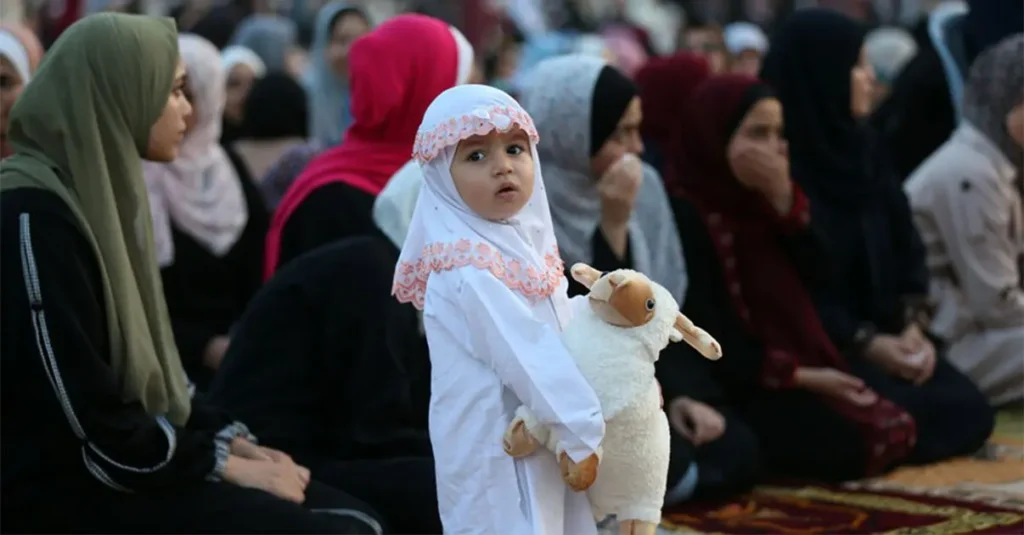
Eid al-Adha, also known as the Festival of Sacrifice, is one of the most significant Islamic holidays celebrated by millions of Muslims worldwide.  It is celebrated on the 10th day of the last Islamic month, Dhul Hijjah. It commemorates the devotion of Prophet Ibrahim (Abraham) to God, highlighting faith, sacrifice, and obedience.


This day is marked by special prayers, communal gatherings, and the sharing of meals. Families who can afford it perform the sacrifice of an animal, such as a sheep or goat, with the meat distributed among family, friends, and those in need. Eid al-Adha underscores the values of charity, gratitude, and faith, promoting a sense of community and solidarity. As an organization, we recognize this important day to foster understanding and appreciation of diverse cultural and religious practices among our members.

June 18: Autistic Pride Day

“Autistic Pride Day is a time to recognize that each autistic person has their own potential and that everyone, despite our challenges, struggles, or circumstances, must be there for each other.” — Bekki Semenova

This day is a time for autistic individuals to celebrate their neurodiversity. It is an event created by the autistic community to show the world that they are proud of being autistic and are not in need of a cure. It’s a day dedicated to inclusion and neurodiversity, embracing and acknowledging an individual’s values along with their differences.  

June 27: Canadian Multiculturalism Day

Canadian Multiculturalism Day, celebrated annually on June 27, is a day to honour and recognize the rich diversity that defines Canada. It celebrates the cultural heritage and contributions of the various ethnic groups that make up the Canadian mosaic. This day promotes understanding, respect, and appreciation for the different cultures, languages, and traditions that coexist in Canada. Multiculturalism means we celebrate not only the heritage of our family and community but also the backgrounds and beliefs of our neighbours.

The Government of Canada has taken significant actions to promote multiculturalism, including the implementation of the Multiculturalism Act in 1988, which ensures the recognition and preservation of diverse cultural identities. Additionally, the government funds numerous programs and initiatives aimed at supporting cultural festivals, language training, and community integration projects. By celebrating Canadian Multiculturalism Day, we reaffirm our commitment to building a harmonious and vibrant society that respects and embraces diversity.

June 28: International Pride Day


Pride Month, celebrated every June in Canada, is a time of celebration, a time to honour love, acceptance, and above all, inclusivity. Pride Day is celebrated annually on June 28.

As an organization dedicated to enabling children and youth to live at their full potential, we recognize the profound importance of creating spaces where everyone feels welcomed and supported, regardless of their gender identity, gender expression and sexual orientation.

For more information about Pride Month, Pride celebrations in the Durham Region or how to be an ally, please visit Durham Region’s 2SLGBTQI+ resource page. To read more about Pride Month, visit our other blog post.

In June, we acknowledge National Indigenous History Month, National Migraine and Headache Awareness Month, Stroke Awareness Month, National Cancer Survivor’s Awareness Day, World Brain Tumour Awareness Day, World Blood Donor Awareness Day, CDKL5 Awareness Day, Dravet Syndrome Awareness Day, and National Post-Traumatic Stress Disorder (PTSD) Awareness Day. Read more about each date of significance below, written by members of our Inclusivity, Diversity, Equity and Accessibility (IDEA) Committee.

National Indigenous History Month


In June, learn about the unique cultures, traditions, and experiences of First Nations, Inuit, and Métis. It’s a time to honour the stories, achievements, and resilience of Indigenous Peoples, who have lived on this land since time immemorial and whose presence continues to impact the evolving Canada.

Here are a few ideas of how you can get involved and show your support:

Discover stories, traditions and cultures

The best way to gain a deeper understanding of First Nations, Inuit, and Métis experiences is through their own voices. Enjoy Indigenous storytelling by picking up a book, attending a show, watching a movie, or listening to music by Indigenous artists.

You can also check out the GC Indigenous Instagram account to learn more about inspiring Indigenous women, 2SLGBTQ+ people, environmentalists, artists, activists, scientists and researchers.

Explore the past and honour the truth

  • Learn about Inuit across Canada
  • Learn about Métis across Canada
  • Learn about First Nations across Canada

Learn more about present-day communities

Look at these maps of Indigenous Peoples and lands to see the First Nations, Inuit and Métis communities around you and the traditional land you live on. Find out more about the significance of land acknowledgment and how you can integrate this practice into your life.

National Migraine and Headache Awareness Month

National Migraine and Headache Awareness Month (#MHAM) is observed in June. The month observes, recognizes, and honours the headache and migraine communities that are continuously working together to ensure that headache disorders are recognized as legitimate neurobiological diseases.

It also encourages people with migraines or chronic headaches to consult a medical professional for proper diagnosis and treatment. It aims to enlighten individuals with headache disorders about the various treatments available. There are many different types of headaches that can be caused by tension, over-exertion, caffeine, illness, lack of sleep, post-traumatic injuries and more.

To learn more about headaches, migraines and resources, visit: https://migrainecanada.org/  

Stroke Awareness Month

The Heart and Stroke Foundation of Canada recognizes June as Stroke Awareness Month. Their mission is to educate Canadians on the prevention of heart disease and stroke.

What is a stroke? A stroke happens when there is a sudden interruption of blood flow to any part of the brain, damaging cells. The effects depend on the area of the brain damaged, as well as the amount of damage done. There are three types of strokes to watch for:

  • Ischemic Stroke: the most common type of stroke caused by a blockage or clot in a blood vessel in the brain. The blockage can sometimes be caused by a build-up of plaque in an artery.
  • Hemorrhagic Stroke: happens when an artery in the brain ruptures and the resulting interruption to blood flow causes damage to the brain. High blood pressure is a common cause of this type of stroke.
  • Transient Ischemic Attack (TIA): also known as a mini-stroke or a warning stroke, it is caused by a small clot that briefly blocks an artery. While symptoms are temporary, a TIA can be a warning sign of something more serious.

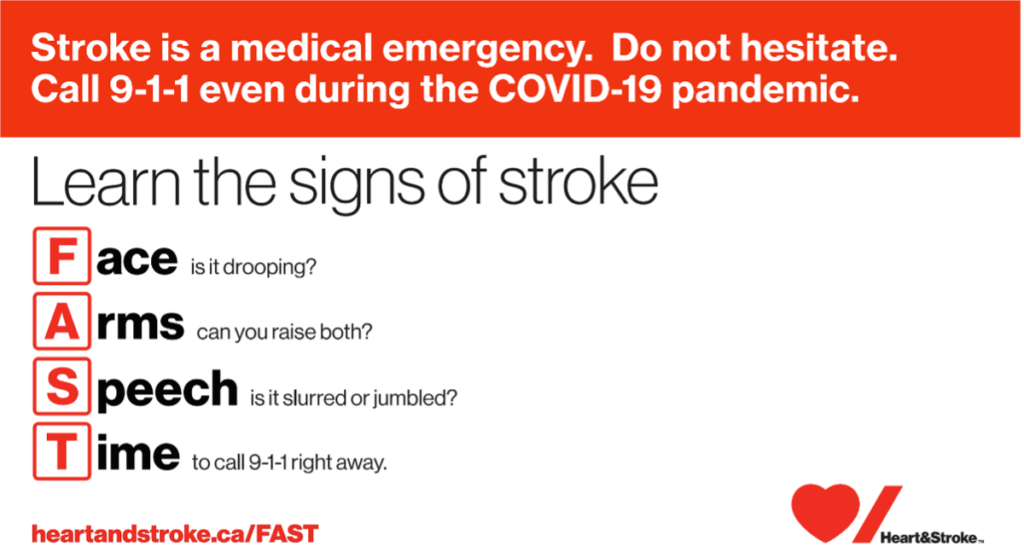
The symptoms of stroke come on suddenly, usually without any warning, and require immediate attention. If you think someone may be having a stroke, remembering the FAST test could make all the difference:


In addition to the FAST method, there are other less common signs of stroke, including:

  • Sudden severe headache
  • Blurred or double vision
  • Numbness usually on one side of the body
  • Loss of balance or dizziness

Did you know that almost 80% of strokes can be prevented by making healthy choices and managing risk factors?  While some risk factors can’t be changed – such as family history, heritage, and age, there are many things you can do to decrease your chance of stroke, such as:

  • Reducing stress
  • Eating a healthy diet that includes more fruits and vegetables
  • Being physically active

June 2: National Cancer Survivor’s Day 

This year, the 37th annual National Cancer Survivors Day falls on Sunday, June 2, 2024. It is a day of celebration for those who have survived cancer, an inspiration for those recently diagnosed/undergoing treatment, a gathering of support for families and an outreach to communities. If you are interested in supporting National Cancer Survivor’s Day, the NCSD website shares a few ways you can get involved

  • Host a celebration; visit https://ncsd.org/organize-an-event/ to learn more.
  • Learn about cancer survivorship issues. Cancer survivors often face ongoing, long-lasting hardships because of their disease. 
  • Raise awareness
  • Join your community celebrations

June 8: World Brain Tumour Awareness Day

This day is observed on June 8 every year to raise awareness and educate people about brain tumours. It was first observed by the German Brain Tumour Association, a Leipzig-based non-profit organization, in 2000. A brain tumour occurs when the cells inside the brain start growing at an abnormal speed, forming a mass of abnormal cells. The enclosed space inside the skull is limited, and when these abnormal cells start closing in the space, symptoms are observed.

June 14: World Blood Donor Awareness Day

World Blood Donor Day, observed annually on June 14, is a significant event in Canada, highlighting the critical importance of voluntary blood donations to save lives and improve health. Organized by the World Health Organization (WHO), this day recognizes the selfless contributions of blood donors and encourages more Canadians to participate in this life-saving act. Canadian Blood Services and Héma-Québec play pivotal roles in organizing events and drives across the country to boost awareness and encourage new donors. The theme for World Blood Donor Day often emphasizes the need for universal access to safe blood and the role of blood donation in achieving global health goals.

June 17: CDKL5 Awareness Day

CDKL5 Deficiency Disorder is a rare genetic mutation that prevents the brain from creating the proteins needed for development. Those affected by this disorder develop seizures from a very young age and struggle to achieve basic motor, vision and developmental skills. Despite being rare, CDKL5 disorder is one of the most common forms of genetic epilepsy in Canada. This awareness day allows us to recognize CDKL5 disorder and promote awareness efforts, research, collaboration and fundraising. You can support those in the CDKL5 community by wearing lime green and sharing your knowledge about CDKL5 disorder both on and offline.

June 23: Dravet Syndrome Awareness Day

This is a rare and life-long condition that begins in infancy and is marked by frequent treatment-resistant seizures, significant developmental and motor impairments that persist into adulthood and an increased risk of sudden death. Dravet Syndrome is a genetic disorder of Chromosome 2, usually affecting a gene called SCN1A, causing epilepsy and other neurological and developmental problems. Dravet syndrome accounts for 1% of the epilepsy population. The condition gets its name from the doctor who first recognized and described it—Dr. Charlotte Dravet.

Dravet Syndrome affects males and females equally and is present in all nationalities, races and ethnic groups. Today marks a day to honour those in the Dravet community and raise awareness for fundraising and research efforts.

June 27: National Post-Traumatic Stress Disorder (PTSD) Awareness Day

Although many of us associate PTSD with the impacts of war, terrorism and destruction, post-traumatic stress disorder can occur after other very scary or traumatic events, such as abuse, an accident, witnessing a horrific event or a natural disaster.

Symptoms of PTSD include:

  • Reliving – flashbacks, hallucinations, nightmares of the incident.
  • Avoiding – avoiding people, places, things, or memories that remind the trauma.
  • Excessive arousal – increased alertness, anger, fits of rage, irritability, or hatred, difficulty sleeping or concentrating.
  • Intrusive negative, distressing thoughts or feelings such as guilt.
  • Flat affect (no expression of emotions)
  • Young children may show delays in toilet training, motor skills, or language.
  • Feeling unsafe even when there is no danger present.

The presence of symptoms can affect well-being and quality of life and may create a need for mental health support.

Based on Statistics Canada’s Survey on Mental Health and Stressful Events in 2021, they found that PTSD affected about 5% of people in Canada who reported their symptoms to their treating physician, but it is anticipated that many more Canadians have undiagnosed PTSD.

PTSD can be treated, so seeking help is important. If you or someone you love is facing challenges related to mental health and well-being, the following resources provide information about PTSD, mental health support and mental health services in Canada:

  • Mental health support: Get help
  • Mental health services
  • Posttraumatic stress disorder (PTSD)
  • Posttraumatic Stress Disorder

Shared on behalf of Grandview Kids’ Inclusivity, Diversity, Equity and Accessibility (IDEA) Committee


Pride Month, celebrated every June in Canada, is a time of celebration, a time to honour love, acceptance, and above all, inclusivity. As an organization dedicated to enabling children and youth to live at their full potential, we recognize the profound importance of creating spaces where everyone feels welcomed and supported, regardless of their gender identity, gender expression and sexual orientation.

Last year, Grandview Kids CEO Tom McHugh shared a heartfelt message, capturing the spirit of Pride Month within our organization. Reflecting on his sentiments, we reiterate our commitment to fostering an environment where diversity is not just accepted but celebrated. Pride Month serves as a serious reminder of the struggles faced by members of the 2SLGBTQI+ community while also recognizing the strides we have taken toward building a more equitable society.

By raising the Pride flag at our Main Site in Oshawa at the beginning of June, we acknowledge our unwavering support for the 2SLGBTQI+ community. It’s a tangible expression of our belief that everyone deserves to be treated with kindness and respect, regardless of their gender identity, gender expression and sexual orientation. However, our commitment to inclusivity extends beyond symbolic gestures. In our daily interactions and practices, we strive to embody our renewed values of belonging, excellence, connection, discovery and celebration. Whether it’s through our programs and services, policies or organizational culture, we are dedicated to creating a safe and affirming space for all.


As we embark on another Pride Month celebration, we invite everyone in the Grandview Kids community to join us in this journey toward greater inclusivity.

Here are a few actions we can take together:

  1. Educate ourselves: Take time to educate ourselves about the experiences and challenges faced by the 2SLGBTQI+ community. By understanding their perspectives, we can better support and advocate for inclusivity.
  2. Listen and amplify 2SLGBTQI+ voices: Actively listen to the voices of 2SLGBTQI+ individuals within our community. Amplify their stories and experiences, ensuring their voices are heard and valued.
  3. Challenge discrimination: Speak out against discrimination and prejudice whenever and wherever we encounter it. Whether it’s in the workplace or in our personal lives, we must actively challenge harmful attitudes and behaviours.
  4. Promote allyship: Actively support the rights of the 2SLGBTQI+ community and advocate for equality. Allyship is about standing in solidarity with marginalized groups and using our privilege to effect positive change.
  5. Create inclusive spaces: Work towards creating inclusive spaces where everyone feels welcome and valued. This includes engaging in conversation with 2SLGBTQI+ clients, staff and members of our community to learn how best we can offer the support and resources they need to be successful.

For more information about Pride Month, Pride celebrations in the Durham Region or how to be an ally, please visit Durham Region’s 2SLGBTQI+ resource page.

On behalf of Grandview Kids’ IDEA Committee and all Team Grandview members, we wish our clients, caregivers and their families a happy Pride Month. Let’s come together to celebrate the diversity that makes our community so vibrant and special.

Happy Pride Month!

This month is observed in June each year to increase awareness and understanding of scoliosis, a medical condition characterized by an abnormal sideways curvature of the spine, forming “S” or “C” shapes instead of a straight line. This condition can range from mild to severe and can occur at different stages of life, with idiopathic scoliosis being the most common form.

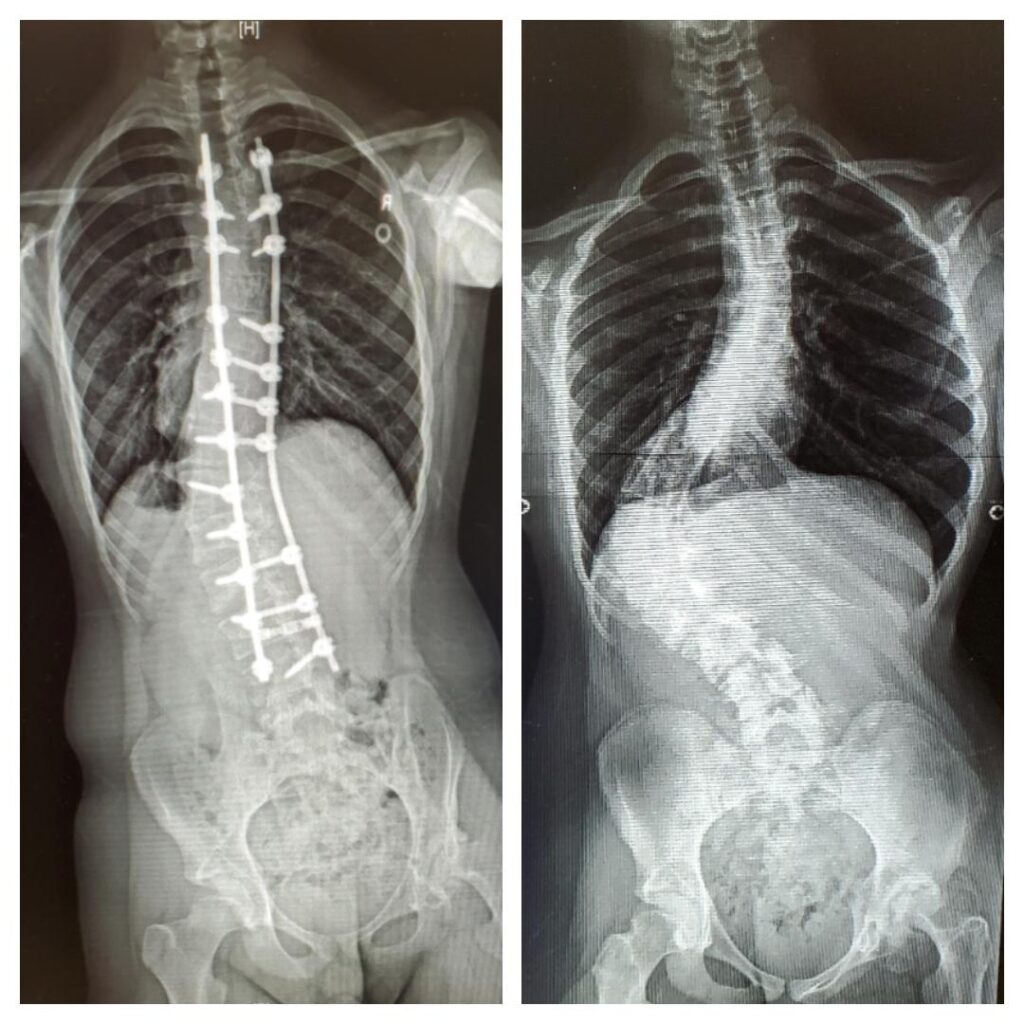
The severity can vary and affect different parts of the spine. Idiopathic Scoliosis, which has an unknown cause, impacts about 3% of children and is usually noticed between ages 4-17. It can be associated with other conditions like muscular dystrophy or cerebral palsy. Signs of scoliosis include uneven shoulders or waist, a prominent shoulder blade, or uneven alignment of the hips. X-rays measure the curve and rotation of the spine, aiding in diagnosis and treatment planning.

Various interventions are available to manage scoliosis, prevent the curvature from worsening, or alleviate associated pain. Customized braces can help halt the progression of the curve and reduce pain. Targeted physical exercises like the Schroth method provide significant support and relief. In cases where non-surgical methods are ineffective or if the curvature is severe, surgery may be considered.

Scoliosis Awareness Month plays a crucial role in improving the lives of individuals affected by scoliosis by increasing awareness, providing support, advocating for improved care, and fostering a sense of community. It aims to promote early detection, early treatments, and overall well-being for those living with this condition.

Read Fadia and her son’s story:

Our journey with my son’s scoliosis has been a challenging and emotional experience, filled with highs and lows that have tested his resilience and determination. It all began with a slight curve in his spine that seemed inconsequential at the time. The doctors couldn’t pinpoint a specific cause, but I have always believed that his leg length discrepancy played a crucial role in its development. As his leg discrepancy increased, so did the severity of his spinal curve.

I first noticed the curvature when it was just a few degrees, something that didn’t initially alarm me. However, as years passed, the situation worsened dramatically. It wasn’t until his hip femur head began to degenerate rapidly in the shorter leg that the gravity of his condition became painfully clear. The doctors measured his spinal curve at 40 degrees, a startling revelation that made us realize how serious things had become. Given that my son doesn’t have arms, traditional mobility aids like crutches were not an option. Instead, he was provided with an electronic wheelchair to help him navigate school and other places where he needed to cover longer distances. This contributed to making his trunk muscles weaker and his spine bending more. Despite the severity of his condition, the doctors noted that his spine was still quite flexible and told us that we could wait some more before surgery. A brace was not suggested because the curve had already progressed beyond the point where it could have been effective in halting further bending.

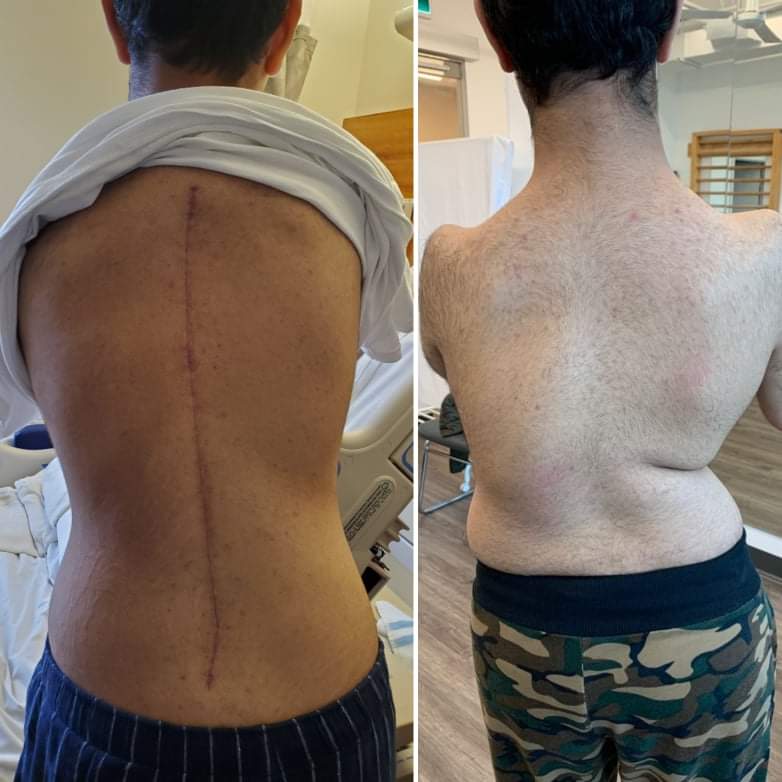
He was placed on a waitlist for spinal fusion surgery, a wait that stretched painfully to 1.5 years. During this time, his condition deteriorated, the curves increased, and so did his pain, which by this time was constant and only relieved by lying down. By the time he finally underwent surgery, his spinal curve had increased to a staggering 87 degrees. The surgery was extensive, lasting 11.5 hours, and involved fusing his spine from T4 to L4. It was a major operation that required significant blood loss management and post-operative care, including iron supplements to aid his recovery.

Following the surgery, my son was transferred to Holland Bloorview for a month-long rehabilitation program. The team there, along with the invaluable support from Grandview’s occupational and physical therapists, became our lifeline. They meticulously assessed his daily living needs and made numerous accommodations at home, at school, and in his wheelchair to ensure he could navigate his world more comfortably. With a straighter spine, my son gained 2.5 inches in height. This positive change brings a smile to his face every day.

After (left) and Before (right)
After (left) and Before (right) – X ray version

Today, the constant pain that once plagued my son is a thing of the past. Although his spinal flexibility has been greatly reduced, the quality of his life has improved immensely. He is a much happier boy now, freed from the constant pain that once dominated his days. Thanks to the marvels of modern medicine, his scoliosis has been significantly reduced, and our family is incredibly grateful for the life-changing impact of this surgery. Our journey has been arduous, but seeing my son smile again makes every moment of struggle worthwhile.

This Scoliosis Awareness Month, I hope our story can offer hope and encouragement to other families facing similar challenges.

  • ⟨
  • Page 1
  • Interim pages omitted …
  • Page 8
  • Page 9
  • Page 10
  • Page 11
  • Page 12
  • Interim pages omitted …
  • Page 51
  • ⟩

Primary Sidebar

Child Stories

LnRiLWZpZWxke21hcmdpbi1ib3R0b206MC43NmVtfS50Yi1maWVsZC0tbGVmdHt0ZXh0LWFsaWduOmxlZnR9LnRiLWZpZWxkLS1jZW50ZXJ7dGV4dC1hbGlnbjpjZW50ZXJ9LnRiLWZpZWxkLS1yaWdodHt0ZXh0LWFsaWduOnJpZ2h0fS50Yi1maWVsZF9fc2t5cGVfcHJldmlld3twYWRkaW5nOjEwcHggMjBweDtib3JkZXItcmFkaXVzOjNweDtjb2xvcjojZmZmO2JhY2tncm91bmQ6IzAwYWZlZTtkaXNwbGF5OmlubGluZS1ibG9ja311bC5nbGlkZV9fc2xpZGVze21hcmdpbjowfQ==
LnRiLWhlYWRpbmcuaGFzLWJhY2tncm91bmR7cGFkZGluZzowfQ==
ICAudGItaW1hZ2V7cG9zaXRpb246cmVsYXRpdmU7dHJhbnNpdGlvbjp0cmFuc2Zvcm0gMC4yNXMgZWFzZX0ud3AtYmxvY2staW1hZ2UgLnRiLWltYWdlLmFsaWduY2VudGVye21hcmdpbi1sZWZ0OmF1dG87bWFyZ2luLXJpZ2h0OmF1dG99LnRiLWltYWdlIGltZ3ttYXgtd2lkdGg6MTAwJTtoZWlnaHQ6YXV0bzt3aWR0aDphdXRvO3RyYW5zaXRpb246dHJhbnNmb3JtIDAuMjVzIGVhc2V9LnRiLWltYWdlIC50Yi1pbWFnZS1jYXB0aW9uLWZpdC10by1pbWFnZXtkaXNwbGF5OnRhYmxlfS50Yi1pbWFnZSAudGItaW1hZ2UtY2FwdGlvbi1maXQtdG8taW1hZ2UgLnRiLWltYWdlLWNhcHRpb257ZGlzcGxheTp0YWJsZS1jYXB0aW9uO2NhcHRpb24tc2lkZTpib3R0b219IC53cC1ibG9jay1pbWFnZS50Yi1pbWFnZVtkYXRhLXRvb2xzZXQtYmxvY2tzLWltYWdlPSJhMWJlMmUyODAwMWFkMGRlMjBhM2RlZWVlYmE5MDJhMSJdIHsgbWF4LXdpZHRoOiAxMDAlOyB9IEBtZWRpYSBvbmx5IHNjcmVlbiBhbmQgKG1heC13aWR0aDogNzgxcHgpIHsgICAudGItaW1hZ2V7cG9zaXRpb246cmVsYXRpdmU7dHJhbnNpdGlvbjp0cmFuc2Zvcm0gMC4yNXMgZWFzZX0ud3AtYmxvY2staW1hZ2UgLnRiLWltYWdlLmFsaWduY2VudGVye21hcmdpbi1sZWZ0OmF1dG87bWFyZ2luLXJpZ2h0OmF1dG99LnRiLWltYWdlIGltZ3ttYXgtd2lkdGg6MTAwJTtoZWlnaHQ6YXV0bzt3aWR0aDphdXRvO3RyYW5zaXRpb246dHJhbnNmb3JtIDAuMjVzIGVhc2V9LnRiLWltYWdlIC50Yi1pbWFnZS1jYXB0aW9uLWZpdC10by1pbWFnZXtkaXNwbGF5OnRhYmxlfS50Yi1pbWFnZSAudGItaW1hZ2UtY2FwdGlvbi1maXQtdG8taW1hZ2UgLnRiLWltYWdlLWNhcHRpb257ZGlzcGxheTp0YWJsZS1jYXB0aW9uO2NhcHRpb24tc2lkZTpib3R0b219IH0gQG1lZGlhIG9ubHkgc2NyZWVuIGFuZCAobWF4LXdpZHRoOiA1OTlweCkgeyAgIC50Yi1pbWFnZXtwb3NpdGlvbjpyZWxhdGl2ZTt0cmFuc2l0aW9uOnRyYW5zZm9ybSAwLjI1cyBlYXNlfS53cC1ibG9jay1pbWFnZSAudGItaW1hZ2UuYWxpZ25jZW50ZXJ7bWFyZ2luLWxlZnQ6YXV0bzttYXJnaW4tcmlnaHQ6YXV0b30udGItaW1hZ2UgaW1ne21heC13aWR0aDoxMDAlO2hlaWdodDphdXRvO3dpZHRoOmF1dG87dHJhbnNpdGlvbjp0cmFuc2Zvcm0gMC4yNXMgZWFzZX0udGItaW1hZ2UgLnRiLWltYWdlLWNhcHRpb24tZml0LXRvLWltYWdle2Rpc3BsYXk6dGFibGV9LnRiLWltYWdlIC50Yi1pbWFnZS1jYXB0aW9uLWZpdC10by1pbWFnZSAudGItaW1hZ2UtY2FwdGlvbntkaXNwbGF5OnRhYmxlLWNhcHRpb247Y2FwdGlvbi1zaWRlOmJvdHRvbX0gfSA=

June is Scoliosis Awareness Month

This month is observed in June each year to increase awareness and understanding of scoliosis, a medical condition characterized by an abnormal sideways curvature of the spine, forming "S" or...

Latest Updates

  • International Pride Day Resources June 26, 2026
  • Herman Kassinger Foundation Establishes $100,000 Endowment Fund at Grandview Kids  June 15, 2026
  • June: Dates of Significance June 1, 2026
  • Becoming her own advocate: Zoey’s story May 29, 2026
  • The life that never was: grieving the fatherhood I thought I’d have May 29, 2026

You Have Questions

We’d like to help you find the answers…

Contact Us Today

© Grandview Kids Built by PeaceWorks

  • About Us
  • Contact Us
  • Privacy
Accessibility Adjustments

Powered by OneTap

How long do you want to hide the toolbar?
Hide Toolbar Duration
Select your accessibility profile
Vision Impaired Mode
Enhances website's visuals
Seizure Safe Profile
Clear flashes & reduces color
ADHD Friendly Mode
Focused browsing, distraction-free
Blindness Mode
Reduces distractions, improves focus
Epilepsy Safe Mode
Dims colors and stops blinking
Content Modules
Font Size

Default

Line Height

Default

Color Modules
Orientation Modules