• Skip to primary navigation
  • Skip to main content
  • Skip to primary sidebar
Grandview Kids Logo

Grandview Kids

Every Child And Youth Living Life At Their Full Potential

  • About Us
    • Vision, Mission and Values
    • The New Grandview Kids
      • Operational Readiness
      • Visiting Grandview Kids’ Ajax Headquarters
    • Our History
    • Leadership
    • Board of Directors and Committees
    • Annual Report
    • Strategic Plan
    • Policies
  • Calendar
  • Annual Report
  • Contact
    • Contactez – nous
    • Ajax – Headquarters
    • Bowmanville Health Centre
    • Grandview School
    • Oshawa – Dwyer
    • Port Perry
    • Whitby – Abilities Centre
  • Careers
  • Register
  • Donate
  • Instagram
  • LinkedIn
  • Facebook
  • Services and Programs
    • Audiology
    • Autism Program
      • Autism Spectrum Disorder (ASD) Diagnostic Hub
      • Caregiver-Mediated Early Years Programs
      • OAP Core Clinical Services
      • Entry to School Program
      • Foundational Family Services
    • Blind-Low Vision Program
    • Extensive Needs Service
    • Family Engagement Program
      • Adolescent Transition Program
      • Family Leader Program
        • Family Advisory Council
        • Paid Advocates
        • Youth Advisory Council
    • Infant Hearing Program
    • Medical Services
      • Autism Spectrum Disorder (ASD) Diagnostic Hub
      • Complex Care Program
      • Grandview Anesthesia Procedure (GAP) Clinic
      • Hypertonia Clinic
      • Nutrition Services
      • Orthopaedic Clinic
    • Occupational Therapy
    • Physiotherapy
    • Preschool Outreach Program
    • School Programs & Resources
      • Resources for Educators
      • School-Based Rehabilitation
    • Service Navigation
      • SmartStart Hub: Parents
      • SmartStart Hub: Partners
    • Social Work
    • Speech-Language Pathology
      • Augmentative and Alternative Communication
    • Therapeutic Recreation
  • Purchased Services
    • Inclusive Recreation
    • Beyond the Walls
    • OAP Core Clinical Services
      • Behaviour Services
  • Research
    • Get involved in research
    • IDEA Study
      • Building knowledge and understanding of the intersection of race and disability in accessing pediatric rehabilitation services.
    • Joint Research Ethics Board
    • Research Associate: Dr. Fiona Moola
    • Research Associate: Dr. Meghann Lloyd
  • Resources
    • Ability Acceptance Program
    • Arriving at Grandview Kids
    • Community Supports & Resources
    • Family Support Fund
    • Free to Read Program
    • Frequently Asked Questions
    • Gather by Grandview Kids
    • News and Updates
    • Privacy
    • Resources for Parents and Caregivers
    • Visiting Grandview Kids
  • Support Us
    • Ways to support
    • Case for Support
    • Host a fundraiser
    • Participate in an event
      • Golf Fore Grandview Kids
      • Sponsor the Drum
      • Dream Big, Dream Brighter Awards Gala
    • Leave a legacy
      • Gifts of securities
      • Gifts of bequests
      • Gifts of life insurance
    • Your impact
    • Building a Legacy: Honouring Jerry Coughlan
  • I Want To…
    • Connect with Grandview Kids
    • Donate
    • Refer a child or youth
    • Register via My Community Hub
    • Schedule an Appointment
    • Volunteer at Grandview Kids
    • Work at Grandview Kids
  • Grandview School
    • About Our Program
    • About Our Board
    • Grandview School Social Story
    • Plans and Reports
    • Resources for Families
    • Resources for Schools – Switch It Up!
    • Careers and Volunteering
    • Contact Grandview School
  • Search

Posted May 30, 2024

June is Scoliosis Awareness Month

Adrian Polidano

This month is observed in June each year to increase awareness and understanding of scoliosis, a medical condition characterized by an abnormal sideways curvature of the spine, forming “S” or “C” shapes instead of a straight line. This condition can range from mild to severe and can occur at different stages of life, with idiopathic scoliosis being the most common form.

The severity can vary and affect different parts of the spine. Idiopathic Scoliosis, which has an unknown cause, impacts about 3% of children and is usually noticed between ages 4-17. It can be associated with other conditions like muscular dystrophy or cerebral palsy. Signs of scoliosis include uneven shoulders or waist, a prominent shoulder blade, or uneven alignment of the hips. X-rays measure the curve and rotation of the spine, aiding in diagnosis and treatment planning.

Various interventions are available to manage scoliosis, prevent the curvature from worsening, or alleviate associated pain. Customized braces can help halt the progression of the curve and reduce pain. Targeted physical exercises like the Schroth method provide significant support and relief. In cases where non-surgical methods are ineffective or if the curvature is severe, surgery may be considered.

Scoliosis Awareness Month plays a crucial role in improving the lives of individuals affected by scoliosis by increasing awareness, providing support, advocating for improved care, and fostering a sense of community. It aims to promote early detection, early treatments, and overall well-being for those living with this condition.

Read Fadia and her son’s story:

Our journey with my son’s scoliosis has been a challenging and emotional experience, filled with highs and lows that have tested his resilience and determination. It all began with a slight curve in his spine that seemed inconsequential at the time. The doctors couldn’t pinpoint a specific cause, but I have always believed that his leg length discrepancy played a crucial role in its development. As his leg discrepancy increased, so did the severity of his spinal curve.

I first noticed the curvature when it was just a few degrees, something that didn’t initially alarm me. However, as years passed, the situation worsened dramatically. It wasn’t until his hip femur head began to degenerate rapidly in the shorter leg that the gravity of his condition became painfully clear. The doctors measured his spinal curve at 40 degrees, a startling revelation that made us realize how serious things had become. Given that my son doesn’t have arms, traditional mobility aids like crutches were not an option. Instead, he was provided with an electronic wheelchair to help him navigate school and other places where he needed to cover longer distances. This contributed to making his trunk muscles weaker and his spine bending more. Despite the severity of his condition, the doctors noted that his spine was still quite flexible and told us that we could wait some more before surgery. A brace was not suggested because the curve had already progressed beyond the point where it could have been effective in halting further bending.

He was placed on a waitlist for spinal fusion surgery, a wait that stretched painfully to 1.5 years. During this time, his condition deteriorated, the curves increased, and so did his pain, which by this time was constant and only relieved by lying down. By the time he finally underwent surgery, his spinal curve had increased to a staggering 87 degrees. The surgery was extensive, lasting 11.5 hours, and involved fusing his spine from T4 to L4. It was a major operation that required significant blood loss management and post-operative care, including iron supplements to aid his recovery.

Following the surgery, my son was transferred to Holland Bloorview for a month-long rehabilitation program. The team there, along with the invaluable support from Grandview’s occupational and physical therapists, became our lifeline. They meticulously assessed his daily living needs and made numerous accommodations at home, at school, and in his wheelchair to ensure he could navigate his world more comfortably. With a straighter spine, my son gained 2.5 inches in height. This positive change brings a smile to his face every day.
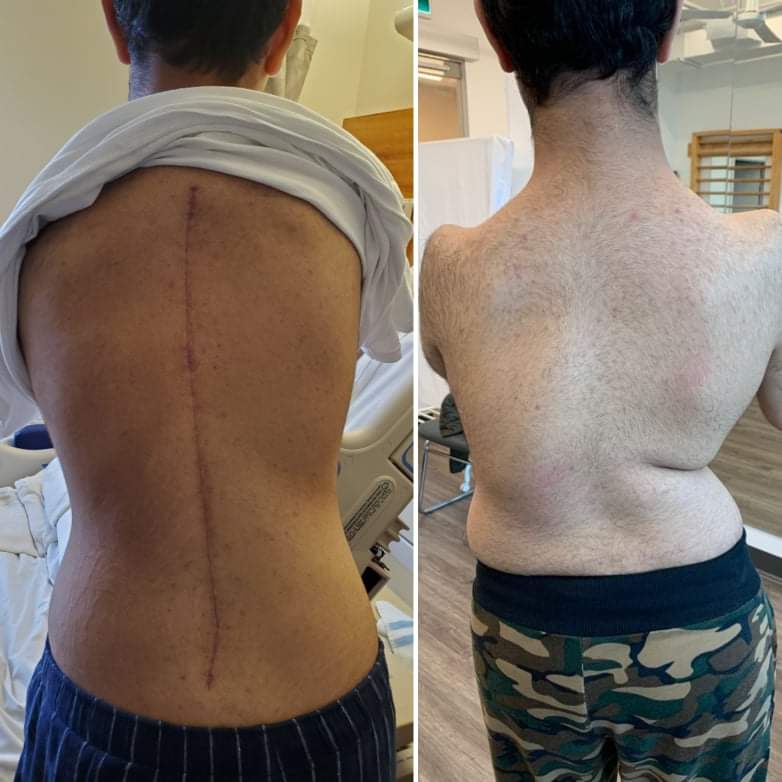
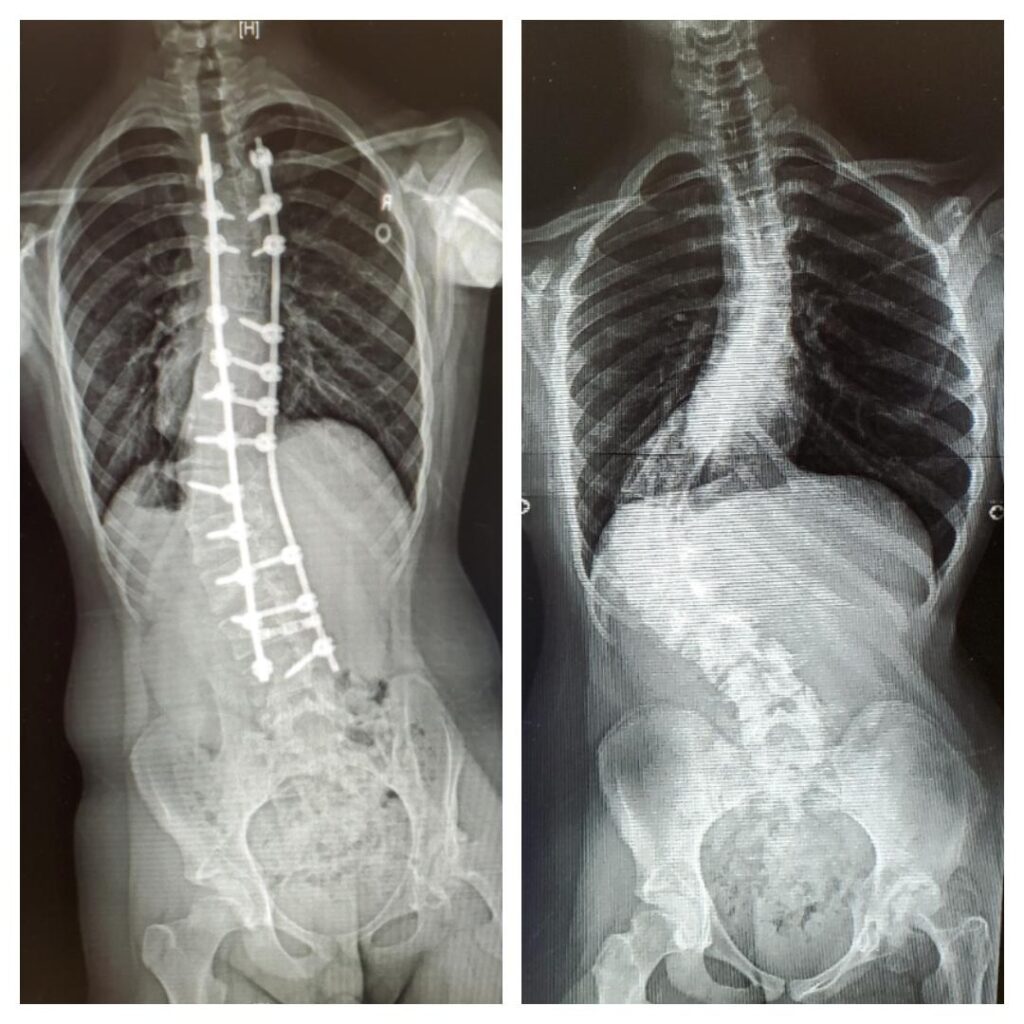
After (left) and Before (right)
After (left) and Before (right) – X ray version

Today, the constant pain that once plagued my son is a thing of the past. Although his spinal flexibility has been greatly reduced, the quality of his life has improved immensely. He is a much happier boy now, freed from the constant pain that once dominated his days. Thanks to the marvels of modern medicine, his scoliosis has been significantly reduced, and our family is incredibly grateful for the life-changing impact of this surgery. Our journey has been arduous, but seeing my son smile again makes every moment of struggle worthwhile.

This Scoliosis Awareness Month, I hope our story can offer hope and encouragement to other families facing similar challenges.
Brain Injury Awareness Month, recognized each June in Canada, provides an important opportunity to bring attention to the prevention of traumatic brain injury (TBI) and to promote strategies to improve the quality of life for persons living with TBI and their families.

Claudia N., a Grandview parent and member of our Family Advisory Council (FAC), tells her son Reid’s story:

Brain injury is invisible and often misunderstood.  The scars may not be obvious, but they are there. They show up in the way you move, talk, and process information.  My son acquired a traumatic brain injury (TBI) after a rare complication of brain inflammation during influenza.

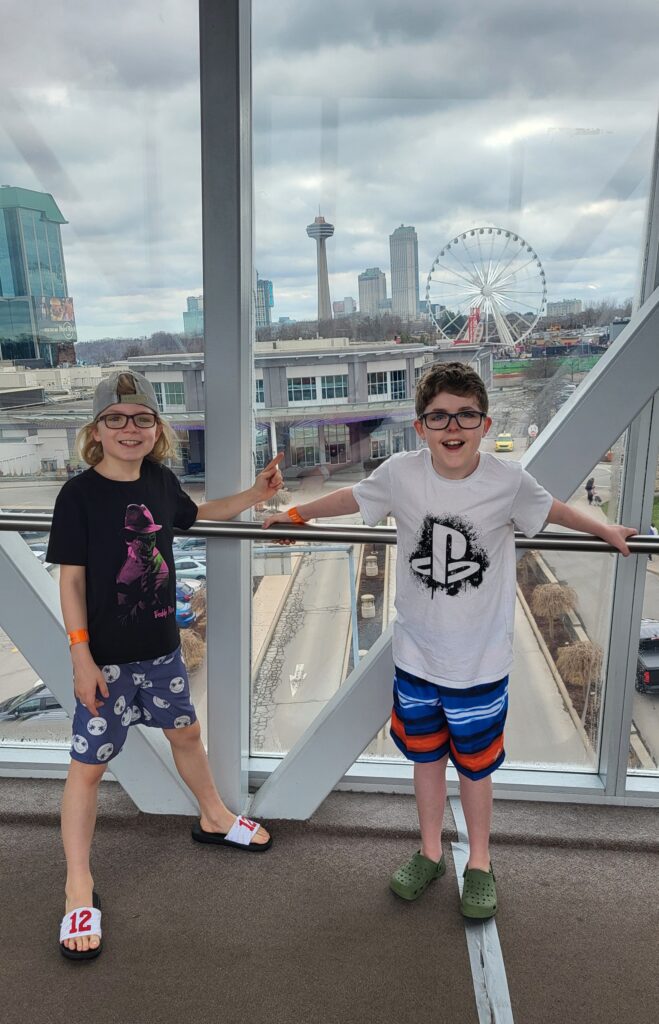
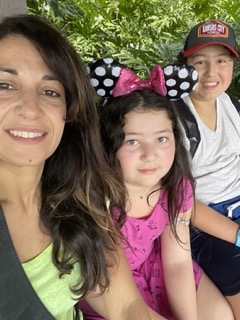
Claudia taking a selfie of herself with her two children.
Claudia N., with her children.
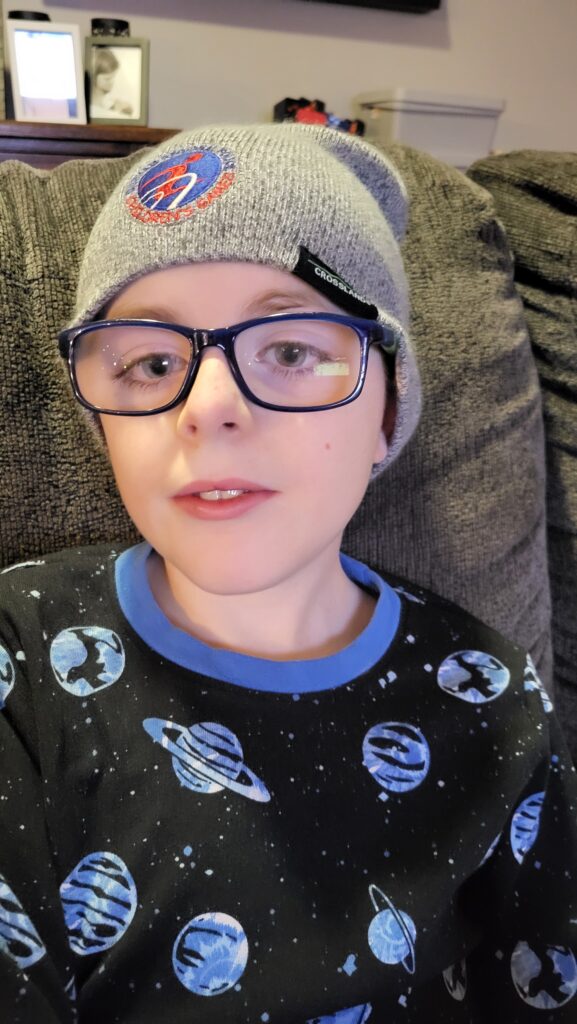
Claudia's son and daughter in a portrait like photo.
Claudia’s son and daughter.

He was a rep-athlete in hockey, basketball, soccer and baseball.  The more contact he had in sports, the better. Now he can no longer have contact. This was his identity. He had to re-learn everything, from riding a bike, walking, and running to tying his shoelaces. 

It is heartbreaking to have to answer the question, “Why doesn’t my brain or body work like it used to?” daily.  Grandview Kids showed me there is hope after a TBI, but it begins when it is taken seriously by others. Instead of hockey, they introduced him to golf. Instead of tackle football, they are teaching how to swim. He was resistant at first but is now secretly loving it. They showed him that there are different directions that can just be as fulfilling. When he wanted to give up, they simply wouldn’t let him.

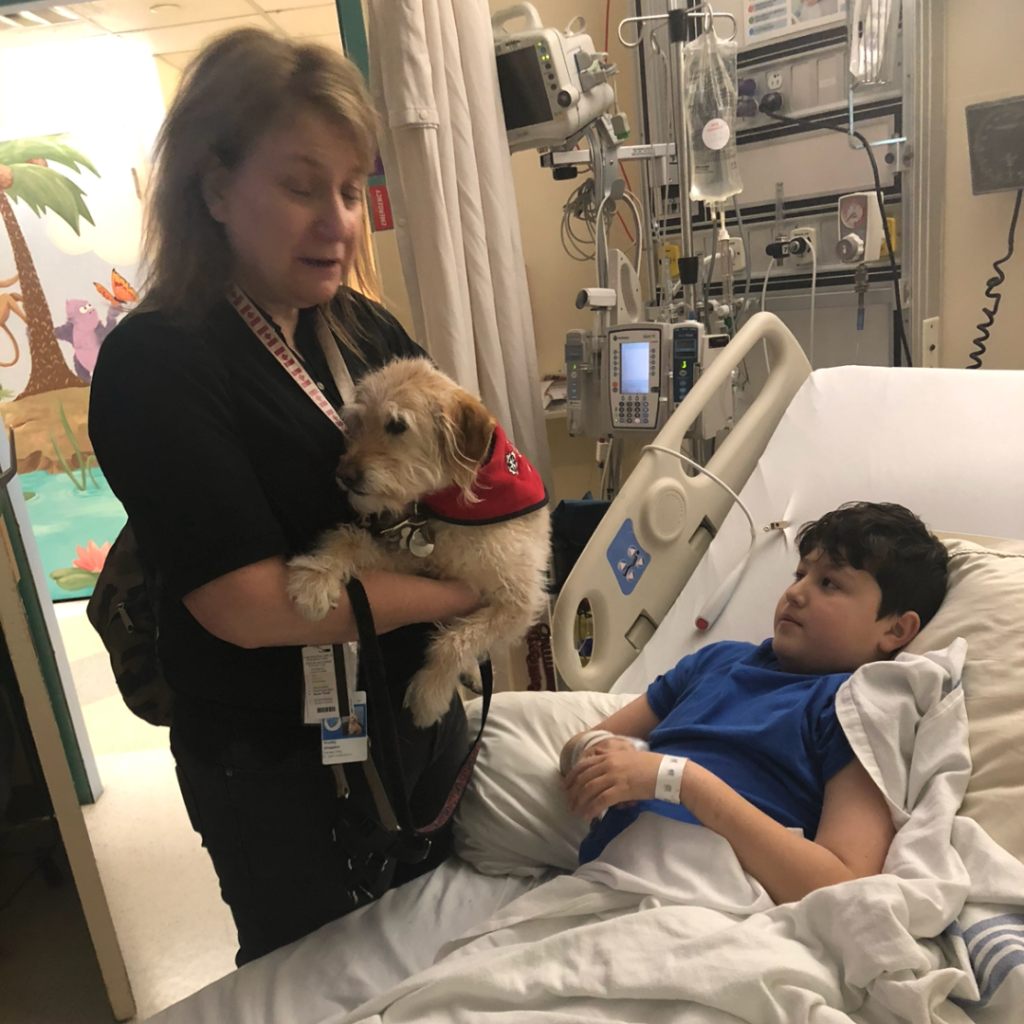
Claudia's son, Reid, sitting in the hospital bed for rehabilitation.
Reid in the hospital for rehabilitation.
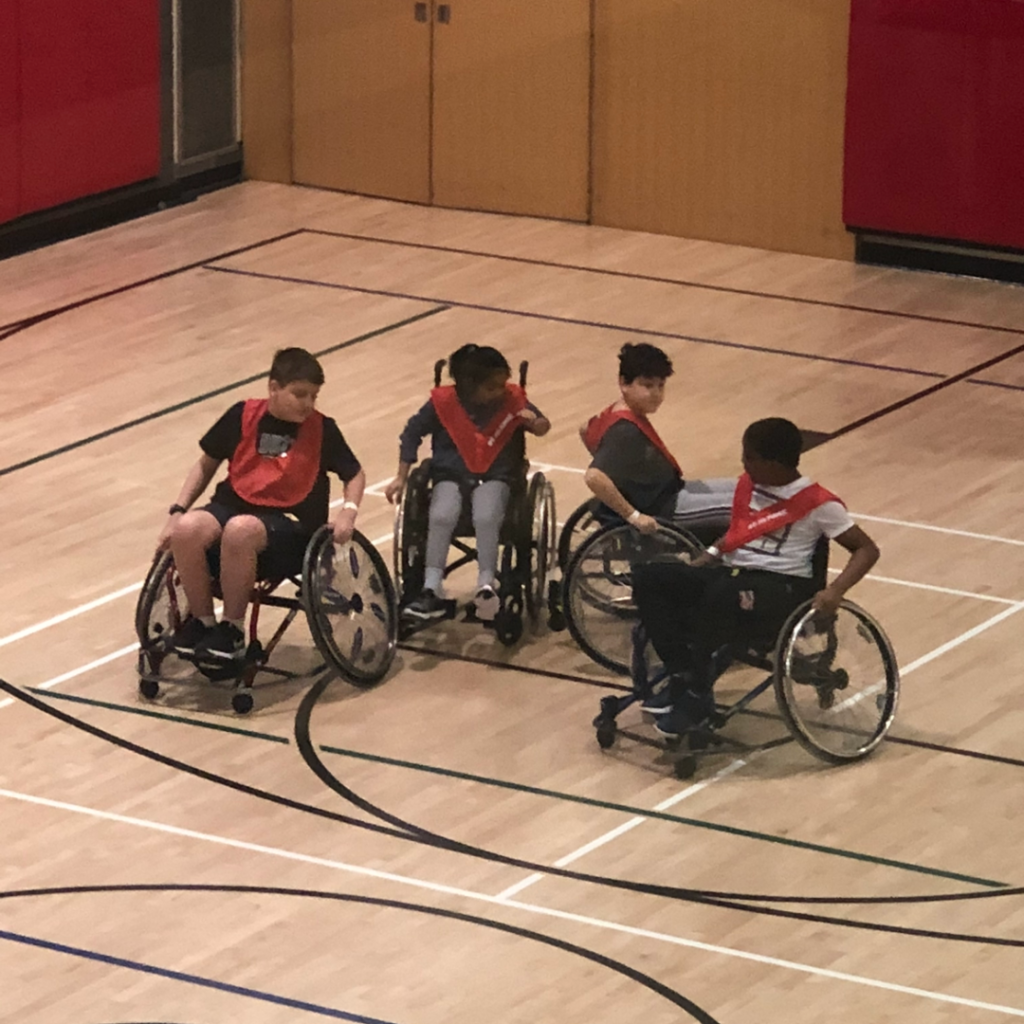
Claudia's son, Reid, playing wheelchair basketball with his friends.
Reid playing wheelchair basketball with his friends.

As his mom, seeing him feeling so lost every day is excruciating, and I wish I could trade places with him. Disabilities come in all shapes, sizes, and visibilities. Yes, this injury is invisible, but the impact and effects are as lifelong as visible ones.

The good news is that with the right support and accommodations, there is light at the end of the tunnel. Next time you meet someone with a TBI, just know how much more there is behind those sweet eyes looking back at you.

Spina Bifida Awareness Month is nationally observed in June. Spina Bifida is the most common congenital birth defect that causes disability. It is a condition that occurs when the spine and spinal cord do not form properly. Many babies born with Spina Bifida will also have or develop hydrocephalus, requiring a shunt to remove excess fluid from the brain. Although there is no cure, there are surgeries to help living and growing with Spina Bifida, and in-utero surgery designed to treat it if detected early enough.

Families like Weston’s share their stories to continue to raise awareness of living with Spina Bifida:

Weston is 13 years old and enjoys playing with Lego, reading Diary of a Wimpy Kid books and being a comedic teen. He loves to affectionately surprise his mom, Krystal, with a kiss on her cheek or hand, have pillow battles with his dad, Ganon, and play with his brother, Jase.

Weston was also born with Spina Bifida, having a hole in his lower back with his spinal cord sticking out. This was corrected through surgery shortly after birth. After further genetic testing prompted by having multiple anomalies, including a heart defect and eye issues, and not meeting many developmental milestones, he was officially diagnosed with Rubinstein Taybi Syndrome 2 (RTS2) in 2020. RTS2 is a rare genetic disorder, and in Weston’s case, caused by a partial gene deletion. He was later diagnosed with autism spectrum disorder (ASD) this past year.


Since Weston looks like a typical kid, it can be challenging for people to fully understand, respect his boundaries or forgive his lack of a filter due to his diagnosis. Grandview Kids has been a part of Weston and his family’s lives since he was a baby.

“Grandview will always hold a special place in our hearts. Weston feels right at home when he walks through the main site doors. He feels safe and comfortable there. The staff are always the sweetest with him too. Our family also feels the love of all the staff. Grandview has been one of our biggest support systems for the last 12 years,” says Krystal.

Weston has received services for physiotherapy (PT), recreational and occupational (OT) therapy, speech-language pathology, social work, hearing, eye and medical clinics, and a bike clinic. He also attended Grandview School for junior and senior kindergarten. Weston does not require the use of any assistive devices. In more recent years, his family has benefited from the Family Engagement Team’s inclusive events where whole-family care is at the forefront.

As a child with Spina Bifida, Weston also visits Holland Bloorview Kids Rehabilitation Hospital a few times a year to visit the Spina Bifida Clinic. In a single day, he may see multiple specialists, including a pediatrician, OT, PT, Urologist, ultrasound, social worker, and orthopedist.

As a parent of a child with physical, communication and developmental needs, it is sometimes difficult to track progress, especially when measured against peers. When Krystal thinks back on how far Weston has truly come, it is a marvel to wonder at. “He went from zero words to talking sentences while attending Grandview School and receiving weekly therapy and continued support from special education teachers,” says Krystal. “He still walks robotically, and his reflexes will always be an issue, but he is getting better. Weston has some physical barriers that he may never overcome just because of his body makeup. But, continuing to receive blocks of therapy and support from Grandview helps.”


 How long have you been volunteering at Grandview Kids? 

I began volunteering at Grandview Kids in 2017 when I retired from teaching. I had had the privilege of teaching children with physical and intellectual challenges for the last 15 years of my career and many of my students had a connection to Grandview Kids. I also worked with a variety of professionals from Grandview Kids who visited my classroom and shared their expertise so that my team and I could develop and implement academic and life skills that would best suit the needs of our students.  I had nothing but positive feelings towards Grandview Kids, and I thought it might be a good fit for volunteering. 

What is the best part of volunteering at Grandview Kids for you?

I thought I knew a lot about Grandview Kids from my teaching days, but I had no idea of the scope and depth of the Grandview team or the many amazing children who benefit from their work. 

I knew about Speech and Language Pathology, Occupational Therapy, and Physical Therapy, but perhaps my biggest revelation was learning about Recreational Therapy. I love participating in the many recreational therapy group sessions, such as music, movement, and play, and summer camps like bike camp. 

I often say that I receive far more from Grandview Kids than I give. The hugs, smiles, and high-fives I get from the kids I interact with and play with are what make me want to come back again and again.

Who inspires you to volunteer or give back?

My son Daniel is perhaps my greatest inspiration to volunteer. Daniel was born with very complex physical and intellectual challenges. We had many therapists in our lives who helped us in so many ways to help Daniel grow and develop to his greatest potential. He passed away as a young child, but had he been able to grow up, I know Grandview Kids would have been part of our lives for sure. By volunteering, I keep Daniel’s memory alive within me and spend time with kids who are as beautiful and special to their families as Daniel was to me.

What would you say to someone who was thinking about volunteering at Grandview Kids?

To anyone who might be thinking of volunteering, I would heartily encourage them to come to Grandview Kids. It is a place filled with hope and positivity, and after you have seen the smiles on the faces of the kids and their parents, your heart will be full. 

Jacki N. is a Peer Navigator on the Family Engagement Team at Grandview Kids. Her role is to support the Family Leader programs, provide families with support after a diagnosis, and show the importance of self-care. She is a mom of four. Her second son was born with a rare genetic seizure disorder, and it is her mission to allow her son’s diagnosis to open and not close doors.

Summer is here, so let’s go on a road trip. Here’s what I have learned from driving hours with my four kids:

I have always loved travelling. As a child, I spent countless March breaks driving backward in my parents’ station wagon across the USA. After my second son started having seizures, I became mentally locked into our home, and my love for travel took a necessary break. As time passed and we became more comfortable with our son’s medical needs, we started to slowly venture out and take road trips to some of our favourite places, Bay of Quinte, Scugog and the Kawarthas. March break 2014, we decided to cross the border and head south for Myrtle Beach on the longest 13-hour road trip. Honestly, that drive was a disaster; we were under-prepared for what driving with a 6, 3 and 6-month-old would involve. Let’s put it this way: it took us so long to get there that we decided it would be easier to drive through the night to get home, and we have not done that since. It did not deter me, though; we have taken many road trips all over the world, and the following are some tips that have made our trips enjoyable and memorable.


First off, preparation is key. It does not matter how far you are travelling. A good packing list and an organized, packed vehicle will set you up for success. I have several different packing lists on my phone that I reuse all the time. Baseball tournaments, camping trips, and Florida vacations all require me to pack different items, and through the years, I have added items to each list that I wish I had brought. Doing anything with 4 children requires bringing items, and without a list, I would certainly get distracted and forget something. For longer trips, make sure wheelchairs, strollers, and medications are easy to access. I also use a drink caddy that fits all our water bottles so they are all in one location, and I can monitor fluid intake. A 3-hour drive will take much longer when you have to stop multiple times for washroom breaks.

Speaking of breaks, plan for them. If travelling with an older child who wears diapers or needs assistance in the washroom, I highly recommend using ON route stops. They have companion washrooms, plenty of accessible parking, and are open 24/7, and you do not have to spend any extra time accessing them as they are right off HWY 401. Use www.onroute.ca for locations and what is available at each stop. Our family rule is when we stop, everyone uses the washroom; this has saved us travelling time. If travelling into the USA we use Rest stops, they are located right of the highway and have accessible washrooms and picnic tables. These locations allow us to stretch our legs and have a snack. Plan those breaks into your travel time, I have learned over the years it may be better to stop before the 4-year-old urgently needs to use the potty.


My children love snacks, so for road trips, I create snack bags for them. Each child has a labelled bag with multiple snacks in it. When it is snack time, I hand them the bag, and they can choose something to eat. I learned the hard way when I gave my then-8-year-old control of his snack bag on one vacation. Snack bags have prevented extra stops and ensure they will be getting a variety of snacks (healthy and non) over the trip (sometimes our destination is 22 hours away). Pro tip, also pack and bring your lunch. We always bring our lunch, it is much quicker, healthier and cheaper to bring. Nowadays, a stop at Mcdonald’s costs $50 for a family of 6 and takes an hour by the time you order, eat, and use the washrooms, so I have learned sandwiches or a cheese and cracker platter are much easier and save us money. During warm weather, this is more doable as Rest stops often have picnic tables, and this gives my children a safe place to move around, and fresh air does us all good.


Lastly, when we back out of the driveway, the journey begins. Some of my favourite memories are all of us in the vehicle. We are laughing, playing games and singing our hearts out to “Old Country Road” while driving through the mountains of West Virginia. We reward good car behaviour with prizes and challenge our children to spot the first Target store, Bald Eagle or palm tree. When we stop for a break, we switch seats so our children get to sit next to a different sibling. We have different playlists of songs for different road trips that we have taken, a baseball playlist, a Florida playlist and even a birding playlist. When I hear the song “Gone Country,” I think of our drive to Tennessee, and “Cruise” always makes me laugh as I reminisce on Colton singing along down the highway with windows open. The best part is when my kids hear one of the songs, their eyes light up!

This summer, get in the car, hop on a bus or train and take a day to explore. It will be good for your soul. Happy road-tripping!

Something new is flying into Grandview Kids this Fall. Two Ontario Sculptors, Francis Muscat and Fly Freeman, are creating a suspended artwork for our entrance at our new headquarters. The artwork will include beautiful, fantastical bugs emerging from cocoons and filling the upper spaces of the area (see the artistic rendering below). But, these artists need the help of Grandview Kids’ creative community!

The bugs are going to be works of imagination. The artists want each bug to have a story, to have a purpose – a unique personality and appearance. Help us create the bugs. Help us build their stories. Your ideas will inspire this amazing, lasting piece of artwork in our new headquarters.

There are a few ways Grandview Kids clients and families can get involved.

From home

  • Draw a bug! Think about what you bug might look like – all the bugs are flying bugs, so your bugs should have wings, and most bugs have 6 legs, 2 eyes, 2 antenna, and a body – but these are just suggestions. Use your imagination. Download the template or pick up a printed copy at any of our Grandview Kids locations.
  • Colour a bug drawing! Drawn by Francis and Fly, but coloured by you. We have some funky designs of butterflies and beetles. All you have to do is supply the colour! Download the templates or pick up a printed copy at any of our Grandview Kids locations.
  • To submit: Take a photo of your finished drawings and email to newbuild@grandviewkids.ca by May 31, 2024.

In-person workshop

  • Build your own bug workshop (space limited): A chance to build a small bug and meet the sculptors. We will have all that you need to make your own, unique bug. Also, you can see how the sculptors are going to make the big butterfly and beetle bugs for the new building. Space is limited, so registration is required.
    • Date: Wednesday, May 29
    • Location: Grandview Kids Main Site 600 Townline Rd S, Oshawa
    • Time: 4:30 to 7:30 p.m. – Drop in any time that evening (registration required)
    • All ages welcome, but please register each family member.
Register here!

We can’t wait to see the amazing ideas and innovation of the Grandview Kids community!

  • ⟨
  • Page 1
  • Interim pages omitted …
  • Page 9
  • Page 10
  • Page 11
  • Page 12
  • Page 13
  • Interim pages omitted …
  • Page 52
  • ⟩

Primary Sidebar

Child Stories

Henley’s Story: Feeding Tube Awareness Week- February 2-8

Feeding Tube Awareness Week, observed from February 2 to 8 this year, aims to increase the understanding of feeding tubes and their critical role in supporting the health and well-being...

Latest Updates

  • November: Dates of Significance October 30, 2026
  • Farheen’s Legacy: A Mother’s journey through grief  October 30, 2026
  • Violet’s voice is valuable! October 30, 2026
  • Grandview Kids receives 11 MarCom Awards October 27, 2026
  • October 2026: Dates of Significance September 30, 2026

You Have Questions

We’d like to help you find the answers…

Contact Us Today

© Grandview Kids Built by PeaceWorks

  • About Us
  • Contact Us
  • Privacy
Accessibility Adjustments

Powered by OneTap

How long do you want to hide the toolbar?
Hide Toolbar Duration
Select your accessibility profile
Vision Impaired Mode
Enhances website's visuals
Seizure Safe Profile
Clear flashes & reduces color
ADHD Friendly Mode
Focused browsing, distraction-free
Blindness Mode
Reduces distractions, improves focus
Epilepsy Safe Mode
Dims colors and stops blinking
Content Modules
Font Size

Default

Line Height

Default

Color Modules
Orientation Modules