• Skip to primary navigation
  • Skip to main content
  • Skip to primary sidebar
Grandview Kids Logo

Grandview Kids

Every Child And Youth Living Life At Their Full Potential

  • About Us
    • Vision, Mission and Values
    • The New Grandview Kids
      • Operational Readiness
      • Visiting Grandview Kids’ Ajax Headquarters
    • Our History
    • Leadership
    • Board of Directors and Committees
    • Annual Report
    • Strategic Plan
    • Policies
  • Calendar
  • Annual Report
  • Contact
    • Contactez – nous
    • Ajax – Headquarters
    • Bowmanville Health Centre
    • Grandview School
    • Oshawa – Dwyer
    • Port Perry
    • Whitby – Abilities Centre
  • Careers
  • Register
  • Donate
  • Instagram
  • LinkedIn
  • Facebook
  • Services and Programs
    • Audiology
    • Autism Program
      • Autism Spectrum Disorder (ASD) Diagnostic Hub
      • Caregiver-Mediated Early Years Programs
      • OAP Core Clinical Services
      • Entry to School Program
      • Foundational Family Services
    • Blind-Low Vision Program
    • Extensive Needs Service
    • Family Engagement Program
      • Adolescent Transition Program
      • Family Leader Program
        • Family Advisory Council
        • Paid Advocates
        • Youth Advisory Council
    • Infant Hearing Program
    • Medical Services
      • Autism Spectrum Disorder (ASD) Diagnostic Hub
      • Complex Care Program
      • Grandview Anesthesia Procedure (GAP) Clinic
      • Hypertonia Clinic
      • Nutrition Services
      • Orthopaedic Clinic
    • Occupational Therapy
    • Physiotherapy
    • Preschool Outreach Program
    • School Programs & Resources
      • Resources for Educators
      • School-Based Rehabilitation
    • Service Navigation
      • SmartStart Hub: Parents
      • SmartStart Hub: Partners
    • Social Work
    • Speech-Language Pathology
      • Augmentative and Alternative Communication
    • Therapeutic Recreation
  • Purchased Services
    • Inclusive Recreation
    • Beyond the Walls
    • OAP Core Clinical Services
      • Behaviour Services
  • Research
    • Get involved in research
    • IDEA Study
      • Building knowledge and understanding of the intersection of race and disability in accessing pediatric rehabilitation services.
    • Joint Research Ethics Board
    • Research Associate: Dr. Fiona Moola
    • Research Associate: Dr. Meghann Lloyd
  • Resources
    • Ability Acceptance Program
    • Arriving at Grandview Kids
    • Community Supports & Resources
    • Family Support Fund
    • Free to Read Program
    • Frequently Asked Questions
    • Gather by Grandview Kids
    • News and Updates
    • Privacy
    • Resources for Parents and Caregivers
    • Visiting Grandview Kids
  • Support Us
    • Ways to support
    • Host a fundraiser
    • Participate in an event
      • Golf Fore Grandview Kids
      • Sponsor the Drum
      • Dream Big, Dream Brighter Awards Gala
    • Leave a legacy
      • Gifts of securities
      • Gifts of bequests
      • Gifts of life insurance
    • Your impact
    • Building a Legacy: Honouring Jerry Coughlan
  • I Want To…
    • Connect with Grandview Kids
    • Donate
    • Refer a child or youth
    • Register via My Community Hub
    • Schedule an Appointment
    • Volunteer at Grandview Kids
    • Work at Grandview Kids
  • Grandview School
    • About Our Program
    • About Our Board
    • Grandview School Social Story
    • Plans and Reports
    • Resources for Families
    • Resources for Schools – Switch It Up!
    • Careers and Volunteering
    • Contact Grandview School
  • Search

Posted January 23, 2026

“Roaring as one:” How a friendship between a Grandview Kids graduate and the York University Lions Women’s Hockey team demonstrates ability acceptance in practice 

Stories

Written by Grandview Kids Peer Navigator, Sam K. and Ability Acceptance Presenter and Archivist, Mitchell D.

About the Ability Acceptance Program at Grandview Kids 

If you have been following Grandview Kids’ Gather newsletter and social media, you may have heard of our Ability Acceptance Program, led by our Ability Acceptance Presenter and Archivist, Mitchell Daniels. Through our Ability Acceptance Program, we deliver presentations to schools, community organizations and local businesses to improve accessibility and acceptance for people of all abilities. As part of the Ability Acceptance Program, we often collaborate with other Team Grandview members to share their lived experiences, as some of our staff are former clients or family members of former clients. 

Acceptance is something everyone deserves 

Unfortunately, some may not feel accepted in their communities, or fear they will not be.  

For anyone, this can be difficult, and for those with a disability, their diagnosis can become a focus in social settings. This can lead to fears of not being accepted. These experiences are often unseen. It can take a harsh, often silent toll on a person’s self-esteem and may lead them to feel “invisible.” It could progress into painful internal questions, including “Is it my fault?” or “Why won’t anyone accept me?”

Over time, toxic self-inquiries like these can manifest into a deeper, silent suffering, which can lead to someone feeling trapped in their own mind. They may start overanalyzing what they perceive as “wrong” because they may be searching for a possible cause of why they have not found the social connection they long for.

When parents or caregivers witness this invisible, silent pain experienced by their youth or child, it can lead them to feel heartbroken and helpless. It might feel like there is no easy remedy. However, even the smallest acts of kindness and acceptance can be catalysts for hope and change.

That is the heart of Ability Acceptance: seeing and valuing people for who they are, not for their diagnosis—visible or invisible. 

So, what happens when an individual or a group of people reaches out and ignites a light in another person’s story that once seemed dark, with a fear of a lack of acceptance?

Sam’s personal experience in finding a strong bond 

Sam is a former Grandview Kids client who is now a Peer Navigator in the Adolescent Transition Program. He is a college graduate and has a diagnosis of Cerebral Palsy. From an early age, Sam knew that life would not be easy; many challenges came, and others were always on the way. Even while overcoming the physical, mental and emotional trauma that is faced by those with a diagnosis, he greatly feared social ostracization by his peers before attending college. It happened, leaving him feeling unwanted and craving acceptance.

Thankfully, a door can open, and for Sam, one literally did. When they do, the trauma can vanish, and unbreakable friendships and bonds can often bloom. 

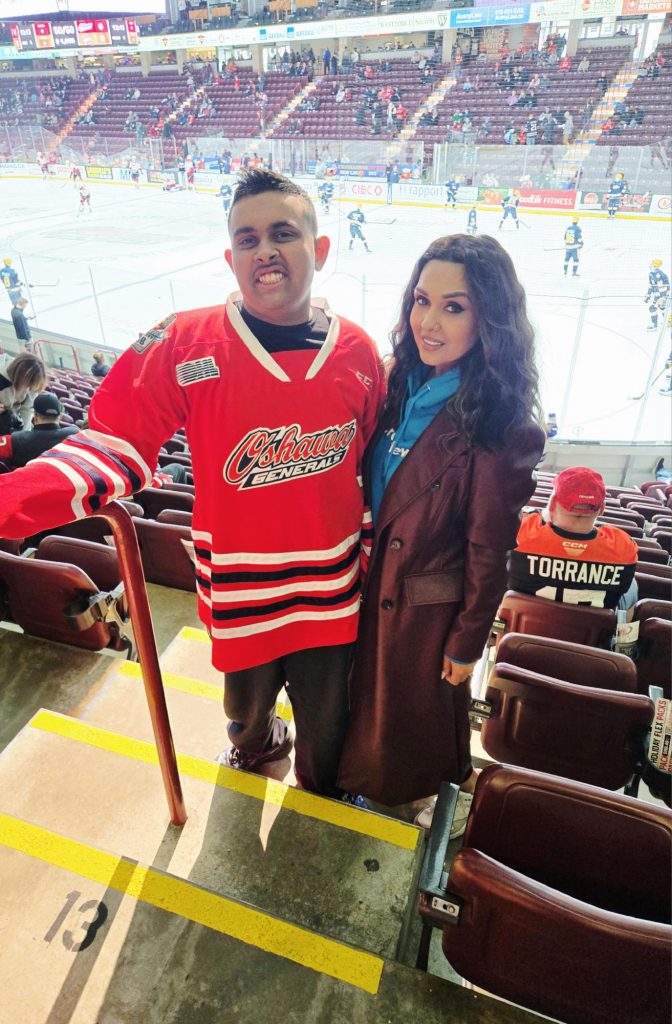
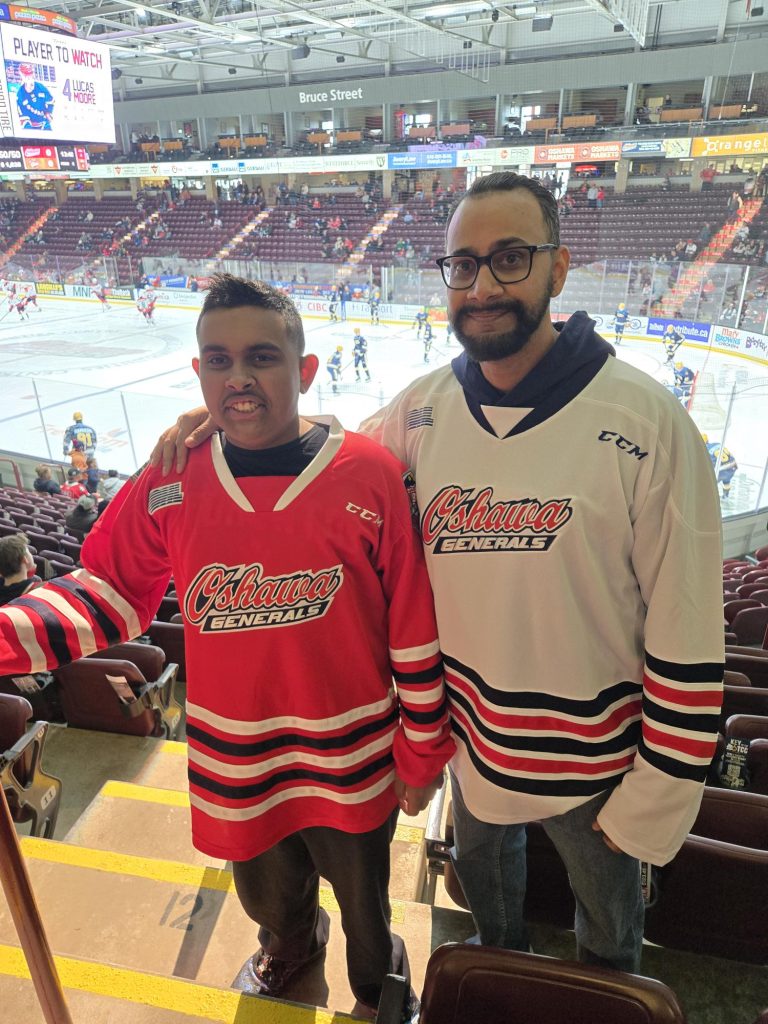
For Sam, these powerful bonds were formed with the Women’s Hockey Team at York University during the 2023/24 season when Sam was at a game at York’s home rink, and two of the players happened to hold a door for him in the lobby of the arena. A brief conversation between them ended with Sam saying a simple yet unknowingly powerful “thank you.” Following this, Sam reached out to the team’s official Instagram account to share what had happened, express his gratitude for the kindness and let the coaching staff know they had incredible players who represented the team so well.

Little did Sam know that the staff managing this account would later read his message to the players before their next game. His simple note of appreciation would leave a lasting mark on the Lions’ locker room.  

In response to this message, the team’s Captain at the time reached out to him personally to thank him for his kind words. Several months later, after Sam’s final regular-season game at York that year, he had a brief conversation with the captain and her sister to express his gratitude for their kindness as they held the door. Sam had no idea that this interaction would not be the last time he would speak to or see them or the team.  

York would later make the play-offs that season for a first-round series against the Nipissing University Lakers, and Sam ended up watching the Lions sweep the series! 

Following the two games played at York, Sam would meet many more players, which marked the start of a new and powerful bond he did not see coming. Though the two players have since graduated from the team, they remain close friends with Sam and talk as often as their busy schedules allow. The impact of the initial friendship and the ones developed since, including those currently on the team, are among Sam’s strongest.

He remains close with the team, becoming their biggest fan and even earning the moniker of “superfan,” which Sam wears on his sleeve proudly. Sam always shows up for his friends and cheers for them louder than anyone attending the games. Alongside these bonds, Sam and the team have had many meaningful, transformational conversations about what it means to be “inclusion allies.” 

For Sam, in-person ones take place at the rinks before and after their games, and online, he texts every player individually a variation of “good luck” on the morning of every game day, without fail. They will often talk about their lives when chatting.

These interactions can carry a lot of power. Some on the outside may view them as “just a conversation” or “just words on a smartphone.” However, to Sam and those like him, such honest efforts mean a world to them. They read as “We see, hear and accept you. We are your friends.”

Parents and caregivers of children and youth with disabilities can find peace in these experiences, too. These bonds and friendships have a lasting impact. They can also deepen their existing understanding and perspectives while continuing to accept others. Sam notes that this is vividly felt across York University’s Women’s Hockey.
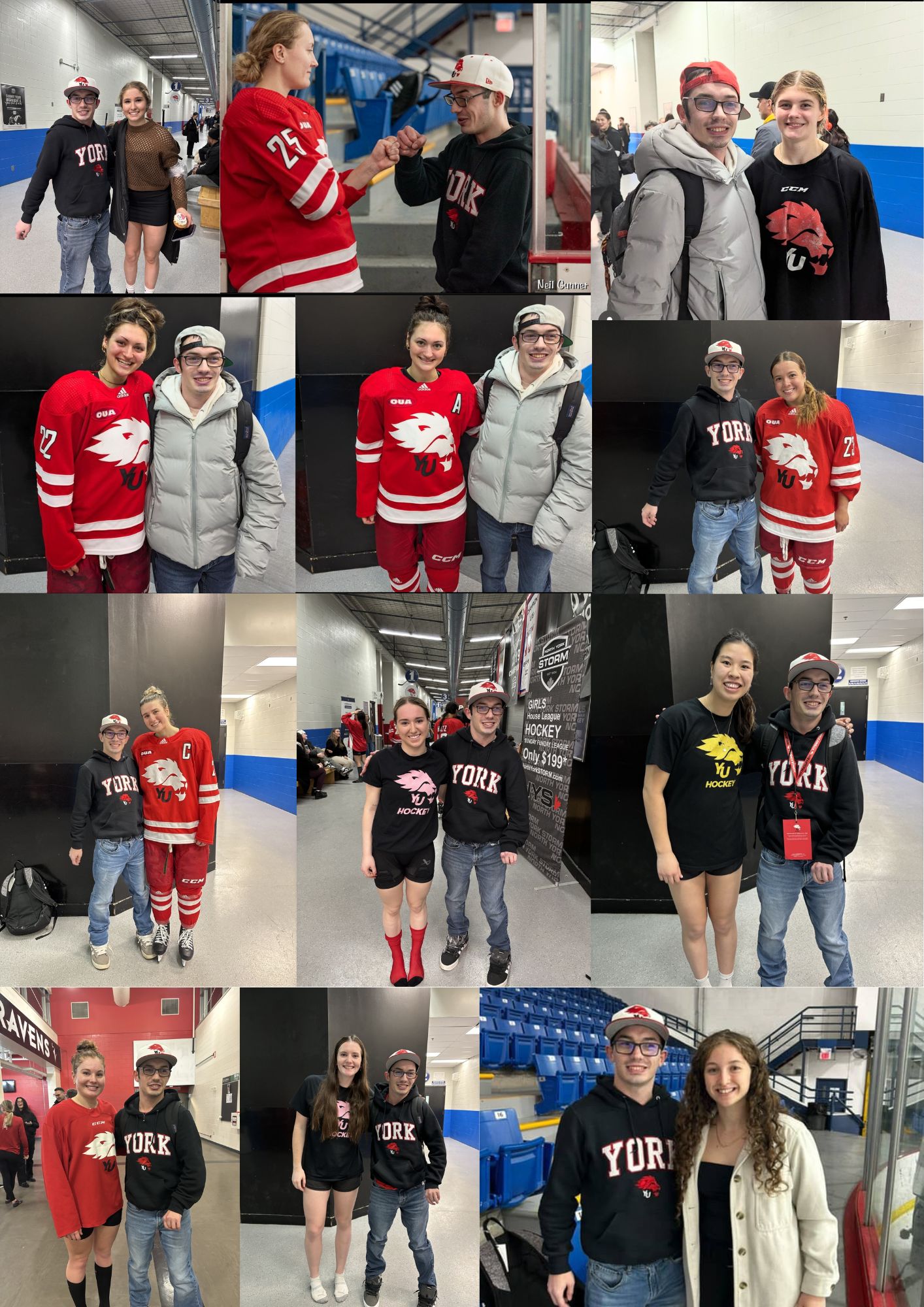
Sam poses with some of his friends on the team

Thoughts from Sam’s friends on how their friendships and bonds with him impacted them and their concepts of ability acceptance

When asked about Sam’s impact on her personally, York University Women’s Hockey forward Lola M. shares, “Sam has taught me about positivity and perseverance. He has also shown me that disability is a spectrum and looks different for everyone… Treating those with different abilities as people first is critical. Understanding how those with disabilities may have a different way of moving through the world is important to push back against institutions and preconceived notions that further disadvantage those with disabilities.”

Forward, Trynity T., echoes the positive influence through her friendship with Sam, stating, “Sam has been a great influence on my understanding and awareness of ability acceptance. I understand that people with disabilities, visible or not, are just as human as the rest of the population and deserve the same treatment. Disabilities do not define who a person is; they’re just a part of them. This will help me to be more understanding of how individuals with disabilities think and feel and allow me to do my best to include everyone and see who people truly are, despite these disabilities.”

Further advocating the impact, defender Abby H. weighs in, “My relationship with Sam has been nothing short of amazing. While Sam is a person with a disability, he is so much more than that. He is a caring and amazing person and friend; his disability has not limited our interactions or relationship at or away from the rink. He has influenced my awareness of ability acceptance by enlightening me that there is so much more to him than his disability, and his personality shows that at the rink every day. This experience can positively impact future interactions with individuals with visible and invisible disabilities by encouraging myself and others to acknowledge their disability, but look further into who they are as a person.”

Conveying the lasting impact that her friendship with Sam has had on her, forward Abbey M., offers her thoughts, “Being friends with Sam has reaffirmed my beliefs that those with visible/invisible disabilities are not defined by their disabilities. I can positively impact my relationship with future individuals with disabilities by taking the time to get to know them on a personal level and create true and meaningful connections.” Part of acceptance is being an inclusive ally; several of Sam’s friends expressed what that means to them.

Goaltender Emma W. says, “Being an ‘Inclusion Ally’ to me is more than just supporting inclusion; it frames around the way you act, speak, and listen. I think it comes down to creating spaces where EVERYONE feels welcomed through traits like respect, empathy, and kindness, allowing individuals to know they can be their true selves and feel valued without facing judgment.”

Forward Emise G. adds her thoughts, “[An inclusion ally is] someone who makes people feel welcomed and accepted when first meeting them. Also, someone who actively supports and advocates for people in marginalized communities.”

It is also vital to recognize that there is much more to someone than their diagnosis, and that must always be understood. When speaking to it, defender Nicole Y. said, “A person’s worth isn’t defined by their disability, visible or not. True acceptance means treating everyone with the same respect and openness, without pity or assumptions. We’d create a more welcoming world by listening, learning, and seeing people for who they are, not just their challenges.”

When asked how someone without a diagnosis may interact socially with someone who does, more of Sam’s friends offer their advice. Former defender and Captain Ava R. advises, “Show love and kindness as you would with anyone and do not focus on the disability because they are not the disability, focus on the wonderful person they are and treat them as the wonderful person they are.”

Former defender and Alternate Captain, Ilena R. recommends, “Be kind, make eye contact and have a conversation! Smile!!! It can start a friendship that will change your life!” Forward Courtenay B. adds, “My advice is to not make any assumptions about what someone can or can’t do and approach all interactions with the same respect and openness that you would show anyone else. Treating people as PEOPLE first; not defining or labelling them with a condition, making eye contact, and asking questions about their interests is how we make people feel included and respected.”
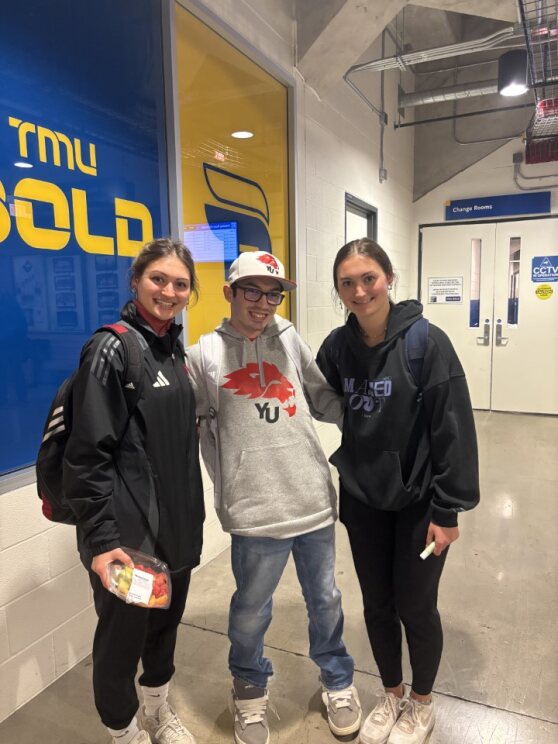
Sam receiving a surprise visit from his friends and former captains, Ava R. and Ilena R. following the team’s game at Toronto Metropolitan University on October 24, 2025

Captain and defender Sara M. says, “Be patient and treat them with respect that you would with anyone else.”

Thoughts from the team’s Head Coach on how Acceptance is interwoven into the team’s culture

The power behind inclusive bonds is felt not only by the players but also by those who witness it, leaving a lasting impression.

For the team: Head Coach Dan C. He shares, “One of the pillars of the Women’s Hockey Program at York University is the concept of ‘Whanau.’ Whanau is a Maori word which means ‘family.’ However, the beauty of the word is that it also encompasses immediate family, extended family, community, and ancestry. It truly is a beautiful word. We work hard for our daily environment to be a ‘family.’ We honour the players who wore the jersey before us and laid the foundation for the program to be where it is today. We value the sisterhood created by our current players on and off the ice. We appreciate the support from our family at every game. Finally, we reflect the values of our extended family and the community that surrounds us. I think to us, being ‘inclusion allies’ means respecting the diverse backgrounds of our whanau. We all come from different and diverse backgrounds, but all of our whanau is important to us. It makes us stronger. As the saying on our dressing room wall says, ‘For the strength of the Pride is the Lion, and the strength of the Lion is the PRIDE.’ An inclusive environment and culture make us a stronger team.”

Sometimes the door that is held open for you reveals a world where you can roar the loudest and proudest.
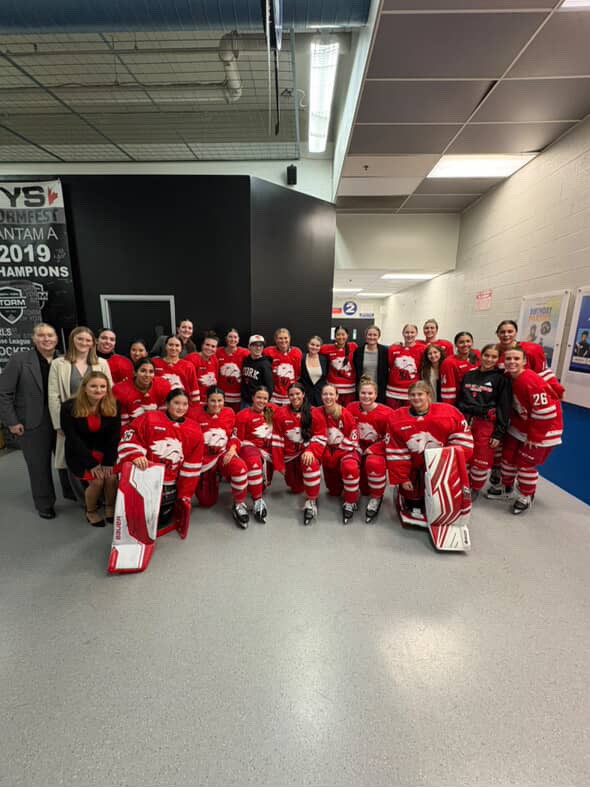
Sam and the 2025/26 York Lions Women’s Hockey Team together after a big game

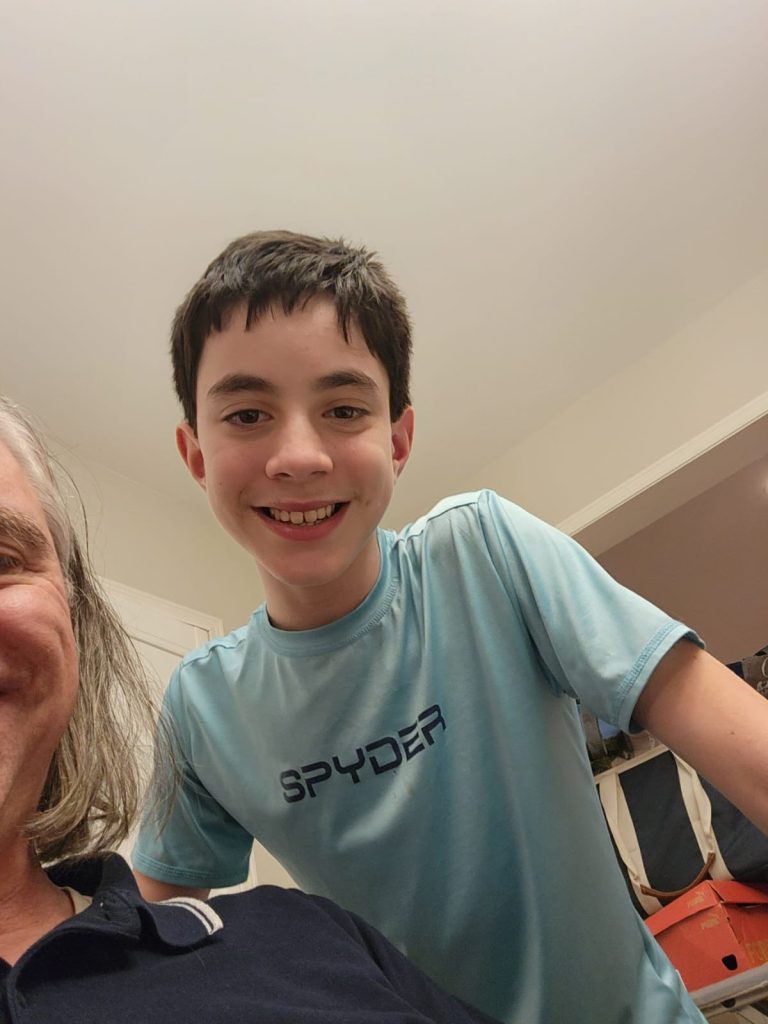
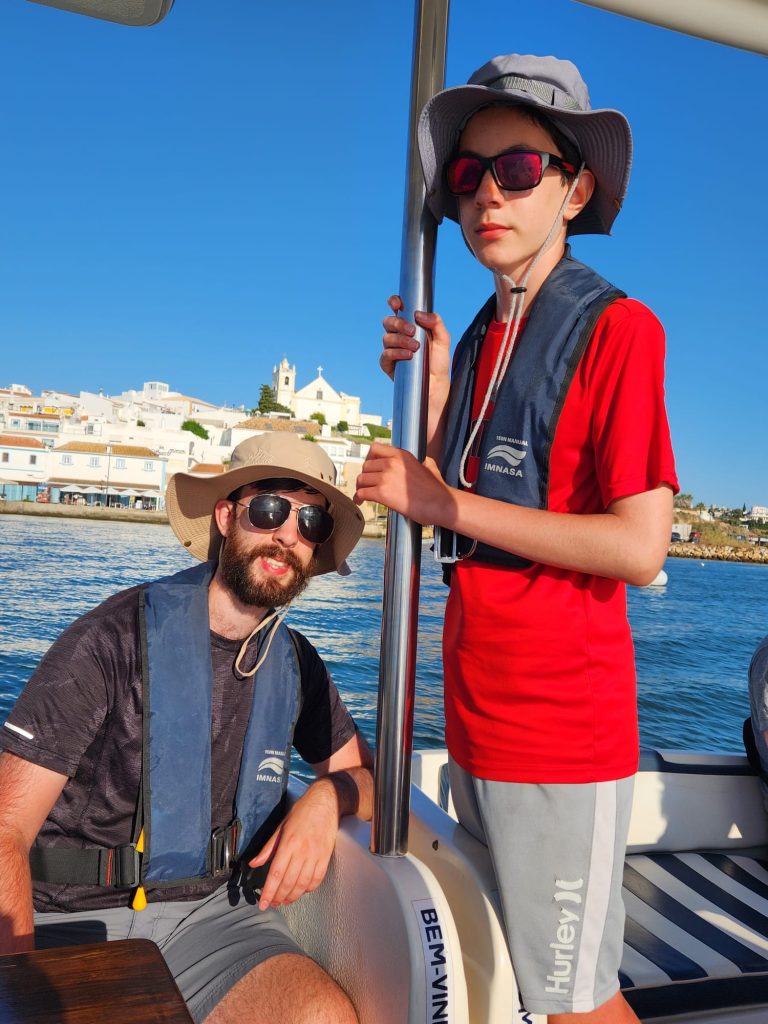
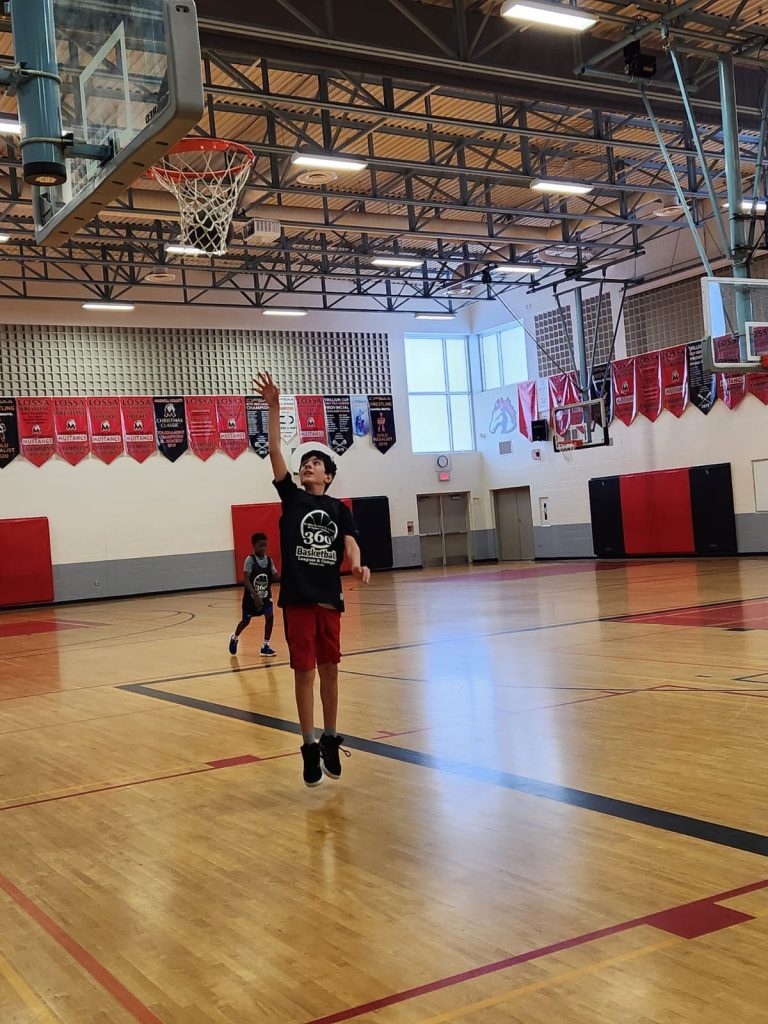
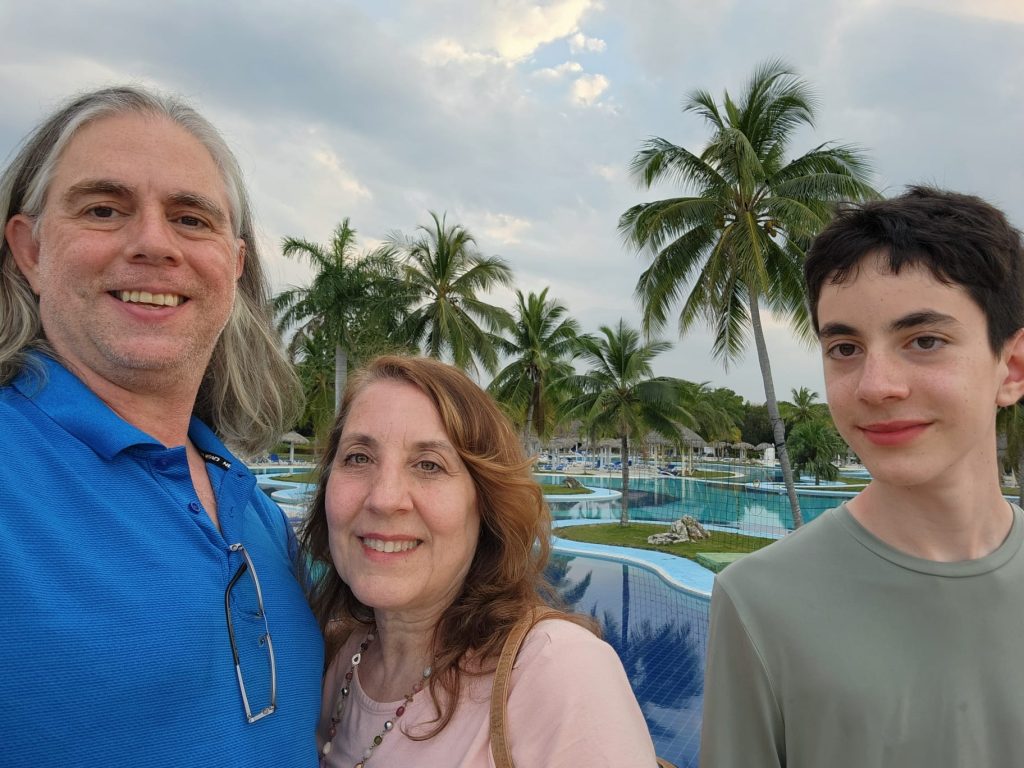
Dana and her husband, Peter, describe their family of four as one tied together by steadfast care and support. 14-year-old Leo’s big brother, who is 11 years his senior and a stepson to Dana, does not live with them full-time, but is a constant, loving presence. Despite the age gap, he remains an attentive sibling who delights in Leo’s victories, large and small. Three grandparents, two on his father’s side and Dana’s mother, complete Leo’s support network. They attend every lesson, skill-building class and new interest that captures Leo’s imagination. Whether it be swimming, basketball or skating, they are there, cheering and learning alongside him. 

Leo’s Grandview Kids journey began as a toddler. Educators in his daycare noticed he was not progressing in speech at the same pace as his peers and expressed concerns about his limited eye contact and lack of response to his name. By age four, after an assessment at Grandview Kids, Leo was diagnosed with autism spectrum disorder (ASD). Dana still remembers the swirl of terminology, questions and fears that followed. She recalls standing in her in-laws’ house, watching Leo linger under the ceiling fan and stim by flapping his arms, yet still feeling surprised when the diagnosis confirmation arrived. 

After years of navigating infertility, Leo was a miracle to Dana and Peter. This diagnosis did not leave them as distraught and hopeless as they expected, knowing that their task at hand was to figure out how to best help Leo. “The more knowledge you have, the better,” she says. “It’s not good to be in the dark. Knowledge lets you make things better.” Peter approached the diagnosis with characteristic determination, eager to understand every possible resource. He uses a Lord of the Rings metaphor to describe their parental role: “Aragorn walks toward the throne, but Legolas and Gimli clear the way.” Their job, he said, was to clear Leo’s path of as many impediments as possible. 

The early years were filled with daunting decisions. Choosing classroom placements, reading psychometric reports, worrying about labels and balancing accommodations and expectations. Dana’s mantra for herself, and now for other parents and caregivers, became clear: “You will make the best decisions you can with the information you have. And you can always adapt as you go. Give yourself grace.” 

Dana describes Grandview Kids not merely as a service provider, but as a lifeline. After receiving the diagnosis, Leo underwent hearing assessments, speech therapy and then ABA-based social skills training. Occupational therapy followed as the school identified fine-motor challenges. Over time, programs shifted based on Leo’s needs and interests, ranging from Lego groups to summer literacy groups to, eventually, a “Typing Without Tears” keyboarding program, which became essential during pandemic learning. Grandview Kids always encouraged revision, guiding his parents to ask, “What does Leo need most right now?” and the family learned to recalibrate continuously. 

Dana recalls the moment she walked into Grandview Kids’ old Oshawa headquarters for the first time. She had expected to have to travel to downtown Toronto for specialized services. Instead, she found “warmth at every layer” from the staff, the digital floor signage, the mini library and even the receptionist who made families feel seen. “It felt like resource heaven,” she says. “I felt enormous relief that Grandview was here. It became my life raft.” 

In addition to support from Grandview Kids, family vacations, especially trips to the Caribbean, have been transformative for Leo. The new environments, unfamiliar routines and diverse social encounters have broadened his comfort in these settings and expanded his interests in sports and the outdoors.  

Travel, Dana notes, has quietly expanded his world. Leo’s personality has also blossomed over time. Once a brooding, withdrawn child who rarely engaged, he gradually developed a sense of humour, sparked by books like Captain Underpants and carefully curated YouTube videos. Today, he is outdoorsy, active and mischievously funny. “You never know what the trigger is,” Dana reflects when learning to lean into Leo’s interests. “A teacher, a YouTuber, a book – someone uncovers a new part of him.” 

Over the years, the defining feature of Dana and Peter’s approach has been adaptive parenting as they closely listen to Leo’s emerging interests, concerns and strengths, especially when he cannot articulate them fully. When he became concerned about physical abilities, they leaned into his newfound love of sports. When his writing challenges became overwhelming, they shifted toward technology solutions. When social supports were needed, they prioritized therapy groups, camps and friendships. 

“You have to be flexible and rethink your approach as a parent,” Dana says. “Between mental and physical health, we’ve had so many balls to juggle. We do our best not to drop anything.” As Leo began high school this year, she reminds herself and others that perfect parenting does not exist. “As long as kids know they’re loved, it’s okay.” 

Today, Dana advocates for families like hers by sharing knowledge freely. “If I’ve learned something that helped us,” she says, “why not help another parent find that information sooner?” She imagines a community of ongoing learners, a network where insights, resources and support flow in every direction. 

For Dana, International Day for People with Disabilities is a vital moment to amplify these perspectives. “My son is a living example of the goodness that disabilities bring to our society,” she says. “Disabled people teach us how they are differently abled. They teach society to appreciate and enjoy differences because along the way, there are beautiful surprises.” 

What Dana wishes the community understood about children and youth with disabilities is simple but profound: “Be open. Be open to discovering what disabled people can teach you. Be open to ways of thinking and challenge the usual pace of the world. Be open to having enough patience and empathy to perceive the world through someone else’s lens.” 

As Leo steps into adolescence with confidence, humour and growing independence, Dana and Peter see the future not as a fixed destination but as a shared path, one that families, professionals and communities must continually clear together. Disability is not a limitation to be managed but a different way of existing to be understood, supported and celebrated. 

Dana Colarusso hosts a podcast called “Autistic, Beyond the Label,” a platform that invites parents, caregivers and families with autistic children and youth to engage in continuous learning and to share knowledge, information and resources freely.’

Every year, Giving Tuesday reminds us of the power of community when individuals rally together to change lives through compassion and generosity. For families like Amber’s, whose journey with her son Kaysan began with uncertainty and evolved into one of hope and empowerment, Giving Tuesday is more than a date on the calendar. It is a celebration of the life-changing work done by organizations like Grandview Kids and a reminder of why giving truly makes an impact. 

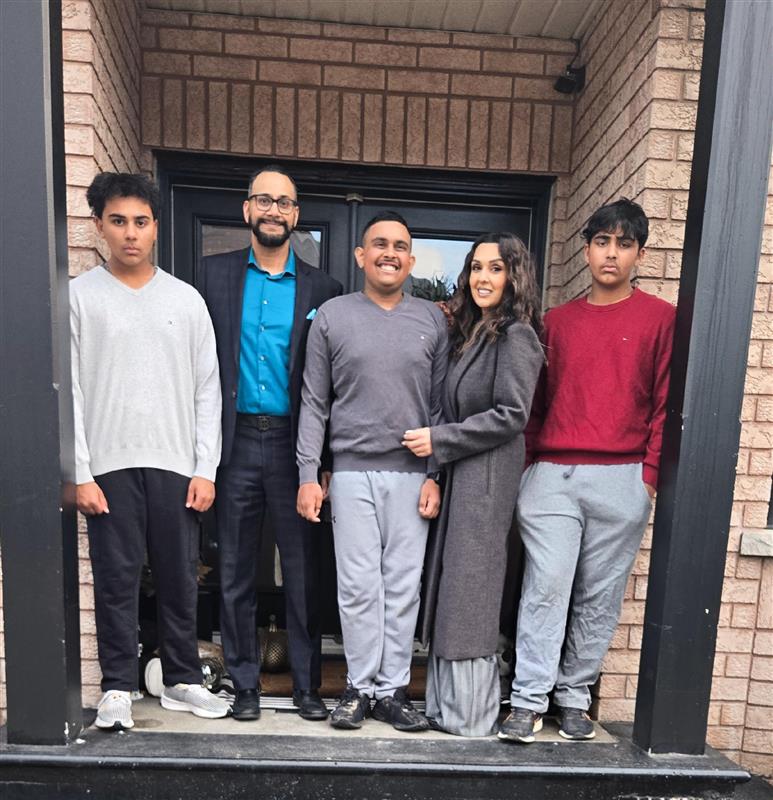
Amber and her husband, Zain, are parents to three teenage boys, two of whom have autism spectrum disorder (ASD) and one with attention deficit hyperactivity disorder (ADHD). Their home is filled with boisterous laughter, high energy and a shared love for Toronto sports teams. Every day is a new comedic adventure, making the little moments memorable and enjoyable. Their eldest son, Kaysan, especially loves food adventures, trampoline parks and family pancake mornings. When Kaysan was diagnosed with ASD shortly after his second birthday, life took a turn that Amber describes as both challenging and transformative. 

Kaysan’s early signs and symptoms included speech delay, limited eye contact, not playing or interacting with other kids, toe walking and not always responding to his name. What were the classic early signs of autism were the first signs that made Amber and Zain realize something may be different and that he would need extra support.  

“In the early years, instead of experiencing the joy and ease of parenthood, it often felt like we were living under a cloud of constant anxiety and pressure,” Amber recalls. “We were always searching for the right supports, planning everything far in advance, and preparing an exit. Strategies for even the simplest outings in case a meltdown happened. Going to birthday parties or family gatherings wasn’t carefree, I often had to take the kids on my own when my husband was working, I couldn’t even enjoy being there. My attention was always split between managing their needs and trying to hold myself together.” 

For a time, their family’s world felt isolating. Friends and extended family did not always understand what daily life with an ASD diagnosis was like. While others seemed to move through parenthood with ease, they were just trying to make it through the day without falling apart. 

The turning point came when their paediatrician connected them with Grandview Kids, a place that would become a cornerstone in their family’s journey. Through Grandview Kids, Kaysan began receiving speech therapy, occupational therapy and Applied Behaviour Analysis (ABA) services. Amber and Zain were able to attend a past program called “More Than Words,” which taught them how to build stronger, more meaningful communication with Kaysan. “That course was an incredible experience,” Amber shares. “It truly helped us understand how to better connect and communicate with Kaysan.” 

At Grandview Kids, Kaysan found a safe space where he could be himself, free from judgment, surrounded by therapists and staff who saw his potential. His speech improved, his confidence grew and his family began to feel that elusive sense of belonging they had been missing. Amber shares how they also attended every community event for families with children with ASD and other diagnoses they could, finding comfort and belonging among families who understood their journey. 

Since first connecting with Grandview Kids in 2012, Amber’s family has become a powerful force for advocacy and support. Amber joined the Family Advisory Council (FAC) in 2017, helping ensure that the voices of families were heard in every decision made at Grandview Kids. She spearheaded multiple Run Ajax teams that raised thousands of dollars for Grandview Kids. Within the community, she also helped organize toy drives through the Muslim Moms of Durham.  

One of Amber’s proudest achievements was serving alongside the Family Engagement Committee in 2014 as a founding member of the Parent Task Force, contributing to the successful advocacy for funding Grandview Kids’ new Ajax-based headquarters, The Jerry Coughlan Building. This 10-year-long project came to completion in November 2024 when the doors at Grandview Kids – The Jerry Coughlan Building opened, offering opportunities for service expansion to thousands of children and youth in Durham Region. 

“This experience highlighted the power of community-driven efforts, reinforced the importance of amplifying the voices of families navigating similar challenges and strengthened my belief in what families can achieve when we come together,” Amber optimistically shares. 

Giving Tuesday is more than a fundraising event; it is an opportunity to invest in the potential of children and youth like Kaysan. Every donation to Grandview Kids supports critical therapies, accessible programs and family resources that make a real difference in the lives of children and youth with physical, communication and developmental needs. 

“Grandview has been our village,” Amber reflects. “And there are so many families still waiting for that same support. Giving to Grandview means giving hope—to kids who deserve the chance to reach their full potential, and to parents who need to know they’re not alone.” 

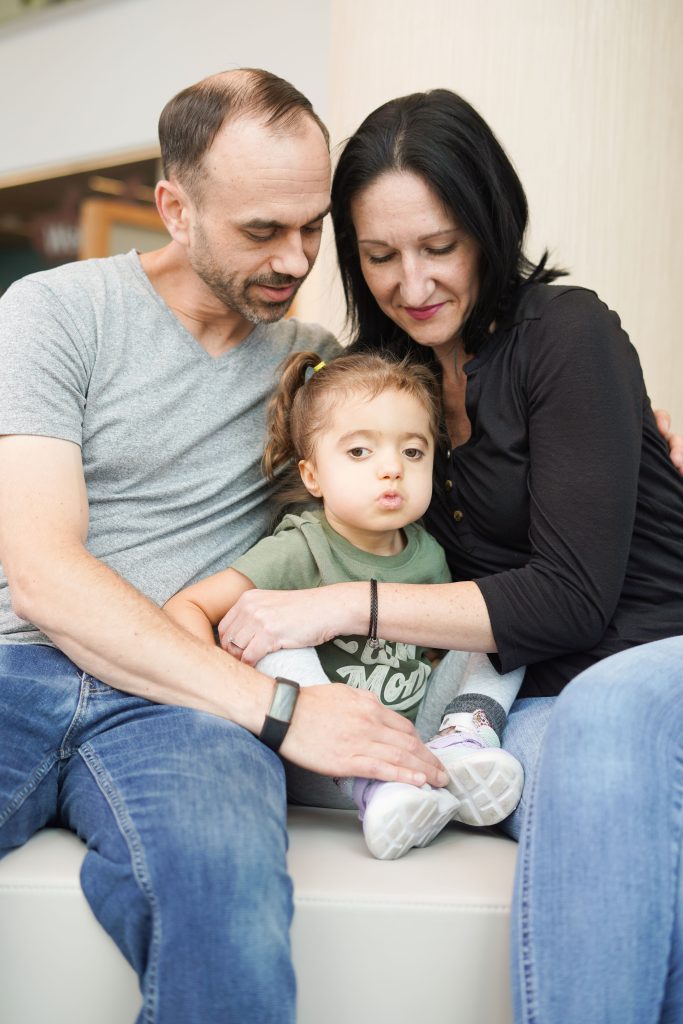
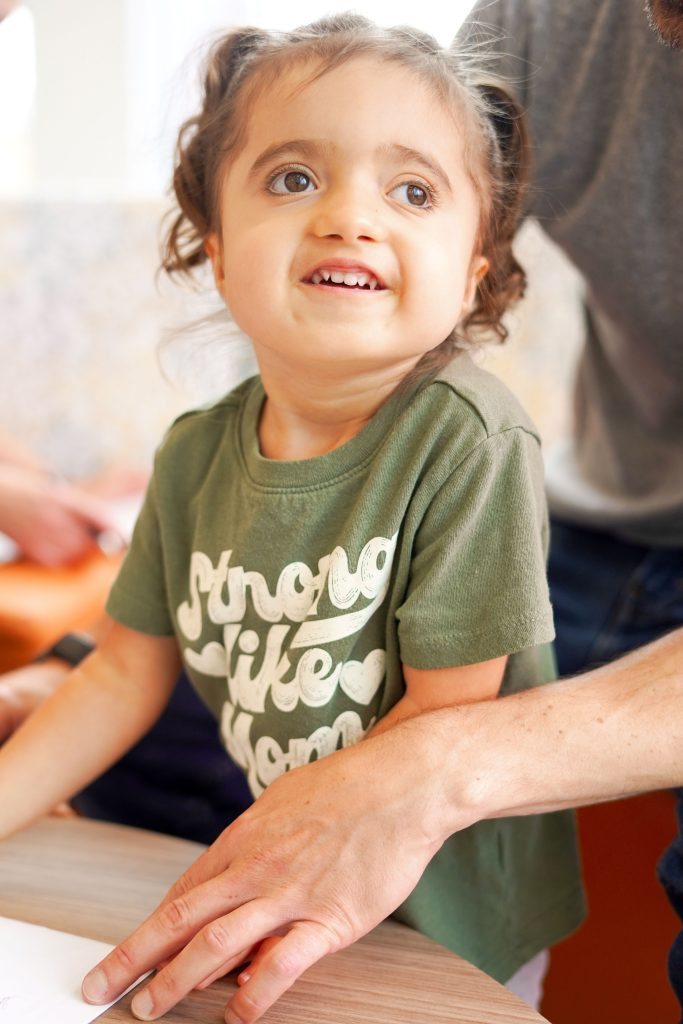
Krystle and Chris want their daughter, Scarlett, to have the chance to enjoy a happy, fulfilling childhood filled with laughter, play and a chance to explore the world around her, just like any other child. In many ways, three-year-old Scarlett does exactly that. She has humour, sass and curiosity. She loves books and dinosaurs in equal measure, rotates her favourite stuffed animals weekly (there are three bins full!) and lives for the thrill found in local fair rides and water slides. Halloween is her absolute favourite time of year, lighting up at the chance to dress up and join in the fun. 

Behind Scarlett’s bright smile is a rare and complex medical journey. This unexpected path they were placed on has challenged her family in ways they never imagined, while also revealing a depth of resilience, love and hope they never thought possible. 

Scarlett was born full-term but glaringly small at just 5 pounds, 4 ounces. In the early days, she was born with one clubfoot, but there were no immediate red flags. She passed all her newborn tests and came home after just two days. Shortly after, concerns began to surface. She had difficulty feeding and was not gaining weight as expected. At just three months old, she stopped eating entirely and was admitted to hospital, where she received a nasogastric (NG) feeding tube. After a series of tests, her family received a life-changing news at a regular doctor’s visit. Through micro array genetic testing, they discovered that Scarlett had an ultra-rare genetic deletion of the third chromosome (deletion of region 3p13p12.3). She is the 14th documented case in the world with that specific deletion.  

There was no roadmap, no named syndrome and very few answers. 

“It was a Friday the 13th – a day we’ll never forget,” says her mom, Krystle. “We were scared, overwhelmed and heartbroken. But at the same time, we were relieved to have an explanation and now a way to start putting the pieces together.” 

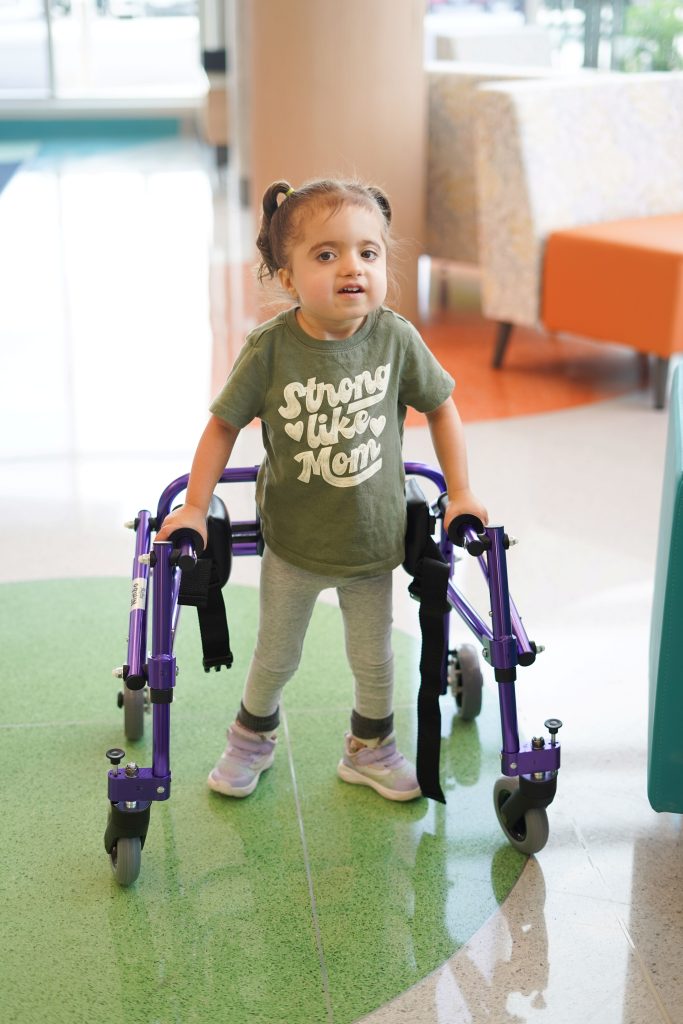
Scarlett’s diagnosis has been associated with developmental delays, failure-to-thrive, slow growth and dysmorphic facial features. For Scarlett, this affects her mobility, communication and development. She is not yet able to walk on her own and communicates using gestures, expressions and her own version of sign language. She relies on a gastrostomy tube (G-Tube) for nutrition and assistance with her daily routine, one that is carefully planned around feedings and medical appointments. 

Scarlett’s paediatrician referred her to Grandview Kids after receiving her diagnosis at six months old. They were bracing for a long wait, but instead, they were welcomed quickly into a circle of care. “From the moment we started at Grandview, we felt supported,” says Krystle. “We met with a multifaceted team for physiotherapy, occupational therapy and speech therapy. They saw Scarlett not for what she couldn’t do, but for everything she could become.” That mindset changed everything. 

Over the years, Grandview Kids has helped Scarlett and her family navigate everything from mobility and communication to feeding strategies and equipment needs.  

She receives regular hearing checks and sees specialists to monitor her growth and development. She also has custom orthotics, trialled different walkers and is working toward greater independence every day. Scarlett has progressed more quickly than anyone expected, moving from knee-foot orthoses (KFOs) to ankle-foot orthoses (AFOs) to supramalleolar orthoses (SMOs) in record time. “Her physiotherapist, Jessica T., hadn’t seen anyone make that kind of progress in such a short period,” says Chris. “It gave us real hope.” 

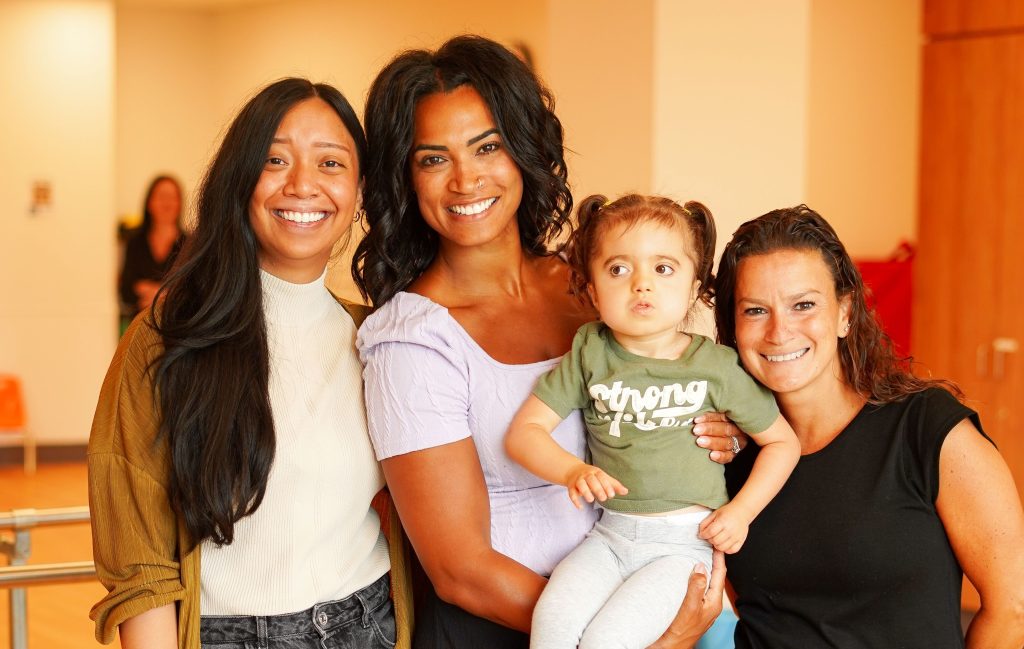
From left to right: Scarlett with her Grandview Kids therapists Melissa M., speech-language pathologist, Natasha S., occupational therapist and Jessica T., physiotherapist.

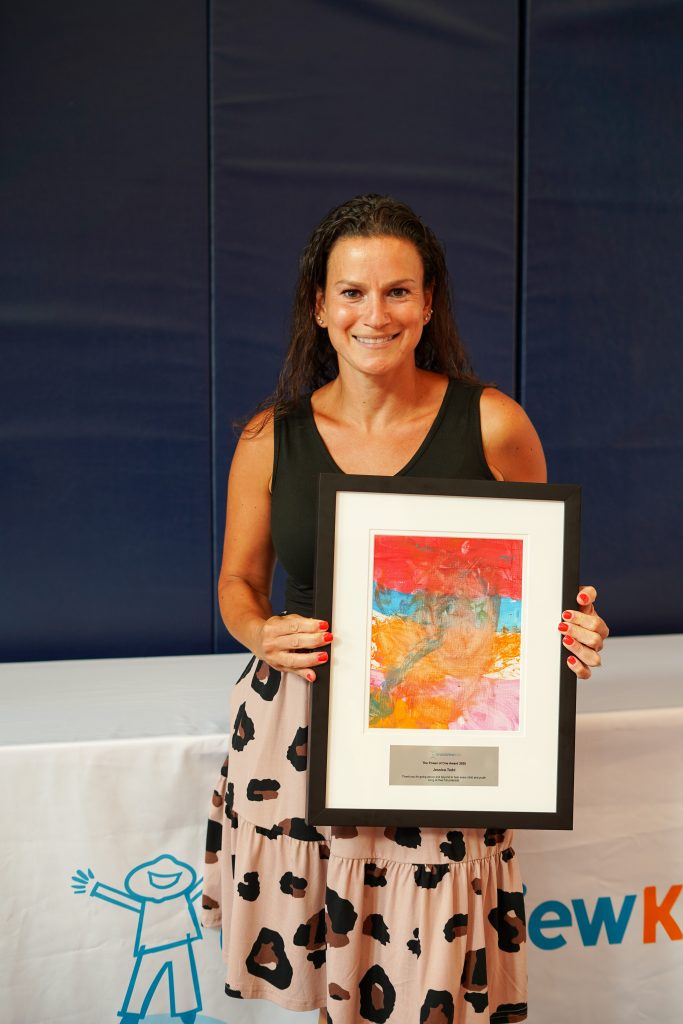
Each of Scarlett’s therapists have made lasting impressions, but Jessica, has become a trusted champion for Scarlett. “She goes above and beyond,” says Krystle. “She never gives up on Scarlett, always thinking of what’s next, how to push her further. She helped get equipment for Scarlett to use at daycare, so she can eat and move around like the other kids. That made such a difference for our whole family.” This encouragement compelled Krystle and Chris to nominate Jessica for Grandview Kids’ 2025 Power of One award, which she did in fact win. This award demonstrates the incredible impact she has made on the families she works with, families like Scarlett’s. 

Grandview Kids physiotherapist Jessica T. receiving the 2025 Power of One award at the Grandview Kids 2025 Annual General Meeting.

“Without Grandview’s support, we don’t know where we’d be,” says Chris. “They’ve given us the tools, therapies and, most importantly, the belief that Scarlett can continue to grow and thrive.” While the road has not been easy, Krystle and Chris are incredibly proud of how far Scarlett has come and are also filled with cautious optimism about what is to come. “She’s our first child, and like any parent, we had expectations. First steps, first words, the typical milestones,” Krystle shares. “But our path has looked different and that’s okay. She’s happy. She’s smart. She loves daycare and being around other kids. There’s excitement when thinking of the future now. She’s accomplished so much in 3 years. What will she do in the next 3 years? 10 years?” 

As this year’s Holiday Campaign Ambassador Family, Krystle and Chris want their story to inspire not just hope, but action.  

“Every donation to Grandview makes a difference,” says Krystle. “It helps families like ours access therapies that open doors for kids with disabilities. It gives them a chance to feel included, to be part of something, to just be kids.” The Family Engagement Team’s events like Accessible Trick-or-Treating and Pumpkin Palooza mean the world to families who are often left out. “When you’re surrounded by other families who understand, who are living a similar reality, you feel seen,” Krystle adds. The overwhelm becomes joy. The unknown and isolation turn into connection and community. With your help, this is the gift Grandview Kids can give to families like Scarlett’s. 

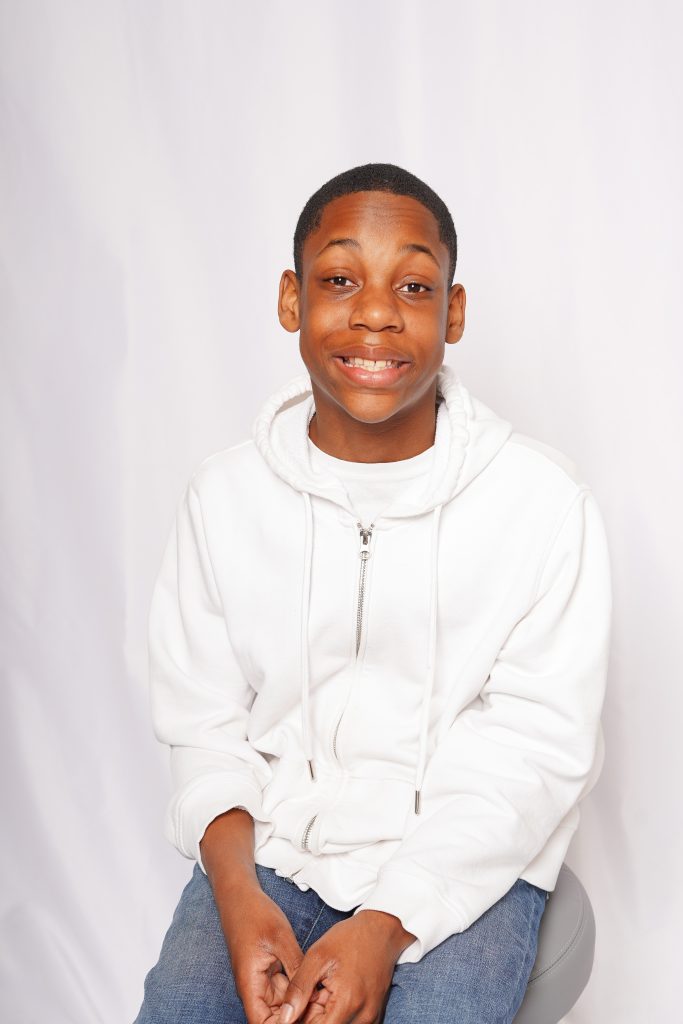
Beth and Andrew’s parenting journey is marked by love, learning and advocacy. Married for 26 years, they are the proud parents of three children, Aaron (12), Arielle (9) and Alayna (4). Each of their children has brought something beautifully unique to their lives, and each, in their own way, has taught them the importance of celebrating every stage of childhood. 

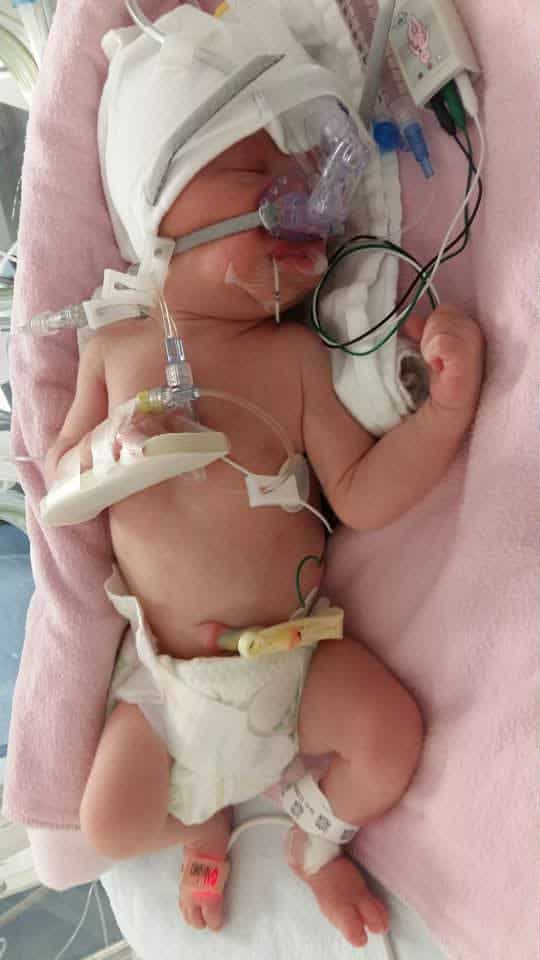
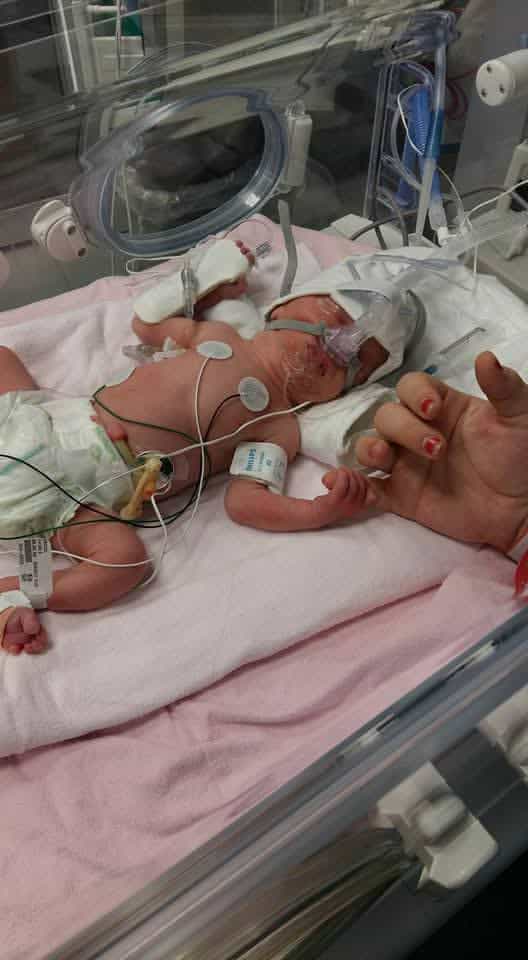
Aaron was born premature at just 26 weeks of gestation. His arrival was the beginning of a long and complex medical journey. His first few months of life were spent in the Neonatal Intensive Care Unit (NICU), followed by years of in-home nursing and diagnoses that would shape the trajectory of his and his family’s lives. Beth recalls, “The first three years were the hardest. We were dealing with heart, kidney, lung and gut issues. He was on Total Parental Nutrition (TPN) at home, receiving his nutrition through a G-tube. He also had a colostomy bag… so many things all at once.” 

At two years old, Aaron was diagnosed with autism spectrum disorder (ASD). While ASD runs in the family, Beth describes being somewhat “numb” to the diagnosis at the time. “There was already so much going on. I just thought, okay, this is something else we’ll overcome.” As Aaron entered nursery school, the signs became clearer. “I started noticing how different he was from his peers – how he wouldn’t hold my hand like the other kids did with their parents, and how unpredictable he was. That’s when it really hit me: This is the ASD now.” 

Beth is quick to acknowledge that Aaron’s progress has only been possible because of the incredible supports they received over the years. From early intervention programs to specialists at SickKids and Grandview Kids, Aaron was wrapped in a community of care. “Intensive Behavioural Intervention (IBI) therapy at home for 8 hours a day and occupational and physiotherapy, Applied Behaviour Analysis (ABA) therapy with Grandview Kids changed everything,” she says. “He started responding to his name, didn’t need a stroller anymore. Things that once seemed so far away started to happen.” 

Beth remembers a therapist once telling her, “Thirty or forty years ago, Aaron would have been in an institution.” That thought stuck with her. “It made me realize how grateful I am for the system we have today. It’s not perfect, but it’s getting better.” Thanks to inclusive education, Aaron is now in a regular classroom with integrated supports. His classmates know, understand and include him. He has also been able to attend summer camps and sports programs that allow him to just be a kid. 

Despite their challenges, Beth emphasizes how joyful family life can be. The kids love indoor playgrounds, and pizza nights are a family favourite. “If everyone’s happy, Mom’s happy,” Beth laughs. “And if we can get Aaron away [from] typical preteen activities like YouTube and gaming for a while, it’s a win.” Long road trips to visit family in the U.S. are treasured memories, and simple moments like everyone laughing in the car or playing together are what Beth holds dearest. 

On top of being mom, Beth is a fierce advocate. She served on Grandview Kids’ Family Advisory Committee (FAC) for nine years, where she helped shape services based on real caregiver experiences. “When Dr. Hunt approached me to join, I felt empowered. They wanted to hear from us. What was it like waiting in the lobby? What would make it better? They listened, and it meant so much.” Even though she’s stepped away due to a two-year rotation break, she plans to return. “Advocacy gives me pride. You go through something hard, and you want it to be easier for the next family. That’s why I do it.” 

Beth also champions greater awareness about autism. She highlights books, shares her story widely and even participated in a podcast episode on “Beyond Autism, Beyond the Label,” offering insight into Aaron’s journey. “The more people hear our stories, the more they can understand and make better decisions – for their kids, patients and communities.” 

For Beth, National Child Day is about recognizing every child’s right to a joyful, fulfilling childhood, no matter their diagnosis, background or challenges. She wants to ensure that barriers are broken and opportunities are unlimited. “Growing up, I had a beautiful childhood. I want the same for all my kids and for every other child. Aaron has that right, too. He gets to be in the classroom, play sports, go to camps and choose what he enjoys. That’s what freedom looks like for a child.” 

She adds, “When you’ve been through something hard, and you tell your story, maybe someone else doesn’t have to go through the same thing. Maybe they get seen sooner. Maybe they don’t have to wait two hours in an empty waiting room. Sometimes it’s the little things, like toys in the waiting area, that change a family’s experience.” She encourages others to realize that their story and voice matter. Every step forward is worth celebrating. 

Celebrating World Prematurity Day!

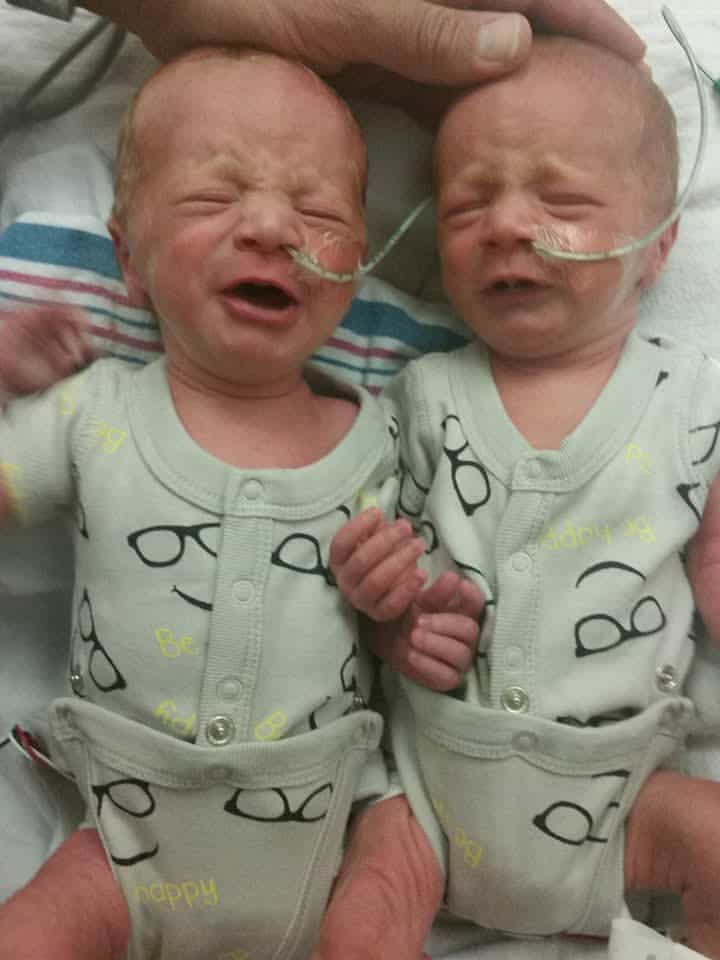
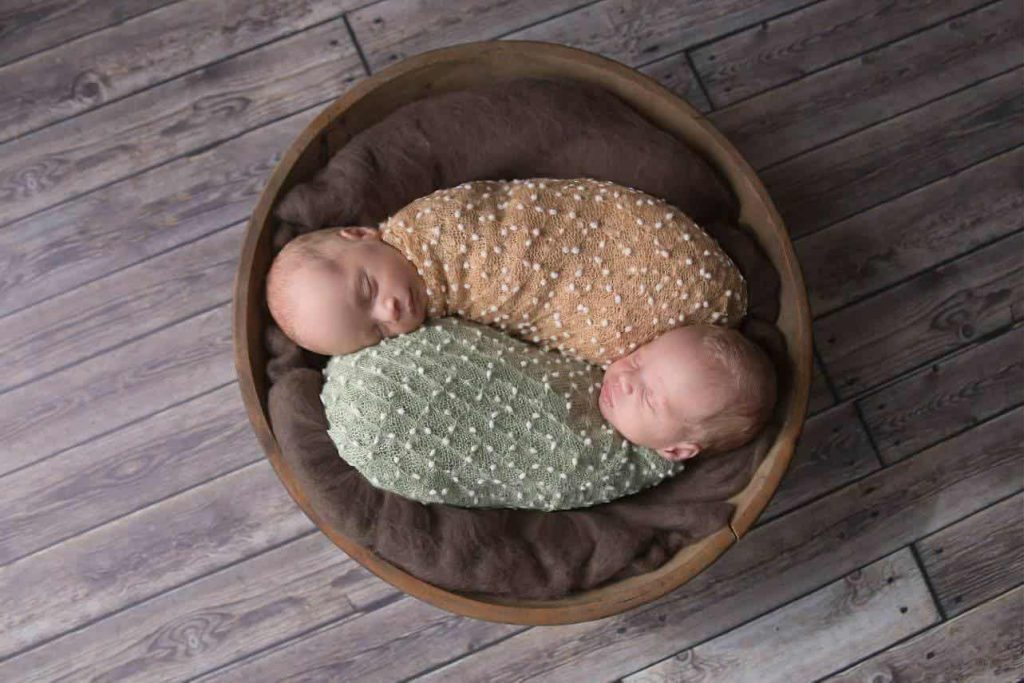
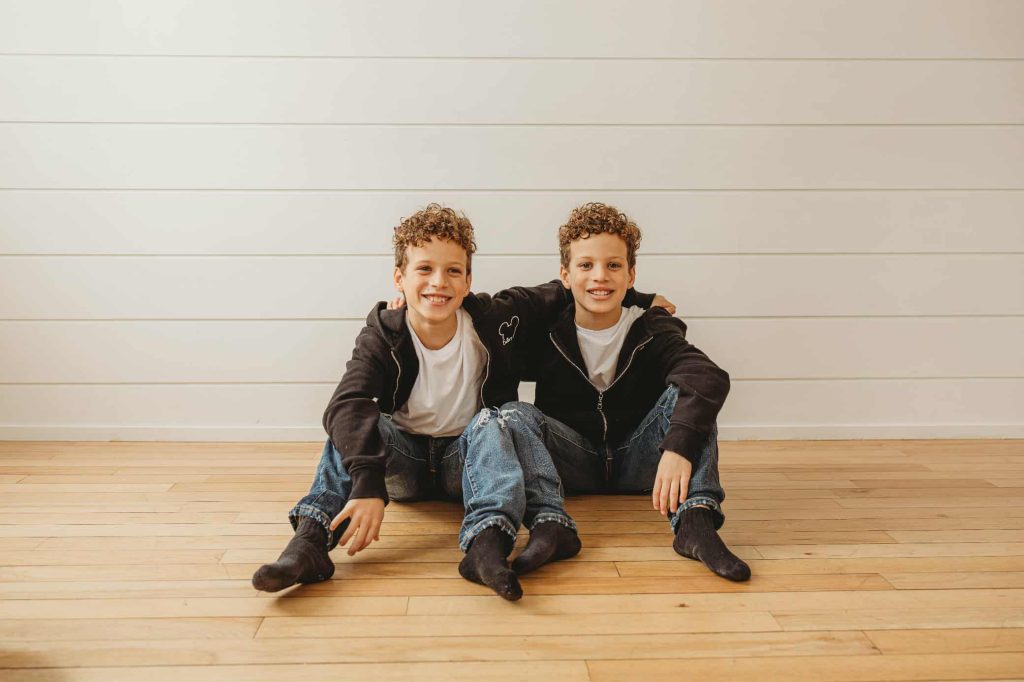
Nine-year-old twins Zander and Elliott are rarely still. Whether on the ice playing double-A hockey, outpacing their peers in cross country or diving into board games at home, their energy is constant, contagious and uniquely their own. Zander is methodical and quiet, often observing before acting, while Elliott is bold and fearless, eager to lead and fiercely protective of his brother and younger sister, Zoe. Their personalities may differ, but their story begins the same in the Neonatal Intensive Care Unit (NICU), where their parents, Sarah-Lynne and Erik, first learned what it means to advocate for your children before they even had a chance to speak. 

Sarah-Lynne, who has polycystic ovary syndrome (PCOS), had struggled with infertility before becoming pregnant with monochorionic-diamniotic twins. Early ultrasounds were reassuring, but that changed abruptly at 19 weeks when a routine anatomy scan revealed Twin-to-Twin Transfusion Syndrome (TTTS), a rare but serious condition affecting twins who share a placenta. The diagnosis required emergency fetal surgery, and the odds were grim, being given only a 70% chance of one twin surviving and 50% for both. 

Following laser ablation surgery and weeks of strict bedrest, Sarah-Lynne’s water broke prematurely at 31 weeks. One week later, Zander and Elliott were born 38 minutes apart, each small and fragile, but fighting. 

They spent 36 days in the NICU across three different hospitals. After initial stabilization at Mount Sinai Hospital, they were transferred to Markham Stouffville Hospital and eventually, Elliott required additional care at SickKids due to E. coli sepsis. For Sarah-Lynne, who never left the hospital, and Erik, who juggled being present for his wife and newborn sons while holding life together at work and home, the NICU was a place of quiet resilience and ongoing crisis. Nothing about their entry into parenthood looked like they had imagined but the NICU became their new normal. 

In the early years, it became clear the boys were developing on a different trajectory than their peers. They were closely monitored by a neonatal follow-up clinic, and though their milestones often landed somewhere between their chronological and corrected ages, it was the day-to-day reality of parenting that prompted Sarah-Lynne to seek further support. Zander and Elliott both struggled with sensory regulation, impulsivity and emotional dysregulation. They masked their challenges at school, only to unravel emotionally at home. “It was like they held it in all day, then exploded,” Sarah-Lynne shares. By age four, they were both diagnosed with Attention-Deficit/Hyperactivity Disorder (ADHD). 

The diagnoses brought clarity, and with it, the start of another journey. Home life had to be restructured to support their needs. Screen time was tightly managed, routines were non-negotiable and snack cupboards required locks. The boys were deeply affected by food textures, sounds and clothing discomfort. Managing these sensory needs required constant adjustments, patience and creativity. 

When the family was referred to Grandview Kids, the support they received was much needed. Grandview Kid’s therapists provided tailored Occupational Therapy, sensory integration tools and Therapeutic Recreation that included Zoe helping the boys play safely and positively with their younger sister, who has a rare disease and is medically fragile. Her medical journey has bonded the siblings and anchored their understanding of difference, resilience and love. 

Through Grandview Kids, Zander and Elliott gained access to adaptive strategies in school, including the use of sensory rooms for emotional regulation, Chromebooks for written output and non-identified Individual Education Plans (IEPs) that provide accommodations without requiring formal special education labels. These small but vital supports help the boys gain confidence and learn in ways that honour their unique needs. 

Despite their early challenges, Zander and Elliott have grown into curious, athletic and empathetic boys. Their ADHD doesn’t define them but understanding it has given their family the language and tools to support their development. “Even when it’s hard, we show up,” Sarah-Lynne says. “They’re not misbehaving to be difficult; it’s just how their brains are wired. Knowing that has made all the difference.” 

For Sarah-Lynne and Erik, the journey from NICU to now has not been linear. It has required relentless advocacy, acceptance of help and constant re-evaluation of what success looks like. However, the joy in their children’s laughter and the pride in watching them score a goal or help a sibling are the victories that matter most. 

To families navigating prematurity, they offer this advice: 

  • Be proactive.  Do not wait for permission to seek support. 
  • Trust your gut. Your instincts are valid. 
  • Accept help. It is a strength, not a weakness. 
  • Protect your mental health. Trauma leaves marks. 
  • Advocate. Your child needs your voice, especially when they do not have one yet. 

Today, on World Prematurity Day, we honour the strength of children like Zander and Elliott, and the families who walk alongside them and turn uncertainty into action and challenge into growth. From the NICU to the hockey rink, theirs is a story of hope, resilience and the power of showing up every single day. 

  • ⟨
  • Page 1
  • Page 2
  • Page 3
  • Page 4
  • Page 5
  • Page 6
  • Interim pages omitted …
  • Page 17
  • ⟩

Primary Sidebar

Child Stories

ICAudGItaW1hZ2V7cG9zaXRpb246cmVsYXRpdmU7dHJhbnNpdGlvbjp0cmFuc2Zvcm0gMC4yNXMgZWFzZX0ud3AtYmxvY2staW1hZ2UgLnRiLWltYWdlLmFsaWduY2VudGVye21hcmdpbi1sZWZ0OmF1dG87bWFyZ2luLXJpZ2h0OmF1dG99LnRiLWltYWdlIGltZ3ttYXgtd2lkdGg6MTAwJTtoZWlnaHQ6YXV0bzt3aWR0aDphdXRvO3RyYW5zaXRpb246dHJhbnNmb3JtIDAuMjVzIGVhc2V9LnRiLWltYWdlIC50Yi1pbWFnZS1jYXB0aW9uLWZpdC10by1pbWFnZXtkaXNwbGF5OnRhYmxlfS50Yi1pbWFnZSAudGItaW1hZ2UtY2FwdGlvbi1maXQtdG8taW1hZ2UgLnRiLWltYWdlLWNhcHRpb257ZGlzcGxheTp0YWJsZS1jYXB0aW9uO2NhcHRpb24tc2lkZTpib3R0b219IC53cC1ibG9jay1pbWFnZS50Yi1pbWFnZVtkYXRhLXRvb2xzZXQtYmxvY2tzLWltYWdlPSJhMWJlMmUyODAwMWFkMGRlMjBhM2RlZWVlYmE5MDJhMSJdIHsgbWF4LXdpZHRoOiAxMDAlOyB9IEBtZWRpYSBvbmx5IHNjcmVlbiBhbmQgKG1heC13aWR0aDogNzgxcHgpIHsgICAudGItaW1hZ2V7cG9zaXRpb246cmVsYXRpdmU7dHJhbnNpdGlvbjp0cmFuc2Zvcm0gMC4yNXMgZWFzZX0ud3AtYmxvY2staW1hZ2UgLnRiLWltYWdlLmFsaWduY2VudGVye21hcmdpbi1sZWZ0OmF1dG87bWFyZ2luLXJpZ2h0OmF1dG99LnRiLWltYWdlIGltZ3ttYXgtd2lkdGg6MTAwJTtoZWlnaHQ6YXV0bzt3aWR0aDphdXRvO3RyYW5zaXRpb246dHJhbnNmb3JtIDAuMjVzIGVhc2V9LnRiLWltYWdlIC50Yi1pbWFnZS1jYXB0aW9uLWZpdC10by1pbWFnZXtkaXNwbGF5OnRhYmxlfS50Yi1pbWFnZSAudGItaW1hZ2UtY2FwdGlvbi1maXQtdG8taW1hZ2UgLnRiLWltYWdlLWNhcHRpb257ZGlzcGxheTp0YWJsZS1jYXB0aW9uO2NhcHRpb24tc2lkZTpib3R0b219IH0gQG1lZGlhIG9ubHkgc2NyZWVuIGFuZCAobWF4LXdpZHRoOiA1OTlweCkgeyAgIC50Yi1pbWFnZXtwb3NpdGlvbjpyZWxhdGl2ZTt0cmFuc2l0aW9uOnRyYW5zZm9ybSAwLjI1cyBlYXNlfS53cC1ibG9jay1pbWFnZSAudGItaW1hZ2UuYWxpZ25jZW50ZXJ7bWFyZ2luLWxlZnQ6YXV0bzttYXJnaW4tcmlnaHQ6YXV0b30udGItaW1hZ2UgaW1ne21heC13aWR0aDoxMDAlO2hlaWdodDphdXRvO3dpZHRoOmF1dG87dHJhbnNpdGlvbjp0cmFuc2Zvcm0gMC4yNXMgZWFzZX0udGItaW1hZ2UgLnRiLWltYWdlLWNhcHRpb24tZml0LXRvLWltYWdle2Rpc3BsYXk6dGFibGV9LnRiLWltYWdlIC50Yi1pbWFnZS1jYXB0aW9uLWZpdC10by1pbWFnZSAudGItaW1hZ2UtY2FwdGlvbntkaXNwbGF5OnRhYmxlLWNhcHRpb247Y2FwdGlvbi1zaWRlOmJvdHRvbX0gfSA=
LnRiLWhlYWRpbmcuaGFzLWJhY2tncm91bmR7cGFkZGluZzowfQ==
LnRiLWZpZWxke21hcmdpbi1ib3R0b206MC43NmVtfS50Yi1maWVsZC0tbGVmdHt0ZXh0LWFsaWduOmxlZnR9LnRiLWZpZWxkLS1jZW50ZXJ7dGV4dC1hbGlnbjpjZW50ZXJ9LnRiLWZpZWxkLS1yaWdodHt0ZXh0LWFsaWduOnJpZ2h0fS50Yi1maWVsZF9fc2t5cGVfcHJldmlld3twYWRkaW5nOjEwcHggMjBweDtib3JkZXItcmFkaXVzOjNweDtjb2xvcjojZmZmO2JhY2tncm91bmQ6IzAwYWZlZTtkaXNwbGF5OmlubGluZS1ibG9ja311bC5nbGlkZV9fc2xpZGVze21hcmdpbjowfQ==

Congenital Heart Defect Awareness Week – February 7 to 14 

Congenital Heart Defect Awareness Week is held every year from February 7 to 14. According to the Centre for Disease Control and Prevention, CHDs are the leading birth defects that...

Latest Updates

  • October 2026: Dates of Significance September 30, 2026
  • “I am Clara”  September 30, 2026
  • Mitchell’s journey with Hydrocephalus September 30, 2026
  • Celebrating World Cerebral Palsy Day 2026 September 29, 2026
  • Building belonging through family leadership August 31, 2026

You Have Questions

We’d like to help you find the answers…

Contact Us Today

© Grandview Kids Built by PeaceWorks

  • About Us
  • Contact Us
  • Privacy
Accessibility Adjustments

Powered by OneTap

How long do you want to hide the toolbar?
Hide Toolbar Duration
Select your accessibility profile
Vision Impaired Mode
Enhances website's visuals
Seizure Safe Profile
Clear flashes & reduces color
ADHD Friendly Mode
Focused browsing, distraction-free
Blindness Mode
Reduces distractions, improves focus
Epilepsy Safe Mode
Dims colors and stops blinking
Content Modules
Font Size

Default

Line Height

Default

Color Modules
Orientation Modules