• Skip to primary navigation
  • Skip to main content
  • Skip to primary sidebar
Grandview Kids Logo

Grandview Kids

Every Child And Youth Living Life At Their Full Potential

  • About Us
    • Vision, Mission and Values
    • The New Grandview Kids
      • Operational Readiness
      • Visiting Grandview Kids’ Ajax Headquarters
    • Our History
    • Leadership
    • Board of Directors and Committees
    • Annual Report
    • Strategic Plan
    • Policies
  • Calendar
  • Annual Report
  • Contact
    • Contactez – nous
    • Ajax – Headquarters
    • Bowmanville Health Centre
    • Grandview School
    • Oshawa – Dwyer
    • Port Perry
    • Whitby – Abilities Centre
  • Careers
  • Register
  • Donate
  • Instagram
  • LinkedIn
  • Facebook
  • Services and Programs
    • Audiology
    • Autism Program
      • Autism Spectrum Disorder (ASD) Diagnostic Hub
      • Caregiver-Mediated Early Years Programs
      • OAP Core Clinical Services
      • Entry to School Program
      • Foundational Family Services
    • Blind-Low Vision Program
    • Extensive Needs Service
    • Family Engagement Program
      • Adolescent Transition Program
      • Family Leader Program
        • Ambassador Program
        • Family Advisory Council
        • Paid Advocates
        • Youth Advisory Council
    • Infant Hearing Program
    • Medical Services
      • Autism Spectrum Disorder (ASD) Diagnostic Hub
      • Complex Care Program
      • Grandview Anesthesia Procedure (GAP) Clinic
      • Hypertonia Clinic
      • Nutrition Services
      • Orthopaedic Clinic
    • Occupational Therapy
    • Physiotherapy
    • Preschool Outreach Program
    • School Programs & Resources
      • Resources for Educators
      • School-Based Rehabilitation
    • Service Navigation
      • SmartStart Hub: Parents
      • SmartStart Hub: Partners
    • Social Work
    • Speech-Language Pathology
      • Augmentative and Alternative Communication
    • Therapeutic Recreation
  • Purchased Services
    • Inclusive Recreation
    • Beyond the Walls
    • OAP Core Clinical Services
      • Behaviour Services
  • Research
    • Get involved in research
    • IDEA Study
      • Building knowledge and understanding of the intersection of race and disability in accessing pediatric rehabilitation services.
    • Joint Research Ethics Board
    • Research Associate: Dr. Fiona Moola
    • Research Associate: Dr. Meghann Lloyd
  • Resources
    • Ability Acceptance Program
    • Arriving at Grandview Kids
    • Community Supports & Resources
    • Family Support Fund
    • Free to Read Program
    • Frequently Asked Questions
    • Gather by Grandview Kids
    • News and Updates
    • Privacy
    • Resources for Parents and Caregivers
    • Visiting Grandview Kids
  • Support Us
    • Ways to support
    • Case for Support
    • Host a fundraiser
    • Participate in an event
      • Golf Fore Grandview Kids
      • Sponsor the Drum
    • Leave a legacy
      • Gifts of securities
      • Gifts of bequests
      • Gifts of life insurance
    • Your impact
    • Building a Legacy: Honouring Jerry Coughlan
  • I Want To…
    • Connect with Grandview Kids
    • Donate
    • Refer a child or youth
    • Register via My Community Hub
    • Schedule an Appointment
    • Volunteer at Grandview Kids
    • Work at Grandview Kids
  • Grandview School
    • About Our Program
    • About Our Board
    • Grandview School Social Story
    • Plans and Reports
    • Resources for Families
    • Resources for Schools – Switch It Up!
    • Careers and Volunteering
    • Contact Grandview School
  • Search

Posted March 28, 2025

Celebrating Autism Awareness & Acceptance Month!

Autism Program

During the month of April, we observe Autism Awareness and Acceptance Month to recognize and support individuals living with Autism Spectrum Disorder (ASD). ASD is a neurodevelopmental condition that affects brain development. Children and youth with autism may face challenges with social interactions, have difficulty making eye contact, exhibit repetitive behaviours and experience speech difficulties. Some may be non-verbal, while others may speak occasionally or lose the ability to speak after initially using words.

In recognition of Autism Awareness and Acceptance Month, family members of clients shared their experiences of being caregivers to children with autism.

Kaleb’s Story, written by Kaleb’s mom, Erika

My child’s autism diagnosis hasn’t just changed me, as a single mother, but everyone Kaleb and I are closest to. It has made us much more understanding and patient. Personally, I feel like I am so much stronger as a mother. Kaleb doesn’t just have an autism diagnosis but multiple diagnoses including serious mental health issues, and this has made me become such a strong advocate for him and any child with similar disabilities.
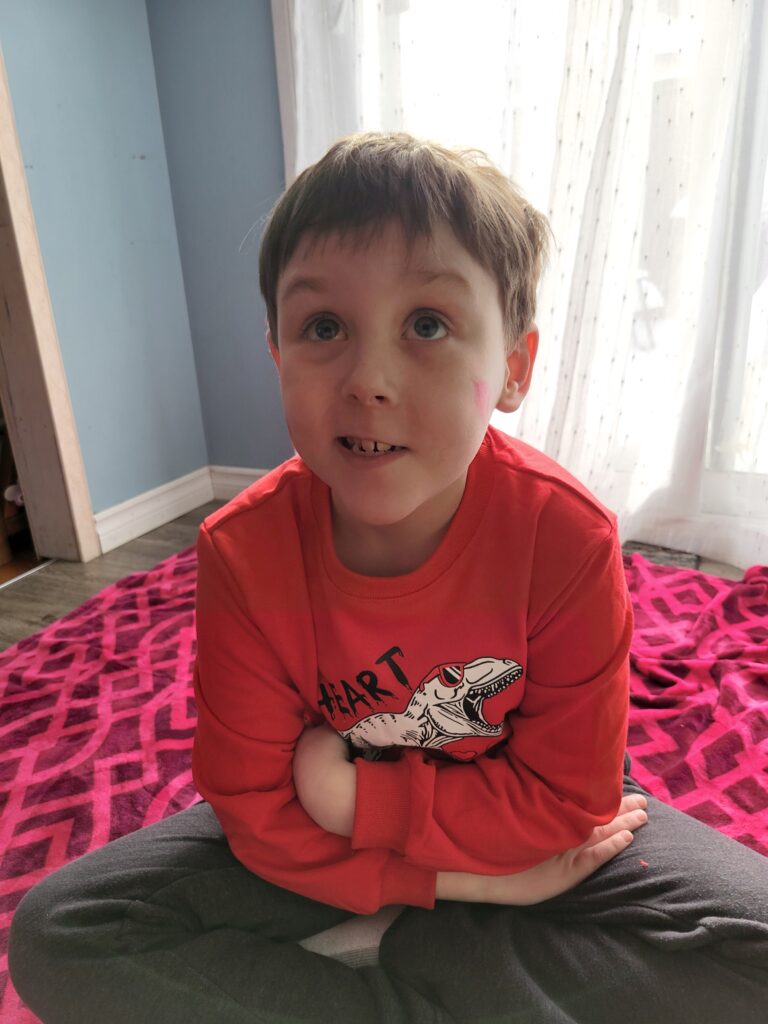
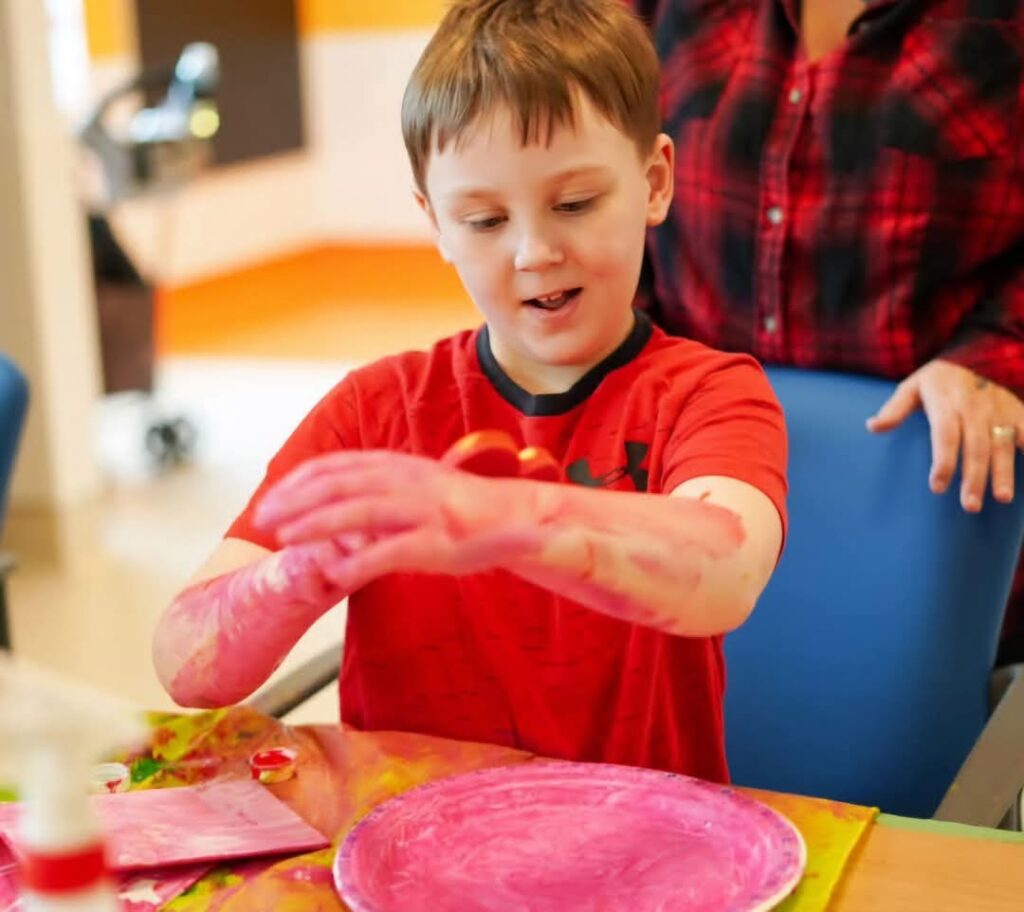
I celebrate autism every day, week, month and year! Autism Awareness and Acceptance Month means the world to me and my family. I am trying very hard every day to make sure Kaleb and every child with autism receive the proper help in school and the community. Sadly, autism is still fairly unknown, so the proper support systems are hard to come by locally. I try as much as possible to join any online groups and fundraisers whenever possible for autism awareness and acceptance.

Logan Story, written by Logan’s mom, Kayla

Logan’s Autism diagnosis flipped our entire world upside down, and in many ways, despite the struggles, for the better. I was on my way to becoming a 9-1-1 telecommunicator and was about to graduate college when it became increasingly obvious he was “peaking.” Our family doctor had pushed for assessments through Grandview Kids from an extraordinarily young age, and at the time, I was ignorant. With his delayed/missed milestones and speech coupled with increasingly intense tics at the age of two, we finally agreed to be assessed and got his diagnosis.
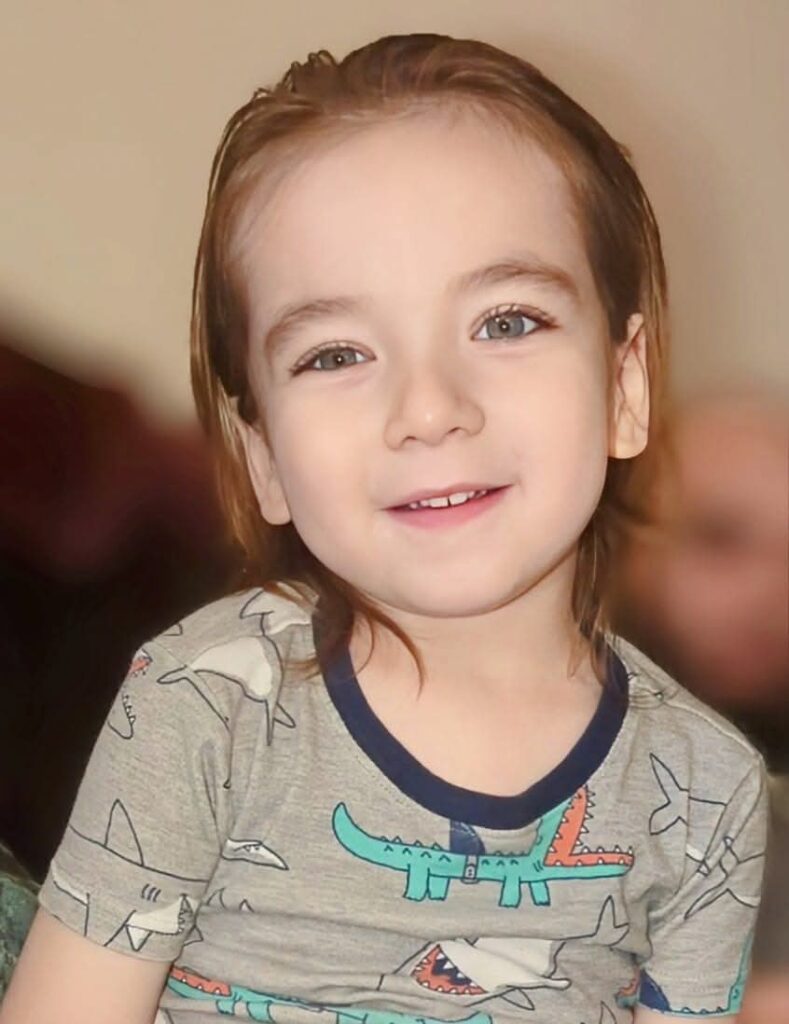
As a family, we have altered our lifestyle, including future and occupational goals, to focus on Logan’s functioning, education, seizures and other medical issues that have come as a result of comorbidity to his Autism. Regardless of the sacrifices and cons, this diagnosis has brought us so much knowledge and resources and provided a community for us to thrive and grow. Logan and I have met the kindest souls through Grandview Kids, including other children on the spectrum and parents navigating this disorder that we can relate to. 

We will celebrate Autism Month by sharing posts and stories to spread awareness, wearing our coolest Autism merch and most importantly celebrating Logan’s 6th birthday on April 5th – which always feels like such a fitting month since learning of his Autism Spectrum Disorder (ASD) diagnosis! Double celebration! This month to us is not only about awareness, but supporting the de-stigmatization of Autism as well. I hope that in spreading information and combatting misinformation we can further educate those that do not understand the spectrum and help enlighten parents of neurotypical children on how to teach their youths to be a supportive friend and ally to those with ASD and similar conditions. This month is not only celebratory but promotes education and, in turn, acceptance just by being noted and seen. This month creates a sense of togetherness and opacity in a diagnosis that can often feel lonely and invisible. “To be loved is to be seen” ❤️!!!
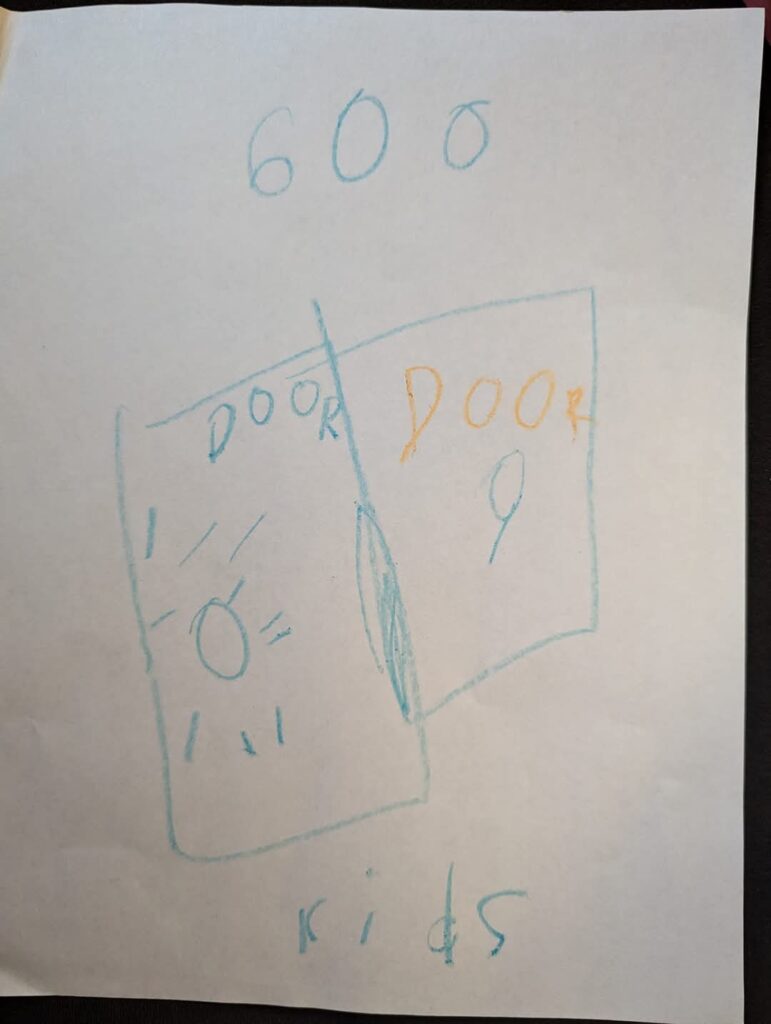
A drawing by Logan of the former
Grandview Kids headquarters.

As an “Autism Mom,” I try my best to spread awareness of the immense talents, abilities and positive traits of my own child and many other individuals on the spectrum. I believe there needs to be more focus on the pros and gifts that come with Autism, without dismissing that there are negative aspects too. I utilize word of mouth and social media to distribute helpful information. I also proudly wear my pins, jewelry and clothing not only to show my pride and support for my son and his community, but knowing someone may ask me about what I’m wearing and open the floor to meaningful discussion.

Molly’s Journey, written by Molly’s mom, Erin

In the first couple of years after our daughter’s diagnosis, we felt overwhelmed and lost, unsure of what the future would hold. But as time went on, we realized that the diagnosis wasn’t the big, bad monster —it was simply a part of who she is. That shift in perspective allowed us to focus on the small wins and everyday joys, appreciating life in a way we had not before. It also pushed me out of my comfort zone. As someone who is naturally shy, I had to learn to speak up, advocate and take things head-on. This journey has changed me in ways I never expected, making me stronger, more present and more grateful for each moment.

For Molly, celebrating Autism and Grandview Kids goes hand in hand. She loves hearing the story of her diagnosis and how she started at Grandview Kids, often looking through old pictures and her communication book to see how far she’s come. It’s a special way for us to reflect on her hard work and progress. We also try to change our outside lights to blue for April—though some years, life gets busy! Last year, Molly took the celebration into her own hands by asking her teacher to share her story with her class on World Autism Day. She even created her own slide deck, explaining her challenges and how Grandview Kids helped her learn to speak. Seeing her take pride in her journey is the best way we celebrate. Watching her stand up and speak for herself was such a proud, full-circle moment.
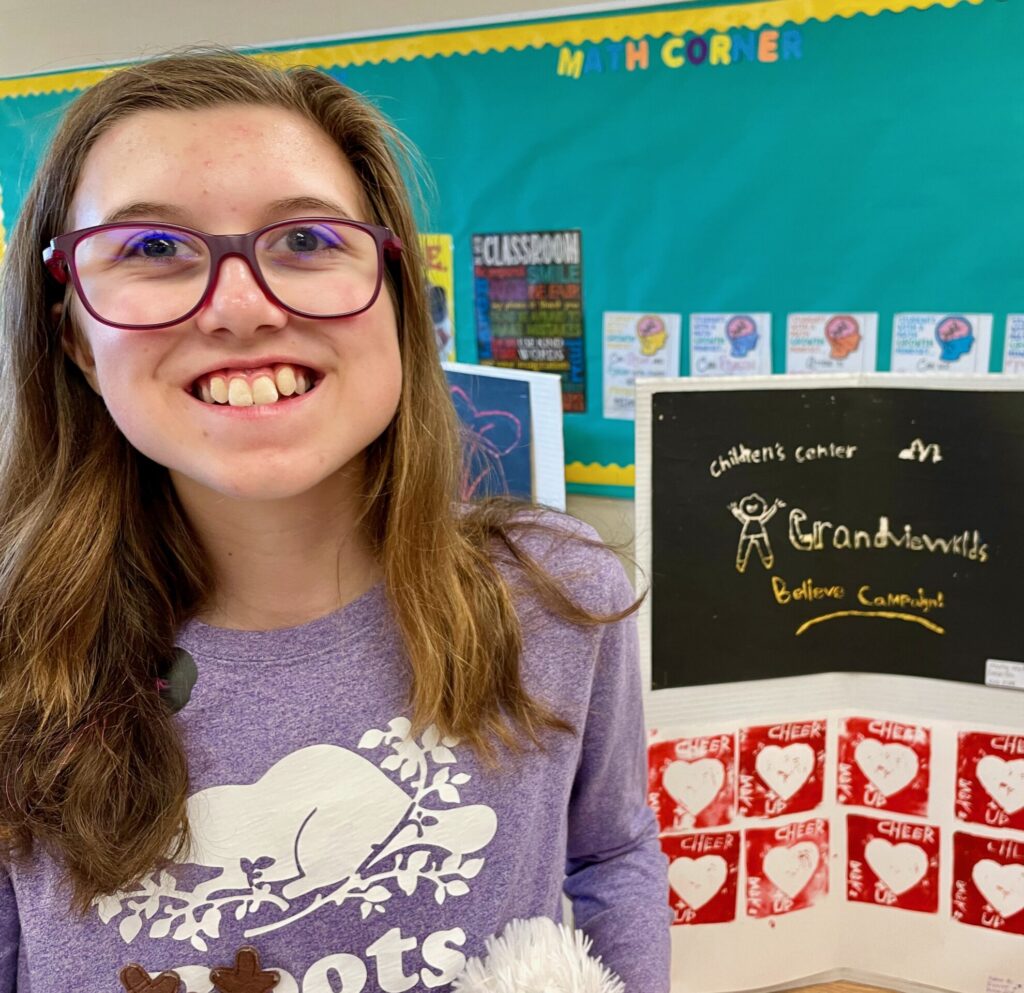
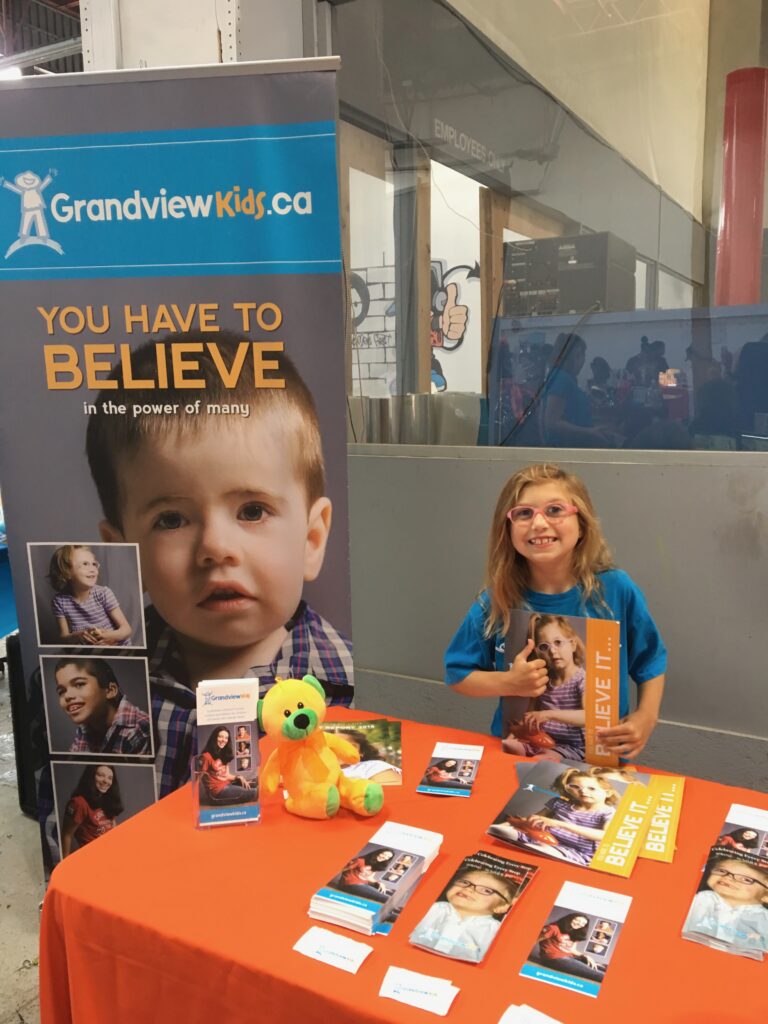
This month is a great reminder to keep awareness and acceptance front and centre. It’s important to keep the conversation going and support efforts that make a real difference. The more we talk about it and help others understand, the more accepting and inclusive the world becomes—not just this month, but all year round.

Like Molly, we focus on supporting Grandview Kids and sharing our story to help spread awareness of how they’ve made a difference in our family’s life. Over the years, we’ve participated in various events, with the most significant being our role as an Ambassador Family for the recently completed Believe Campaign. But awareness and acceptance also happen in the small, everyday moments—by being open and honest with family, friends, colleagues, neighbours and even acquaintances. We love to talk about Molly because she is such a unique, kind and funny person who brings us so much joy. We believe people learn best when they have a personal connection and feel comfortable asking questions, so we embrace those conversations whenever they arise.

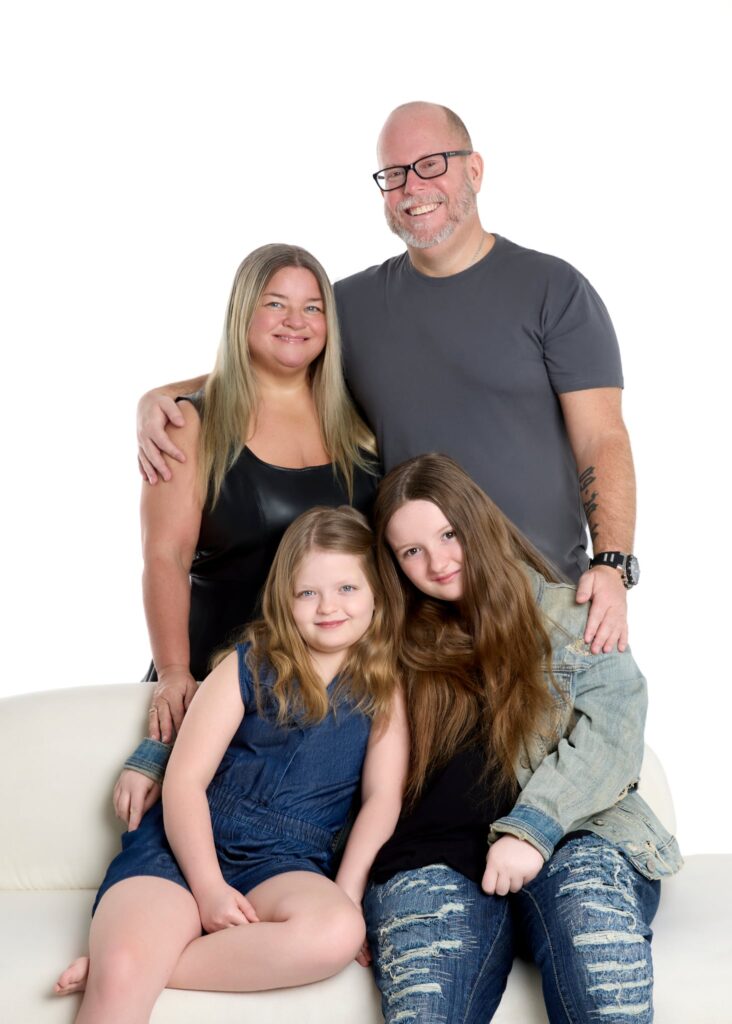
Teagan & Logan’s Story, written by Teagan and Logan’s parents, Gregory & Kara

My children’s autism diagnosis has made us realize that as a family, no matter how many challenges life throws at us that we can get through everything if we work together. We are celebrating Autism Awareness and Acceptance Month by making sure that we are actively involved in the autism community through participation in social groups and attending events that cater to children with autism. This month is a chance to showcase all the amazing, unique and inspiring things that our children can do and have accomplished. We encourage our children to be part of groups, events and show people that despite their diagnosis, our children can enjoy and be active members of the community. We also share resources with other families to let them know what is available for their kids and encourage them to join.
Faith’s Journey, written by Faith’s mom, Sophia

Joining the autism club was not something I signed up for, but wow—what a journey it’s been! My daughter’s diagnosis has completely reshaped who I am, and honestly, I like this newer, better version of me.  I have become more patient, kind and much less judgmental, and I am proud of the grace and joy I bring to tough situations now. The challenges? They are very real. But they have taught me to embrace life’s messiness and celebrate every little victory. It’s been a wild ride, and I would not trade the lessons or the love for anything. There is nothing I cannot get through now.

This month, I’m keeping the spirit of awareness and acceptance alive in so many ways. First by celebrating how far we have come as a family with a child on the spectrum. I’m reminding my team at work that it’s Autism Awareness and Acceptance Month and encouraging them to support activities or even join me in donating to amazing organizations like Grandview Kids or Autism Ontario. I’ll be guest-hosting an Autism Awareness Podcast with another family who has a son on the spectrum, which I’m really excited about. I’m also participating in a fundraising walk at Whitby Heydenshore Park. Beyond that, I’m making it a priority to keep the conversations going—sharing resources, stories and simple ways everyone can help create a more inclusive world. Every bit of effort makes a difference!
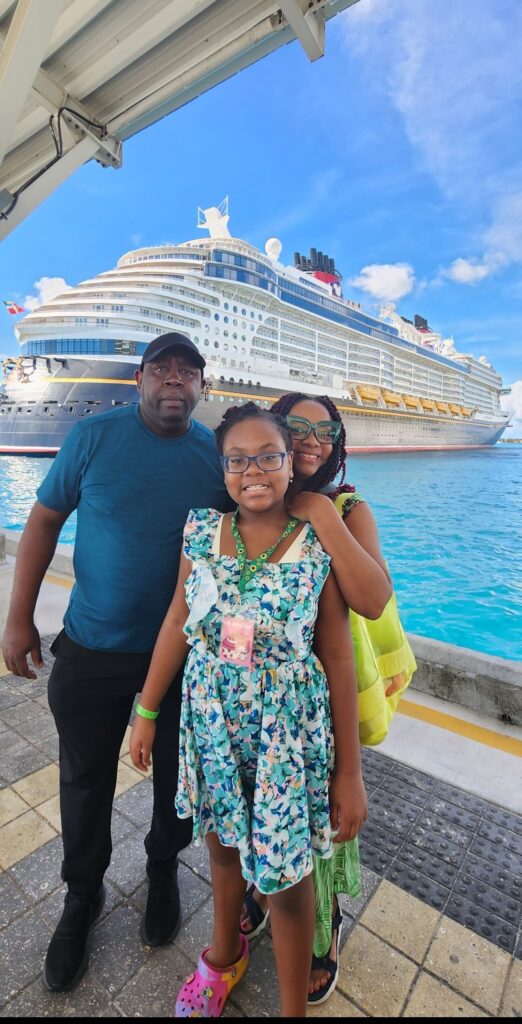
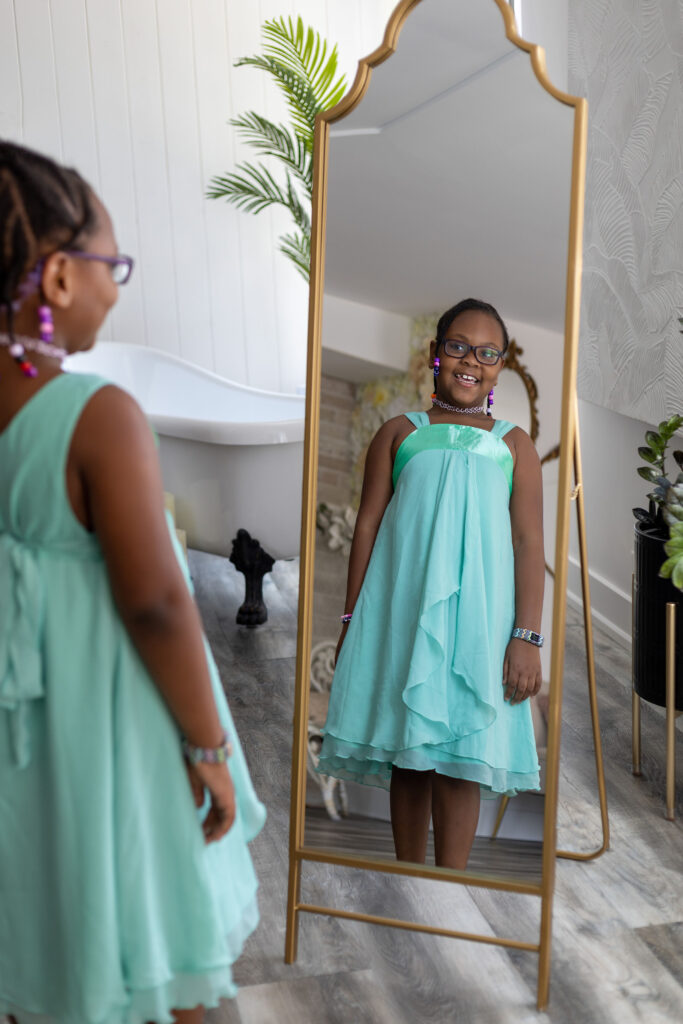
Autism Month is all about celebrating the amazing ways individuals with an autism diagnosis, like my daughter Faith, see and experience the world. It’s a chance to listen, learn and make sure everyone, including her, feels valued, included and safe to be her unique self, no matter how they think or communicate. In my community—like at my daughter’s school, with friends and at church—I use my experience as a mom of a thriving autistic daughter to share helpful tools and resources. This includes sharing programs like the Access 2 Card for participating venues like CNE and Wonderland, Autism Ontario sensory-friendly events, the Sunflower Program for airports and information on OAP funding. I love helping families discover opportunities that make a real difference for our kids and their caregivers.

Éamon’s Story, written by Éamon’s mom, Susan

Our son’s Autism has made us realize that you can never truly understand all that someone else is going through. He has helped us see the world in different and positive ways. The community that our son has built around himself just by virtue of his diagnosis has astounded us in their capacity for caring, understanding and support. Despite the stereotypes associated with being “different,” our son shows us every day not to underestimate his abilities.

Applied Behaviour Analysis (ABA) is a science-based approach to learning that focuses on creating supportive environments to help build important skills like communication, self-regulation and independence. ABA can also support children and families by reducing barriers to learning and addressing interfering or dangerous behaviours.

How do we practice ABA at Grandview Kids?

At Grandview Kids, ABA is delivered through engaging, individualized activities tailored to each child or youth. The Behaviour Services team, including Registered Behaviour Analysts, Senior Autism Therapists and Autism Therapy Assistants, works closely with families to create personalized plans focused on communication, emotional regulation, daily living skills and behaviours that interfere with learning. A strengths-based, collaborative approach is used, working alongside Speech-Language Pathologists, Occupational Therapists and other specialists.

From left to right in the back row: Sabrina M., Autism Therapy Assistant, Arjana S., Behaviour Analyst, Mikaela M., Autism Therapy Assistant, Lauren B., Autism Therapy Assistant, Kayla H., Autism Therapy Assistant, Brizida V., Behaviour Analyst, Alicia C., Clinical Manager, Social Enterprise, Leigh S., Clinical Manager, Specialized Supports- Extensive Needs, Kaitlynn B., Autism Therapy Assistant and Julie J., Behaviour Analyst.
From left to right in the front row: Sarah A., Behaviour Analyst, Charlene M., Senior Autism Therapist, Deanne R., Autism Therapy Assistant, Marlaina R., Senior Autism Therapist, Trishna S., Autism Therapy Assistant, Jennifer-Lynn B., Autism Therapy Assistant, Clare T., Autism Therapy Assistant and Dana D., Autism Therapy Assistant.

How do we use our values in action?

  • Assent-Based Practice: Children have a voice in their learning. We listen to them, ensure they feel safe and empowered and adapt our teaching accordingly.
  • Trauma-Informed Care: Building rapport is a key part of our process. We focus on creating supportive environments that foster trust and emotional well-being.
  • Skill Building: We focus on teaching meaningful skills that integrate into daily life, creating new opportunities for reinforcement and connection for children and their families.
From left to right in the back row: Kaveena K., Autism Therapy Assistant and Jamie G., Autism Therapy Assistant.
From left to right in the front row: Katie B., Autism Therapy Assistant and
Ashley A., Autism Therapy Assistant.

What services do we provide?

  • Group-Based Learning: Helping children develop play, group-readiness and self-regulation skills.
  • Foundational Family Services Workshops: Offering resources and strategies to empower caregivers.
  • Extensive Needs Service: In collaboration with Holland Bloorview Kids Rehabilitation Hospital, this service stream is designed to support children and youth with complex developmental, physical and communication needs. It offers comprehensive, interdisciplinary care, including Behaviour Services, medical, therapeutic and other support services.
  • Ontario Autism Program (OAP) Core Clinical Services: Providing ABA therapy in collaboration with Speech-Language Pathology and Occupational Therapy.

Grandview Kids offers two service streams to support your child’s growth: the Focused ABA Model and the Mediated ABA Model.

  1. The Focused ABA Model targets foundational skills such as communication, imitation, play skills, behaviour management, self-care and motor skills through regular practice using ABA principles.
  2. The Mediated ABA Model focuses on a specific set of skills, guided by input from parents and assessment results, helping families practice and apply what their child learns.

If you have questions about ABA at Grandview Kids, you can check out our dedicated Purchased Services page, contact Service Navigation or speak with your other clinicians.

Grandview Kids is the lead agency for the Ontario Autism Program – Durham (OAP-D), a local partnership providing programs and services to children and youth with Autism.

In 2021, the OAP-D was selected by the Province of Ontario to offer Caregiver-Mediated Early Years Program as part of the Ontario Autism Program. Grandview Kids offers one of three programs in the Durham Region, known as the Social ABCs.

After several months of intensive fidelity training, four members of Team Grandview have successfully become Social ABCs coaches through Holland Bloorview Kids Rehabilitation Hospital.

Karen J. is a Social ABCs Parent Coach and Site Lead who has been part of the Grandview team since 2003. Her experience includes supporting Preschool Speech and Language Services, Autism Services, and the ASD Diagnostic Hub. Since joining the Social ABCs team in 2021, Karen has focused on empowering parents to build positive, playful interactions with their children. She loves helping families explore how everyday moments, often using simple household items or even kitchen ingredients, can become powerful opportunities for connection, communication, and natural learning.

Vareesha K. is a Social ABCs Coach and Site Lead and has ten years of experience supporting neurodiverse populations with communication challenges. She joined Grandview Kids in 2019 and has worked in the Preschool Speech and Language Program and OAP Program. She also pertains certification in Solution Focused Coaching and training in the Early Start Denver Model approach. As a Social ABCs site lead and coach, her work focuses on empowering parents to support their child’s social communication skills and self-regulation needs. In this program, strategies are practiced through play-based routines and naturally occurring moments throughout the day that are intrinsically motivating for the child. What sets this program apart is the level of intensive coaching provided to families.  It is direct, supportive, in the moment and adapted to the caregiver and child’s needs. We get back to the basics to set the foundation of play, interaction, and fun! This program highlights the power of shared positive emotions between caregivers and their children to foster meaningful connections and engagement.  

Here are some parent testimonials from the program:

“Thank you for giving me the confidence to be able to interact with my child and connect with them on a level I never thought was possible.” 
“This program not only benefits my son, it also benefits my whole family.” 
“The knowledge you’ve shared with us has been invaluable, and I will always appreciate it. I’ll definitely recommend this program to anyone in a situation like mine.” 

Celcela N. is a Communicative Disorders Assistant and Social ABCs Coach who has been a part of the Social ABC’s team since February 2025. Prior to joining Social ABCs, Celcela supported the Preschool Speech and Language Program at Grandview, providing parent coaching for a diverse range of communicative needs.

Celcela strongly values Social ABCs’ emphasis on intentional communication through connection building and shared joy. By fostering social communication within positive, motivating and emotionally engaging experiences, Celcela supports gentle and naturalistic learning opportunities that feel authentic and enjoyable for both the child and caregiver. It’s incredibly rewarding for her to observe children throughout the program as they discover how much richer and more meaningful play and daily routines can be when shared with another person, especially as they begin to initiate interactions, take turns, direct their attention, and send messages to others.

Through her work at Social ABCs, Celcela has come to value positive emotion sharing as the foundation for communication. Witnessing caregivers and children reciprocate smiles and laughter demonstrates that social communication truly begins with connecting with another person.

Ashna D. has been a Communicative Disorders Assistant since 2023 and joined Social ABCs in October 2025. Prior to becoming a Communicative Disorders Assistant, Ashna spent several years working with individuals with diverse neurological and developmental needs, building a strong foundation in supporting a wide range of communication and learning profiles. Her favorite part of Social ABCs is watching parents and children discover new ways to play together. Research shows how important play is for both connection and learning. Yet adults often spend much of their time being serious. Being able to help parents find new activities and opportunities to be silly during play and seeing how that translates into deeper learning for children is truly amazing. Ashna finds it incredibly rewarding to support families in embracing play as a meaningful, joyful part of everyday learning.

Grandview Kids is proud to offer the Social ABCs as a caregiver-mediated early years program. If your family has received a letter of invitation from the Ministry of Children, Community and Social Services, visit https://grandviewkids.ca/caregiver-mediated-programs/ to learn how you can enroll in the Social ABCs.

Written by Grandview Kids’ Autism Therapy Team

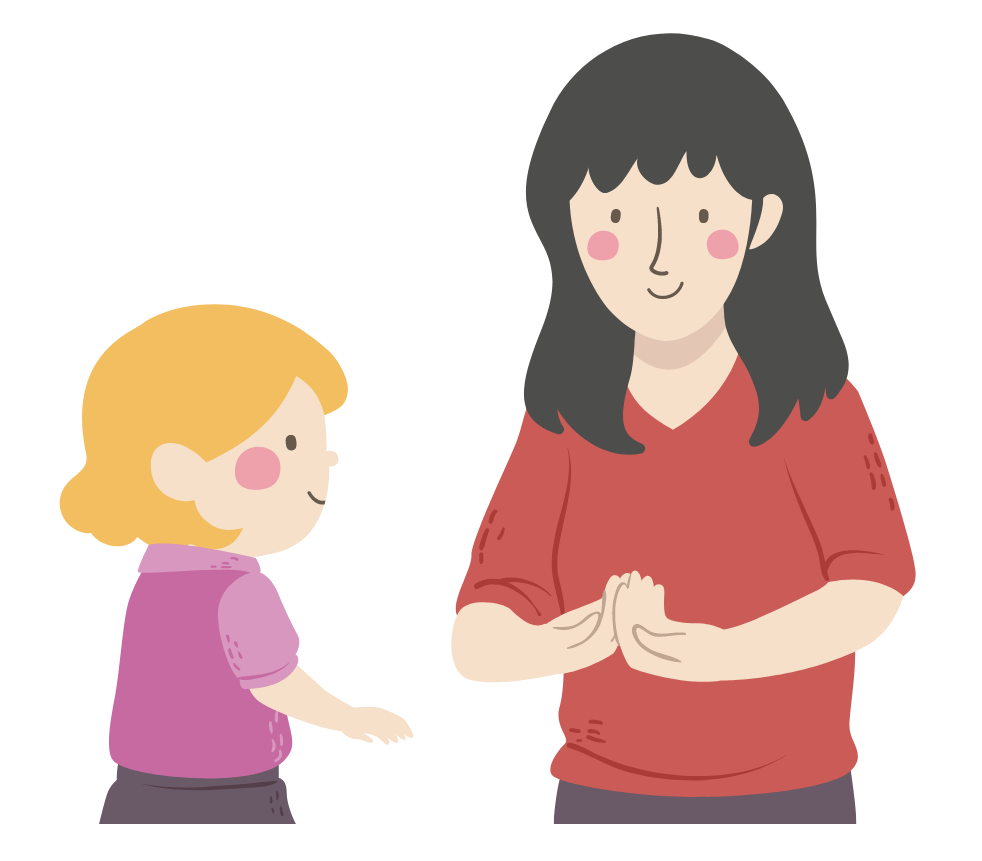
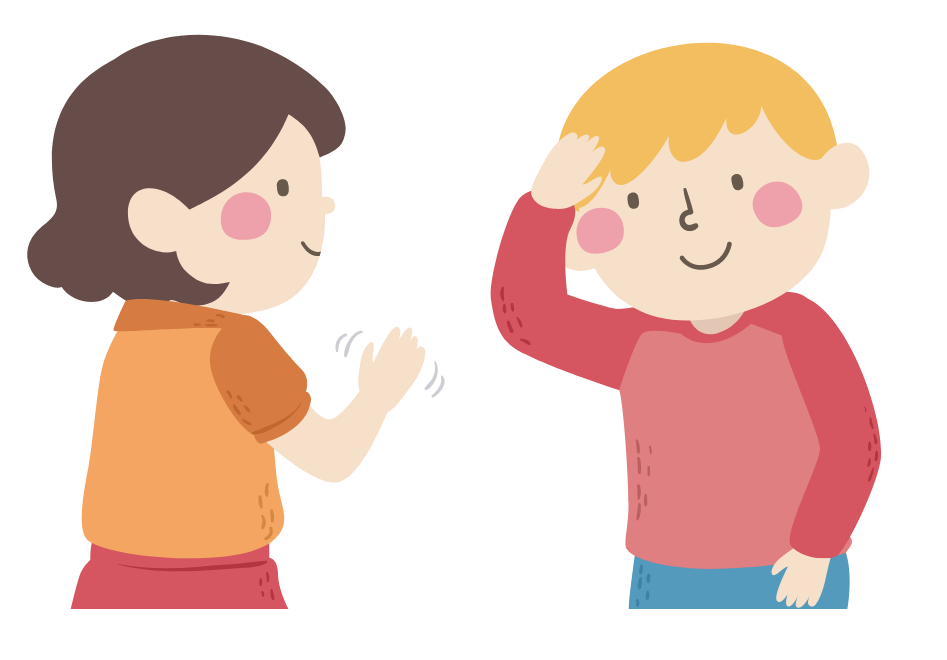
Using sign language can be an excellent way to promote language and social interaction for children experiencing a delay in their communication skills.


Using Sign Language for Children with Delayed Speech or Language Skills

Benefits of using signs

  • Reduce frustration: sign language can give your child a way to express themselves and may reduce frustration or challenging behaviours that can result when they do not have another way to communicate.
  • Teaches the power of communication: For example: “if I use the sign for ‘more’ I can make Mommy or Daddy jump up and get me more blueberries. This is pretty great!” This can be very helpful for children with Autism or children who are reluctant to communicate.
  • Increase understanding: when parents model a sign AND say the word, this helps build your child’s understanding. For example: pairing the sign for diaper and the word ‘diaper’ gives your child another “tool” to build their understanding.
  • Teaches imitation: copying actions, gestures, sounds, or words is an extremely important skill for language development. Teaching signs is one way to work on imitation in a motivating and rewarding way.
  • Builds foundational language skills: children often demonstrate an improvement in their nonverbal language (gestures, pointing, giving an object, leading by the hand) before we see an improvement in their verbal language.
  • Takes away the pressure: children can often feel the pressure we unintentionally put on them when we are so motivated to hear those first words. Using signs can take the pressure off using words. Sometimes this is just what your child needs to start using words!

Common myths

If my child is using signs it will slow down their language development.

My child can speak. They’re just lazy. I don’t want to teach them the “lazy” way to communicate.

Using sign language means we are “giving up” on speaking.

Here’s the TRUTH

If your child could easily use words they would already be doing this. Children who aren’t talking aren’t lazy. Using language is tough for a lot of kids! Using alternative communication means (including sign language) does NOT prevent your child from learning language. In fact, it may support your child in learning to speak. We want to think of using signs as being a bridge to support your child in reaching their full communication potential.

Tips to start introducing sign language at home

1. Pick a few signs: You do not have to use a sign for every word you say. In fact, picking too many signs can be overwhelming. Aim to start with 2-4 meaningful signs.

2. Always say the word while you’re modelling the sign.

3. Learn the sign you want to teach your child. There are lots of online resources and videos available to help you learn the signs. It is ok to adapt this sign if it is too difficult for your child to do.

For example, the sign for “water” involves tapping your mouth with 3 fingers. Your child might start to tap their mouth with their whole hand – this is great progress!

4. Incorporate these signs into routines.

For example, think of familiar routines that already happen each day in your home such as getting dressed, brushing hair and eating a meal.  Pick 1 sign that you could teach your child within these different routines such as ‘get dressed’ or ‘eat’ and use the sign and the word each day during these routines. 

5. Use communication temptations to motivate your child to communicate.

For example, place a favourite food item or small toy in a clear container with a lid to encourage your child to request ‘help’ or ‘open’.  When giving your child a snack and drink, only give them a little bit at a time so your child will be motivated to request ‘more’ or ‘juice.’  Place a favourite item on a shelf where your child can see it but can’t reach it to encourage him/her to request ‘help’ or the name of the object such as ‘baby’ or ‘puppy.’

6. Model, model, model: your first job is to just MODEL the signs with no expectation for your child to copy. You may have to model the signs for a few weeks before you get a response. Model and WAIT to give them an opportunity to copy without any pressure for them to do so.

7. Gently help your child to sign: after you have modelled the sign MANY times you can begin to gently help your child make the sign.

For example, you may guide their hands together for the sign “more.”

8. Tell everyone about the signs: make sure you inform anyone looking after your child of the signs they are using and what they look like (they might not look exactly the same as you or I would make the signs). This can include Grandparents, babysitters, daycare providers, and other therapists. It is very exciting and rewarding for your child when a new person recognizes and responds to their sign!

Ideas of signs to start with

  1. Signs that can be used across activities. Examples might include: more, open, help, eat, all done.
  2. Highly motivating signs. What is your child’s favourite thing? Examples might include the name of a favourite toy.
  3. Signs of toys, foods, objects, or activities that your child enjoys on a daily basis. Examples might include: ball, bear, baby, book, milk, water, juice, cookie, or sing. 

Written by Grandview Kids Autism Therapy Assistant, Brittany, and Behaviour Consultant, Arjana

Social narratives provide comfort for their readers as they walk them through unfamiliar places and events. These stories vary in how much detail is provided and how they are presented (i.e., a story with just text versus with text and pictures).


What are social narratives?

Social narratives are visual stories that represent an upcoming event and the associated behaviours and expectations that accompany that event. In addition to expectations of the event, desired responses are also described in the story.

For example, a social narrative might discuss a trip to the dentist. This story may have pictures of the dentist’s office, the dentist, the appointment room, and will describe what will happen during a visit to the dentist. The level of detail for the narrative will depend on the skill level of the child; the pictures within the narrative may be real-life photos or animated pictures. The expectations of the visit may be extremely detailed such as including the length of the appointment to each step of the appointment. For some individuals, pictures may not be necessary, and text alone is sufficient to explain the upcoming event.

Illustration of mother reading to her two kids sitting in her lap

Writing a successful social narrative

The narrative should be written in first-person so that the individual reading the narrative is reading “I” statements to explain what is going to happen and what the appropriate/expected responses are. The narrative should also use clear, concise, and descriptive language, so as to paint a picture of the upcoming event for the reader

Illustration of kids introducing a new friend to the group

Examples of social narratives

Sometimes social narratives may be called social scripts, or Social Stories™, which is a trademarked term. Examples of social narratives include but are not limited to:

  • Doctor visits
  • New schools/classrooms/teachers
  • Social situations (making friends, joining in play)
  • Riding the bus
  • Leaving the home
  • Using nice words
  • Keeping hands to ourselves

Written by Grandview Kids Autism Therapy Assistants Pamela and Deidre

You may have heard the word in a variety of contexts, and you could be wondering…what is reinforcement? Is it a reward? A bribe? Well, two of our Autism Therapist Assistants are here to give you a crash course!


Reinforcement IS:

  • Used to increase or decrease the likelihood of certain behaviours occurring in the future (behaviour is anything a person does such as: eat, sleep, print, clap, yell or even communicate)

Reinforcement MUST:

  • Be meaningful to the individual, and should be given immediately after the behaviour you want to increase (the longer you wait, the less effective it is!)
  • Include the learner’s preferences such as: food, attention, activities, compliments (great job!), actions, sounds, drinks, scents, items (stickers), and people (seeing parents).
Illustration of little boy holding a two-scoop ice cream cone.

“But my child has such limited preferences!”

  • If a child has limited preferences, try exploring new toys, sensory play and activities.
  • Sometimes an item or activity may not be instantly reinforcing, the child may need to be taught how to use the toy or may need more time to interact with it. Modeling how to use a new toy may encourage the child to try it. When in doubt, try to explore and have fun and follow your child when looking for new reinforcers. Try pairing new items with known preferred items/activities to increase the value of the novel item.

Reinforcement looks different for everyone!

Illustration of a boy playing with a fidget spinner.

There are two types of reinforcement:

  1. Positive reinforcement: something is presented that is pleasant (e.g., giving a sticker).
  2. Negative reinforcement: something is adversely taken away (e.g., the sound of your alarm clock stopping when you hit snooze).

Be aware of these hidden reinforcers that maintain behaviours! Sometimes, we may reinforce certain behaviours in children without realizing it. For example, if a child is yelling and the teacher gives the child attention, the attention may reinforce the child and increase the likelihood he will scream when seeking attention in the future.

Illustration of a little boy sleeping.

Reinforcement needs motivation!

Motivation is the reason someone is doing something. A child must be motivated by the ‘reinforcer’ chosen when teaching a new skill or behaviour. Motivation is what makes the reinforcer valuable. If the child is not motivated, they will be less likely to engage in the desired behaviour (e.g., making a verbal request). It is important always to explore possible reinforcers to ensure a child’s reinforcement repertoire is diverse! Spend time following your child’s lead as a way to find activities, items and games that will motivate a child and become a reinforcer.

THE MYTH- REINFORCEMENT IS BRIBERY

BUSTED! Bribery is offering a preferred item or access to a desirable activity to influence the behaviour in the moment. A bribed behaviour occurs only after receiving the item or activity first, and it does not result in a future increase in responding.

BRIBE FIRST, THEN DESIRED BEHAVIOUR.         

As you learned above, reinforcement is delivered following the desired behaviour, and it increases the likelihood of the behaviour occurring again.

BEHAVIOUR FIRST, THEN REINFORCEMENT.

  • ⟨
  • Page 1
  • Page 2
  • Page 3
  • Page 4
  • ⟩

Primary Sidebar

Child Stories

“I am Clara” 

Celebrating Down Syndrome Awareness Month! Before Tanya tells you about diagnoses, therapies or milestones, she tells you about her daughter. She tells you about a nine-year-old who cannot help but...

Latest Updates

  • Teaching Through Daily Chores: Laundry November 10, 2026
  • November: Dates of Significance October 30, 2026
  • Farheen’s Legacy: A Mother’s journey through grief  October 30, 2026
  • Violet’s voice is valuable! October 30, 2026
  • Grandview Kids receives 11 MarCom Awards October 27, 2026

You Have Questions

We’d like to help you find the answers…

Contact Us Today

© Grandview Kids Built by PeaceWorks

  • About Us
  • Contact Us
  • Privacy
Accessibility Adjustments

Powered by OneTap

How long do you want to hide the toolbar?
Hide Toolbar Duration
Select your accessibility profile
Vision Impaired Mode
Enhances website's visuals
Seizure Safe Profile
Clear flashes & reduces color
ADHD Friendly Mode
Focused browsing, distraction-free
Blindness Mode
Reduces distractions, improves focus
Epilepsy Safe Mode
Dims colors and stops blinking
Content Modules
Font Size

Default

Line Height

Default

Color Modules
Orientation Modules