• Skip to primary navigation
  • Skip to main content
  • Skip to primary sidebar
Grandview Kids Logo

Grandview Kids

Every Child And Youth Living Life At Their Full Potential

  • About Us
    • Vision, Mission and Values
    • The New Grandview Kids
      • Operational Readiness
      • Visiting Grandview Kids’ Ajax Headquarters
    • Our History
    • Leadership
    • Board of Directors and Committees
    • Annual Report
    • Strategic Plan
    • Policies
  • Calendar
  • Annual Report
  • Contact
    • Contactez – nous
    • Ajax – Headquarters
    • Bowmanville Health Centre
    • Grandview School
    • Oshawa – Dwyer
    • Port Perry
    • Whitby – Abilities Centre
  • Careers
  • Register
  • Donate
  • Instagram
  • LinkedIn
  • Facebook
  • Services and Programs
    • Audiology
    • Autism Program
      • Autism Spectrum Disorder (ASD) Diagnostic Hub
      • Caregiver-Mediated Early Years Programs
      • OAP Core Clinical Services
      • Entry to School Program
      • Foundational Family Services
    • Blind-Low Vision Program
    • Extensive Needs Service
    • Family Engagement Program
      • Adolescent Transition Program
      • Family Leader Program
        • Family Advisory Council
        • Paid Advocates
        • Youth Advisory Council
    • Infant Hearing Program
    • Medical Services
      • Autism Spectrum Disorder (ASD) Diagnostic Hub
      • Complex Care Program
      • Grandview Anesthesia Procedure (GAP) Clinic
      • Hypertonia Clinic
      • Nutrition Services
      • Orthopaedic Clinic
    • Occupational Therapy
    • Physiotherapy
    • Preschool Outreach Program
    • School Programs & Resources
      • Resources for Educators
      • School-Based Rehabilitation
    • Service Navigation
      • SmartStart Hub: Parents
      • SmartStart Hub: Partners
    • Social Work
    • Speech-Language Pathology
      • Augmentative and Alternative Communication
    • Therapeutic Recreation
  • Purchased Services
    • Inclusive Recreation
    • Beyond the Walls
    • OAP Core Clinical Services
      • Behaviour Services
  • Research
    • Get involved in research
    • IDEA Study
      • Building knowledge and understanding of the intersection of race and disability in accessing pediatric rehabilitation services.
    • Joint Research Ethics Board
    • Research Associate: Dr. Fiona Moola
    • Research Associate: Dr. Meghann Lloyd
  • Resources
    • Ability Acceptance Program
    • Arriving at Grandview Kids
    • Community Supports & Resources
    • Family Support Fund
    • Free to Read Program
    • Frequently Asked Questions
    • Gather by Grandview Kids
    • News and Updates
    • Privacy
    • Resources for Parents and Caregivers
    • Visiting Grandview Kids
  • Support Us
    • Ways to support
    • Host a fundraiser
    • Participate in an event
      • Golf Fore Grandview Kids
      • Sponsor the Drum
      • Dream Big, Dream Brighter Awards Gala
    • Leave a legacy
      • Gifts of securities
      • Gifts of bequests
      • Gifts of life insurance
    • Your impact
    • Building a Legacy: Honouring Jerry Coughlan
  • I Want To…
    • Connect with Grandview Kids
    • Donate
    • Refer a child or youth
    • Register via My Community Hub
    • Schedule an Appointment
    • Volunteer at Grandview Kids
    • Work at Grandview Kids
  • Grandview School
    • About Our Program
    • About Our Board
    • Grandview School Social Story
    • Plans and Reports
    • Resources for Families
    • Resources for Schools – Switch It Up!
    • Careers and Volunteering
    • Contact Grandview School
  • Search

Posted June 15, 2022

Grandview Kids joins a community in mourning following the loss of Draven Graham

Social Work

Grandview Kids joins a community in mourning following the loss of Draven Graham.

Draven Graham was a young boy with Autism who tragically passed away early this week in Lindsay, Ontario. Grandview Kids extends our deepest condolences to Draven’s family and friends during this difficult time. Many of us within the Durham, Lindsay and Autism communities remain shaken by this tragedy.

Traumatic events can impact those directly or indirectly involved. It is natural to experience all kinds of emotions, from shock or sadness to anger or fearfulness. You may also experience physical or behavioural responses such as changes to your sleep or eating patterns, forgetfulness, increased vigilance, withdrawal or irritability. These reactions are all part of the grief experienced when we suffer a loss.

Here are some things to consider:

  • Reach out to friends and family. Let them know what would be helpful during this difficult time.
  • Be kind to yourself and be aware of your feelings. Try not to judge and be patient. Time will often ease the intensity of your reactions.
  • Reduce other stressors when possible and try to engage in a relaxing activity, like a hobby, exercise or leisure activity.
  • Look after your physical health. Maintain good sleep, eating and exercise habits.
  • Focus on what you can control in your life and engage in routine activities.  
  • Express your feelings tangibly or creatively by writing in a journal, doing an art activity, or volunteering for a cause.
  • If your reactions are intense and enduring, talk to your doctor or connect with a mental health professional.

There are many professional services that you and your family can access:

  • Distress Centre Durham: 905-430-2522
  • Durham Mental Health Services Crisis Response: 905-666-0483
  • Bereaved Families of Ontario Durham Region: 1-800-387-4870
  • Durham Counselling Walk-in Clinic (ages three to 19 years): 289-509-0603 extension 3203
  • Kids Help Phone (ages five to 20 years): 1-800-668-6868

Grandview parents and caregivers can lean on each other by accessing the Online Parent Support page through Facebook. Families currently accessing Grandview Kids Social Work services can reach out to their clinician for advice and insight.

Tragedies such as this bring our community closer together. Connect with one another and know there are many professionals and peers ready to support you.

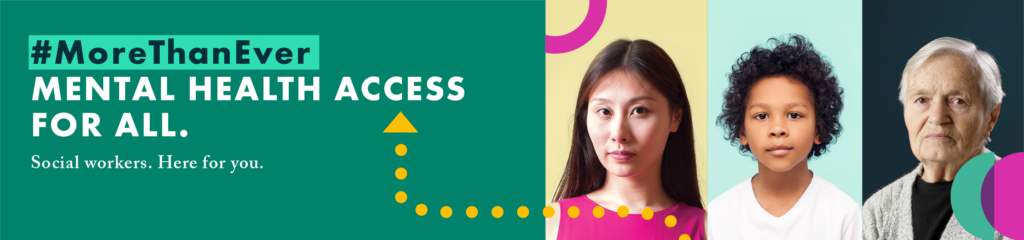
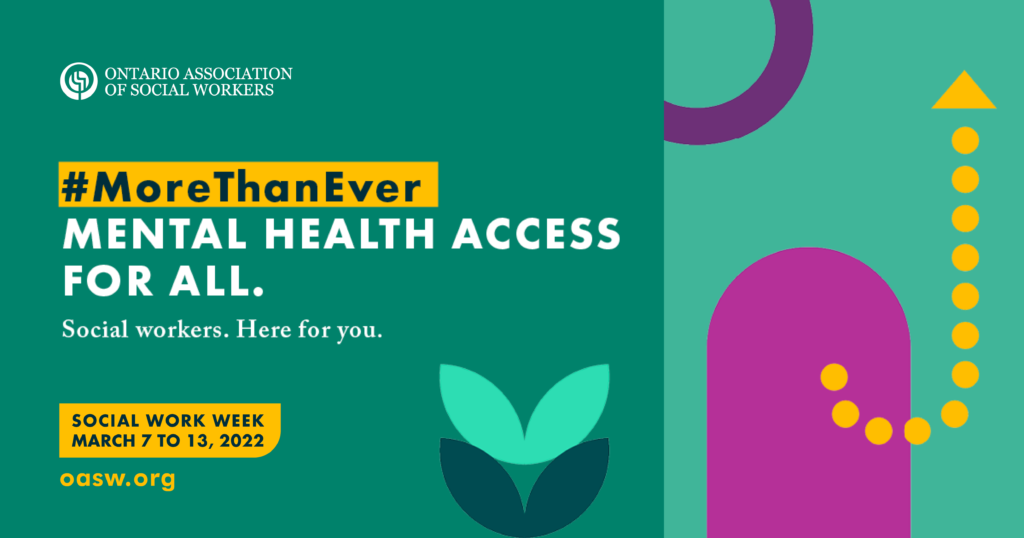
Promotional banner for the #MoreThanEver Ontario Social Work week campaign.

March 7-13 is Social Work week in Ontario, allowing a chance to pause and celebrate Social Workers’ contributions towards supporting mental health. The theme of #MoreThanEver speaks to ensuring timely access to high-quality mental health services. Social Workers have been at the frontline throughout the pandemic and are focused on the path towards recovery.

Social Work is a profession aimed at helping individuals, families and communities to build capacity and promote wellbeing. Social Workers at Grandview Kids hold a Masters of Social Work degree and are registered with their College. They offer counselling, resource coordination, transition support and funding assistance. Grandview Kids Social Workers support children, youth and families to cope with the impact of disability and complex health needs.

Promotional graphic for the #MoreThanEver Ontario Social Work week campaign.

What Grandview clients and families say about their Social Workers

“She has a way of making you feel so comfortable like you have known her for years.”


“When I felt like I was at my lowest, my Social Worker helped me to realize that I was not alone and my feelings were normal.”


“She was able to help my daughter find strategies to help her deal with her feelings and it helped strengthen our relationship”.

Thank you to our incredible team of Social Workers at Grandview Kids for the fantastic and vital work that you do every day!

Written by Grandview Kids Social Worker, Stephanie

Are you anxiously awaiting your child’s return to school? Or do you want to set up your child’s first year at school for success? Grandview Kids Social Worker, Stephanie, provides several tips and strategies to help you manage the transition to the new school year.


The transition to, or back to, school

The transition to school or back to school is a significant milestone for children and parents, which may be associated with anxiety, excitement, sadness and anticipation; this is especially true during the current pandemic. Whether in-person or virtual at-home learning, children and parents may be experiencing struggles during this initial transition. Beginning school brings unique challenges to children with special needs and their families.

The transition to school looks different for each child. It is common at the beginning for there to be separation anxiety. You may also notice changes in behaviour, especially at home, as children navigate this transition. You can do several things as parents to make the transition to school a smooth and positive experience for the whole family. Take a look at the tips and strategies below to help you and your child manage the transition to the new school year.

Tips and strategies to help your child’s transition to school

  • Children can often “hold it together” at school, only to then display behaviours in the safety of their home. Keep after-school routines simple and limit demands.
  • Getting enough sleep and proper nutrition can also assist with positive behaviour. Ensure there are plenty of preferred foods packed in the lunch bag and offered after school, which may make the transition easier.
  • Manage expectations – especially if participating in virtual at-home learning. This method of learning places a lot of expectations on parents and children/youth. You know your child the best. Make sure you are not setting unrealistic expectations for sitting, on-task learning, or homework. Think about what is best for the whole family and think outside the box. Can older children, respite workers or others in your support network assist with learning expectations?
  • Talk openly to the school team and ask for help. The Special Education and Resource Teacher is a great resource to assist you in ensuring accommodations or modifications are in place to support learning, whether in the classroom or at home.
  • Learning as much as possible about the rights and responsibilities regarding your child’s education as early as possible is essential. To assist with this, check out your particular School Board’s website to learn more about inclusive student services.
  • Check out the Ministry of Education website (www.edu.gov.on.ca) for information about special education.
  • Talk with your child’s therapy and medical teams regarding concerns you may have related to school.
  • You are not alone. Connect with other parents who are going through a similar experience for support and strategies. Grandview’s Online Parent Support Group is a great place to stay connected and informed.
  • Prepare as much as possible the night before (i.e., lunches and clothes) to reduce stress in the morning.
  • Allow your child to bring a transitional object from home to provide comfort, keeping in mind the current safety protocols at school.
  • It is crucial to remember school should be a fun and safe place for children and youth to learn!

Wishing you all the best for the coming school year,

Grandview Kids Social Work Services

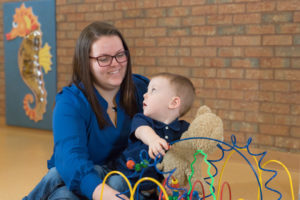
Mother holding her son while he plays with various toys.

When talking to your kids about COVID-19, it’s okay not to know where to start or be worried about saying the wrong thing. It’s very possible they may have heard about it at this point, and their amazing imaginations may have started to fill in gaps which might be making the information scarier for them. By opening up the conversation however you can, it will help them better understand what’s happening and why. Do your best to describe things in a child friendly and honest way.

Take some time each day to have 1:1 communication with your child. We know that “special time” conversations with your kids are helpful when we: follow their lead, speak at their level face-to-face, use language that is appropriate for their understanding, and provide full attention with our “listening ears” on. Using conversation is an excellent way to be able to connect to our children’s thoughts and feelings, as well as to express our own.

You will want to find a setting and time that is optimal for both of you. Remove any distractions (e.g., background noise, television, toys) and set up the environment so that you can both have undivided attention. It may be easier to have a conversation during a walk, bath time, or snack/meal time. If you have more than one child, you might consider having the conversations 1:1 to check in on each child.

Children constantly see and hear new things in their environment. The “adult” conversations we are having and “news” may not be appropriate for young children. Pay attention to what your children are exposed to and how it affects them.

Some things you may want to talk about:

  • Ask them what they know or have heard about COVID-19, this can help better understand what they know and clarify any incorrect assumptions or conclusions they have made
  • Be honest about how you are feeling and describe what those feelings mean
  • Use words they will understand (e.g. “virus” versus “sick”).
  • Use a calm and reassuring voice
  • Talk about their questions and answer honestly if you don’t know the answer, reassuring them that you will let them know when you hear or find the answer
  • Involve them in any planning (e.g. “Let’s think of what we will make for lunch”, “What movie should we watch together?”). For younger children, it may be easier to give them a choice of two options than an open-ended question.
  • Validate their feelings and discuss that it’s okay to have fears.
  • Reassure them of what they can do to take control of themselves and how to reduce the spread of germs
  • Read the Grandview Kids Social Story about COVID-19 together

You may find your child doesn’t want to talk in depth about COVID-19 or after their questions have been answered they say, “okay” and go back to playing. This is a normal response and how children regulate their emotions. What you have done is now created a safe space for them to come back and talk more if they need to.

Further Reading:

Centre for Disease Control Recommendations

A Kids Book About COVID-19

It’s been nearly two weeks since schools closed and the uncertainty of the unknown continues to create a great sense of discomfort in our lives. Grandview Kids Social Worker Stephanie Kirwin has some thoughts to share in hopes of helping to manage the stress you are feeling.

You may be finding some days more challenging than others to manage the stress you are feeling, to stay positive and optimistic. This is okay. It is okay to feel sad and angry, to feel stressed and worried. Let yourself be present with those feelings. Letting yourself feel and be with your thoughts, away from social media and distractions can be very therapeutic and healthy. It helps you to move through them.

Things to think about (from the Canadian Psychological Association):

  • “People are strong and resilient, and generally have the skills they need to cope with the stressors they will face in a lifetime.
  • Not everyone reacts to the same event in the same way and not everyone shows their distress in the same way.
  • The ways in which children and communities cope and react to a stressor are influenced by how they see parents, caregivers and community leaders cope and react.”

Strategies that might help:

  • Stay informed and regularly disconnect from news stories; try to only check for updates 1-2 times a day
  • Try to keep some sort of routine and structure in your day, such as getting yourself and kids dressed, sitting for meals as a family
  • Build some scheduled activities in your day, outdoor time, yoga or dance videos with the kids
  • Go outside and pay attention to all your senses: feeling the sun on your face, watching the tops of trees move in the wind, smelling the coming of spring
  • Try to let go of things you can’t control and focus on the things you can control such as practicing safe hand hygiene and physical distancing with your family, reminding yourself that you are doing something
  • Reach out for help. On days when worried thoughts become difficult to manage, reach out to those you trust or a mental health professional. This is not a sign of weakness but a sign of strength.

Information adapted from the following websites, view for further reading:
https://cpa.ca/new-covid-19-factsheet/
https://hbr.org/2020/03/that-discomfort-youre-feeling-is-grief

  • ⟨
  • Page 1
  • Page 2
  • Page 3

Primary Sidebar

Child Stories

ICAudGItaW1hZ2V7cG9zaXRpb246cmVsYXRpdmU7dHJhbnNpdGlvbjp0cmFuc2Zvcm0gMC4yNXMgZWFzZX0ud3AtYmxvY2staW1hZ2UgLnRiLWltYWdlLmFsaWduY2VudGVye21hcmdpbi1sZWZ0OmF1dG87bWFyZ2luLXJpZ2h0OmF1dG99LnRiLWltYWdlIGltZ3ttYXgtd2lkdGg6MTAwJTtoZWlnaHQ6YXV0bzt3aWR0aDphdXRvO3RyYW5zaXRpb246dHJhbnNmb3JtIDAuMjVzIGVhc2V9LnRiLWltYWdlIC50Yi1pbWFnZS1jYXB0aW9uLWZpdC10by1pbWFnZXtkaXNwbGF5OnRhYmxlfS50Yi1pbWFnZSAudGItaW1hZ2UtY2FwdGlvbi1maXQtdG8taW1hZ2UgLnRiLWltYWdlLWNhcHRpb257ZGlzcGxheTp0YWJsZS1jYXB0aW9uO2NhcHRpb24tc2lkZTpib3R0b219IC53cC1ibG9jay1pbWFnZS50Yi1pbWFnZVtkYXRhLXRvb2xzZXQtYmxvY2tzLWltYWdlPSJhMWJlMmUyODAwMWFkMGRlMjBhM2RlZWVlYmE5MDJhMSJdIHsgbWF4LXdpZHRoOiAxMDAlOyB9IEBtZWRpYSBvbmx5IHNjcmVlbiBhbmQgKG1heC13aWR0aDogNzgxcHgpIHsgICAudGItaW1hZ2V7cG9zaXRpb246cmVsYXRpdmU7dHJhbnNpdGlvbjp0cmFuc2Zvcm0gMC4yNXMgZWFzZX0ud3AtYmxvY2staW1hZ2UgLnRiLWltYWdlLmFsaWduY2VudGVye21hcmdpbi1sZWZ0OmF1dG87bWFyZ2luLXJpZ2h0OmF1dG99LnRiLWltYWdlIGltZ3ttYXgtd2lkdGg6MTAwJTtoZWlnaHQ6YXV0bzt3aWR0aDphdXRvO3RyYW5zaXRpb246dHJhbnNmb3JtIDAuMjVzIGVhc2V9LnRiLWltYWdlIC50Yi1pbWFnZS1jYXB0aW9uLWZpdC10by1pbWFnZXtkaXNwbGF5OnRhYmxlfS50Yi1pbWFnZSAudGItaW1hZ2UtY2FwdGlvbi1maXQtdG8taW1hZ2UgLnRiLWltYWdlLWNhcHRpb257ZGlzcGxheTp0YWJsZS1jYXB0aW9uO2NhcHRpb24tc2lkZTpib3R0b219IH0gQG1lZGlhIG9ubHkgc2NyZWVuIGFuZCAobWF4LXdpZHRoOiA1OTlweCkgeyAgIC50Yi1pbWFnZXtwb3NpdGlvbjpyZWxhdGl2ZTt0cmFuc2l0aW9uOnRyYW5zZm9ybSAwLjI1cyBlYXNlfS53cC1ibG9jay1pbWFnZSAudGItaW1hZ2UuYWxpZ25jZW50ZXJ7bWFyZ2luLWxlZnQ6YXV0bzttYXJnaW4tcmlnaHQ6YXV0b30udGItaW1hZ2UgaW1ne21heC13aWR0aDoxMDAlO2hlaWdodDphdXRvO3dpZHRoOmF1dG87dHJhbnNpdGlvbjp0cmFuc2Zvcm0gMC4yNXMgZWFzZX0udGItaW1hZ2UgLnRiLWltYWdlLWNhcHRpb24tZml0LXRvLWltYWdle2Rpc3BsYXk6dGFibGV9LnRiLWltYWdlIC50Yi1pbWFnZS1jYXB0aW9uLWZpdC10by1pbWFnZSAudGItaW1hZ2UtY2FwdGlvbntkaXNwbGF5OnRhYmxlLWNhcHRpb247Y2FwdGlvbi1zaWRlOmJvdHRvbX0gfSA=
LnRiLWhlYWRpbmcuaGFzLWJhY2tncm91bmR7cGFkZGluZzowfQ==
LnRiLWZpZWxke21hcmdpbi1ib3R0b206MC43NmVtfS50Yi1maWVsZC0tbGVmdHt0ZXh0LWFsaWduOmxlZnR9LnRiLWZpZWxkLS1jZW50ZXJ7dGV4dC1hbGlnbjpjZW50ZXJ9LnRiLWZpZWxkLS1yaWdodHt0ZXh0LWFsaWduOnJpZ2h0fS50Yi1maWVsZF9fc2t5cGVfcHJldmlld3twYWRkaW5nOjEwcHggMjBweDtib3JkZXItcmFkaXVzOjNweDtjb2xvcjojZmZmO2JhY2tncm91bmQ6IzAwYWZlZTtkaXNwbGF5OmlubGluZS1ibG9ja311bC5nbGlkZV9fc2xpZGVze21hcmdpbjowfQ==

Meet 9-year-old Weston

Meet 9-year-old Weston. He is a happy, loving and friendly boy whose smile and contagious laugh can brighten anyone’s day. Weston loves playing on his iPad, with his brother Jase,...

Latest Updates

  • Building belonging through family leadership August 31, 2026
  • September 2026: Dates of Significance August 31, 2026
  • Celebrating Camp at Grandview Kids August 31, 2026
  • Celebrating International Youth Day! July 31, 2026
  • Living beyond expectations: Haylee’s journey with SMA Type 1  July 31, 2026

You Have Questions

We’d like to help you find the answers…

Contact Us Today

© Grandview Kids Built by PeaceWorks

  • About Us
  • Contact Us
  • Privacy
Accessibility Adjustments

Powered by OneTap

How long do you want to hide the toolbar?
Hide Toolbar Duration
Select your accessibility profile
Vision Impaired Mode
Enhances website's visuals
Seizure Safe Profile
Clear flashes & reduces color
ADHD Friendly Mode
Focused browsing, distraction-free
Blindness Mode
Reduces distractions, improves focus
Epilepsy Safe Mode
Dims colors and stops blinking
Content Modules
Font Size

Default

Line Height

Default

Color Modules
Orientation Modules