• Skip to primary navigation
  • Skip to main content
  • Skip to primary sidebar
Grandview Kids Logo

Grandview Kids

Every Child And Youth Living Life At Their Full Potential

  • About Us
    • Vision, Mission and Values
    • The New Grandview Kids
      • Operational Readiness
      • Visiting Grandview Kids’ Ajax Headquarters
    • Our History
    • Leadership
    • Board of Directors and Committees
    • Annual Report
    • Strategic Plan
    • Policies
  • Calendar
  • Annual Report
  • Contact
    • Contactez – nous
    • Ajax – Headquarters
    • Bowmanville Health Centre
    • Grandview School
    • Oshawa – Dwyer
    • Port Perry
    • Whitby – Abilities Centre
  • Careers
  • Register
  • Donate
  • Instagram
  • LinkedIn
  • Facebook
  • Services and Programs
    • Audiology
    • Autism Program
      • Autism Spectrum Disorder (ASD) Diagnostic Hub
      • Caregiver-Mediated Early Years Programs
      • OAP Core Clinical Services
      • Entry to School Program
      • Foundational Family Services
    • Blind-Low Vision Program
    • Extensive Needs Service
    • Family Engagement Program
      • Adolescent Transition Program
      • Family Leader Program
        • Family Advisory Council
        • Paid Advocates
        • Youth Advisory Council
    • Infant Hearing Program
    • Medical Services
      • Autism Spectrum Disorder (ASD) Diagnostic Hub
      • Complex Care Program
      • Grandview Anesthesia Procedure (GAP) Clinic
      • Hypertonia Clinic
      • Nutrition Services
      • Orthopaedic Clinic
    • Occupational Therapy
    • Physiotherapy
    • Preschool Outreach Program
    • School Programs & Resources
      • Resources for Educators
      • School-Based Rehabilitation
    • Service Navigation
      • SmartStart Hub: Parents
      • SmartStart Hub: Partners
    • Social Work
    • Speech-Language Pathology
      • Augmentative and Alternative Communication
    • Therapeutic Recreation
  • Purchased Services
    • Inclusive Recreation
    • Beyond the Walls
    • OAP Core Clinical Services
      • Behaviour Services
  • Research
    • Get involved in research
    • IDEA Study
      • Building knowledge and understanding of the intersection of race and disability in accessing pediatric rehabilitation services.
    • Joint Research Ethics Board
    • Research Associate: Dr. Fiona Moola
    • Research Associate: Dr. Meghann Lloyd
  • Resources
    • Ability Acceptance Program
    • Arriving at Grandview Kids
    • Community Supports & Resources
    • Family Support Fund
    • Free to Read Program
    • Frequently Asked Questions
    • Gather by Grandview Kids
    • News and Updates
    • Privacy
    • Resources for Parents and Caregivers
    • Visiting Grandview Kids
  • Support Us
    • Ways to support
    • Host a fundraiser
    • Participate in an event
      • Golf Fore Grandview Kids
      • Sponsor the Drum
      • Dream Big, Dream Brighter Awards Gala
    • Leave a legacy
      • Gifts of securities
      • Gifts of bequests
      • Gifts of life insurance
    • Your impact
    • Building a Legacy: Honouring Jerry Coughlan
  • I Want To…
    • Connect with Grandview Kids
    • Donate
    • Refer a child or youth
    • Register via My Community Hub
    • Schedule an Appointment
    • Volunteer at Grandview Kids
    • Work at Grandview Kids
  • Grandview School
    • About Our Program
    • About Our Board
    • Grandview School Social Story
    • Plans and Reports
    • Resources for Families
    • Resources for Schools – Switch It Up!
    • Careers and Volunteering
    • Contact Grandview School
  • Search

Posted February 27, 2026

Melecia’s strength and love for Lorenzo

Social Work

Celebrating National Epilepsy Awareness Month and National Cerebral Palsy (CP) Awareness Month

12-year-old Lorenzo is warm, welcoming and engaging in his own way. Though he is nonverbal, he communicates clearly. He shows interest through his eyes and energy and demonstrates displeasure by pushing an object away or disengaging. He is an extremely happy preteen who still loves to cuddle when he is in the mood and not in pain. Lorenzo lives with his mom, Melecia, and his grandmother, who recently began helping with his care. As a family, they treasure simple moments such as car rides, trips to the mall, watching movies and spending time outdoors. Lorenzo also loves cartoons, for their bright colours and fast movement and riding his adaptive tricycle when the weather allows. 

At two months old, Melecia noticed Lorenzo lying in his bassinet, staring steadily at one side. “It didn’t look right,” Melecia recalls, “So I told our family doctor about it. He said to bring Lorenzo to the emergency department if it recurred, which I did.”  That moment marked the beginning of a long and unpredictable medical journey. Lorenzo was experiencing difficult-to-control seizures and although medications were introduced, they did not bring meaningful improvement.  

Monitoring, testing and sleepless nights turned the hospital into a second home. At The Hospital for Sick Children (SickKids), doctors conducted extensive investigations, including genetic testing. They identified a rare mutation in the KCTN1 gene, a mutation that occurs at conception. Lorenzo was first diagnosed with infantile spasms and later with malignant migrating focal seizures in infancy, a severe and rare form of epilepsy. 

For Melecia, the diagnosis felt surreal. During her pregnancy, she did all that she could to stay healthy, and Lorenzo was born full-term. There was a sense of disbelief; surely something could “fix” this. Melecia learned that epilepsy, especially rare genetic epilepsy, rarely follows a straight line. Brain surgery was not an option because seizure activity affected both sides of Lorenzo’s brain. Instead, doctors focused on medication to calm the electrical misfiring. He tried countless treatments, but eventually, he required a complex combination of medications, including pharmaceutical-grade CBD oil and a strict ketogenic diet. 

The ketogenic diet demanded exact precision, with every ingredient weighed and every ounce mattered. Melecia followed instructions meticulously, determined to do her part while doctors did theirs. The diet reduced seizure activity for a time, but it also took a toll. Long-term restrictions led to fragile bones from calcium deficiency, leading to the difficult decision to pause the diet and slowly rely on a concoction of medications. Like much of Lorenzo’s care, treatment required constant re-balancing. Now entering adolescence, Lorenzo’s seizures are changing again. Hormonal shifts have increased their frequency, and they look different than before. They are not back-to-back emergencies, but they remain unpredictable. 

The impact of uncontrolled seizures in infancy was profound. During critical stages of brain development, repeated seizure activity altered Lorenzo’s developmental path. He was later diagnosed with Level 5 cerebral palsy, cortical visual impairment (CVI) and global developmental delay. Caring for Lorenzo demands constant vigilance as he requires assistance with all daily activities, managed solely by Melecia. Nights can be sleepless as Lorenzo sleeps beside her to monitor if no nurse is available. Every seizure is tracked, and medication is carefully timed. Feeding adds a further layer of complexity as Lorenzo uses both oral feeds and a gastrotomy tube (G-tube). Lorenzo also uses many devices and equipment, including ankle-foot orthoses (AFOs), a manual wheelchair, a stander, a walker and, at one time, a lift. 

Melecia attests that she was thankful she did not have to do it alone, especially in their early, confusing days. SickKids connected the family with Grandview Kids, opening the door to vital services such as occupational therapy, physiotherapy and speech-language pathology. Lorenzo is part of the Durham Region Complex Care Program, delivered in partnership between SickKids, Grandview Kids, Lakeridge Health and Ontario Health at Home, Central East. Having appointments organized locally has eased much of the logistical burden and ensures continuity of care with each team member informed at every point of Lorenzo’s journey. 

Melecia notes that being able to receive social work services through Grandview Kids has been especially meaningful. “Sometimes just having someone to talk to and being connected with other Grandview Kids parents (with their consent) has been a gamechanger.” Being connected to other Grandview Kids families has provided insight, encouragement and community. “At one point, I was a bus driver and was assigned a route with a Grandview child on the bus. It felt so rewarding knowing that I was taking care of a Grandview friend’s child and confidently caring for them as they were my own.” Through Lorenzo, Melecia learned the need for reciprocity in community, knowing when to give and take assistance. 

Still, the weight of caregiving remains heavy, especially when your child is completely dependent due to seizures and profound physical limitations. “You know you’re doing enough, but it’s still never enough,” Melecia reflects. There is always more to research, monitor and manage. Early on in their journey, she made a conscious decision not to lose herself. Shortly after Lorenzo’s diagnosis, she returned to weight training and cardio. What began as physical conditioning became something deeper. “I have to be strong for my son,” she says. “I want him to know that he’ll never outgrow my lap.” As Lorenzo grows, lifting and transferring him safely requires strength. To her surprise, building physical strength also strengthened her mentally. The gym became her outlet, the place where she processed both good and bad news. “I run for me,” she explains, “so that whenever something happens, I know how to handle it.” 

Lorenzo’s life is complex, shaped by seizures and significant physical disability. Yet it is also filled with joy through bright cartoons, busy public spaces, fresh air and family connection. As a medical parent, self-care became essential to Melecia, not optional. She encourages other parents to invest in themselves now, building resilience for the years ahead. Physical and mental strength, she believes, create the foundation needed to weather uncertainty.  

She lives by this belief: people may give up on you, but you dare not give up on yourself.  

July 24 is International Self-Care Day, a day to highlight the importance of self-care in supporting overall health and well-being. Self-care helps restore energy, sharpen focus and foster a positive mindset by ensuring our basic needs are met. It does not need to be elaborate or costly, but it should be meaningful and tailored to each individual. Self-care looks different for everyone. Whether it’s taking time to rest, recharge or indulge, prioritizing your own well-being can help you show up as the best version of yourself.

While self-care looks different for everyone, fresh ideas can help inspire new ways to recharge and care for ourselves. Members of Team Grandview’s Family Engagement and Social Work teams shared some of their favourite self-care tips below!

Step outside for fresh air

Open a window, sit on your porch or go for a short walk. Even a few minutes of fresh air can provide mental clarity, ease stress and help you reset.

Schedule “me time”

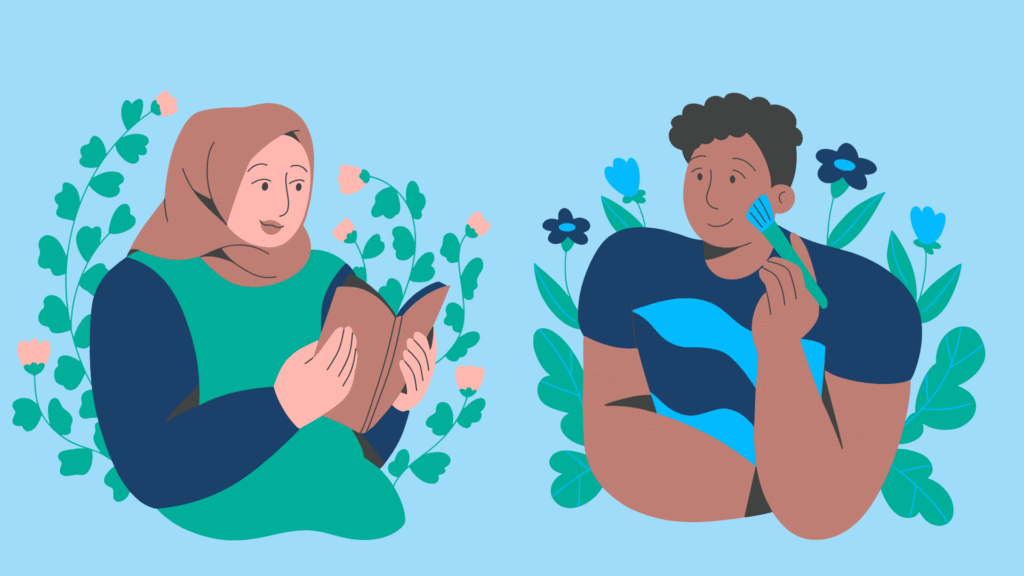
Make time for things that bring you joy, even if it’s a solo grocery run, a cozy face mask, your favourite TV show or movie, a manicure or a quiet cup of coffee. Even simple rituals matter.

Move your body

Exercise can take many forms! Whether it’s lifting weights, going for a walk, playing tennis, pickleball or even a game of pick-up dodgeball with colleagues. Regular movement boosts your mood, supports heart health and improves energy levels.

Read a book or magazine!

Reading offers a break from daily stress. Whether it’s fiction, memoir or poetry, immersing yourself in a good book can be restorative.

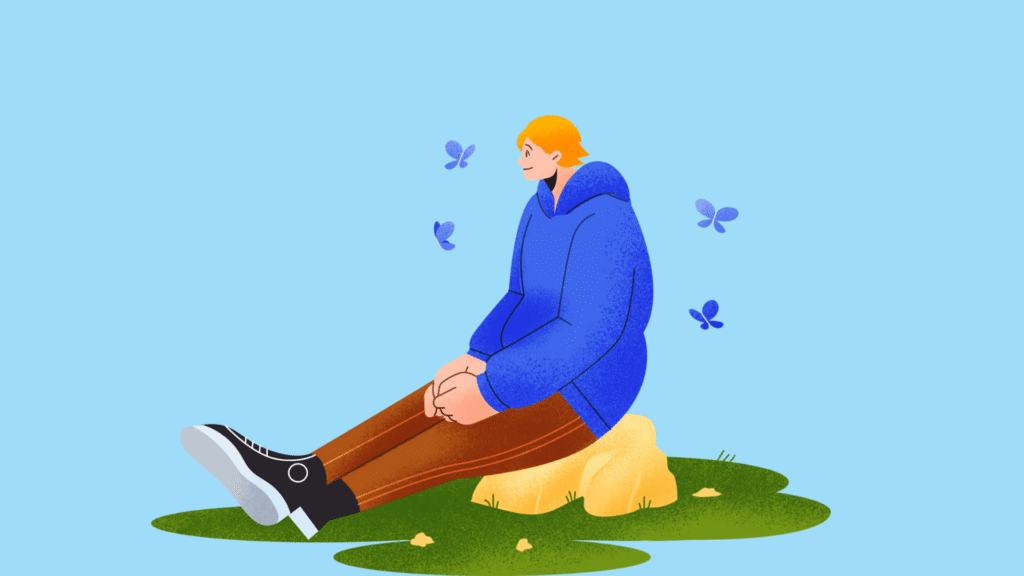
Sit in nature

Find a peaceful moment outdoors, whether you’re at the lake, a local park or watching the sunset from your window. Nature has a calming effect that helps you pause and reflect.

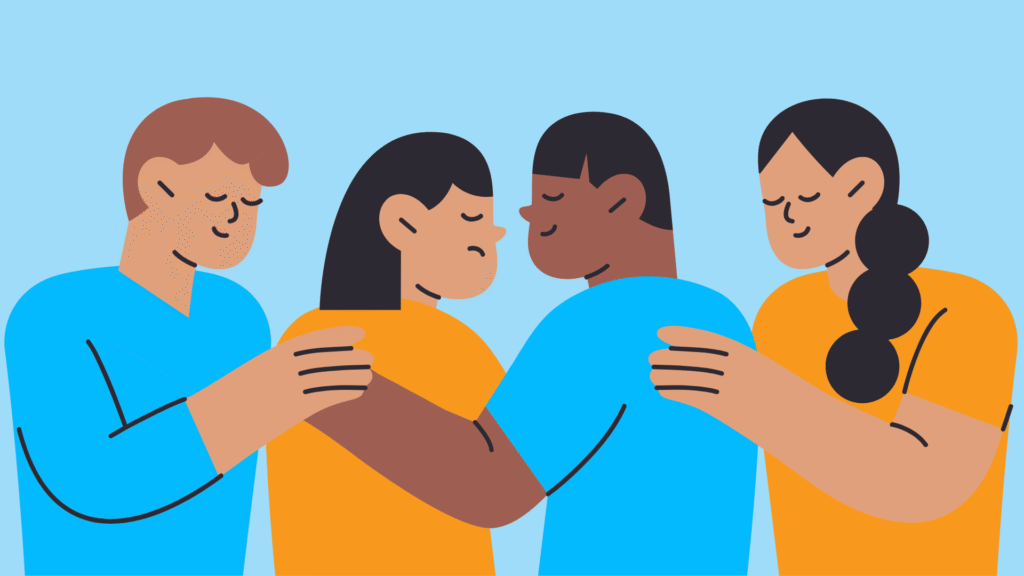
Connect with others who “get it”

Joining a peer support group, especially one connected to your lived experience can offer encouragement, practical advice and emotional strength. You are not alone. There’s comfort in spending time with those who understand your challenges. Whether you’re sending memes back and forth or sharing a latte in person, those small connections count.

Explore creativity

Don’t wait for “someday.” Try a new hobby like painting, crochet, macramé or cooking a recipe from another culture. Creative outlets can re-energize and inspire.

Journal your thoughts

Writing can be a powerful tool for processing emotions and celebrating growth. Start small, or dive deep into telling your story, your lived experience matters.

Surround yourself with people who lift you up

Supportive friends and loved ones offer comfort, laughter and the kind of company that recharges your spirit, even if it’s just through a meme exchange or quick chat.

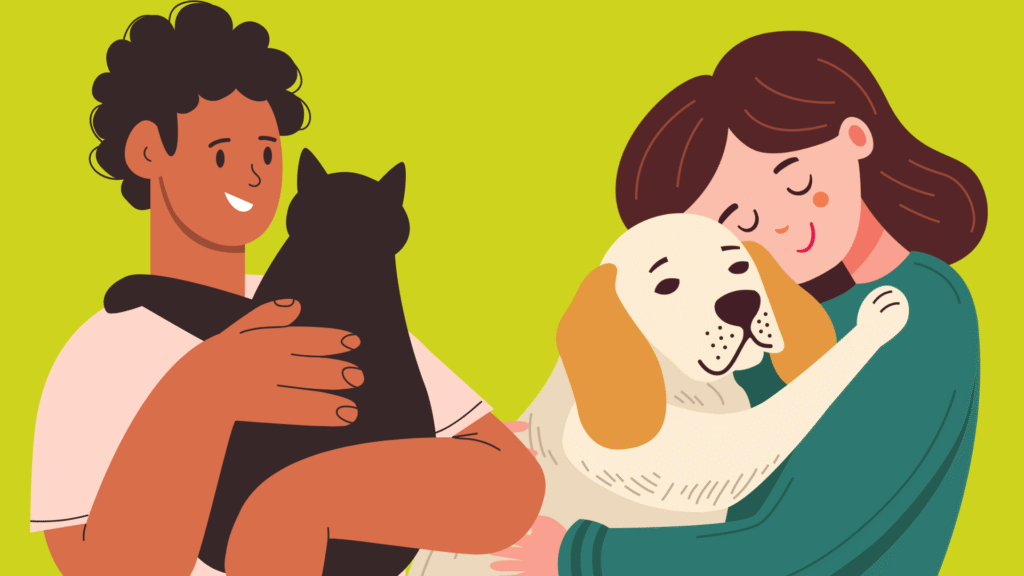
Snuggle with a furry friend

Pets offer comfort and help ground us in the moment. Time spent with animals can be a calming and joyful part of your routine.

Practice mindful breathing

Breathing exercises like box breathing or TIPP (temperature, intense exercise, paired muscle relaxation and paced breathing) can reduce anxiety and bring focus.

Spend quality time with loved ones

Time with family and friends can be an important form of self-care. It helps us feel safe, supported and connected.

Explore new places

Visiting vintage markets, museums, historical sites or even nearby towns can refresh your perspective and spark joy.

Try gardening

Spending time in the garden, even just playing in the dirt can be meditative. It’s a great way to unwind and reconnect with nature.

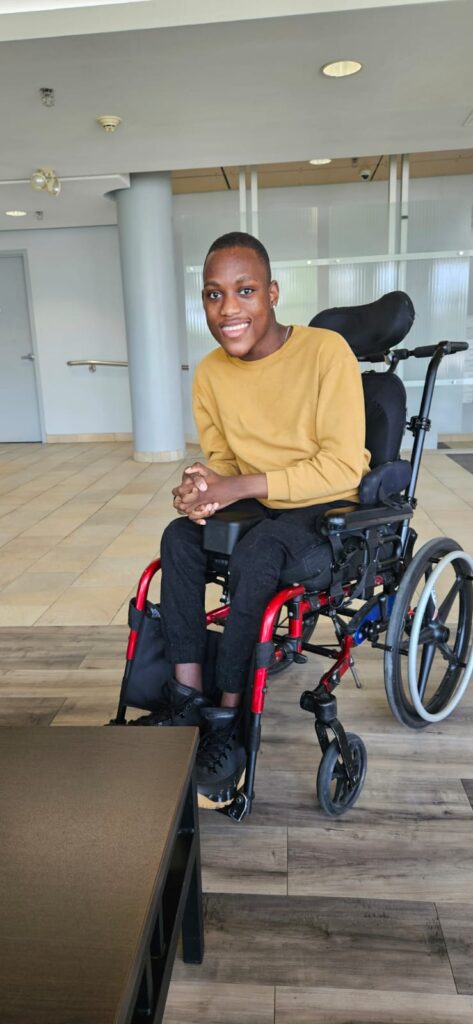
Cyle, born at just 26 weeks, came into the world fragile, impossibly small and a fighter. It wasn’t until he was three years old, while living in Jamaica, that he was diagnosed with cerebral palsy (CP), level 4. Even then, answers were hard to come by. Resources were few, and therapies were out of reach. For most of his childhood, understanding his condition was like trying to read in the dark. 


For years, his mother, Nordean, a resilient and determined woman, did what she could with the limited resources she had. Financial hardship meant makeshift solutions, such as pillows to help him sit up, custom-built wooden chairs, and of course, endless love. Without access to specialized mobility devices or consistent medical care, every day was a challenge. As Cyle aged, his mental and emotional health began to waver. As he watched other children run and play, and though his spirit was vibrant and full of life, he began to withdraw. His mother, one of ten siblings herself, never treated him differently, ensuring he was participating socially as best as he could.  

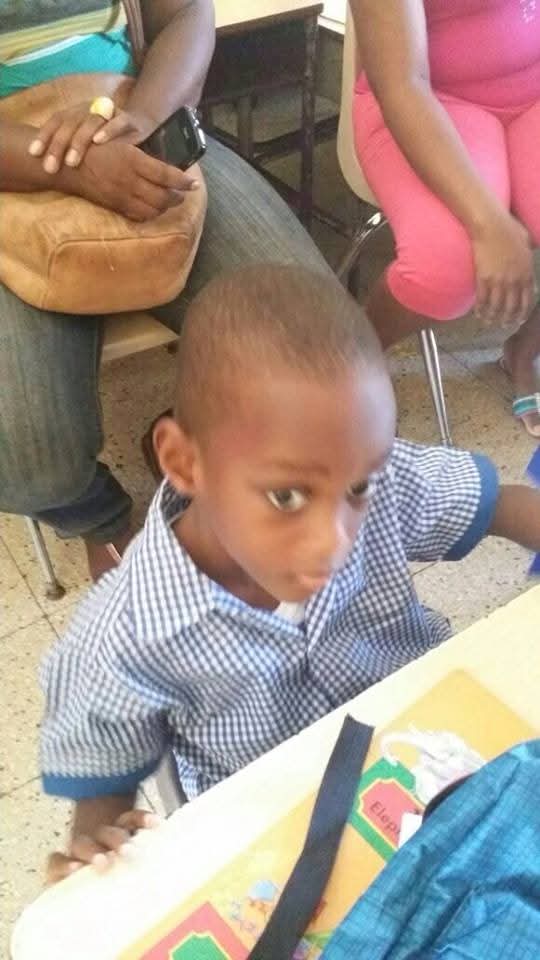
Cyle at Preschool in Jamaica

Everything changed when Cyle and his mom moved to Canada when he was 12. At first, they weren’t sure where to turn. They called many different organizations trying to connect with the right place that would provide them guidance. One of those calls connected them to Grandview Kids, and from that moment, hope began to blossom. 

Occupational therapist, Sandie, and physiotherapist, Nicole, were some of the first from Team Grandview to visit the family. They walked into a home marked by strength as they saw homemade equipment built by loving hands. “You’re super people,” they said, recognizing the love and fight that had brought them this far. Social Work helped secure Assistance for Children with Severe Disabilities (ACSD) funding and quickly provided a loaner wheelchair while the paperwork for permanent equipment was processed. Soon, Cyle received ankle-foot orthotics (AFOs), a stander, commode and other tools that eased daily functions.  

Physiotherapy, Botox® treatments and customized home exercise plans from Grandview Kids helped reduce his pain, especially in his growing body. His physiotherapists even printed out exercises with photos and instructions, making it easier for the family to follow at home. The relief of pain allowed him to stretch, grow and, perhaps most significantly, focus. For the first time, he could attend school regularly and began to thrive. 

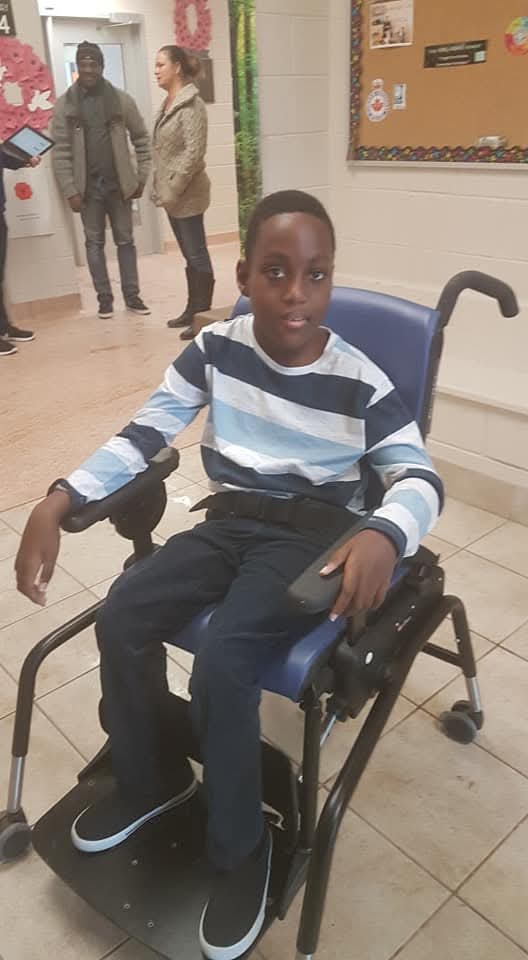
Cyle’s first day of middle school in Canada

In Jamaica, school had been a battle. Many didn’t believe he belonged in a classroom. However, in Canada, with Grandview Kids’ support, not only was he welcomed, but he excelled. Despite the learning gaps from years without proper support, Cyle caught up, and by middle school, he had earned a student award. By high school, it was straight A’s. His mother watched as her son blossomed, finding strength in the very place where others had once only seen limitation. 

Cyle celebrating graduation with his family

Grandview Kids continued to support Cyle, Nordean and his stepdad beyond his physical needs. Cyle was missing his extended family in Jamaica, the warmth of his homeland and the familiarity of his culture. Canada’s cold winters and unfamiliar systems made the early days tough. His team at Grandview Kids, consisting of therapists across several disciplines, developmental paediatrician, a social worker and a family support assistant, helped bridge that emotional gap. They listened to Cyle, connected him with other kids, showed him he wasn’t alone and made space for his voice and his story. He saw that he belonged. 

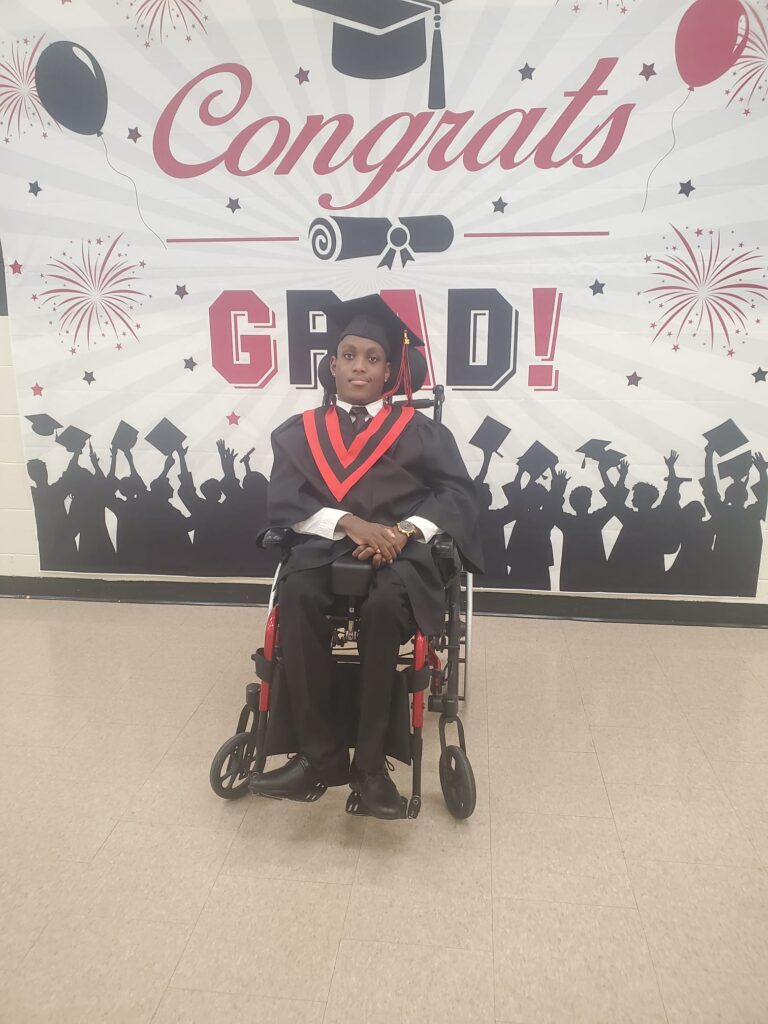
When Cyle had major surgery in September 2024 for hip relocation and foot lengthening, he spent eight weeks at Holland Bloorview Kids Rehabilitation Hospital in inpatient rehab. Following his surgery, Cyle received follow-up care from his Grandview Kids team. While recovering, he stayed on top of his schoolwork, and by the end of the year, he made the honour roll again! Graduating high school this year was more than a standard ceremony. It was a celebration of resilience. His mom wept tears of joy and pride, remembering the 12 to 18-hour days: waking at 6:30 a.m., finishing homework by 10 p.m. “I look up to my son,” she says. “I see many days where Cyle can push through because of his mental fortitude. I am very proud.” 

“Cyle has been with Grandview since 2019, and has Level IV spastic CP. As a result, he is unable to stand or walk and has limited use of his hands. He has sustained significant pain and difficulties over the years. None of this has stopped his drive and ambition. His resilience and determination were rewarded last night as he walked across his high school stage to graduate with honours and the Ontario Scholar Award!” – Tanya, Family Support Assistant 

Cyle at prom

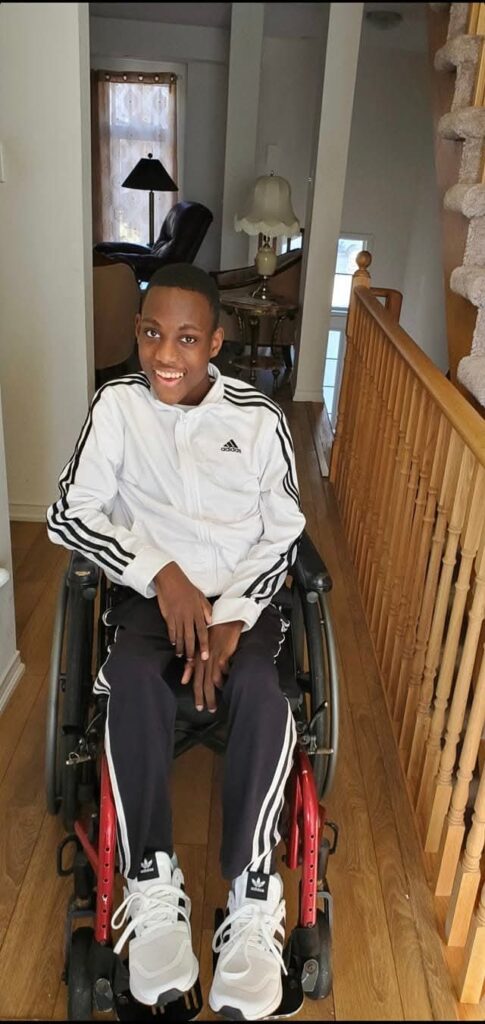
Cyle, now 18, loves basketball, music and lively conversations about politics and societal topics. With the loving support of his mom, stepdad and extended family, he knows his differences make him uniquely important in the world. Nordean reminds him that, “Your difference is appreciated. Look at colours, they can’t all be the same – they come in different shades, and it makes the world more beautiful.” Along with the unwavering support of Grandview Kids, Cyle’s story is one of hope not only to children and youth with physical, communication and developmental needs in Canada, but including those back in Jamaica and beyond. He’s living proof that with the right support, every child and youth can live at their full potential. 

Most people find themselves in circumstances that require some extra support. Whether it’s short-term counselling or long-term therapy to help process emotions, understand our reactions to specific situations, or develop coping strategies. People participate in counselling/therapy for a variety of reasons and needs.

Families of Grandview Kids may struggle with acceptance of the diagnosis, caregiver burnout, frustrations with the health care system, financial strain, and marital discord that can be connected to the diagnosis. Symptoms of depression, anxiety, OCD, etc. are very common.

At Grandview Kids, the Social Work Team is available to provide support, at no cost, related to the impact of the child’s diagnosis. However, if you are not eligible or you want to seek counselling/therapy for other reasons, below is a list of options:

  • Ontario College of Social Workers and Social Service Workers – Public Registry of Social Workers.
  • Psychology Today is an online website to search for therapists in private practice; you can search by your preferences as well. Fee-based.
  • Counselling – Region of Durham – Fees are based on family income
  • https://www.durhamchc.ca/ – No fees.
  • https://affordabletherapynetwork.com/ – Reduced rates.
  • https://affordabletherapyontario.com/ – Reduced rates.

If you have benefits, you may have coverage to cover the cost of private therapy. It’s essential to compare the therapist’s credentials with your insurance coverage. Some only cover the costs of a Psychologist, and others may cover Mental Health Professionals, which is more inclusive of the varying professions.

Always ensure the therapist is registered in the regulating body of their profession, for example, the Ontario College of Social Workers and Social Service Workers or the College of Registered Psychotherapists of Ontario.

Written by Grandview Kids Social Worker, Mandy

Healthy boundaries are evident when people feel comfortable and safe. Boundaries are an important part of any relationship, personal or professional, for individuals to feel respected and to be respectful to others. They recognize that interactions include emotional, physical, use of time, intellectual, material (i.e., loaning money), relationship, professional and digital or online.

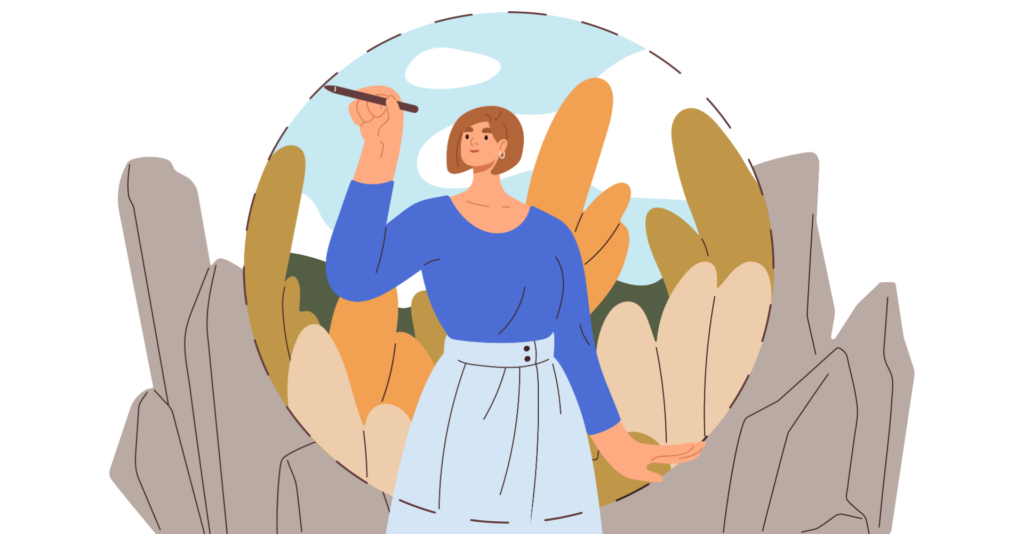
A graphic depicting a cartoon woman drawing a circular boundary around her in a lush landscape.

Healthy boundaries are:

  • A safeguard to overextending yourself
  • A self-care practice
  • A way of defining roles in a relationship
  • Strategies to communicate acceptable and unacceptable behaviours
  • Perimeters for knowing what to expect in relationships
  • How we can express our own needs

Boundaries are based on values and are individual to each of us. What is comfortable for one may not be for another. As important as it is to set your own boundaries, it is just as important to recognize and respect the boundaries of others.

However, this is sometimes a difficult feat. If this is a challenge for you, know that you are not alone. Our life experiences define our boundaries, and others can influence us until we identify the need to define them ourselves.

Consider a time that you felt uncomfortable or unsafe with someone. For example, you feel that you cannot express your own opinion in a family discussion for fear of being ridiculed. That is usually indicative of a pattern in the family dynamics. Replay that same scenario in your head, but imagine you are using confident body language and assertive communication.

  • “I can see where you are coming from. However, my experience with this is…”

If the person you are interacting with becomes disrespectful towards you, you can say “no.” Everyone always has the right to say no, whether it’s a friend asking for favours or someone threatening your personal safety.

  • “I’m not comfortable with this…”
  • “Please don’t do that…”
  • “I’ve decided not to…”

An explanation isn’t required, but use ‘I’ statements if you want to.

  • “I feel that you are taking advantage of me when you ask me to…”
  • “I feel disrespected when you speak to me like that…”

On the flip side is respecting the boundaries of others. Remember that these are all individual. You may be someone who likes to hug but physical touch could be triggering for some people.

  • “Is it ok if I give you a hug?”
  • “I would prefer if you didn’t.”
  • “Ok, I’ll remember that from now on.”

Hot topics, such as politics and religion, can be uncomfortable conversations for some. You can start a respectful conversation by explaining your own boundaries.

  • “I am very thoughtful about the election. Can we discuss that?”
  • “I am also very thoughtful about it but am uncomfortable discussing politics.”
  • “That’s understandable. What would you like to talk about?”

A healthy interaction is a give-and-take activity. If you start to feel unheard, disrespected or uncomfortable, that means that you are giving too much of yourself in that scenario, and it’s a good time to bring out your boundaries. If you notice someone you are speaking with seems uncomfortable or angry, consider that you might be taking too much in that conversation and need to respect other’s boundaries.

Remember that your self-care is top priority!

March 3 to 9 is Social Work Week in Ontario, and across Canada, March is National Social Work Month. This March, we invite you to how social workers are meeting Ontarians where they are, when it matters most. The 2025 theme, Wherever you are, #SoAreWe, speaks to the availability and versatility of the social work profession, highlighting its critical role in addressing a growing and universal problem – access to care.

What is a Social Worker? 

Social Work is a profession aimed at helping individuals, families and communities to build capacity and promote wellbeing. They can help to identify sources of stress or problems, strengthen coping skills and find effective solutions. Social workers are unique among helping professionals because they look at people’s problems within the context of their families, workplace and communities and consider the connection between personal problems and larger social issues (Ontario Association of Social Workers, 2025).  

Receiving and navigating through a disability diagnosis for your child is complicated and confusing and often evokes many difficult emotions, thoughts, and worries about the future. Parents and caregivers are often left to search for support in a convoluted system with little direction while caring for their child and/or family and managing their own well-being. This is an overwhelming time in a family’s life, and Social Workers at Grandview Kids play a unique role in the care team.

Social Workers can help your family understand your child’s diagnosis, assist in developing coping strategies and connect your family with programs or services in the community. Social Workers aim to include and promote the best interests of the entire family that may be impacted by a disability.  

Social Workers assist families in processing their emotions and thoughts and navigating the next steps regarding a child’s disability. Social Work Services at Grandview Kids can include individual, family or group counselling for caregivers/parents, clients and siblings and are provided by Registered Social Workers and Family Support Assistants. These services can also assist with resource coordination, transition support, and funding assistance to clients and their families.  

How to access Social Work at Grandview Kids and beyond:

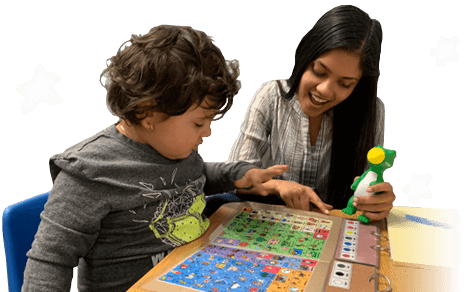
Any child who is receiving Speech Therapy, Occupational Therapy, or Physiotherapy may be eligible for Social Work Services at Grandview Kids. Ask your clinician about Social Work Services, and they can complete a referral to our team.  

When you meet with a Social Worker, they will complete an intake assessment to better understand your current goals and support needs. From that point, you will work with your Social Worker towards those goals. Your Social Worker will be a supportive member of your child’s team that works collaboratively with your family, their Grandview Team, and other community members that may be supporting your child or family. 

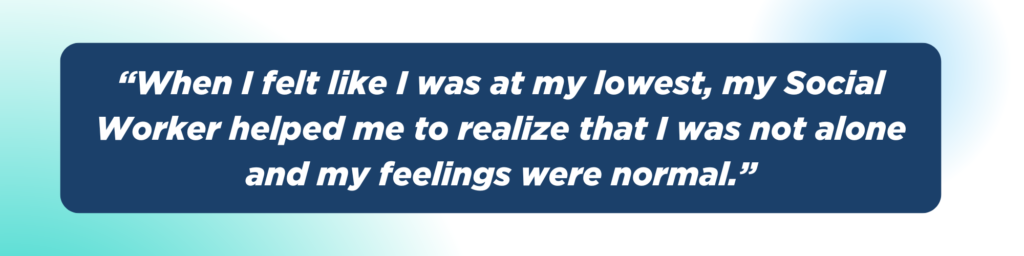
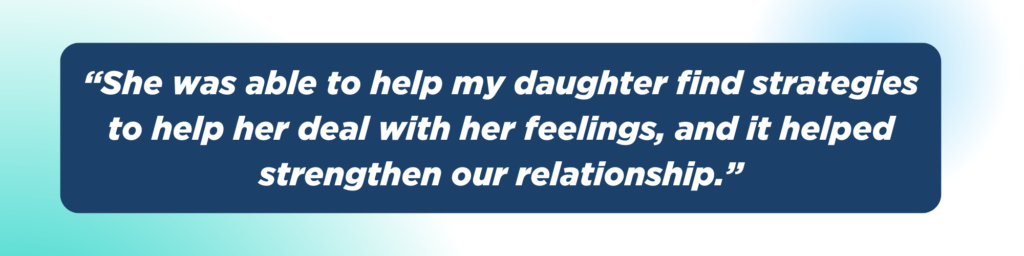
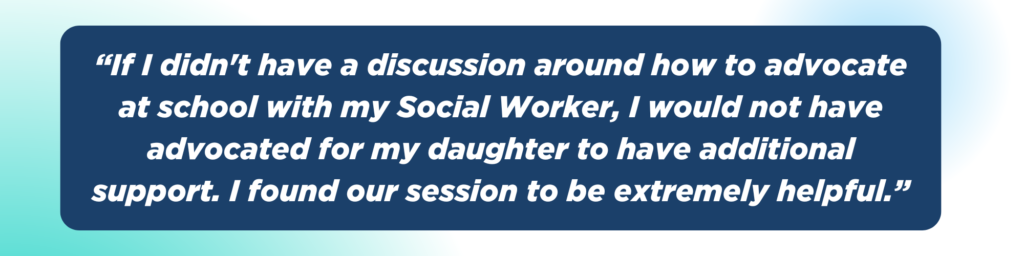
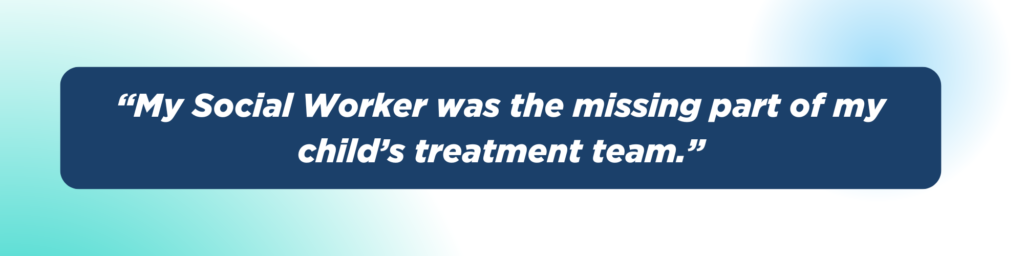
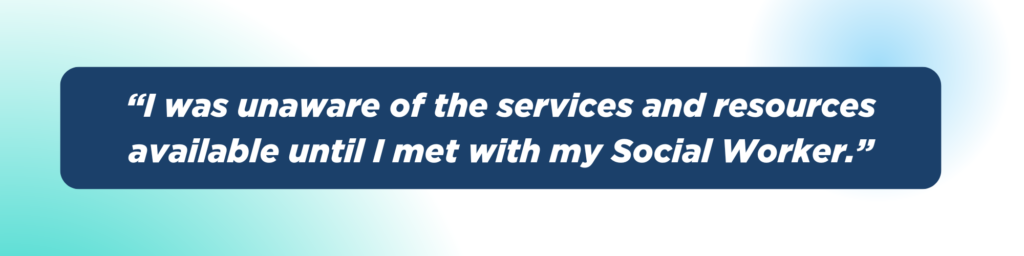
Feedback from Grandview Kids families about Social Work: 


Myths About Social Workers  

Source: Ontario Association of Social Workers 

Myth: For psychotherapy or mental health services, you need to see a psychologist or psychiatrist. 

FACT: Social Workers are the largest group of practitioners providing psychotherapy and other mental health services in the province. In fact, Social Workers are often the only mental health care providers in many rural and remote communities.  

Myth: Anyone who has a kind heart can do what a Social Worker does. 

FACT: Social Workers are highly skilled professionals who have a university degree in Social Work at the bachelor’s, master’s, or doctoral level. 

Myth: Social Workers are bleeding hearts. 

FACT: Social workers believe that many factors affect the health and well-being of individuals and communities. In fact, a growing body of research supports the conclusion that the roots of health and well-being can be found in such factors as access to early childhood education and care, education and literacy, employment and working conditions, income and distribution, housing, social inclusion, etc.  

Thank you to our amazing Social Work team for making a difference to clients and families. Join us in celebrating them this #SocialWorkMonth.

  • ⟨
  • Page 1
  • Page 2
  • Page 3
  • ⟩

Primary Sidebar

Child Stories

ICAudGItaW1hZ2V7cG9zaXRpb246cmVsYXRpdmU7dHJhbnNpdGlvbjp0cmFuc2Zvcm0gMC4yNXMgZWFzZX0ud3AtYmxvY2staW1hZ2UgLnRiLWltYWdlLmFsaWduY2VudGVye21hcmdpbi1sZWZ0OmF1dG87bWFyZ2luLXJpZ2h0OmF1dG99LnRiLWltYWdlIGltZ3ttYXgtd2lkdGg6MTAwJTtoZWlnaHQ6YXV0bzt3aWR0aDphdXRvO3RyYW5zaXRpb246dHJhbnNmb3JtIDAuMjVzIGVhc2V9LnRiLWltYWdlIC50Yi1pbWFnZS1jYXB0aW9uLWZpdC10by1pbWFnZXtkaXNwbGF5OnRhYmxlfS50Yi1pbWFnZSAudGItaW1hZ2UtY2FwdGlvbi1maXQtdG8taW1hZ2UgLnRiLWltYWdlLWNhcHRpb257ZGlzcGxheTp0YWJsZS1jYXB0aW9uO2NhcHRpb24tc2lkZTpib3R0b219IC53cC1ibG9jay1pbWFnZS50Yi1pbWFnZVtkYXRhLXRvb2xzZXQtYmxvY2tzLWltYWdlPSJhMWJlMmUyODAwMWFkMGRlMjBhM2RlZWVlYmE5MDJhMSJdIHsgbWF4LXdpZHRoOiAxMDAlOyB9IEBtZWRpYSBvbmx5IHNjcmVlbiBhbmQgKG1heC13aWR0aDogNzgxcHgpIHsgICAudGItaW1hZ2V7cG9zaXRpb246cmVsYXRpdmU7dHJhbnNpdGlvbjp0cmFuc2Zvcm0gMC4yNXMgZWFzZX0ud3AtYmxvY2staW1hZ2UgLnRiLWltYWdlLmFsaWduY2VudGVye21hcmdpbi1sZWZ0OmF1dG87bWFyZ2luLXJpZ2h0OmF1dG99LnRiLWltYWdlIGltZ3ttYXgtd2lkdGg6MTAwJTtoZWlnaHQ6YXV0bzt3aWR0aDphdXRvO3RyYW5zaXRpb246dHJhbnNmb3JtIDAuMjVzIGVhc2V9LnRiLWltYWdlIC50Yi1pbWFnZS1jYXB0aW9uLWZpdC10by1pbWFnZXtkaXNwbGF5OnRhYmxlfS50Yi1pbWFnZSAudGItaW1hZ2UtY2FwdGlvbi1maXQtdG8taW1hZ2UgLnRiLWltYWdlLWNhcHRpb257ZGlzcGxheTp0YWJsZS1jYXB0aW9uO2NhcHRpb24tc2lkZTpib3R0b219IH0gQG1lZGlhIG9ubHkgc2NyZWVuIGFuZCAobWF4LXdpZHRoOiA1OTlweCkgeyAgIC50Yi1pbWFnZXtwb3NpdGlvbjpyZWxhdGl2ZTt0cmFuc2l0aW9uOnRyYW5zZm9ybSAwLjI1cyBlYXNlfS53cC1ibG9jay1pbWFnZSAudGItaW1hZ2UuYWxpZ25jZW50ZXJ7bWFyZ2luLWxlZnQ6YXV0bzttYXJnaW4tcmlnaHQ6YXV0b30udGItaW1hZ2UgaW1ne21heC13aWR0aDoxMDAlO2hlaWdodDphdXRvO3dpZHRoOmF1dG87dHJhbnNpdGlvbjp0cmFuc2Zvcm0gMC4yNXMgZWFzZX0udGItaW1hZ2UgLnRiLWltYWdlLWNhcHRpb24tZml0LXRvLWltYWdle2Rpc3BsYXk6dGFibGV9LnRiLWltYWdlIC50Yi1pbWFnZS1jYXB0aW9uLWZpdC10by1pbWFnZSAudGItaW1hZ2UtY2FwdGlvbntkaXNwbGF5OnRhYmxlLWNhcHRpb247Y2FwdGlvbi1zaWRlOmJvdHRvbX0gfSA=
LnRiLWhlYWRpbmcuaGFzLWJhY2tncm91bmR7cGFkZGluZzowfQ==
LnRiLWZpZWxke21hcmdpbi1ib3R0b206MC43NmVtfS50Yi1maWVsZC0tbGVmdHt0ZXh0LWFsaWduOmxlZnR9LnRiLWZpZWxkLS1jZW50ZXJ7dGV4dC1hbGlnbjpjZW50ZXJ9LnRiLWZpZWxkLS1yaWdodHt0ZXh0LWFsaWduOnJpZ2h0fS50Yi1maWVsZF9fc2t5cGVfcHJldmlld3twYWRkaW5nOjEwcHggMjBweDtib3JkZXItcmFkaXVzOjNweDtjb2xvcjojZmZmO2JhY2tncm91bmQ6IzAwYWZlZTtkaXNwbGF5OmlubGluZS1ibG9ja311bC5nbGlkZV9fc2xpZGVze21hcmdpbjowfQ==

Diwali (Festival of Lights) – November 12

Diwali, also known as Deepavali, is a festival of lights celebrated by many people all around the world. Based on the Hindu lunar calendar, Diwali will be celebrated on November...

Latest Updates

  • Building belonging through family leadership August 31, 2026
  • September 2026: Dates of Significance August 31, 2026
  • Celebrating Camp at Grandview Kids August 31, 2026
  • Celebrating International Youth Day! July 31, 2026
  • Living beyond expectations: Haylee’s journey with SMA Type 1  July 31, 2026

You Have Questions

We’d like to help you find the answers…

Contact Us Today

© Grandview Kids Built by PeaceWorks

  • About Us
  • Contact Us
  • Privacy
Accessibility Adjustments

Powered by OneTap

How long do you want to hide the toolbar?
Hide Toolbar Duration
Select your accessibility profile
Vision Impaired Mode
Enhances website's visuals
Seizure Safe Profile
Clear flashes & reduces color
ADHD Friendly Mode
Focused browsing, distraction-free
Blindness Mode
Reduces distractions, improves focus
Epilepsy Safe Mode
Dims colors and stops blinking
Content Modules
Font Size

Default

Line Height

Default

Color Modules
Orientation Modules