• Skip to primary navigation
  • Skip to main content
  • Skip to primary sidebar
Grandview Kids Logo

Grandview Kids

Every Child And Youth Living Life At Their Full Potential

  • About Us
    • Vision, Mission and Values
    • The New Grandview Kids
      • Operational Readiness
      • Visiting Grandview Kids’ Ajax Headquarters
    • Our History
    • Leadership
    • Board of Directors and Committees
    • Annual Report
    • Strategic Plan
    • Policies
  • Calendar
  • Annual Report
  • Contact
    • Contactez – nous
    • Ajax – Headquarters
    • Bowmanville Health Centre
    • Grandview School
    • Oshawa – Dwyer
    • Port Perry
    • Whitby – Abilities Centre
  • Careers
  • Register
  • Donate
  • Instagram
  • LinkedIn
  • Facebook
  • Services and Programs
    • Audiology
    • Autism Program
      • Autism Spectrum Disorder (ASD) Diagnostic Hub
      • Caregiver-Mediated Early Years Programs
      • OAP Core Clinical Services
      • Entry to School Program
      • Foundational Family Services
    • Blind-Low Vision Program
    • Extensive Needs Service
    • Family Engagement Program
      • Adolescent Transition Program
      • Family Leader Program
        • Family Advisory Council
        • Paid Advocates
        • Youth Advisory Council
    • Infant Hearing Program
    • Medical Services
      • Autism Spectrum Disorder (ASD) Diagnostic Hub
      • Complex Care Program
      • Grandview Anesthesia Procedure (GAP) Clinic
      • Hypertonia Clinic
      • Nutrition Services
      • Orthopaedic Clinic
    • Occupational Therapy
    • Physiotherapy
    • Preschool Outreach Program
    • School Programs & Resources
      • Resources for Educators
      • School-Based Rehabilitation
    • Service Navigation
      • SmartStart Hub: Parents
      • SmartStart Hub: Partners
    • Social Work
    • Speech-Language Pathology
      • Augmentative and Alternative Communication
    • Therapeutic Recreation
  • Purchased Services
    • Inclusive Recreation
    • Beyond the Walls
    • OAP Core Clinical Services
      • Behaviour Services
  • Research
    • Get involved in research
    • IDEA Study
      • Building knowledge and understanding of the intersection of race and disability in accessing pediatric rehabilitation services.
    • Joint Research Ethics Board
    • Research Associate: Dr. Fiona Moola
    • Research Associate: Dr. Meghann Lloyd
  • Resources
    • Ability Acceptance Program
    • Arriving at Grandview Kids
    • Community Supports & Resources
    • Family Support Fund
    • Free to Read Program
    • Frequently Asked Questions
    • Gather by Grandview Kids
    • News and Updates
    • Privacy
    • Resources for Parents and Caregivers
    • Visiting Grandview Kids
  • Support Us
    • Ways to support
    • Case for Support
    • Host a fundraiser
    • Participate in an event
      • Golf Fore Grandview Kids
      • Sponsor the Drum
      • Dream Big, Dream Brighter Awards Gala
    • Leave a legacy
      • Gifts of securities
      • Gifts of bequests
      • Gifts of life insurance
    • Your impact
    • Building a Legacy: Honouring Jerry Coughlan
  • I Want To…
    • Connect with Grandview Kids
    • Donate
    • Refer a child or youth
    • Register via My Community Hub
    • Schedule an Appointment
    • Volunteer at Grandview Kids
    • Work at Grandview Kids
  • Grandview School
    • About Our Program
    • About Our Board
    • Grandview School Social Story
    • Plans and Reports
    • Resources for Families
    • Resources for Schools – Switch It Up!
    • Careers and Volunteering
    • Contact Grandview School
  • Search

Posted July 23, 2025

Grandview Kids Celebrate National Sister Day!

Family Engagement

National Sister Day, celebrated on the first Sunday in August, honours the unique and lasting bond between sisters. This special relationship is filled with moments that bring laughter, occasional disagreement and unwavering support.

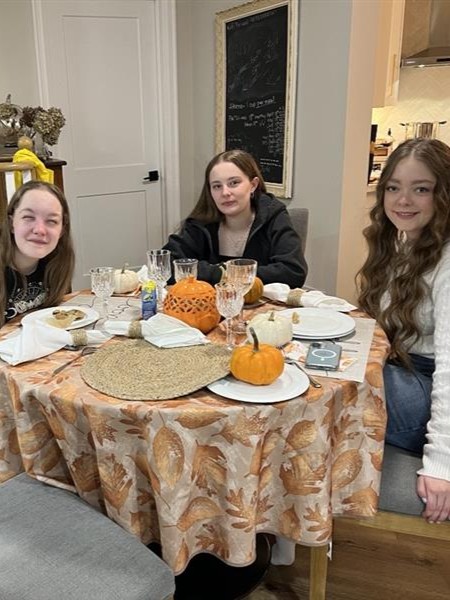
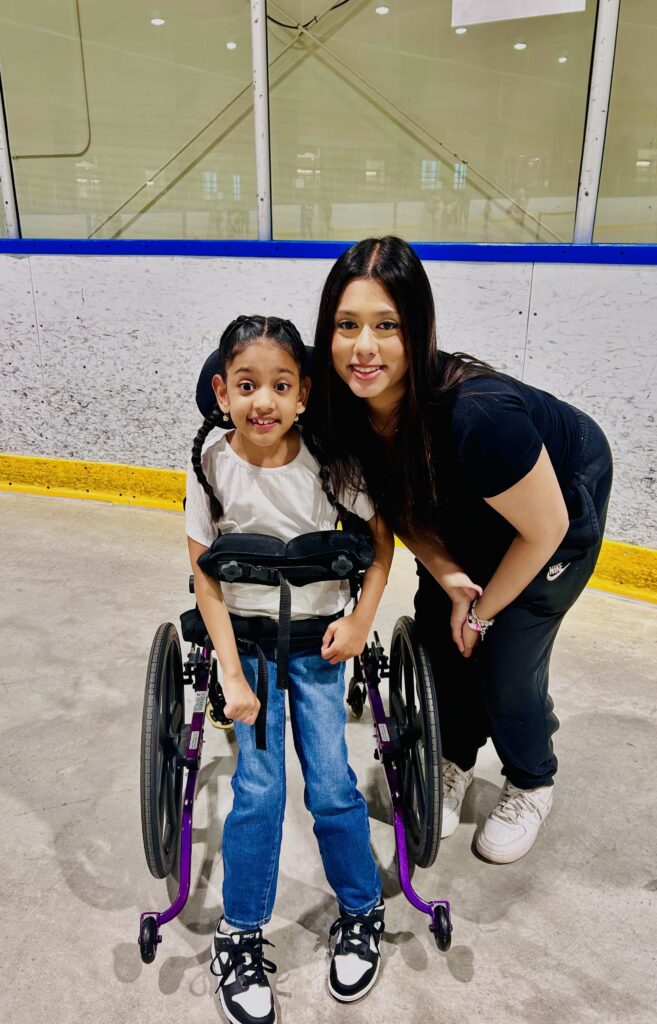
At Grandview Kids, we recognize the important role siblings play and the meaningful impact they have on the lives of our clients. In recognition of National Sisters Day, sisters of clients shared their experiences of being siblings to Grandview clients.

The Wiley Sisters: Anna, Ella and Reggie

“My name is Anna Wiley. I’m a Grandview Kids graduate, and I have two younger sisters, Reggie and Ella. Ella is the middle child, and Reggie is the youngest. They are the coolest sisters I could ask for. 

The best thing about having sisters is how supportive they are. They always give their all to what the other cares about, and they take time to show they care. My sisters are so kind and loving, and they are always ready to help. That is what inspires me.” 


“Hi, my name is Ella Wiley! I have two sisters, an older sister named Anna and a younger sister named Reggie. My oldest sister, Anna, received speech therapy at Grandview Kids, and I’m also a proud Grandview graduate, as I received physiotherapy and occupational therapy when I was younger. 

The best thing about having a sister is always having a built-in best friend. Whether I’m happy or sad, they’re always people I can rely on. They mean the world to me, and life wouldn’t be the same without them. There’s never a dull moment and I wouldn’t have it any other way. 

One thing I’ve learned by being a sister to a Grandview Kids client is how important it is to show up for each other with love, patience and understanding. It’s made me a better sister and person. Being part of the Grandview community, both as a sibling and a former client has shown me that there’s a place for everyone. This is my normal, and it’s perfect just the way it is.” 

“My name is Reggie Wiley. I have two sisters, and their names are Ella and Anna. The best thing about having sisters is how easy it is to understand, relate to and connect with them. I’ve learned that even with a disability, you can still achieve success in anything you put your mind to.” 

Zoey and Zayla

“My name is Zoey Stevens, and I have one sister. The best thing about having a sister is having a built-in lifelong friendship and always having support. One thing that I have learned while being a sister of a Grandview Kids client is how important it is to be patient and understanding with someone with special needs.”
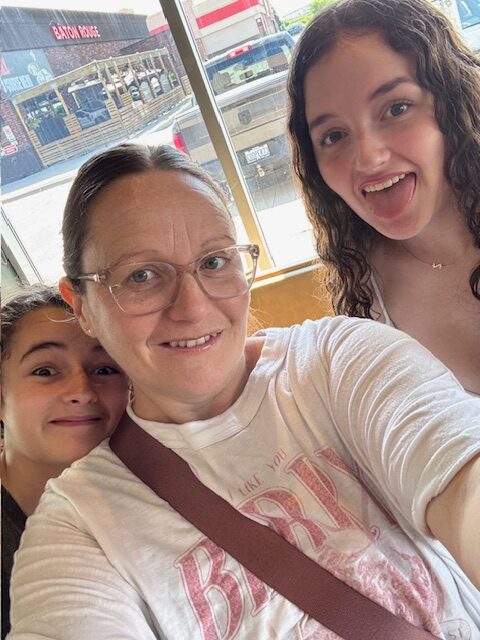
Cianna and Kiara

“Hi, my name is Cianna and I have one sister named Kiara. She is eight years old, and being her big sister is one of the greatest joys of my life. Kiara is funny, creative and full of love. The best thing about having a sister is always having someone by your side to make memories with, whether we’re playing, laughing or just spending time together. We have a very special bond, and I love how we can sometimes understand each other without even needing words. 

Being a big sister to Kiara, who is a Grandview Kids client, has taught me so much about love, patience and seeing the world through a more caring lens. I’ve learned that progress comes in all shapes and sizes, and that every small step deserves to be celebrated. 

Kiara has shown me how to slow down and appreciate the little things — like her smile when she’s proud of herself, or the way she lights up when we do something fun together. One of the most important things I’ve learned from being her sister is how to be an advocate, not just for her, but for others too. 

I’ve become more understanding of how different people communicate and learn, and I’ve realized how important it is to make sure everyone feels included and heard. Kiara has made me more patient, more kind and definitely more courageous. Watching her face challenges with strength and joy has inspired me in ways I can’t even explain. I’m so lucky to have her as my sister, and I’m proud of her every single day. “

Megan and Lauren

“My name is Megan, and I have one sister named Lauren. The best thing about having a sister is that she gets me! Lauren always knows how to make me laugh and brighten up my day, even though we still argue over her stealing all my chocolate. She has taught me patience and shown me how important it is to live life to the fullest. Lauren has faced more than her fair share of challenges throughout the last 17 years, but she is still the happiest kid I know, and I’d be lost without her!” 
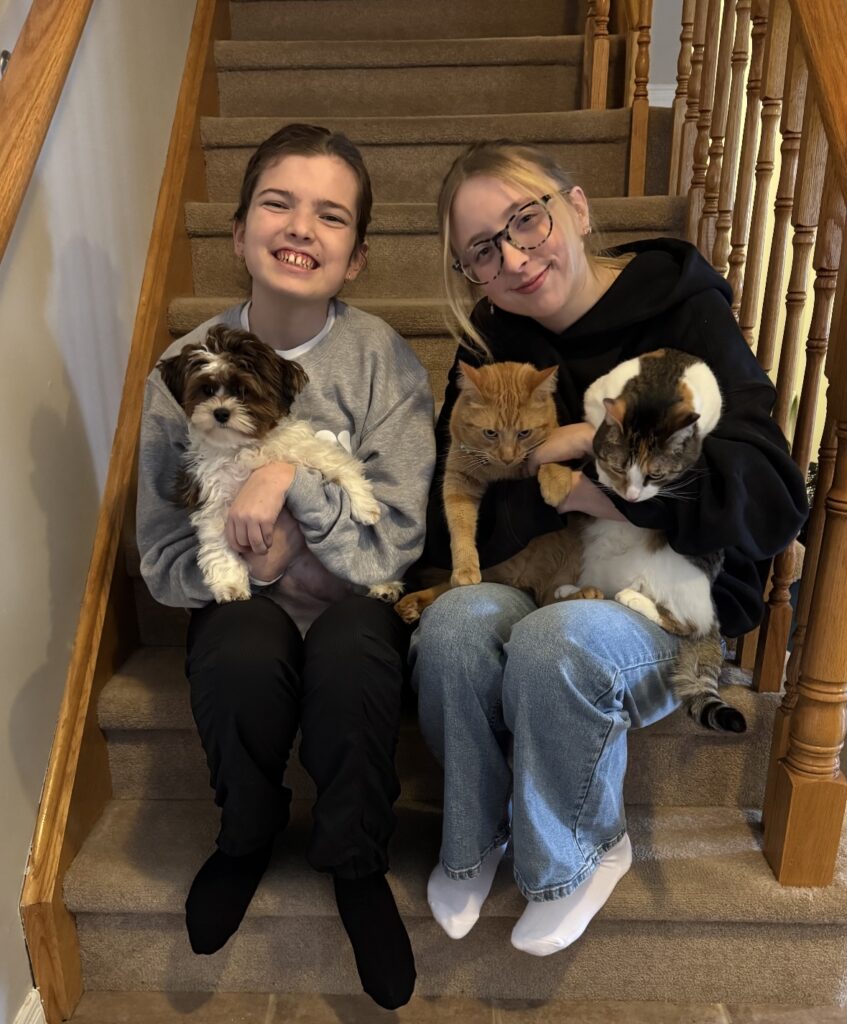
Grandview Kids Ambassador Program 

Grandview Kids is privileged to boast a wide network of clients and their families (known as “Ambassadors”) who participate in our Ambassador Program each year to tell their stories and support Grandview Kids in media opportunities, fundraising initiatives and at events.

Are you a sibling of a Grandview Kids client? We want to give you the opportunity to share your Grandview journey as a sibling with those in the community. Contact our Ambassador Advisor, Abby Valenciano, at Abby.Valenciano@grandviewkids.ca.


July 24 is International Self-Care Day, a day to highlight the importance of self-care in supporting overall health and well-being. Self-care helps restore energy, sharpen focus and foster a positive mindset by ensuring our basic needs are met. It does not need to be elaborate or costly, but it should be meaningful and tailored to each individual. Self-care looks different for everyone. Whether it’s taking time to rest, recharge or indulge, prioritizing your own well-being can help you show up as the best version of yourself.

While self-care looks different for everyone, fresh ideas can help inspire new ways to recharge and care for ourselves. Members of Team Grandview’s Family Engagement and Social Work teams shared some of their favourite self-care tips below!

Step outside for fresh air

Open a window, sit on your porch or go for a short walk. Even a few minutes of fresh air can provide mental clarity, ease stress and help you reset.

Schedule “me time”

Make time for things that bring you joy, even if it’s a solo grocery run, a cozy face mask, your favourite TV show or movie, a manicure or a quiet cup of coffee. Even simple rituals matter.

Move your body

Exercise can take many forms! Whether it’s lifting weights, going for a walk, playing tennis, pickleball or even a game of pick-up dodgeball with colleagues. Regular movement boosts your mood, supports heart health and improves energy levels.

Read a book or magazine!

Reading offers a break from daily stress. Whether it’s fiction, memoir or poetry, immersing yourself in a good book can be restorative.

Sit in nature

Find a peaceful moment outdoors, whether you’re at the lake, a local park or watching the sunset from your window. Nature has a calming effect that helps you pause and reflect.

Connect with others who “get it”

Joining a peer support group, especially one connected to your lived experience can offer encouragement, practical advice and emotional strength. You are not alone. There’s comfort in spending time with those who understand your challenges. Whether you’re sending memes back and forth or sharing a latte in person, those small connections count.

Explore creativity

Don’t wait for “someday.” Try a new hobby like painting, crochet, macramé or cooking a recipe from another culture. Creative outlets can re-energize and inspire.

Journal your thoughts

Writing can be a powerful tool for processing emotions and celebrating growth. Start small, or dive deep into telling your story, your lived experience matters.

Surround yourself with people who lift you up

Supportive friends and loved ones offer comfort, laughter and the kind of company that recharges your spirit, even if it’s just through a meme exchange or quick chat.

Snuggle with a furry friend

Pets offer comfort and help ground us in the moment. Time spent with animals can be a calming and joyful part of your routine.

Practice mindful breathing

Breathing exercises like box breathing or TIPP (temperature, intense exercise, paired muscle relaxation and paced breathing) can reduce anxiety and bring focus.

Spend quality time with loved ones

Time with family and friends can be an important form of self-care. It helps us feel safe, supported and connected.

Explore new places

Visiting vintage markets, museums, historical sites or even nearby towns can refresh your perspective and spark joy.

Try gardening

Spending time in the garden, even just playing in the dirt can be meditative. It’s a great way to unwind and reconnect with nature.

June 23 is International Dravet Syndrome Awareness Day. This day gives families affected by Dravet Syndrome a chance to share stories, build support and increase public knowledge about this rare form of childhood epilepsy. This syndrome is associated with a genetic mutation, primarily in the SCN1A gene, a sodium channel receptor. Dravet Syndrome is a spectrum, affecting individuals with different outcomes depending on gene mutation. Classic signs and symptoms include children presenting with the onset of seizures before their first birthday, with long-lasting initial seizures, often triggered by illness. Individuals with Dravet Syndrome are diagnosed through genetic testing that observes sodium channel levels. Grandview Kids’ Peer Navigator, Jacki N., shares her family’s journey as they navigate life with Dravet Syndrome. 

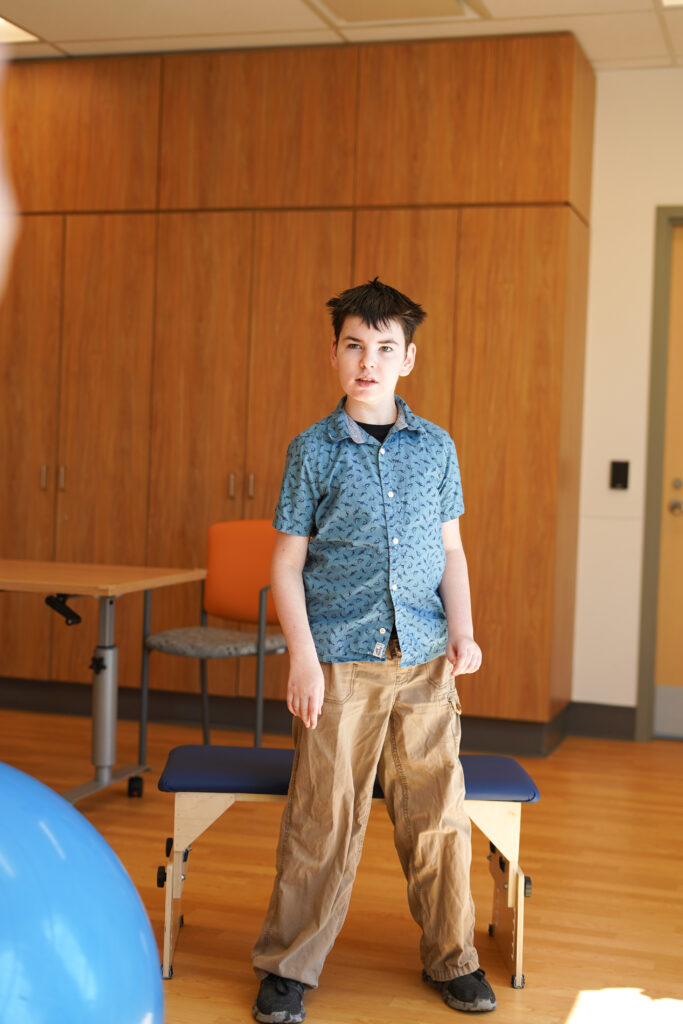
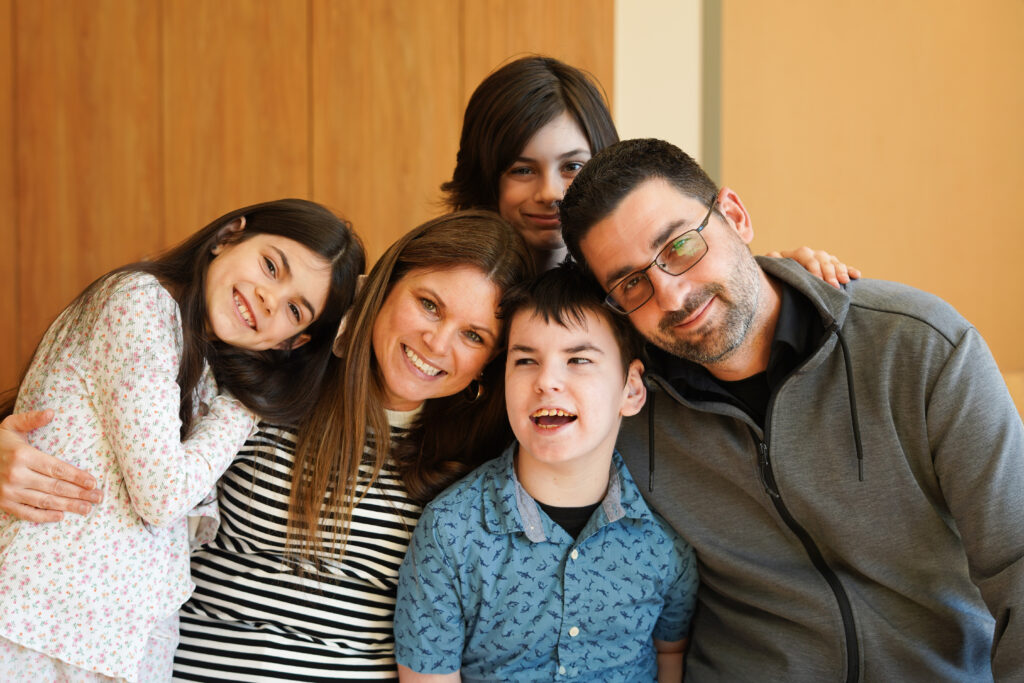
13-year-old Colton lives with his parents, Jacki and Chris, older brother Treston and younger siblings Jaxon and Adelaide. They enjoy travelling, watching and playing sports and birdwatching, which gives them a purpose to go on many family walks and hikes. Colton loves all sports, particularly watching hockey, baseball and soccer, the latter of which he plays. He is also fond of playing video games with his brothers, is fascinated with bubbles, loves watching Toopy and Binoo and is always ready for an adventure. Although Colton has a sweet and easy-going personality, he is also quite persistent, preferring to stick to his known routines and schedules, even after rough days or nights of experiencing multiple seizures. 

Colton was diagnosed with Dravet Syndrome in April 2013, a year after his first seizure. As expected with Dravet Syndrome, he was later given a formal diagnosis of global developmental delay. Receiving the Dravet Syndrome diagnosis was an unexpected and initial shock to his parents. Later that evening, Jacki vividly recalls giving Colton a bath and looking at him, thinking “[the diagnosis] doesn’t change him; this is who Colton is,” immediately transitioning to acceptance, which they recognize can be a challenging step for parents and caregivers. Within a few weeks, Jacki began to realize the importance of receiving a formal diagnosis as it opened doors to education, treatment and connection with other families to help understand the nuances of Dravet Syndrome. “Receiving a diagnosis was more helpful than not receiving one,” as she was able to focus her research on sodium channel levels for controlling and stopping seizures. 

Seizure treatment and management for those living with Dravet Syndrome typically include a ketogenic diet, cannabidiol (CBD), which is used to significantly decrease seizure activity, pharmaceutical medications and, often, as a last resort, vagus nerve stimulation (VNS). VNS is an implanted device that sends mild electrical pulses through the vagus nerve to the brain to alter nerve activity and stop seizures. Jacki’s family quickly learned about Colton’s heat trigger, a commonality among those with Dravet Syndrome, prompting them to order a cooling vest. They also initially received pushback from their medical team on a treatment plan. However, the diagnosis gave them clearance to put Colton on a ketogenic diet, which has been highly effective for his seizure management. Making necessary adjustments to his diet, such as removing fruits at dinner to increase Ketone levels or taking supplements, has proven that even minor but tailored changes are helpful.  

Accessing medications currently being researched is a vital intervention for chronic illnesses like Dravet Syndrome, but they are not without risks. Colton was on a 5-year-long trial medication that required the consumption of 14 pills daily. Unfortunately, the trial medication was not approved, and he required weaning from this essential medication. This lengthy process of medication weaning over six months proved to be a challenge, especially when weaning off the last two pills, prompting approximately ten seizures a night. Although he is not back to baseline, the slow weaning process and dietary changes helped decrease the seizures to only one 30-second seizure a night. 

Losing seizure control and having to administer rescue medication is frightening. “We can’t give him rescue medication every night, or else we should be in the hospital,” Jacki says. If Colton has a bad night, he must likely recover at home the next day by sitting and resting. When deciding to participate in a research trial, you must be prepared to lose control over anything related to the medication. “We cannot tweak doses and are at the mercy of those running the trial and the supplier. We depend on funding and adequate results.” Jacki also shares that Canada is behind Europe and the U.S. in trials, research and development, so even if the medication works and is approved, there may be insufficient healthcare coverage for the costs after trial completion.  

Although most treatments aim to reduce the frequency of seizures, they do not address other effects of the disease and seizure control remains a challenge for the majority of those with Dravet Syndrome. Colton can walk short distances in the home and community but uses a paediatric stroller for longer distances. He can also communicate his needs and wants with few words and his body language, but the effects of his seizures are significant and long-lasting. 

Grandview Kids has been part of Colton’s journey since the beginning. His family are active members of the Grandview Kids community, being members of the Family Advisory Council (FAC), Youth Advisory Council (YAC) and Family Engagement Team (FET) over the years. Colton has received necessary support through Grandview Kids’ medical, therapy and social work services. “Of all the support I received, Grandview Kids was the most impactful,” Jacki shares. “We would always go to different events since seeing other families like mine, although experiencing different problems, because it made me feel like I wasn’t alone.” Through these connections, resources and information were freely shared, introducing Colton to Challenger Baseball, inclusive programming and soccer. Jacki appreciates how Colton and her other kids would see familiar faces, feel welcomed and be exposed to children with all types of skills and abilities. She emphasizes the importance of getting involved in attending Grandview Kids events, especially those hosted by the FET. “I didn’t always want to attend, but I would always leave better,” challenging other parents and caregivers to make the time to foster community, connection and belonging. 

World Diabetes Day was created in 1991 by IDF and the World Health Organization as a response to the escalating threat posed by diabetes. While 1 in 10 adults have diabetes, many are still undiagnosed, and there is a growing number of children diagnosed with diabetes. Diabetes is a chronic health condition that affects how the body turns food into energy. Normally, sugar comes from carbohydrates needed to fuel the body’s cells. When the pancreas does not develop enough insulin, or any at all, too much blood sugar stays in the bloodstream.

Serious health problems such as heart disease, nerve damage and eye issues can occur if lifestyle changes are not made and/or medication taken. There are multiple types of diabetes, but the most common are Type 1 and Type 2. Type 1 or juvenile diabetes is often genetic, and the rate of diagnosis is lower. Type 2, or adult-onset diabetes, can sometimes be prevented by adopting or maintaining healthy lifestyle choices. We wear blue for World Diabetes Day!

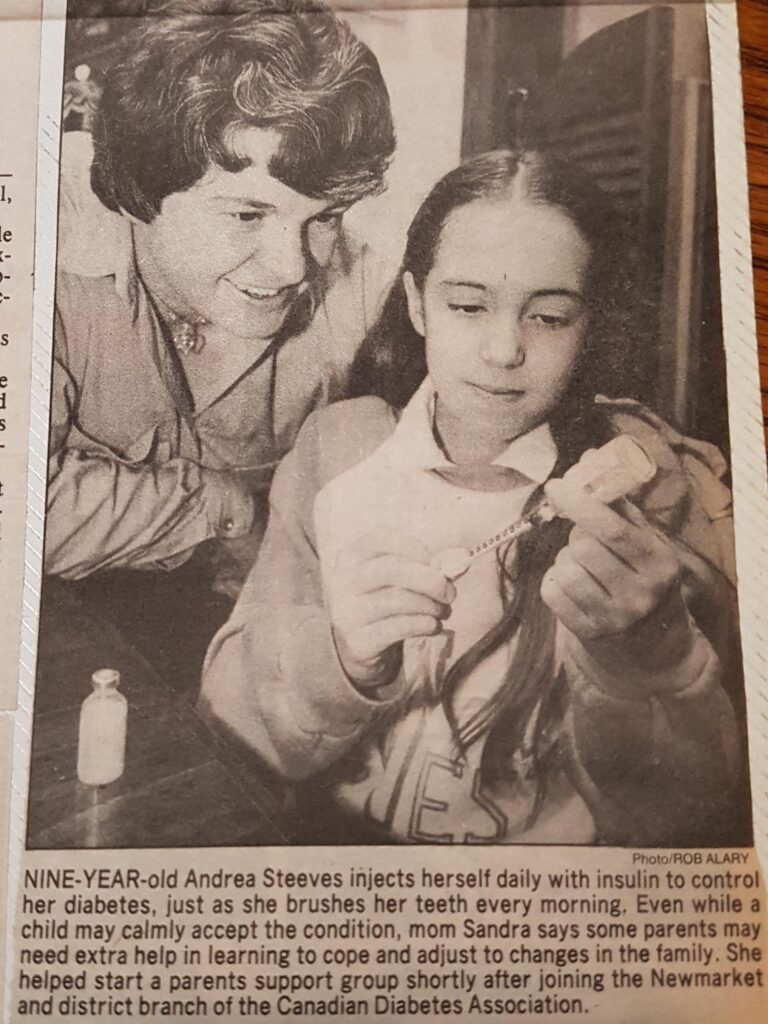
Andrea B., Family Engagement Program Manager, shares her experience of living with diabetes and the way it has shaped her resiliency and advocacy.


“I was only seven years old when doctors told me I had type 1 diabetes and would need to give myself needles – multiple times a day – just to stay alive. At that moment, I was so sick that I would have done anything to feel better. As the weeks wore on and I started to feel better, there were moments when life seemed unfair. I was diagnosed in October and remember how tough Halloween felt that year. All my friends raced home to eat candy, and I came home and gave mine to my brother.

Allowing me to return to school after my diagnosis must have been hard for my mom. She had just learned how to be my pancreas. It was hard enough when I was at home, balancing my food, exercise and medication. She had a lot of sleepless nights checking my sugar just to make sure I would wake up in the morning. One of the first things my mom did was look for a parent support group. Not finding one locally, she created one and started working for the Canadian Diabetes Association! Within a few years, she had developed a youth group as well. I guess family support and engagement runs in my genes!


Technology wasn’t what it is today. It was 6-10 finger pokes a day to test my blood sugar and strict medication dosing. I was a pretty independent kid, though. I did not want anything to stop me. In fact, when the nurses wanted me to practice giving myself a needle using an orange, I refused and made them teach me to do it on myself right away! That fierce independence has served me well over the years. I had to learn to advocate for myself when offered treats I could not have or when my blood sugar felt too high or too low, and I needed to go to the office for a shot or a snack. I wish I could tell that little girl how amazing technology is now. No more finger pokes since my phone tracks my blood sugar in real time. My insulin pump is my new pancreas and allows me to eat what I want and be active (or not!) and still stay in control. Despite the difficult road I’ve tread, I can now demonstrate the importance of resiliency and advocacy to my own children.”

Jacki N. is a Peer Navigator on the Family Engagement Team at Grandview Kids. Her role is to support the Family Leader programs, provide families with support after a diagnosis, and show the importance of self-care. She is a mom of four. Her second son was born with a rare genetic seizure disorder, and it is her mission to allow her son’s diagnosis to open and not close doors.

Summer is here, so let’s go on a road trip. Here’s what I have learned from driving hours with my four kids:

I have always loved travelling. As a child, I spent countless March breaks driving backward in my parents’ station wagon across the USA. After my second son started having seizures, I became mentally locked into our home, and my love for travel took a necessary break. As time passed and we became more comfortable with our son’s medical needs, we started to slowly venture out and take road trips to some of our favourite places, Bay of Quinte, Scugog and the Kawarthas. March break 2014, we decided to cross the border and head south for Myrtle Beach on the longest 13-hour road trip. Honestly, that drive was a disaster; we were under-prepared for what driving with a 6, 3 and 6-month-old would involve. Let’s put it this way: it took us so long to get there that we decided it would be easier to drive through the night to get home, and we have not done that since. It did not deter me, though; we have taken many road trips all over the world, and the following are some tips that have made our trips enjoyable and memorable.


First off, preparation is key. It does not matter how far you are travelling. A good packing list and an organized, packed vehicle will set you up for success. I have several different packing lists on my phone that I reuse all the time. Baseball tournaments, camping trips, and Florida vacations all require me to pack different items, and through the years, I have added items to each list that I wish I had brought. Doing anything with 4 children requires bringing items, and without a list, I would certainly get distracted and forget something. For longer trips, make sure wheelchairs, strollers, and medications are easy to access. I also use a drink caddy that fits all our water bottles so they are all in one location, and I can monitor fluid intake. A 3-hour drive will take much longer when you have to stop multiple times for washroom breaks.

Speaking of breaks, plan for them. If travelling with an older child who wears diapers or needs assistance in the washroom, I highly recommend using ON route stops. They have companion washrooms, plenty of accessible parking, and are open 24/7, and you do not have to spend any extra time accessing them as they are right off HWY 401. Use www.onroute.ca for locations and what is available at each stop. Our family rule is when we stop, everyone uses the washroom; this has saved us travelling time. If travelling into the USA we use Rest stops, they are located right of the highway and have accessible washrooms and picnic tables. These locations allow us to stretch our legs and have a snack. Plan those breaks into your travel time, I have learned over the years it may be better to stop before the 4-year-old urgently needs to use the potty.


My children love snacks, so for road trips, I create snack bags for them. Each child has a labelled bag with multiple snacks in it. When it is snack time, I hand them the bag, and they can choose something to eat. I learned the hard way when I gave my then-8-year-old control of his snack bag on one vacation. Snack bags have prevented extra stops and ensure they will be getting a variety of snacks (healthy and non) over the trip (sometimes our destination is 22 hours away). Pro tip, also pack and bring your lunch. We always bring our lunch, it is much quicker, healthier and cheaper to bring. Nowadays, a stop at Mcdonald’s costs $50 for a family of 6 and takes an hour by the time you order, eat, and use the washrooms, so I have learned sandwiches or a cheese and cracker platter are much easier and save us money. During warm weather, this is more doable as Rest stops often have picnic tables, and this gives my children a safe place to move around, and fresh air does us all good.


Lastly, when we back out of the driveway, the journey begins. Some of my favourite memories are all of us in the vehicle. We are laughing, playing games and singing our hearts out to “Old Country Road” while driving through the mountains of West Virginia. We reward good car behaviour with prizes and challenge our children to spot the first Target store, Bald Eagle or palm tree. When we stop for a break, we switch seats so our children get to sit next to a different sibling. We have different playlists of songs for different road trips that we have taken, a baseball playlist, a Florida playlist and even a birding playlist. When I hear the song “Gone Country,” I think of our drive to Tennessee, and “Cruise” always makes me laugh as I reminisce on Colton singing along down the highway with windows open. The best part is when my kids hear one of the songs, their eyes light up!

This summer, get in the car, hop on a bus or train and take a day to explore. It will be good for your soul. Happy road-tripping!

For over a decade, the Family Engagement Team has supported families to be an active part of their child’s therapy and support team. Our lived experience has shown us that our knowledge of our own child is a powerful tool when combined with the professional knowledge of various early childhood development experts.

Research supports our hypothesis that engaged caregivers as active team members in their loved one’s healthcare leads to many positive outcomes (https://www.cfhi-fcass.ca/docs/default-source/itr/tools-and-resources/essential-together/evidence-brief-en.pdf ) including but not limited to:  

Enhanced Patient and Family Experience:  

  • Caregivers/families know their child’s medical history best. They know how their child’s journey, carry lists of medical professionals and binders of information on procedures, diagnoses, hospital visits and discharges, etc. They are well-connected and versed in their child’s medical journey. 
  • Caregivers know the details of what is typical and atypical when it comes to reactions to medications, appointment/hospital triggers/stressors, and surgery recoveries. They understand the inner workings of their child’s mind, mood, and communication, whether verbal or non-verbal. Understanding when a child has reached their limits also avoids overstimulation and overwhelm. 
  • Therapy appointments are opportunities for caregivers to learn vital tools from the therapist. This promotes the transferability of skills and techniques to be worked on by the caregivers outside of therapy sessions, providing the opportunity to do therapy with their child when they are ready. 
  • Caregivers can best determine if their child is unable to participate in therapy at any given point. As therapy time is precious, knowing when to move allows caregivers to recover the session by informing the therapist of the appropriate time to move to a mediated model, in which parents can participate in the session to continue it later at home. 
  • Encouraging caregivers to provide session modification suggestions to fit their child’s interests or abilities acknowledges caregivers as the experts of their child. They can feel confident in knowing that their thoughts are valued and that they are capable of practicing the tools they are taught in therapy sessions at home. 
  • Caregivers are given a voice to express their child’s and their own needs/concerns and goals. When acknowledged as an integral part of their child’s care, caregivers and therapists’ relationships improve through greater transparency, respect, integrity, honesty, and openness, leading to better patient care and support. 

Better Health Outcomes: 

  • Healthcare quality is increased through a professional and candour flow of communication with the child development experts and their caregivers. Working as a team maximizes time and effort. It brings comfort, order and routine to a child seeing a continuation of care from therapy sessions to home, and home to therapy sessions. 
  • Caregivers are with their child for many waking hours. This allows time to really practice the techniques learned in therapy and supports the generalization of skills. However, funding, insurance, and time in therapy can only go so far. Caregivers can take therapy much further if they integrate parts of it into their daily lives. 
  • Caregivers feel empowered, understood, and supported. Caregiver burnout and isolation may be minimized or prevented, promoting better health outcomes for children and caregivers. 

Continuity of Care:  

  • Quality of care over time can be achieved through goal setting and planning for your child’s future. It reduces fragmentation of care to improve your child’s safety and abilities. Caregivers take an active role through goal setting, giving them the ability to make goals that are meaningful to their family. This can be done by incorporating tasks, skill-building and goals that fit into the child’s everyday activities. By sharing with your clinician your child’s likes and dislikes and/or schedules and routines you have at home, opportune times to practice a particular skill keep it relevant for the child. 
  • The number of therapy sessions allotted often remains insufficient due to availability, resources, funding, and/or insurance coverage. Make the most of it. Caregivers will still be there after sessions, groups, and therapy end. Actively engaged caregivers can extend and build on the skills learned in the Centre. 

“My best advice is… you must put in the work. For every one day at Grandview Kids, you are going to have 6 days, 13 days at home where everything really happens. Grandview Kids’ is going to give you the tools to get that work in.”

– Grandview Kids Caregiver
  • ⟨
  • Page 1
  • Page 2
  • Page 3
  • Page 4
  • Page 5
  • Page 6
  • Page 7
  • ⟩

Primary Sidebar

Child Stories

From the search for support to finding a village: Celebrating Giving Tuesday

Every year, Giving Tuesday reminds us of the power of community when individuals rally together to change lives through compassion and generosity. For families like Amber’s, whose journey with her son Kaysan began...

Latest Updates

  • October 2026: Dates of Significance September 30, 2026
  • “I am Clara”  September 30, 2026
  • Mitchell’s journey with Hydrocephalus September 30, 2026
  • Celebrating World Cerebral Palsy Day 2026 September 29, 2026
  • Building belonging through family leadership August 31, 2026

You Have Questions

We’d like to help you find the answers…

Contact Us Today

© Grandview Kids Built by PeaceWorks

  • About Us
  • Contact Us
  • Privacy
Accessibility Adjustments

Powered by OneTap

How long do you want to hide the toolbar?
Hide Toolbar Duration
Select your accessibility profile
Vision Impaired Mode
Enhances website's visuals
Seizure Safe Profile
Clear flashes & reduces color
ADHD Friendly Mode
Focused browsing, distraction-free
Blindness Mode
Reduces distractions, improves focus
Epilepsy Safe Mode
Dims colors and stops blinking
Content Modules
Font Size

Default

Line Height

Default

Color Modules
Orientation Modules