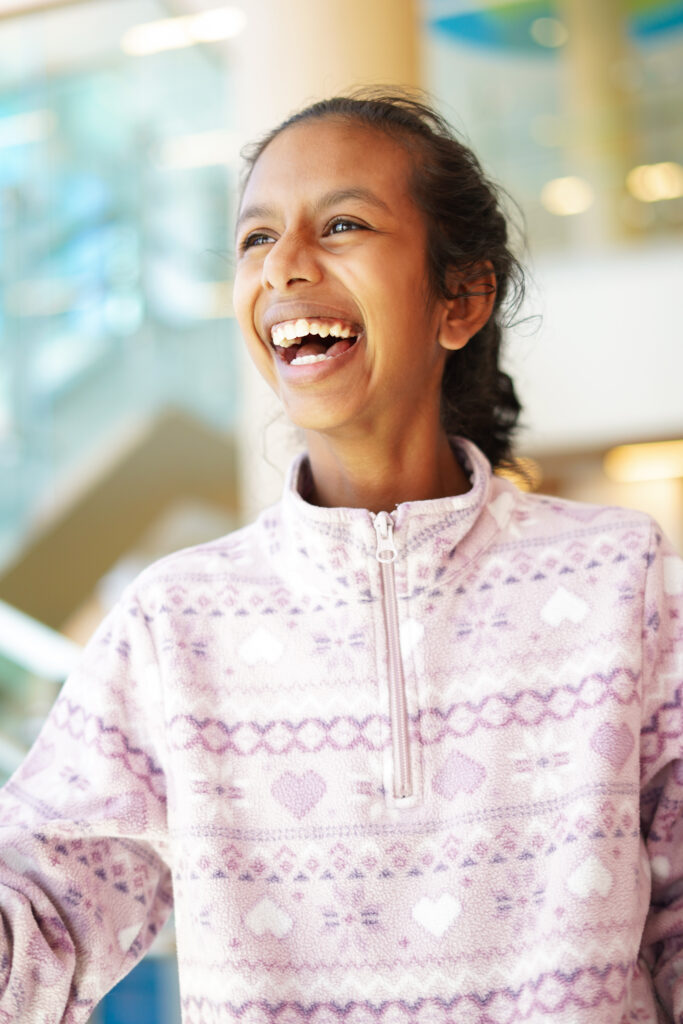
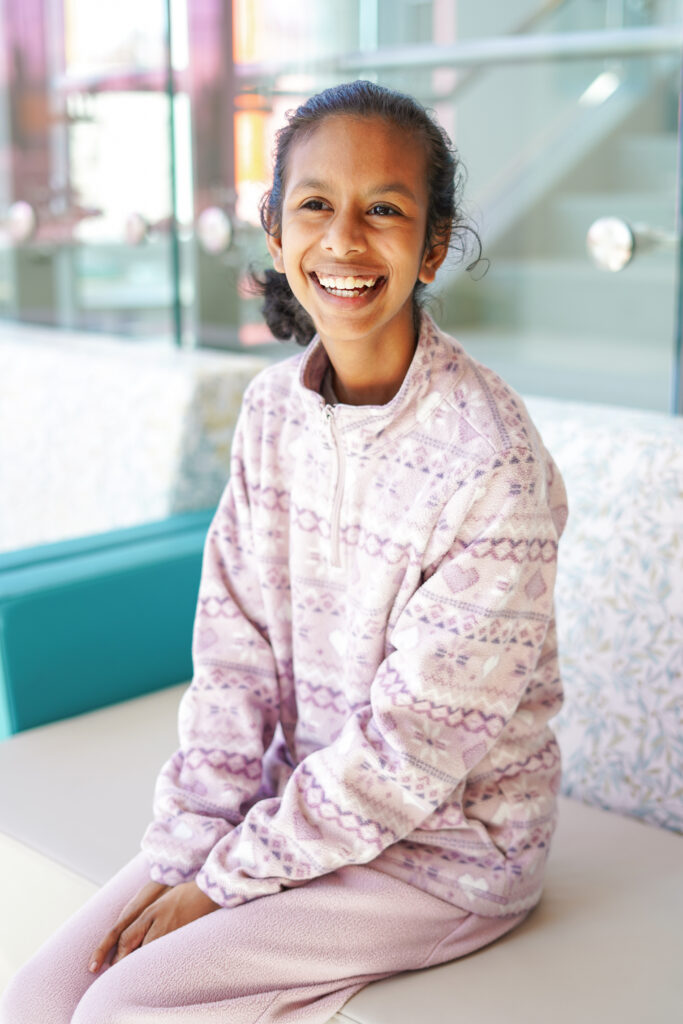
When 15-year-old S walks into a room, she radiates light. People naturally gravitate towards her. They are drawn to her social, expressive energy. She loves music, singing, dancing and thrives on connection. She is happiest when she feels included and known. She always strives to bring her family together, whether through bowling nights, shared meals, playing Wii or watching movies. She really enjoys singing with her dad.
S has a sharp memory and sings in multiple languages (at least nine), including English, Spanish, Urdu, Arabic, Swahili and Afrikaans and has memorized the lyrics to hundreds, if not thousands, of songs across multiple genres. She values routine and predictability and can be unsettled by loud, unpredictable noises or sudden changes, but within her comfort zone, she flourishes.
As a newborn, S was under birth weight and later diagnosed at The Hospital for Sick Children (SickKids) with failure to thrive during infancy. She struggled with feeding, sleep and growth. She suffered from extreme colic, uncontrollable crying and sensory processing. S’s mother, Sharon, consulted with a paediatric nutritionist to help improve her symptoms and was then referred to a naturopathic doctor when things did not improve. Through a food sensitivities test, it was discovered that she had a leaky gut and had developed severe sensitivities to certain foods, despite being on a gluten and dairy-free diet.
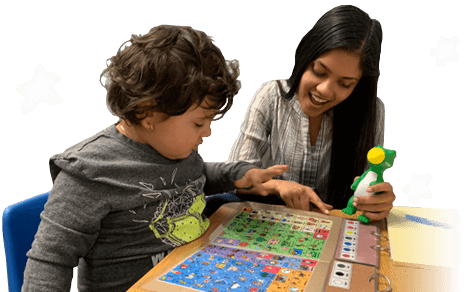
In 2012, at just two years old, S was referred to Grandview Kids by her family doctor as she was failing to meet her developmental milestones. Upon assessment, a medical team was established, which included a developmental paediatrician, speech-language pathologist (SLP), occupational therapist (OT) and physiotherapist (PT). Little did she know that this was the beginning of her lifelong journey at Grandview Kids.
Initially diagnosed with global developmental delay, S was referred to Lakeridge Health for genetic testing to determine the underlying cause. S was diagnosed with Williams Syndrome (WS), a rare genetic condition affecting approximately 1 in 10,000 people. Caused by a random partial deletion on chromosome 7, which includes the elastin gene, the marker gene for a WS diagnosis.
Those with WS are characterized by similar facial characteristics and an array of medical problems, including cardiovascular disease, gastrointestinal (GI) issues, developmental delays and learning challenges, which S also experiences. Despite these health challenges, they are also known for their friendly, highly empathic qualities, which are part of S’s charming personality. In particular, she has speech and language challenges, decreased cognitive and physical abilities, and sensitivities to loud, unpredictable sounds such as thunderstorms, fire alarms, dogs barking and people laughing or coughing. Her heart is regularly screened by a pediatric cardiologist due to early detection of a heart murmur. Those with WS are prone to cardiovascular narrowing of the arteries and heart attacks.
The diagnosis brought mixed emotions of fear, relief and disbelief all at once. Her parents suspected something was not right, especially as the youngest child of three, but did not yet have the language or roadmap to understand what lay ahead. Sharon was plagued by guilt, thinking it was something she had done. Learning that this random deletion in their daughter’s chromosomes occurred at the time of conception and not by anything they did before or during pregnancy was the first step in a long journey ahead.
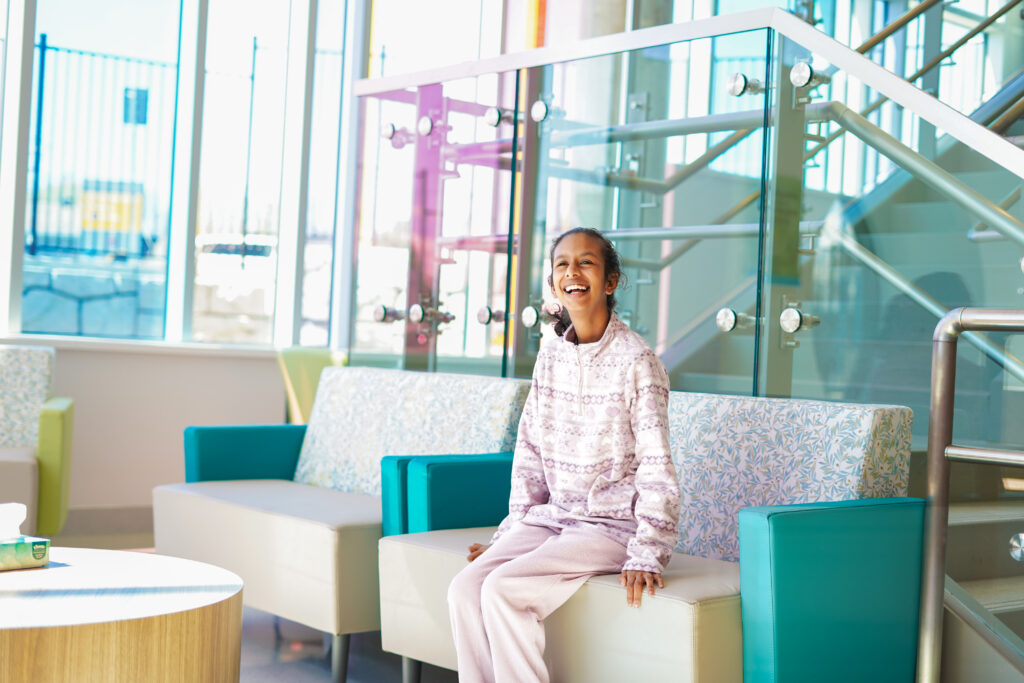
What made it harder was the condition’s rarity. It is difficult for people with WS to access dedicated resources, support for treatment, continuity of care or find medical professionals with experience in WS. While in the U.S., those with WS have access to established clinics and conferences, Sharon and her family often felt like they were navigating uncharted territory at home. Still, even in those early days, one thing was clear: S loved music. A simple music box could calm her, distract her enough to eat and bring her joy. Music became a bridge, a way she could connect with the world.
Over the years, S’s Grandview Kids services also expanded to therapeutic recreation, audiology, social work, the orthopaedic clinic, optometry and, most recently, the Adolescent Transition Program. From 2014-2016, Sharon attended monthly Parent Support Group meetings on Saturdays to connect with other families facing similar challenges of raising a child with disabilities.
For Sharon, Grandview Kids quickly became more than a therapy centre. “Grandview Kids became our home away from home,” said Sharon. “It’s the one place where I never had to explain my child or justify her needs. I could just let my guard down and be a mom.”
In other community spaces, Sharon often felt pressured to explain, justify or defend her child’s needs. At Grandview Kids, that pressure disappeared. Parents sat together in waiting rooms without labels or explanations, just shared understanding. No one asked why a child behaved a certain way, and no one judged, so guards came down.
Once S aged out of the Grandview Kids services and entered the school system, she continued to receive school-based rehabilitation services (SBRS). Sharon shares that over the years she has learned to be S’s voice, advocating for her, especially during COVID-19 lockdowns, when she assumed the unofficial title of “educational assistant.” As a social butterfly, she found that those years of isolation and social distancing had a profound effect on her personality, and returning to the physical classroom was a slow adjustment.
Since then, S has learned to find her own voice with Grandview Kids by her side and with mom as her lead example. She is thriving in new ways, enjoying high school and has grown tremendously since overcoming early communication barriers. With advocacy support from her parents and speech therapist, her teachers learned how to better understand and support her. She is now in a practical learning program (PLP) classroom and beginning to develop self-advocacy skills. While transitions can still be hard and loud environments overwhelming, she is confident in who she is and that confidence has been nurtured by her community.
Equally important are caregiver supports through the Family Engagement (FE) Program’s weekly park playdates, parent and youth social nights, monthly coffee chats, summer days at the Barrett Centre rural farm and outings to the pumpkin patch. These moments allow families to build confidence, clarity and connection. One of the most meaningful parts of S’s journey has been the Adolescent Transition Program (ATP), where she met Peer Navigator April W., who has become like extended family.
“April has a big heart and specialized training and combines that with her lived experience to help support other families navigate their journey,” Sharon notes.
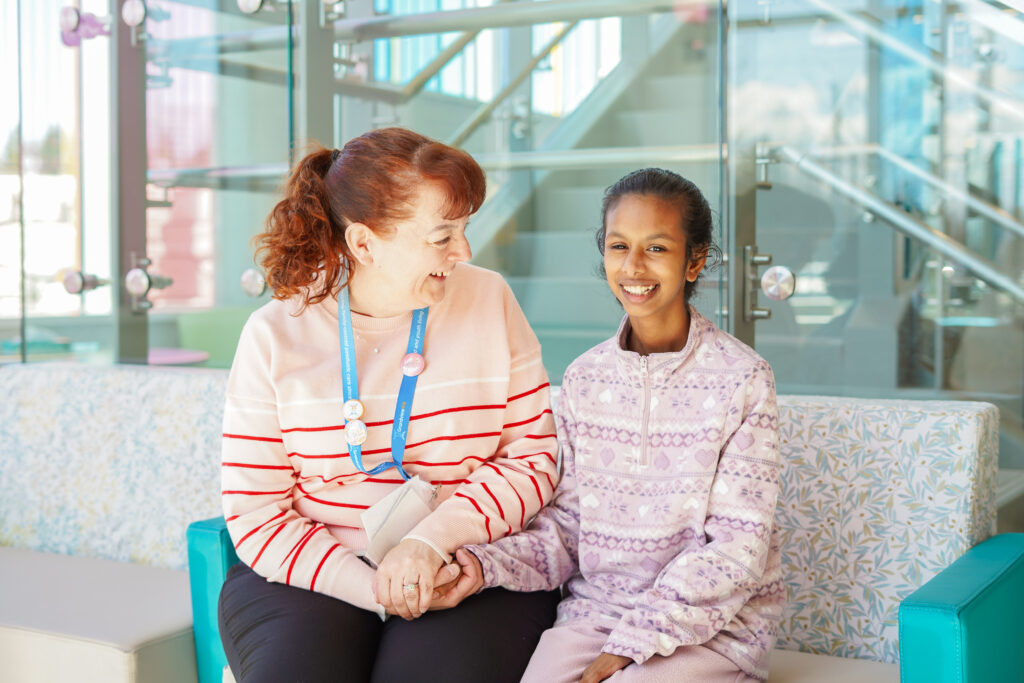
ATP was co-designed by parent and youth advocates and various members of Team Grandview. ATP puts the family voice at the centre of program development. The program is supported by a grant from TD Bank and pioneered by FE Program Manager, Andrea B. She brings both the parent/caregiver and peer lived experience to provide support and resources to families when clients transition from paediatric to adult care. Sharon also attended ATP workshops that share vital information on funding, guardianship and post-secondary education.
Since being part of ATP, when S hears “Grandview,” she thinks of the amazing friendships she has fostered and the fun dance parties that she gets to attend. The enthusiasm is spilling into other areas of her life, including therapy and school. Sharon sees the excitement in S’s eyes and the joy bubbles and overflows.
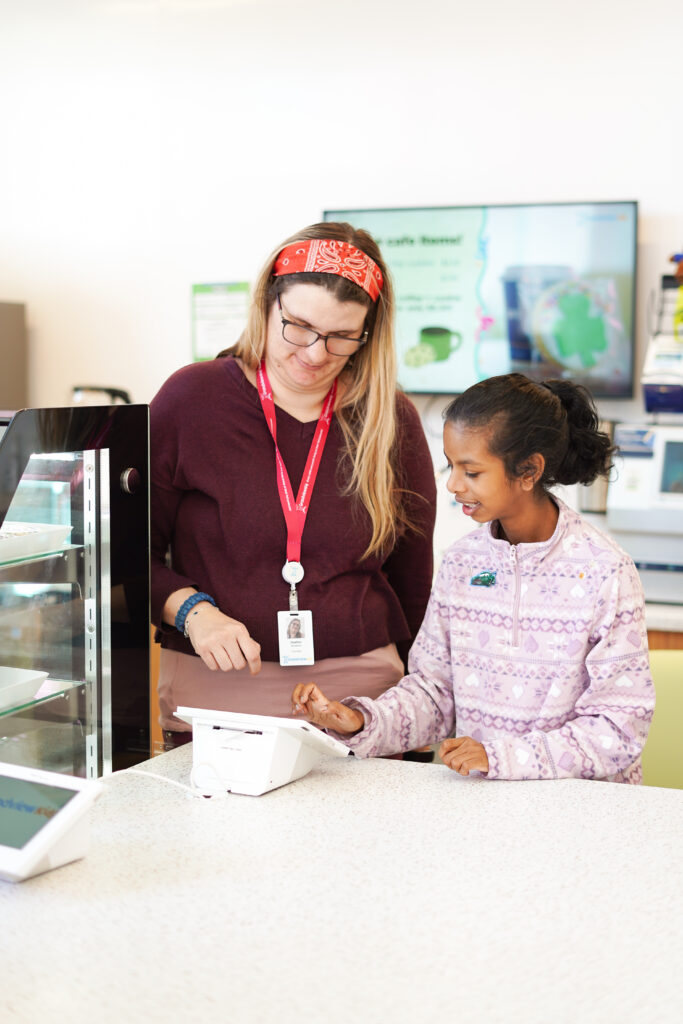
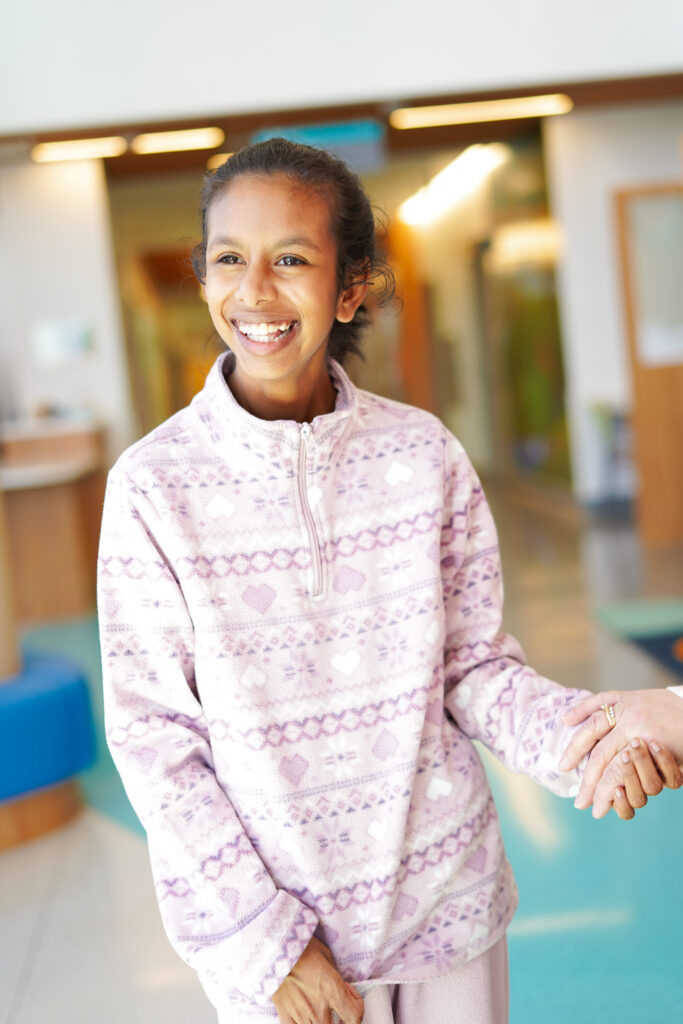
To Grandview Kids families who feel hesitant or unsure about making connections with others, Sharon offers simple advice,
“If you’re hesitant, just come. You don’t know what you’re missing. You’ll learn, you’ll connect and you’ll realize you’re not alone.”
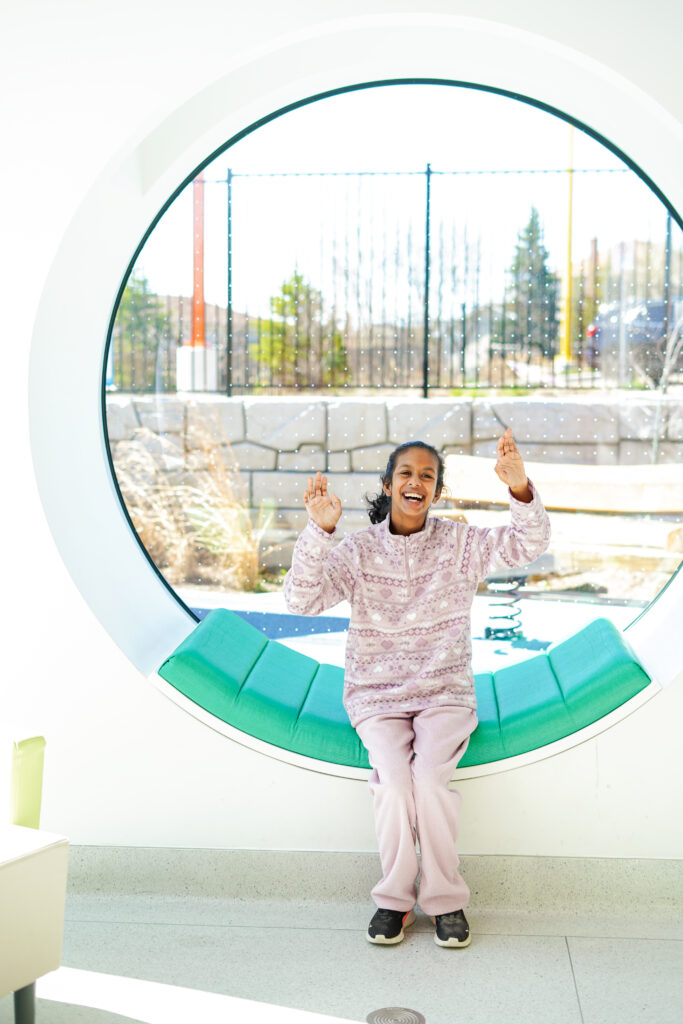
Living with a child with physical, communication or developmental needs comes with uncertainty, but it also comes with extraordinary joy, resilience and connection. S reminds everyone she meets that difference is not something to fix, but something to understand, support and celebrate. At Grandview Kids, S receives services, but she’s also dancing, connecting and shining exactly as she should.
Check out more Grandview Kids articles
- October 2026: Dates of Significance
- “I am Clara”
- Mitchell’s journey with Hydrocephalus
- Celebrating World Cerebral Palsy Day 2026
- Building belonging through family leadership