• Skip to primary navigation
  • Skip to main content
  • Skip to primary sidebar
Grandview Kids Logo

Grandview Kids

Every Child And Youth Living Life At Their Full Potential

  • About Us
    • Vision, Mission and Values
    • The New Grandview Kids
      • Operational Readiness
      • Visiting Grandview Kids’ Ajax Headquarters
    • Our History
    • Leadership
    • Board of Directors and Committees
    • Annual Report
    • Strategic Plan
    • Policies
  • Calendar
  • Annual Report
  • Contact
    • Contactez – nous
    • Ajax – Headquarters
    • Bowmanville Health Centre
    • Grandview School
    • Oshawa – Dwyer
    • Port Perry
    • Whitby – Abilities Centre
  • Careers
  • Register
  • Donate
  • Instagram
  • LinkedIn
  • Facebook
  • Services and Programs
    • Audiology
    • Autism Program
      • Autism Spectrum Disorder (ASD) Diagnostic Hub
      • Caregiver-Mediated Early Years Programs
      • OAP Core Clinical Services
      • Entry to School Program
      • Foundational Family Services
    • Blind-Low Vision Program
    • Extensive Needs Service
    • Family Engagement Program
      • Adolescent Transition Program
      • Family Leader Program
        • Ambassador Program
        • Family Advisory Council
        • Paid Advocates
        • Youth Advisory Council
    • Infant Hearing Program
    • Medical Services
      • Autism Spectrum Disorder (ASD) Diagnostic Hub
      • Complex Care Program
      • Grandview Anesthesia Procedure (GAP) Clinic
      • Hypertonia Clinic
      • Nutrition Services
      • Orthopaedic Clinic
    • Occupational Therapy
    • Physiotherapy
    • Preschool Outreach Program
    • School Programs & Resources
      • Resources for Educators
      • School-Based Rehabilitation
    • Service Navigation
      • SmartStart Hub: Parents
      • SmartStart Hub: Partners
    • Social Work
    • Speech-Language Pathology
      • Augmentative and Alternative Communication
    • Therapeutic Recreation
  • Purchased Services
    • Inclusive Recreation
    • Beyond the Walls
    • OAP Core Clinical Services
      • Behaviour Services
  • Research
    • Get involved in research
    • IDEA Study
      • Building knowledge and understanding of the intersection of race and disability in accessing pediatric rehabilitation services.
    • Joint Research Ethics Board
    • Research Associate: Dr. Fiona Moola
    • Research Associate: Dr. Meghann Lloyd
  • Resources
    • Ability Acceptance Program
    • Arriving at Grandview Kids
    • Community Supports & Resources
    • Family Support Fund
    • Free to Read Program
    • Frequently Asked Questions
    • Gather by Grandview Kids
    • News and Updates
    • Privacy
    • Resources for Parents and Caregivers
    • Visiting Grandview Kids
  • Support Us
    • Ways to support
    • Case for Support
    • Host a fundraiser
    • Participate in an event
      • Golf Fore Grandview Kids
      • Sponsor the Drum
    • Leave a legacy
      • Gifts of securities
      • Gifts of bequests
      • Gifts of life insurance
    • Your impact
    • Building a Legacy: Honouring Jerry Coughlan
  • I Want To…
    • Connect with Grandview Kids
    • Donate
    • Refer a child or youth
    • Register via My Community Hub
    • Schedule an Appointment
    • Volunteer at Grandview Kids
    • Work at Grandview Kids
  • Grandview School
    • About Our Program
    • About Our Board
    • Grandview School Social Story
    • Plans and Reports
    • Resources for Families
    • Resources for Schools – Switch It Up!
    • Careers and Volunteering
    • Contact Grandview School
  • Search

Posted March 14, 2025

What is Applied Behaviour Analysis?

#TeamGrandview Article

Applied Behaviour Analysis (ABA) is a science-based approach to learning that focuses on creating supportive environments to help build important skills like communication, self-regulation and independence. ABA can also support children and families by reducing barriers to learning and addressing interfering or dangerous behaviours.

How do we practice ABA at Grandview Kids?

At Grandview Kids, ABA is delivered through engaging, individualized activities tailored to each child or youth. The Behaviour Services team, including Registered Behaviour Analysts, Senior Autism Therapists and Autism Therapy Assistants, works closely with families to create personalized plans focused on communication, emotional regulation, daily living skills and behaviours that interfere with learning. A strengths-based, collaborative approach is used, working alongside Speech-Language Pathologists, Occupational Therapists and other specialists.

From left to right in the back row: Sabrina M., Autism Therapy Assistant, Arjana S., Behaviour Analyst, Mikaela M., Autism Therapy Assistant, Lauren B., Autism Therapy Assistant, Kayla H., Autism Therapy Assistant, Brizida V., Behaviour Analyst, Alicia C., Clinical Manager, Social Enterprise, Leigh S., Clinical Manager, Specialized Supports- Extensive Needs, Kaitlynn B., Autism Therapy Assistant and Julie J., Behaviour Analyst.
From left to right in the front row: Sarah A., Behaviour Analyst, Charlene M., Senior Autism Therapist, Deanne R., Autism Therapy Assistant, Marlaina R., Senior Autism Therapist, Trishna S., Autism Therapy Assistant, Jennifer-Lynn B., Autism Therapy Assistant, Clare T., Autism Therapy Assistant and Dana D., Autism Therapy Assistant.

How do we use our values in action?

  • Assent-Based Practice: Children have a voice in their learning. We listen to them, ensure they feel safe and empowered and adapt our teaching accordingly.
  • Trauma-Informed Care: Building rapport is a key part of our process. We focus on creating supportive environments that foster trust and emotional well-being.
  • Skill Building: We focus on teaching meaningful skills that integrate into daily life, creating new opportunities for reinforcement and connection for children and their families.
From left to right in the back row: Kaveena K., Autism Therapy Assistant and Jamie G., Autism Therapy Assistant.
From left to right in the front row: Katie B., Autism Therapy Assistant and
Ashley A., Autism Therapy Assistant.

What services do we provide?

  • Group-Based Learning: Helping children develop play, group-readiness and self-regulation skills.
  • Foundational Family Services Workshops: Offering resources and strategies to empower caregivers.
  • Extensive Needs Service: In collaboration with Holland Bloorview Kids Rehabilitation Hospital, this service stream is designed to support children and youth with complex developmental, physical and communication needs. It offers comprehensive, interdisciplinary care, including Behaviour Services, medical, therapeutic and other support services.
  • Ontario Autism Program (OAP) Core Clinical Services: Providing ABA therapy in collaboration with Speech-Language Pathology and Occupational Therapy.

Grandview Kids offers two service streams to support your child’s growth: the Focused ABA Model and the Mediated ABA Model.

  1. The Focused ABA Model targets foundational skills such as communication, imitation, play skills, behaviour management, self-care and motor skills through regular practice using ABA principles.
  2. The Mediated ABA Model focuses on a specific set of skills, guided by input from parents and assessment results, helping families practice and apply what their child learns.

If you have questions about ABA at Grandview Kids, you can check out our dedicated Purchased Services page, contact Service Navigation or speak with your other clinicians.

Grandview Kids parent and Board member, Leisa Ackerblade, reflects on the Parent Task Force’s advocacy to construct the New Grandview Kids

Read Leisa’s remarks below, which she shared at the Ribbon Cutting Ceremony of Grandview Kids’ new Ajax Headquarters – The Jerry Coughlan Building.

Leisa speaking at the Ribbon Cutting Ceremony in front of a podium that reads "Building Ontario."
Leisa speaking at the Ribbon Cutting Ceremony.

Leisa’s remarks

My name is Leisa Ackerblade; I’m a member of the Board of Trustees and a proud Grandview parent.

I was honoured to be a part of the Grandview Parent Task Force, a group that began in 2014 with the goal of advocating for a new headquarters for Grandview Kids.

Fast forward, 10 years later, it’s here. This is a surreal moment for us – many of the Task Force parents are in this room. We can’t believe that what was once a dream, has turned into a reality.

We are so proud, and we know this facility will have a profound impact on children, youth, and families – now and for generations to come.

Thanks, Tom and Avori, for asking me to speak on behalf of parents and families today. But you know, sometimes, us parents go a little rogue. So, I’d like to take this opportunity to say a few thank yous—on behalf of parents and families.

To our elected officials and friends in government, particularly the Ministry of Children, Community, and Social Services, thank you for not only hearing us but for listening.

We knew you heard us – because let’s face it… we got kind of loud. But you went beyond that. Thank you for listening to our stories and for understanding why this facility was so critical to kids in Durham Region. Thank you for continuing to listen, and for walking this journey with us.

To Team Grandview. And when I say Team Grandview, I mean TEAM GRANDVIEW. From the Board to Senior Leadership, to every staff member from every discipline, volunteers, our friends at the Foundation, donors, partners. Thank you.

I’m not sure you quite know the impact that you make.

Thank you for believing in the potential of our kids.

Thank you for delivering exceptional care and creating welcoming, safe and inclusive spaces for our children to learn and grow – at their own pace, in their own time.

You cheer for our kids as loud as we do – and bring your own pom poms to work every day. You show the same dedication, passion and care whether we are your first appointment of the day, or your last appointment of the day.

You never falter.

We see you. We appreciate you. We thank you.

And finally – to our kids. The very special people who inspired us to act.

Thank you.

Thank you for showing us determination.

Thank you for showing us strength.

Thank you for never losing faith.

We are so proud to be your parents.

You are miracles, you are marvels and you are magic.

This building is your legacy too.

And to the future generation of Grandview kids who will experience amazing ‘firsts’ within these walls. I hope that seeing this massive project become a reality shows you, that if you can dream it, you can do it.

Grandview …. is for the dreamers.

We can’t wait to watch you discover your full potential.

You got this.

To quote the great Dr. Suess….who should be quoted to conclude all parent speeches –

“You’re off to great places!

Today is your day!

Your mountain is waiting, so… get on your way!”

Written by Grandview Kids Social Worker, Mandy

Healthy boundaries are evident when people feel comfortable and safe. Boundaries are an important part of any relationship, personal or professional, for individuals to feel respected and to be respectful to others. They recognize that interactions include emotional, physical, use of time, intellectual, material (i.e., loaning money), relationship, professional and digital or online.

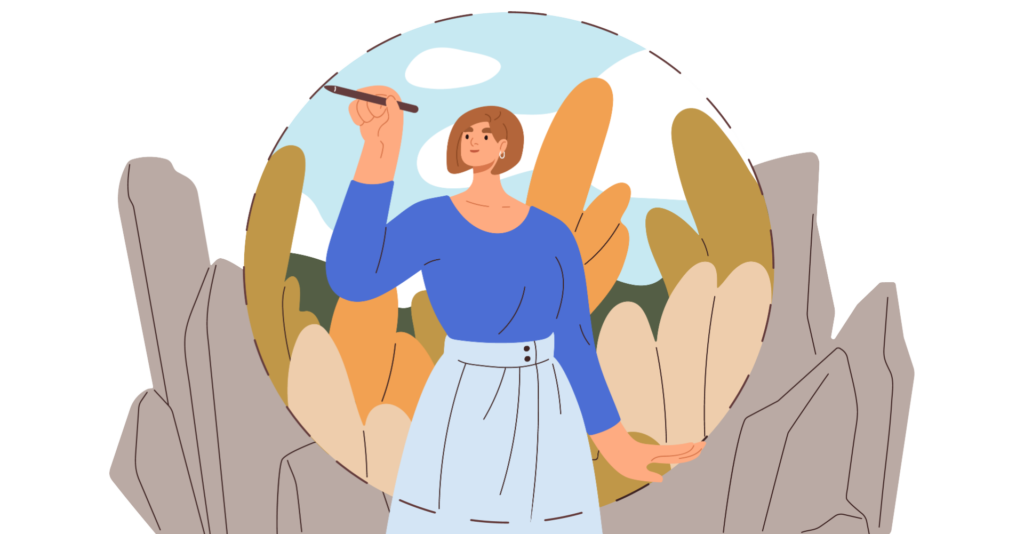
A graphic depicting a cartoon woman drawing a circular boundary around her in a lush landscape.

Healthy boundaries are:

  • A safeguard to overextending yourself
  • A self-care practice
  • A way of defining roles in a relationship
  • Strategies to communicate acceptable and unacceptable behaviours
  • Perimeters for knowing what to expect in relationships
  • How we can express our own needs

Boundaries are based on values and are individual to each of us. What is comfortable for one may not be for another. As important as it is to set your own boundaries, it is just as important to recognize and respect the boundaries of others.

However, this is sometimes a difficult feat. If this is a challenge for you, know that you are not alone. Our life experiences define our boundaries, and others can influence us until we identify the need to define them ourselves.

Consider a time that you felt uncomfortable or unsafe with someone. For example, you feel that you cannot express your own opinion in a family discussion for fear of being ridiculed. That is usually indicative of a pattern in the family dynamics. Replay that same scenario in your head, but imagine you are using confident body language and assertive communication.

  • “I can see where you are coming from. However, my experience with this is…”

If the person you are interacting with becomes disrespectful towards you, you can say “no.” Everyone always has the right to say no, whether it’s a friend asking for favours or someone threatening your personal safety.

  • “I’m not comfortable with this…”
  • “Please don’t do that…”
  • “I’ve decided not to…”

An explanation isn’t required, but use ‘I’ statements if you want to.

  • “I feel that you are taking advantage of me when you ask me to…”
  • “I feel disrespected when you speak to me like that…”

On the flip side is respecting the boundaries of others. Remember that these are all individual. You may be someone who likes to hug but physical touch could be triggering for some people.

  • “Is it ok if I give you a hug?”
  • “I would prefer if you didn’t.”
  • “Ok, I’ll remember that from now on.”

Hot topics, such as politics and religion, can be uncomfortable conversations for some. You can start a respectful conversation by explaining your own boundaries.

  • “I am very thoughtful about the election. Can we discuss that?”
  • “I am also very thoughtful about it but am uncomfortable discussing politics.”
  • “That’s understandable. What would you like to talk about?”

A healthy interaction is a give-and-take activity. If you start to feel unheard, disrespected or uncomfortable, that means that you are giving too much of yourself in that scenario, and it’s a good time to bring out your boundaries. If you notice someone you are speaking with seems uncomfortable or angry, consider that you might be taking too much in that conversation and need to respect other’s boundaries.

Remember that your self-care is top priority!

People around the world recognize the important role volunteers play in many areas of life. But volunteers don’t work alone. That’s why we celebrate International Volunteer Managers Day every year on November 5.

Here is what Grandview Kids’ Volunteer Coordinator, Tara, shares when asked what leading the Volunteer Program at Grandview Kids means to her

“I am honoured to be part of the Volunteer Program at Grandview Kids.  As a coordinator of volunteers, I enjoy meeting and ultimately introducing a diverse array of dynamic, talented, and caring people within our community to our organization.  When interviewing potential volunteers, it is no surprise to hear the most common response for wanting to volunteer is the desire to give back to the community.  

As we look to the future, it is exciting to grow and develop our program.  Our volunteers can be seen as the “Director of First Impressions” when clients/families enter our Centre, or they may be in the background assisting with various programs, offering their support to our clinical team.  Some offer their enthusiasm and expertise by participating in community events and on committees, and others are very happy to serve up freshly baked goods (and a smile) in our volunteer-run Café.“

This year’s International Volunteer Managers Day theme is “What’s our future normal?” Visit volunteermanagersday.org to learn more.

Did you know?

Grandview Kids is actively recruiting volunteers to support us at our new Ajax-based headquarters and Oshawa-Dwyer site starting this fall.

If you or someone you know is interested in our available opportunities and would like to apply, please visit our blog to learn more.

Written by Grandview Kids Speech-Language Pathologist, Rikki

Maintaining vocal health is important for everyone, especially in busy, active households. Whether your child or youth is learning to communicate or just loves chatting and singing, caring for their voices can make a big difference. Here are five simple tips to help you practice vocal hygiene at home.

1. Stay hydrated!

Encourage your child to drink plenty of water throughout the day. Try to limit caffeinated beverages, as they can dehydrate the vocal cords.

2. Incorporate voice breaks

Resting the voice is essential for preventing vocal fatigue. Encourage your child to engage in quiet activities that don’t require speaking.

3. Reduce background noise

Talking over background noise, like the TV or music, can lead to vocal strain. Turn off or lower the volume when speaking with your child.

4. Practice good posture

Proper posture allows for better airflow and more efficient voice production. Encourage your child to sit up straight when speaking.

5. Speak from an appropriate distance

Practice speaking with your child from a reasonable distance rather than from different rooms or floors of the house.

Written by IDEA Study Research Assistant, Kaylan

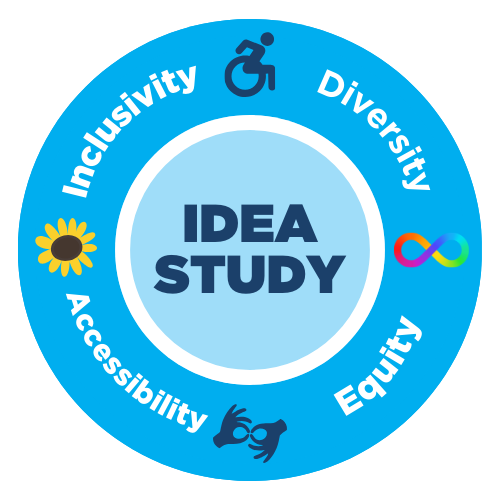
IDEA Study logo

The IDEA Study is a research study that Grandview Kids and Ontario Tech University have partnered on. It investigates the intersection of race and disability and how this intersection affects access to paediatric rehabilitation and developmental services. To help identify this study, a logo has been created, and it can be found on all material related to the IDEA Study. Read on to learn more about the IDEA Study logo!

Starting with the inner circle of the logo, this has the words “IDEA Study” in the centre. This comes from the fact that the research team is approaching this study through the lens of Inclusivity, Diversity, Equity and Accessibility. If put together, these words form the acronym “IDEA” which is how our study is known outside of its official name, “Building knowledge and understanding of the intersection of race and disability in accessing paediatric rehabilitation services.”

Inclusivity or inclusion involves appreciating, recognizing and using the skills and talents of individuals of all backgrounds.³ Diversity involves including the numerous identities, races, communities, backgrounds, abilities, ethnicities, beliefs and cultures of the people, including those from underserved communities.³ Equity involves systematically and consistently treating all individuals fairly, justly and impartially.³ Accessibility includes that programs and services, facilities and information and communication technology are constructed, designed, developed and maintained such that they can be used independently and fully by individuals with disabilities.³

The outer circle of the logo includes symbols that represent disability. The goal of using these symbols of disability was to represent the Grandview Kids community. Grandview Kids serves children and youth with physical, communication and developmental needs, and their families. As such, the symbols in the logo include a sunflower, which represents non-visible disability; the forward movement symbol of a person using a wheelchair which represents physical disability; a rainbow infinity symbol representing Autism Spectrum Disorder (ASD) which is a developmental disability; and the universal access symbol for sign language interpretation which represents communicative disability. While not all disabilities are represented within this logo, these were chosen for their design aspects and their collective broad representation of the Grandview Kids community.

We hope that this explanation has clarified why the IDEA Study logo was created and what it symbolizes. For more information, please visit https://grandviewkids.ca/research/ideastudy/.

References

  1. Autism symbols: What do they mean?
  2. Communicating with universal access symbols
  3. Diversity, equity, inclusion, and accessibility in the federal workforce
  4. Grandview Kids — Every child and youth living at their full potential
  5. Hidden disabilities sunflower
  6. IDEA study
  7. Living with non-visible disabilities
  8. The forward movement

About the author

Kaylan is a current Ontario Tech undergraduate student working on the IDEA Study as a Research Assistant. She is also a former Grandview Kids client who is passionate about helping other children and youth with disabilities. She believes that being a part of the IDEA Study is a way to give back to the Grandview Kids community that helped her live the life she does today and to help other children and youth with disabilities like her.

  • ⟨
  • Page 1
  • Page 2
  • Page 3
  • Page 4
  • Interim pages omitted …
  • Page 6
  • ⟩

Primary Sidebar

Child Stories

March 1: International Wheelchair Day – Justine’s Story

Justine's Story Written by Ambassador Advisor and Grandview Kids parent, Abby V. Justine is a dedicated, second-year honour roll student at Durham College studying social service work. If she is...

Latest Updates

  • Teaching Through Daily Chores: Laundry November 10, 2026
  • November: Dates of Significance October 30, 2026
  • Farheen’s Legacy: A Mother’s journey through grief  October 30, 2026
  • Violet’s voice is valuable! October 30, 2026
  • Grandview Kids receives 11 MarCom Awards October 27, 2026

You Have Questions

We’d like to help you find the answers…

Contact Us Today

© Grandview Kids Built by PeaceWorks

  • About Us
  • Contact Us
  • Privacy
Accessibility Adjustments

Powered by OneTap

How long do you want to hide the toolbar?
Hide Toolbar Duration
Select your accessibility profile
Vision Impaired Mode
Enhances website's visuals
Seizure Safe Profile
Clear flashes & reduces color
ADHD Friendly Mode
Focused browsing, distraction-free
Blindness Mode
Reduces distractions, improves focus
Epilepsy Safe Mode
Dims colors and stops blinking
Content Modules
Font Size

Default

Line Height

Default

Color Modules
Orientation Modules