• Skip to primary navigation
  • Skip to main content
  • Skip to primary sidebar
Grandview Kids Logo

Grandview Kids

Every Child And Youth Living Life At Their Full Potential

  • About Us
    • Vision, Mission and Values
    • The New Grandview Kids
      • Operational Readiness
      • Visiting Grandview Kids’ Ajax Headquarters
    • Our History
    • Leadership
    • Board of Directors and Committees
    • Annual Report
    • Strategic Plan
    • Policies
  • Calendar
  • Annual Report
  • Contact
    • Contactez – nous
    • Ajax – Headquarters
    • Bowmanville Health Centre
    • Grandview School
    • Oshawa – Dwyer
    • Port Perry
    • Whitby – Abilities Centre
  • Careers
  • Register
  • Donate
  • Instagram
  • LinkedIn
  • Facebook
  • Services and Programs
    • Audiology
    • Autism Program
      • Autism Spectrum Disorder (ASD) Diagnostic Hub
      • Caregiver-Mediated Early Years Programs
      • OAP Core Clinical Services
      • Entry to School Program
      • Foundational Family Services
    • Blind-Low Vision Program
    • Extensive Needs Service
    • Family Engagement Program
      • Adolescent Transition Program
      • Family Leader Program
        • Family Advisory Council
        • Youth Advisory Council
    • Infant Hearing Program
    • Medical Services
      • Autism Spectrum Disorder (ASD) Diagnostic Hub
      • Complex Care Program
      • Grandview Anesthesia Procedure (GAP) Clinic
      • Hypertonia Clinic
      • Nutrition Services
      • Orthopaedic Clinic
    • Occupational Therapy
    • Physiotherapy
    • Preschool Outreach Program
    • School Programs & Resources
      • Resources for Educators
      • School-Based Rehabilitation
    • Service Navigation
      • SmartStart Hub: Parents
      • SmartStart Hub: Partners
    • Social Work
    • Speech-Language Pathology
      • Augmentative and Alternative Communication
    • Therapeutic Recreation
  • Purchased Services
    • Beyond the Walls
    • OAP Core Clinical Services
      • Behaviour Services
  • Research
    • Get involved in research
    • IDEA Study
      • Building knowledge and understanding of the intersection of race and disability in accessing pediatric rehabilitation services.
    • Research Associate: Dr. Fiona Moola
    • Research Associate: Dr. Meghann Lloyd
  • Resources
    • Ability Acceptance Program
    • Arriving at Grandview Kids
    • Community Supports & Resources
    • Family Support Fund
    • Free to Read Program
    • Frequently Asked Questions
    • Gather by Grandview Kids
    • News and Updates
    • Privacy
    • Resources for Parents and Caregivers
    • Visiting Grandview Kids
  • Support Us
    • Ways to support
    • Host a fundraiser
    • Participate in an event
      • Golf Fore Grandview Kids
      • Sponsor the Drum
      • Dream Big, Dream Brighter Awards Gala
    • Leave a legacy
      • Gifts of securities
      • Gifts of bequests
      • Gifts of life insurance
    • Your impact
    • Building a Legacy: Honouring Jerry Coughlan
  • I Want To…
    • Connect with Grandview Kids
    • Donate
    • Refer a child or youth
    • Register via My Community Hub
    • Schedule an Appointment
    • Volunteer at Grandview Kids
    • Work at Grandview Kids
  • Grandview School
    • About Our Program
    • About Our Board
    • Grandview School Social Story
    • Plans and Reports
    • Resources for Families
    • Resources for Schools – Switch It Up!
    • Careers and Volunteering
    • Contact Grandview School
  • Search

Posted February 29, 2024

Acknowledging holidays and celebrations in March

Awareness Days

In March, we acknowledge Ramadan, Chet, St. Patrick’s Day, Nowruz, St. Joseph’s Day, Holi, Good Friday, and Easter Sunday. Read more about each holiday/celebration below, written by members of our Inclusivity, Diversity, Equity and Accessibility (IDEA) Committee.

March 11: Ramadan

Ramadan, the holy month of fasting for Muslims, begins this year on March 11 (depending on the sighting of the new moon). It is a time marked by community, prayer, and acts of charity, emphasizing personal growth, gratitude, and compassion.


At Grandview Kids, we celebrate the diversity of our team, which includes our Muslim colleagues observing Ramadan. Recognizing this sacred month allows us to foster a supportive, understanding, and inclusive environment for everyone. We view Ramadan as a chance for mutual learning, adapting to the special requirements of our fasting colleagues by modifying schedules for prayer times and the breaking of their fast at sunset. 

During Ramadan, Muslims abstain from several things from dawn until sunset, including:

  • Food: Muslims do not eat any food during the daylight hours.
  • Drinks: This includes not drinking any liquids, not even water.
  • Smoking or chewing gum: They can not smoke, chew gum or put a mint in their mouth.
  • Sexual Relations: Abstaining from sexual activities during the daylight hours is also part of the fast.
  • Sinful Behavior: Muslims are encouraged to avoid all types of sinful behaviour, such as lying, gossiping, and fighting. The fast goes beyond the physical to include moral and ethical dimensions, aiming for spiritual growth and purification.

To support our Muslim colleagues, a box of dates will be placed in the fridge at our Oshawa, Ajax and Airport sites, available for anyone to break their fast at sunset and for anyone from the staff to enjoy them as well. This gesture is a small but meaningful way to show our respect and support for those fasting and also an opportunity to reinforce our commitment to inclusivity and unity, making Ramadan meaningful for everyone in our organization. 

March 14: Chet

In the Punjabi calendar, as well as the Nanakshahi calendar followed by Sikhs, the first month is known as Chet. This year, Chet is taking place on March 14, 2024. Chet marks the beginning of a new year, symbolizing renewal, growth, and the awakening of nature as winter fades and spring blossoms. It holds special significance for Sikhs as it commemorates the birth anniversary of Guru Nanak Dev Ji, the founder of Sikhism, which typically falls in this month. Chet is a time of spiritual reflection and rejuvenation, inviting individuals to rekindle their connection with the divine and embark on a journey of self-discovery and transformation. It serves as a reminder of the eternal cycle of life, the importance of gratitude, and the potential for spiritual growth and enlightenment.

March 17: St. Patrick’s Day

St. Patrick’s Day is the feast day of this patron saint of Ireland. St Patrick’s Day is celebrated with religious feasts and services. St. Patrick was a 5th-century missionary to Ireland and later served as Bishop there. He is credited with bringing Christianity to parts of Ireland. There are many legends associated with the life of St. Patrick. According to one, he miraculously drove all the snakes of Ireland into the sea.

Another legend, and probably the most popular, is that of the shamrock, which was intended to describe three persons in one God to an unbeliever by showing him the three-leaved plant with one stalk. Traditionally, Irishmen have worn shamrocks, the national flower of Ireland, in their lapels on St Patrick’s Day, March 17.


So how will you celebrate St Patrick’s Day?  Wear Green? Display a shamrock?  Perhaps you might enjoy a traditional Irish feast such as Colcannon. The traditional Irish food pairs creamy mashed potatoes with cabbage. It can also feature greens like kale, scallions and leeks (its verdant colour makes it a St. Patrick’s Day classic) and is often served with boiled ham.

March 19: Nowruz

Nowruz marks the first day of spring and is celebrated on the day of the astronomical vernal equinox, which usually occurs from March 19-21. It is celebrated as the beginning of the new year by more than 300 million people all around the world and has been celebrated for over 3,000 years in the Balkans, the Black Sea Basin, the Caucasus, Central Asia, the Middle East and other regions.

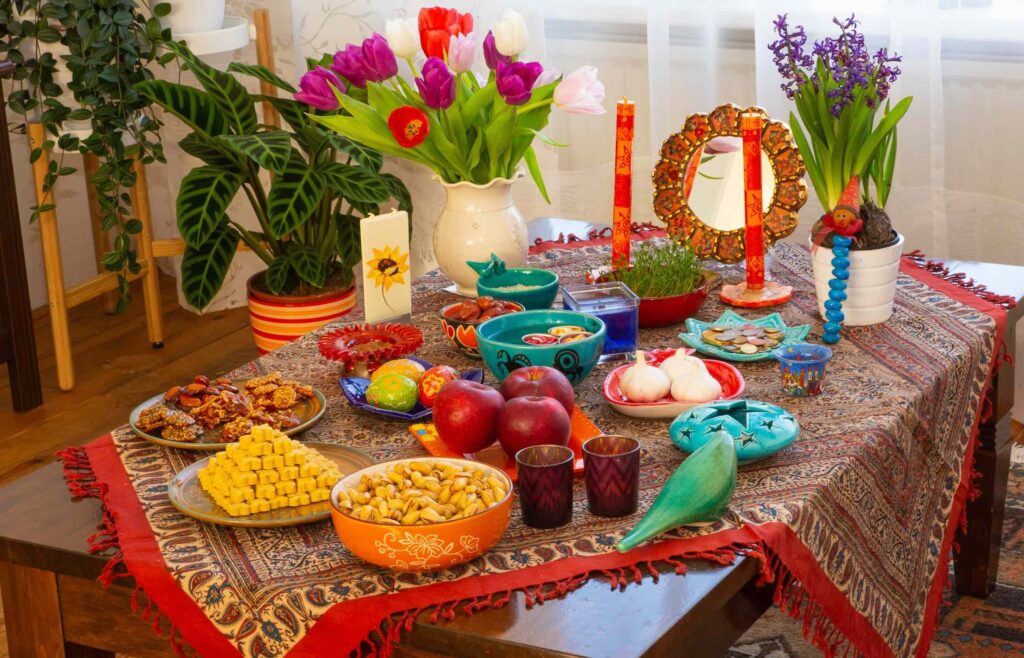
Haft Seen traditional table of Nowruz. Haft-Seen also spelled as Haft Sin is a tabletop (sofreh) arrangement of seven symbolic items traditionally displayed at Nowruz, the Iranian new year.

Nowruz plays a significant role in strengthening the ties among people based on mutual respect and the ideals of peace and good neighbourliness. Its traditions and rituals reflect the cultural and ancient customs of the civilizations of the East and West, which influenced those civilizations through the interchange of human values. Celebrating Nowruz means the affirmation of life in harmony with nature, awareness of the inseparable link between constructive labour and natural cycles of renewal and a solicitous and respectful attitude towards natural sources of life.

March 19: St. Joseph’s Day

Joseph was the husband of the Virgin Mary and the legal father of Jesus Christ.  After marrying Mary, Joseph found her already pregnant and, “being a righteous man and unwilling to expose her to public disgrace,” decided to divorce her quietly, but an angel told him that the child was the Son of God and was conceived by the Holy Spirit. Obeying the angel, Joseph took Mary as his wife. After Jesus’ birth at Bethlehem, an angel warned Joseph and Mary about the impending violence against the child as such, they fled to Egypt. There, the angel again appeared to Joseph, informing them to return to the Holy Land, and they settled in Nazareth.

Since the 10th century, several Western countries celebrated March 19 as the Feast of St. Joseph. The feast day became the official practice of the Church in the 1500s. Joseph is a patron of many things. He is the patron of a happy death, families, the Universal Church, fathers, expectant mothers, travellers, craftsmen, immigrants, workers, and engineers. He is also the patron of many countries, including the Americas, Canada, Croatia, Mexico, Korea, Austria, Belgium, Peru, the Philippines, and Vietnam.

March 25: Holi

Holi, also known as the ‘Festival of Colours,’ is one of the most vibrant and jubilant festivals in Hinduism, celebrated across India. It’s a time for people to come together, forget grievances, and enjoy life’s colourful moments. Holi is celebrated to mark the arrival of spring and the victory of good over evil. The following day, in Holi, people engage in playing with colours, singing, and dancing, embodying the spirit of forgiveness, love, and joy. The celebrations can vary depending on the region in India, but one of the most common celebrations is having a bonfire on the eve of Holi, a reference to Holika.


March 29: Good Friday

Good Friday is a Christian holiday commemorating the crucifixion of Jesus Christ and his death at Calvary. The holiday is observed yearly as part of the Paschal Triduum on the Friday before Easter Sunday and can also be known as Holy Friday, Great Friday or Easter Friday. This year, Good Friday falls on March 29.


As a statutory holiday in Canada, schools and many businesses are closed to recognize the day. Hot cross buns are a traditional treat on Good Friday. There are small, bread-like buns made from dough that contains raisins, currents and other dried fruits. Typically, Good Friday is used as a day to attend church and spend time with loved ones preceding the Easter weekend.

March 31: Easter Sunday

Easter, also known as Pascha or Resurrection Sunday, is a cultural holiday commemorating the resurrection of Jesus after the crucifixion (Good Friday). The Easter Bunny was created sometime in the 1700s and is a widely valued tradition for many families and children around the world today. However, some countries celebrate Easter without a bunny. In France, for example, people celebrate Easter with flying church bells. In Sweden, with Easter witches. However, if you’re spending the Easter Holiday this year, enjoy the time off and take some time for yourself.

In March, we acknowledge Juvenile Arthritis Awareness Month, International Wheelchair Day, Self-Injury Awareness Day, World Teen Mental Wellness Day, World Hearing Day, World Birth Defects Day, World Lymphedema Day, International Women’s Day, International Day to Combat Islamophobia, National Trisomy 18 Awareness Day, World Behaviour Analysis Day, International Day for the Elimination of Racial Discrimination and Transgender Day of Visibility. Read more about each date of significance below, written by members of our Inclusivity, Diversity, Equity and Accessibility (IDEA) Committee.

Juvenile Arthritis Awareness Month

March is Juvenile Arthritis Awareness Month, aimed at increasing public understanding about this condition, which affects 1 in 1000 Canadian children under the age of 16. It’s more prevalent than cystic fibrosis and childhood diabetes. Juvenile arthritis is an autoimmune disease where the immune system attacks the body instead of protecting it from foreign substances.

No exact cause is known, but researchers link juvenile arthritis to genetics, certain infections, and environmental triggers. Although there is no cure for juvenile arthritis, some children achieve permanent remission. However, any physical damage to the joint remains. Diagnosis of Juvenile Idiopathic Arthritis (JIA) is based on a comprehensive medical history, physical examination, blood tests, and imaging studies.

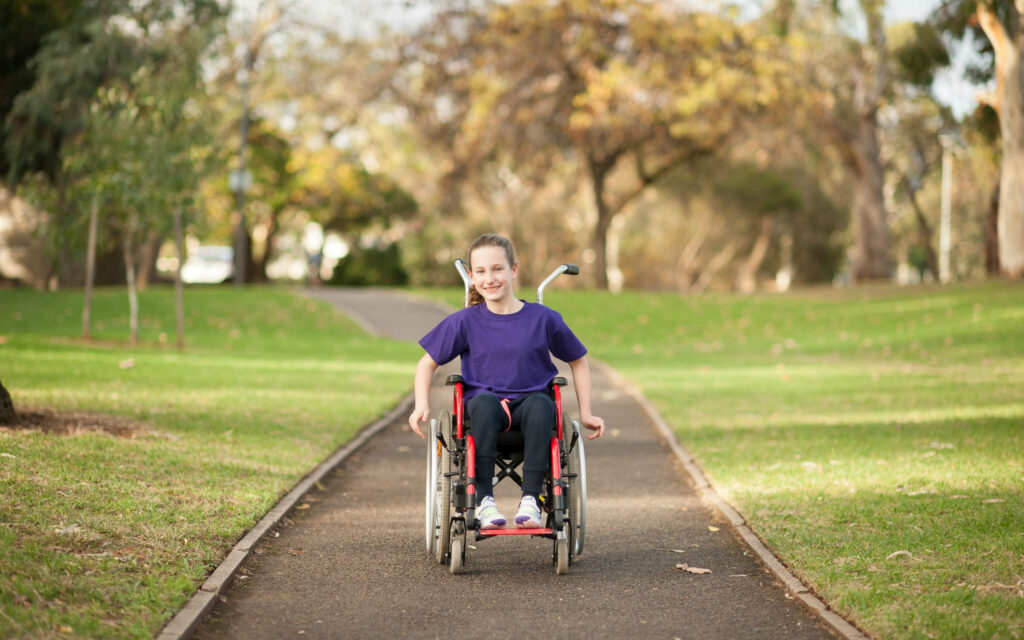
March 1: International Wheelchair Day

Developed in 2008, International Wheelchair Day falls each year on March 1st and is an opportunity to recognize and celebrate the positive aspects of wheelchairs for those who require the use of them throughout their lives. According to the National Institute of Health, in 2023, it was estimated that approximately 1% or 288,800 Canadians used a wheelchair over the course of a year.  Wheelchairs have been around for many years, with the first wheelchairs being invented in China in the fifth Century BCE. Today the technology has continued to advance and will continue to assist individuals for years to come.


March 1: Self-Injury Awareness Day

Self-injury Awareness Day is on March 1 each year and focuses on increasing education and support on a misunderstood problem. Self-injury occurs in many forms, including cutting, scratching, punching, and ingestion of chemicals. Those who self-harm do so for a variety of reasons. Some of them include coping with fear, stress, anxiety, or inducing positive feelings. It is reported that children and youth with developmental disabilities, such as autism and intellectual disability, are more likely to engage in self-injury than children without these disabilities.

HOW TO OBSERVE SELF INJURY AWARENESS DAY

  • Learn more about self-injury and find help if you need it. If your client is engaging in self-injury, consider reaching out to members of the behaviour services team.
  • Understand that no one has to suffer alone, and there is help.
  • Wear orange to show your support.
  • Help remove the stigma associated with this and other mental health concerns.
  • Open a dialogue by starting the conversation.

March 2: World Teen Mental Wellness Day

World Teen Mental Wellness Day is globally observed on March 2. Unfortunately, teenagers who experience mental health difficulties are often stigmatized. You may hear people say some comments like “You’re too young to have stress” or “You’re not paying bills; you’re fine,” which can ignore the feelings that they are trying to express. Anxiety-related struggles and depression are common among teenagers. As adults and clinicians, we can support teenagers by listening to them and encouraging them to speak to another peer or adult that they trust.

March 3: World Hearing Day

On March 3, World Hearing Day is globally celebrated each year to raise awareness regarding hearing and hearing loss, promoting ear and hearing care, and calling for action to address hearing loss and related issues.

The 2024 World Hearing Day theme is changing mindsets. Changing mindsets is crucial for improving access and reducing the cost of unaddressed hearing loss. Consider promoting care for your ears and hearing by reducing high volume levels while watching TV or listening to music, wearing hearing protection when exposed to loud volume levels cannot be avoided and consulting with your family physician and/or audiologist if you have concerns. Visit the World Health Organization (WHO) website for more information.

March 3: World Birth Defects Day

Created in 2015, World Birth Defects Day and the World Birth Defects Movement provide an opportunity for the community and community organizations to make improvements in birth defect prevention, care, and treatment worldwide. These advancements in research and care will continue to help to improve the lives of individuals with birth defects to ensure that they can continue to live full, rewarding lives.

March 6: World Lymphedema Day

World Lymphedema Day, observed annually on March 6, serves as a global platform to raise awareness about lymphedema and related lymphatic disorders. Lymphedema is a chronic condition characterized by swelling due to the accumulation of lymphatic fluid, often resulting from surgery, trauma, or infection.

This day aims to educate the public, healthcare professionals, and policymakers about the impact of lymphedema on individuals’ quality of life and the importance of early detection, treatment, and management. Through advocacy efforts, community outreach, and educational initiatives, World Lymphedema Day seeks to reduce stigma, improve access to care, and empower those affected by lymphatic disorders to lead fulfilling lives. It also honours the resilience and strength of individuals living with lymphedema while fostering solidarity and support within the global lymphedema community.

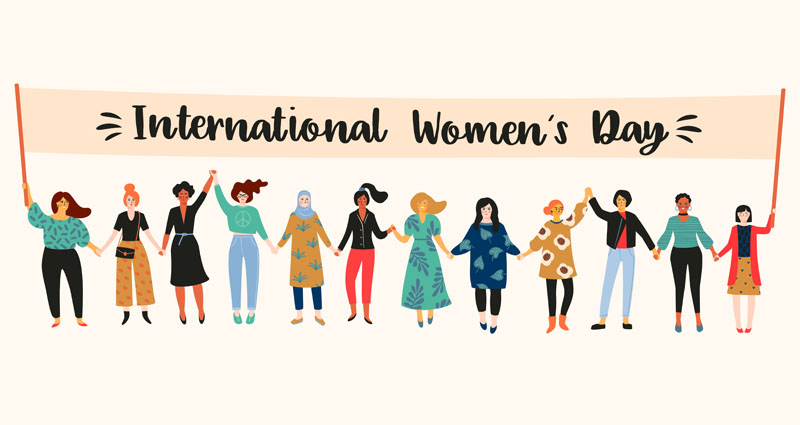
March 8: International Women’s Day


On March 8, people around the country come together to celebrate International Women’s Day 2024 in Canada. It’s a global day organized annually that recognizes and celebrates the social, economic, cultural, and political achievements of women.

It is a day for us to join voices with people around the world and shout our message for equal rights loud and clear: “Women’s rights are human rights!” We celebrate all women in all their diversity. We embrace their facets and intersections of faith, race, ethnicity, gender or sexual identity, or disability. We celebrate those who came before us, those who stand beside us now, and those who will come after. It’s a time to celebrate the achievements of women, whether social, political, economic or cultural.

March 15: International Day to Combat Islamophobia

On March 15, we at Grandview Kids join the global community in observing the International Day to Combat Islamophobia, a day that underscores our unwavering commitment to fight against intolerance and violence directed towards Muslims around the world. This observance, established by the U.N. General Assembly in 2022, serves as a solemn reminder of the tragic events in Christchurch, New Zealand, in 2019, which vividly brought to light the critical need to challenge hatred and misconceptions.

Islamophobia, manifesting as a form of racism through xenophobia, negative profiling, and harmful stereotypes, demands our attention. We are particularly concerned about its gendered aspect, which subjects Muslim women and girls to discrimination based on their attire, often misinterpreted as a sign of oppression (Read about World Hijab Day here).

At Grandview Kids, recognizing this day is a crucial step in our journey to dispel such misconceptions and cultivate a culture rooted in compassion and respect. We believe in the power of open dialogue, and we encourage everyone to ask questions and engage with our Muslim colleagues and families. This approach is instrumental in clarifying misunderstandings, breaking down stereotypes, and fostering a truly inclusive community.

Let’s embrace this opportunity to learn from one another and unite against Islamophobia, thereby reinforcing our dedication to building a diverse and empathetic Grandview Kids family.

March 18: National Trisomy 18 Awareness Day

Edwards syndrome, also known as trisomy 18, is a genetic condition that affects how a child’s body develops and grows. Having three copies of chromosome 18 instead of the typical two causes Edwards syndrome (trisomy 18). It occurs in an estimated 1 out of every 5,000 to 6,000 live births. Children diagnosed with trisomy 18 have a low birth weight, multiple birth defects and defining physical characteristics. Children with trisomy 18 have a chance to live longer, enriched lives with the appropriate medical care and support. More information here!

March 20: World Behaviour Analysis Day

Applied Behaviour Analysis (ABA) is a therapy based on the science of learning and behaviour. As the field of behaviour analysis is always evolving, the research and process of implementing ABA is also changing. Behaviour clinicians choose activities based on their client’s interests and interactions within their environment. This way of teaching will sometimes include methods of repeating and rewarding desirable behaviours but in a more fluid and natural approach.

March 21: International Day for the Elimination of Racial Discrimination

Annually on March 21, we observe the International Day for the Elimination of Racial Discrimination, a day rooted in the International Convention on the Elimination of All Forms of Racial Discrimination. This significant day commemorates the tragic events of 1960 in Sharpeville, South Africa when 69 peaceful demonstrators were killed by police during protests against apartheid “pass laws.” It serves as a reminder that racial discrimination persists globally, including here in Canada.

Despite progress, Indigenous peoples, and racialized and religious minority communities continue to face racism and discrimination in various forms, from systemic injustices to overt acts of hate. The day calls upon us all to take action, urging individuals, organizations and governments to work actively toward eliminating racial discrimination, injustice, systemic racism and hate. By recommitting our efforts, we strive to ensure that everyone is treated with respect, has equal access to opportunities and can thrive in safety.

It is important to leverage this day as an opportunity to educate ourselves and others, speak out against racism and discrimination, support marginalized communities, and promote anti-racism and racial equality in all aspects of life. Together, we can contribute to a more just and inclusive society.

Learn more about the International Day for the Elimination of Racial Discrimination: https://www.un.org/en/observances/end-racism-day

March 31: Transgender Day of Visibility


This day is dedicated to celebrating transgender people and their contributions to society and raising awareness of discrimination faced by transgender people worldwide. This day acts as a reminder to celebrate transgender and non-binary people worldwide and acknowledge the courage it takes to live openly and authentically.

The day was founded by an American transgender activist named Rachel Crandall in 2009 as a reaction to the lack of recognition of transgender people, citing the frustration that the only well-known transgender-centred day was the Transgender Day of Remembrance, which mourned the murders of transgender people but did not acknowledge and celebrate living members of the transgender community.

March is national epilepsy awareness month in Canada, and Grandview Kids hopes to encourage people to acknowledge and understand the disorder and support the fight against the misconceptions, discrimination and isolation facing those who live with epilepsy.

Disclaimer: Jacki is a peer navigator, and her information is not a substitute for professional medical advice.

Jacki’s Story

It’s about one month away from Colton’s first seizure anniversary. To this day, it can still be incomprehensible that my little boy has been having seizures for 12 years. Colton’s first seizure was when he was 8 months old; his second seizure was 2 weeks later, and from there, they never stopped. His seizures are not every day; sometimes they are not every week, but most certainly, by the 2 weeks mark, he has had a few.

Back when Colton’s seizures began, I chased seizure freedom as that was the only goal. I chased it at the cost of anything. The reality is that 30% of individuals with Epilepsy will not have seizure control, and my son is one of them (at least currently, I never lose hope or belief that a treatment will become available in his lifetime). Our family had to learn to live in between the seizures and enjoy any seizure-free day Colton had.

Jacki with her husband and children
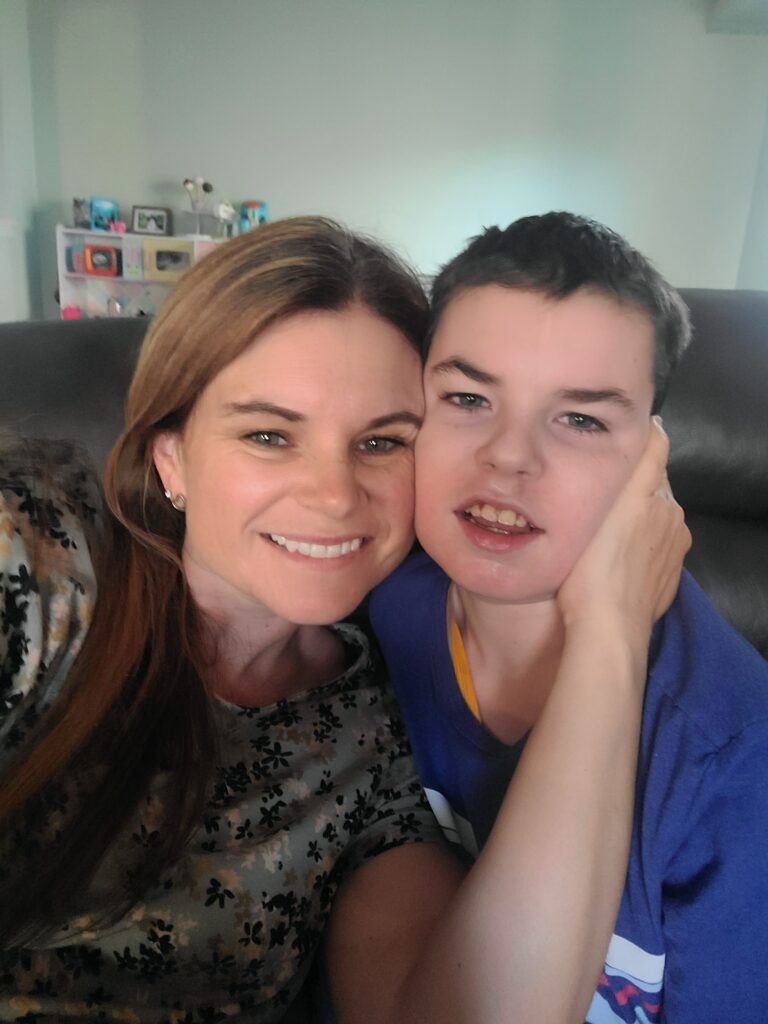
Jacki and Colton

During the past years of parenting a child with a seizure disorder, I have learned a few things:

People mean well; the friend who asks if you have read this article or tried this medication, the mom who says he will outgrow it, the doctor who sends him for more bloodwork. They mean well but they also do not know what is best for your child, you do. You need to educate them on your child, but also learning to understand people do mean well makes this road easier.

With healthcare providers, I found that asking questions and taking time to understand the next steps is essential. Medications for Epilepsy tend to have side effects, so choosing the right treatment plan is important and should not be rushed. Getting a second opinion can be worth it, and so is connecting with other families with similar diagnoses.

Find your tribe – yours and your child’s. Knowing who to reach out to or who you can trust to support your child makes hard days easier. If the doctor or support worker isn’t the right fit, then ask for a referral elsewhere. I have done this; I do not regret it. They may be great, but they are not the right ones for your child. I know who I can reach out to on a hard day, who is going to listen and give what I need. This has come with time, but having the right tribe is helpful.

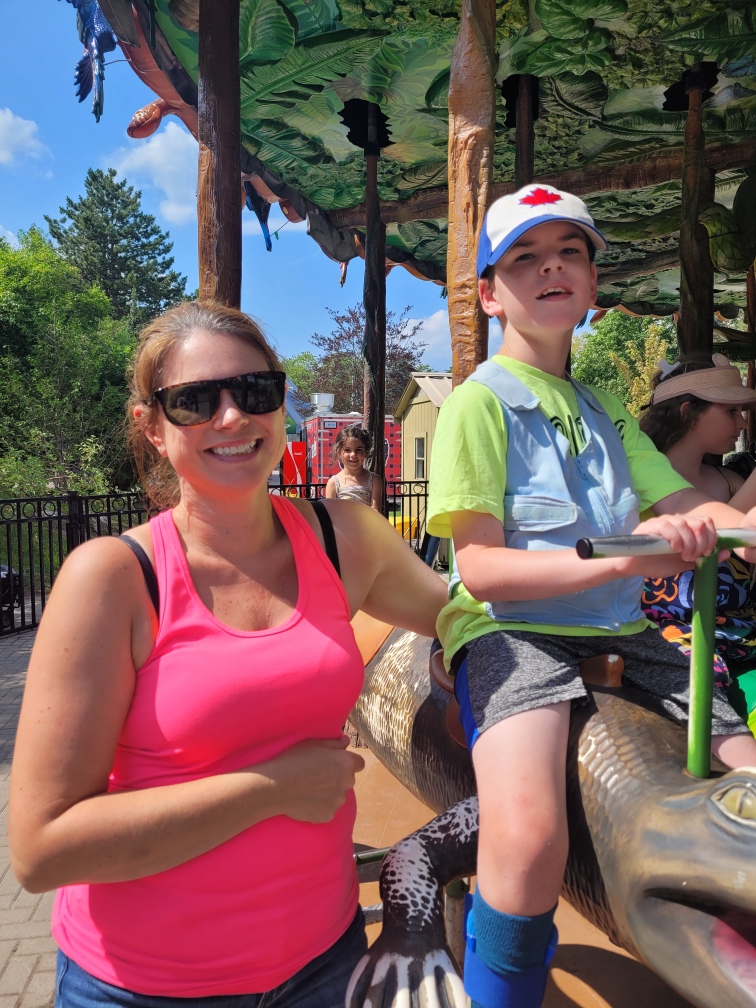
Jacki standing beside Colton on a ride.

Finally, it is ok to be sad, stressed, scared or anxious. Those are real feelings, and it is important to feel them. It is natural to think of all the things that can go wrong, but you must also think of all the things that will go right. Write down a list of things that you can do for yourself when you are stressed and having a tough day. Some ideas are getting outside, reading a book, listening to music, ordering a Starbucks drink, and taking a few minutes for some deep breaths. As a parent of a child with seizures, I know there will be bad days, but being prepared with what I can do for myself when feeling depleted helps. It is vital to recognize that taking care of yourself allows you to be there for others.

During the month of March, we celebrate National Cerebral Palsy Awareness Month to recognize and support the many individuals who live with Cerebral Palsy (CP). CP is a permanent physical disability impacting a person’s mobility and muscle strength. The degree of its impact ranges greatly on an individual basis, from mild to severe. Early intervention, therapies, use of Botox and even surgeries can help a person’s ability to deal with pain management and functionality in daily life. CanChild states that approximately 1 out of every 400 individuals in Canada are diagnosed with CP, and it is the most common physical disability in children.

Gavin’s Story – Shooting for the Stars

Gavin and his twin sister are 7 years old and were born six weeks prematurely. As preemies, baby milestones were adjusted to take into consideration their gestational age. His sister was meeting milestones when adjusted to their due date, but Gavin was not. At 18 months of age, his paediatrician referred him to Grandview Kids to see Dr. Hunt. He was diagnosed with spastic cerebral palsy, and Grandview Kids was able to provide his family with support through physiotherapy (PT), occupational therapy (OT), speech-language pathology, recreational therapy, and social work. He had difficulty in using his trunk and legs and holding his head up, and he currently uses a wheelchair for long distances, a walker, and ankle-foot orthotics for support. With continuous PT, he has increased his muscle strength and is now working on coordination and balance. OT helps him work on his fine motor skills through fun activities that develop his colouring, printing, pincer, and feeding skills.

Gavin smiling widely!
Gavin and his twin sister.

Gavin’s parents recognize the way Grandview Kids has been there to support him and his family over the years. “It’s nice to see people still care. His therapists want him to succeed, so they go above and beyond!” says his dad, who also happens to have CP. “Each therapist brings their own unique ‘quirks,’ and it benefits him and pushes him more. They have great qualities and challenge him.” Gavin was able to take his first steps with his physiotherapist, and it wasn’t just one step, but five amazing first steps.

What does Gavin want to be when he grows up? His parents say that he is not letting CP keep his dreams modest. He is shooting for the stars and wants to be an astronaut. Gavin inspires his parents, who share words of encouragement with other parents of children with CP. “It might hurt in the beginning, but it’s worth it – push them! They come out stronger & smarter. They must think more and expend more energy than the average person, but it pushes their brain capacity. Have that ‘money is no object’ mentality. You will be rewarded, but be patient as it is not an overnight thing; it will take work.”

On March 21, we celebrate World Down Syndrome Day by showcasing the abilities, contributions, and experiences of people with Down syndrome. It also aims to educate, raise public awareness and advocate for acceptance and inclusion.

Down syndrome is a naturally occurring chromosomal arrangement that has always existed and is universal across racial, gender, and socio-economic lines. One in every 781 babies born in Canada has Down syndrome.

The goal is to make the world a more inclusive place for individuals with Down syndrome, and we can start by using appropriate language when referring to any group of people. Correct terminology helps to reduce the chances of prejudice, misconceptions, and stereotypes. The Canadian Down Syndrome Society has a helpful guide for talking about Down Syndrome.

Client Story:

Meet 5-year-old Clara! She enjoys listening to music, working with puzzles, building things and is a skilled reader. Clara also has Down Syndrome, but her diagnosis does not define her. In fact, with extra care and understanding, she will show you how smart and determined she can be!

Depending on the task, she can do and accomplish many things quite well and independently. She requires help in some areas, but given the time to work with her, “Clara can do great things in her own way, on her own time,” says Clara’s mom, Tanya.

Tanya (mom) is holding Clara (client) in her lap.
Clara stanind by a tree.

Clara accesses Grandview Kids services such as Speech-Language Pathology, Physiotherapy, Occupational Therapy and Social Work support. She has been working on improving her social skills and communication skills. Clara and Tanya’s Grandview Kids experience has been “absolutely positive all around,” and “Grandview Kids is a great place to start to figure out the journey.”

They made lots of connections with different services and teams that helped Clara move forward. Tanya knows that she can approach Grandview Kids and say, “This is where we’re at, and I need the help, and the help is always there.” This is why she “wholeheartedly and will always be a champion for Grandview Kids.”

Join us and others to take a stand against bullying and be an advocate for kindness and inclusivity by wearing a pink shirt on February 28, 2024.

Pink Shirt Day is celebrated on the last Wednesday in February every year to promote anti-bullying. The initiative was started in 2007 in small-town Nova Scotia, after a Grade 9 boy was bullied for wearing a pink shirt. Other students took a stand against this bullying, distributing pink shirts to all Grade 9 boys in an act of solidarity. This simple act of kindness spread across the school, community and country, becoming a global movement to support children and youth affected by bullying.

Bullying is a form of aggression where there is a power imbalance; it is behaviour that makes the person being bullied feel afraid, alone or uncomfortable. This can include such behaviours as being teased, insulted or excluded. There are many different types of bullying, ranging from being made fun of, to having one’s property destroyed, to cyberbullying-type measures such as having hurtful information posted on the Internet.

Having needs due to neurological, developmental, physical and mental health conditions can add to the challenges children and young people face as they learn to navigate social situations in school and in life. While bullying and cyberbullying is an unfortunate reality for many young people, children with physical, communication and developmental needs are at greater risk for being targeted by their peers.

That’s why Pink Shirt Day is so important to Grandview Kids!

We all have a role to play in making the community accessible and inclusive for all abilities. Becoming an Inclusion Ally is one way you can make a difference!

An Inclusion Ally is someone who listens to and supports people with different needs and abilities, but does not have this lived experience. It’s not a label you give yourself. An Inclusion Ally is always learning and unlearning. An Inclusion Ally finds a way to make sure everyone feels like they belong.

Don’t know where to start to combat bullying? We can help!

Our Ability Acceptance Program is available to local businesses, schools, licensed child care centres and community groups, with the goal to enhance the understanding and acceptance of all abilities and promote inclusive practices. Request a presentation!

Remember, sometimes disabilities are visible, but other times they may be invisible. This includes brain injuries, chronic pain, mental illness, gastro-intestinal disorders, and much more. Because they’re not obvious to spot, invisible disabilities may be overlooked and misunderstood. That’s why it’s important to treat everyone with respect, kindness and understanding.

Together, we can make our classrooms, schools and communities more inclusive for people of all abilities!

  • ⟨
  • Page 1
  • Interim pages omitted …
  • Page 18
  • Page 19
  • Page 20
  • Page 21
  • Page 22
  • Interim pages omitted …
  • Page 26
  • ⟩

Primary Sidebar

Child Stories

ICAudGItaW1hZ2V7cG9zaXRpb246cmVsYXRpdmU7dHJhbnNpdGlvbjp0cmFuc2Zvcm0gMC4yNXMgZWFzZX0ud3AtYmxvY2staW1hZ2UgLnRiLWltYWdlLmFsaWduY2VudGVye21hcmdpbi1sZWZ0OmF1dG87bWFyZ2luLXJpZ2h0OmF1dG99LnRiLWltYWdlIGltZ3ttYXgtd2lkdGg6MTAwJTtoZWlnaHQ6YXV0bzt3aWR0aDphdXRvO3RyYW5zaXRpb246dHJhbnNmb3JtIDAuMjVzIGVhc2V9LnRiLWltYWdlIC50Yi1pbWFnZS1jYXB0aW9uLWZpdC10by1pbWFnZXtkaXNwbGF5OnRhYmxlfS50Yi1pbWFnZSAudGItaW1hZ2UtY2FwdGlvbi1maXQtdG8taW1hZ2UgLnRiLWltYWdlLWNhcHRpb257ZGlzcGxheTp0YWJsZS1jYXB0aW9uO2NhcHRpb24tc2lkZTpib3R0b219IC53cC1ibG9jay1pbWFnZS50Yi1pbWFnZVtkYXRhLXRvb2xzZXQtYmxvY2tzLWltYWdlPSJhMWJlMmUyODAwMWFkMGRlMjBhM2RlZWVlYmE5MDJhMSJdIHsgbWF4LXdpZHRoOiAxMDAlOyB9IEBtZWRpYSBvbmx5IHNjcmVlbiBhbmQgKG1heC13aWR0aDogNzgxcHgpIHsgICAudGItaW1hZ2V7cG9zaXRpb246cmVsYXRpdmU7dHJhbnNpdGlvbjp0cmFuc2Zvcm0gMC4yNXMgZWFzZX0ud3AtYmxvY2staW1hZ2UgLnRiLWltYWdlLmFsaWduY2VudGVye21hcmdpbi1sZWZ0OmF1dG87bWFyZ2luLXJpZ2h0OmF1dG99LnRiLWltYWdlIGltZ3ttYXgtd2lkdGg6MTAwJTtoZWlnaHQ6YXV0bzt3aWR0aDphdXRvO3RyYW5zaXRpb246dHJhbnNmb3JtIDAuMjVzIGVhc2V9LnRiLWltYWdlIC50Yi1pbWFnZS1jYXB0aW9uLWZpdC10by1pbWFnZXtkaXNwbGF5OnRhYmxlfS50Yi1pbWFnZSAudGItaW1hZ2UtY2FwdGlvbi1maXQtdG8taW1hZ2UgLnRiLWltYWdlLWNhcHRpb257ZGlzcGxheTp0YWJsZS1jYXB0aW9uO2NhcHRpb24tc2lkZTpib3R0b219IH0gQG1lZGlhIG9ubHkgc2NyZWVuIGFuZCAobWF4LXdpZHRoOiA1OTlweCkgeyAgIC50Yi1pbWFnZXtwb3NpdGlvbjpyZWxhdGl2ZTt0cmFuc2l0aW9uOnRyYW5zZm9ybSAwLjI1cyBlYXNlfS53cC1ibG9jay1pbWFnZSAudGItaW1hZ2UuYWxpZ25jZW50ZXJ7bWFyZ2luLWxlZnQ6YXV0bzttYXJnaW4tcmlnaHQ6YXV0b30udGItaW1hZ2UgaW1ne21heC13aWR0aDoxMDAlO2hlaWdodDphdXRvO3dpZHRoOmF1dG87dHJhbnNpdGlvbjp0cmFuc2Zvcm0gMC4yNXMgZWFzZX0udGItaW1hZ2UgLnRiLWltYWdlLWNhcHRpb24tZml0LXRvLWltYWdle2Rpc3BsYXk6dGFibGV9LnRiLWltYWdlIC50Yi1pbWFnZS1jYXB0aW9uLWZpdC10by1pbWFnZSAudGItaW1hZ2UtY2FwdGlvbntkaXNwbGF5OnRhYmxlLWNhcHRpb247Y2FwdGlvbi1zaWRlOmJvdHRvbX0gfSA=
LnRiLWhlYWRpbmcuaGFzLWJhY2tncm91bmR7cGFkZGluZzowfQ==
LnRiLWZpZWxke21hcmdpbi1ib3R0b206MC43NmVtfS50Yi1maWVsZC0tbGVmdHt0ZXh0LWFsaWduOmxlZnR9LnRiLWZpZWxkLS1jZW50ZXJ7dGV4dC1hbGlnbjpjZW50ZXJ9LnRiLWZpZWxkLS1yaWdodHt0ZXh0LWFsaWduOnJpZ2h0fS50Yi1maWVsZF9fc2t5cGVfcHJldmlld3twYWRkaW5nOjEwcHggMjBweDtib3JkZXItcmFkaXVzOjNweDtjb2xvcjojZmZmO2JhY2tncm91bmQ6IzAwYWZlZTtkaXNwbGF5OmlubGluZS1ibG9ja311bC5nbGlkZV9fc2xpZGVze21hcmdpbjowfQ==

Henley’s journey with Kabuki Syndrome: Kabuki Syndrome Awareness Day

Written by Grandview Kids parent, Laura  Kabuki syndrome is a rare genetic disorder affecting 1 of every 32,000 births worldwide. Children with Kabuki Syndrome may experience a variety of symptoms,...

Latest Updates

  • Celebrating International Youth Day! July 31, 2026
  • Living beyond expectations: Haylee’s journey with SMA Type 1  July 31, 2026
  • Summer 2026: Dates of Significance July 30, 2026
  • “Grandview will always have my heart”: Brad’s story  July 20, 2026
  • International Pride Day Resources June 26, 2026

You Have Questions

We’d like to help you find the answers…

Contact Us Today

© Grandview Kids Built by PeaceWorks

  • About Us
  • Contact Us
  • Privacy
Accessibility Adjustments

Powered by OneTap

How long do you want to hide the toolbar?
Hide Toolbar Duration
Select your accessibility profile
Vision Impaired Mode
Enhances website's visuals
Seizure Safe Profile
Clear flashes & reduces color
ADHD Friendly Mode
Focused browsing, distraction-free
Blindness Mode
Reduces distractions, improves focus
Epilepsy Safe Mode
Dims colors and stops blinking
Content Modules
Font Size

Default

Line Height

Default

Color Modules
Orientation Modules