• Skip to primary navigation
  • Skip to main content
  • Skip to primary sidebar
Grandview Kids Logo

Grandview Kids

Every Child And Youth Living Life At Their Full Potential

  • About Us
    • Vision, Mission and Values
    • The New Grandview Kids
      • Operational Readiness
      • Visiting Grandview Kids’ Ajax Headquarters
    • Our History
    • Leadership
    • Board of Directors and Committees
    • Annual Report
    • Strategic Plan
    • Policies
  • Calendar
  • Annual Report
  • Contact
    • Contactez – nous
    • Ajax – Headquarters
    • Bowmanville Health Centre
    • Grandview School
    • Oshawa – Dwyer
    • Port Perry
    • Whitby – Abilities Centre
  • Careers
  • Register
  • Donate
  • Instagram
  • LinkedIn
  • Facebook
  • Services and Programs
    • Audiology
    • Autism Program
      • Autism Spectrum Disorder (ASD) Diagnostic Hub
      • Caregiver-Mediated Early Years Programs
      • OAP Core Clinical Services
      • Entry to School Program
      • Foundational Family Services
    • Blind-Low Vision Program
    • Extensive Needs Service
    • Family Engagement Program
      • Adolescent Transition Program
      • Family Leader Program
        • Family Advisory Council
        • Youth Advisory Council
    • Infant Hearing Program
    • Medical Services
      • Autism Spectrum Disorder (ASD) Diagnostic Hub
      • Complex Care Program
      • Grandview Anesthesia Procedure (GAP) Clinic
      • Hypertonia Clinic
      • Nutrition Services
      • Orthopaedic Clinic
    • Occupational Therapy
    • Physiotherapy
    • Preschool Outreach Program
    • School Programs & Resources
      • Resources for Educators
      • School-Based Rehabilitation
    • Service Navigation
      • SmartStart Hub: Parents
      • SmartStart Hub: Partners
    • Social Work
    • Speech-Language Pathology
      • Augmentative and Alternative Communication
    • Therapeutic Recreation
  • Purchased Services
    • Beyond the Walls
    • OAP Core Clinical Services
      • Behaviour Services
  • Research
    • Get involved in research
    • IDEA Study
      • Building knowledge and understanding of the intersection of race and disability in accessing pediatric rehabilitation services.
    • Research Associate: Dr. Fiona Moola
    • Research Associate: Dr. Meghann Lloyd
  • Resources
    • Ability Acceptance Program
    • Arriving at Grandview Kids
    • Community Supports & Resources
    • Family Support Fund
    • Free to Read Program
    • Frequently Asked Questions
    • Gather by Grandview Kids
    • News and Updates
    • Privacy
    • Resources for Parents and Caregivers
    • Visiting Grandview Kids
  • Support Us
    • Ways to support
    • Host a fundraiser
    • Participate in an event
      • Golf Fore Grandview Kids
      • Sponsor the Drum
      • Dream Big, Dream Brighter Awards Gala
    • Leave a legacy
      • Gifts of securities
      • Gifts of bequests
      • Gifts of life insurance
    • Your impact
    • Building a Legacy: Honouring Jerry Coughlan
  • I Want To…
    • Connect with Grandview Kids
    • Donate
    • Refer a child or youth
    • Register via My Community Hub
    • Schedule an Appointment
    • Volunteer at Grandview Kids
    • Work at Grandview Kids
  • Grandview School
    • About Our Program
    • About Our Board
    • Grandview School Social Story
    • Plans and Reports
    • Resources for Families
    • Resources for Schools – Switch It Up!
    • Careers and Volunteering
    • Contact Grandview School
  • Search

Posted May 30, 2024

June is Scoliosis Awareness Month

Awareness Days

This month is observed in June each year to increase awareness and understanding of scoliosis, a medical condition characterized by an abnormal sideways curvature of the spine, forming “S” or “C” shapes instead of a straight line. This condition can range from mild to severe and can occur at different stages of life, with idiopathic scoliosis being the most common form.

The severity can vary and affect different parts of the spine. Idiopathic Scoliosis, which has an unknown cause, impacts about 3% of children and is usually noticed between ages 4-17. It can be associated with other conditions like muscular dystrophy or cerebral palsy. Signs of scoliosis include uneven shoulders or waist, a prominent shoulder blade, or uneven alignment of the hips. X-rays measure the curve and rotation of the spine, aiding in diagnosis and treatment planning.

Various interventions are available to manage scoliosis, prevent the curvature from worsening, or alleviate associated pain. Customized braces can help halt the progression of the curve and reduce pain. Targeted physical exercises like the Schroth method provide significant support and relief. In cases where non-surgical methods are ineffective or if the curvature is severe, surgery may be considered.

Scoliosis Awareness Month plays a crucial role in improving the lives of individuals affected by scoliosis by increasing awareness, providing support, advocating for improved care, and fostering a sense of community. It aims to promote early detection, early treatments, and overall well-being for those living with this condition.

Read Fadia and her son’s story:

Our journey with my son’s scoliosis has been a challenging and emotional experience, filled with highs and lows that have tested his resilience and determination. It all began with a slight curve in his spine that seemed inconsequential at the time. The doctors couldn’t pinpoint a specific cause, but I have always believed that his leg length discrepancy played a crucial role in its development. As his leg discrepancy increased, so did the severity of his spinal curve.

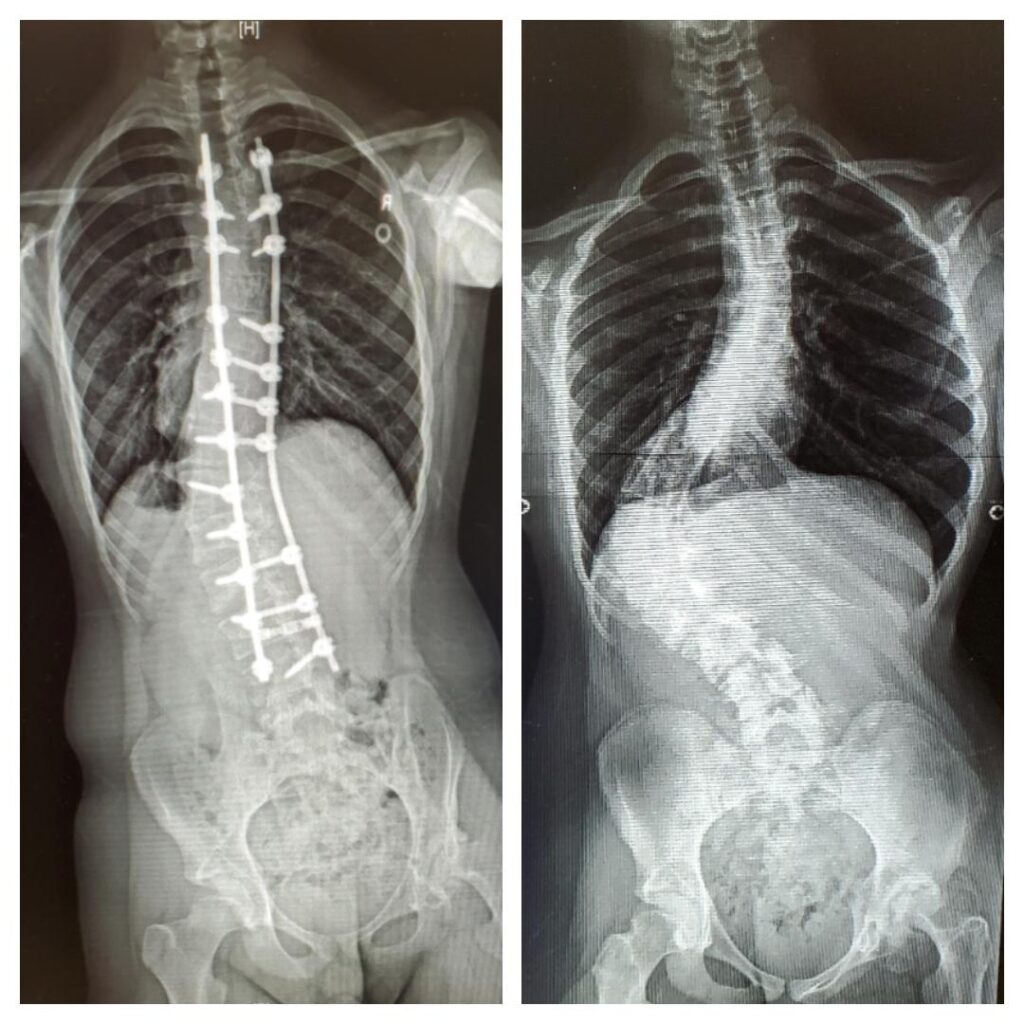
I first noticed the curvature when it was just a few degrees, something that didn’t initially alarm me. However, as years passed, the situation worsened dramatically. It wasn’t until his hip femur head began to degenerate rapidly in the shorter leg that the gravity of his condition became painfully clear. The doctors measured his spinal curve at 40 degrees, a startling revelation that made us realize how serious things had become. Given that my son doesn’t have arms, traditional mobility aids like crutches were not an option. Instead, he was provided with an electronic wheelchair to help him navigate school and other places where he needed to cover longer distances. This contributed to making his trunk muscles weaker and his spine bending more. Despite the severity of his condition, the doctors noted that his spine was still quite flexible and told us that we could wait some more before surgery. A brace was not suggested because the curve had already progressed beyond the point where it could have been effective in halting further bending.

He was placed on a waitlist for spinal fusion surgery, a wait that stretched painfully to 1.5 years. During this time, his condition deteriorated, the curves increased, and so did his pain, which by this time was constant and only relieved by lying down. By the time he finally underwent surgery, his spinal curve had increased to a staggering 87 degrees. The surgery was extensive, lasting 11.5 hours, and involved fusing his spine from T4 to L4. It was a major operation that required significant blood loss management and post-operative care, including iron supplements to aid his recovery.

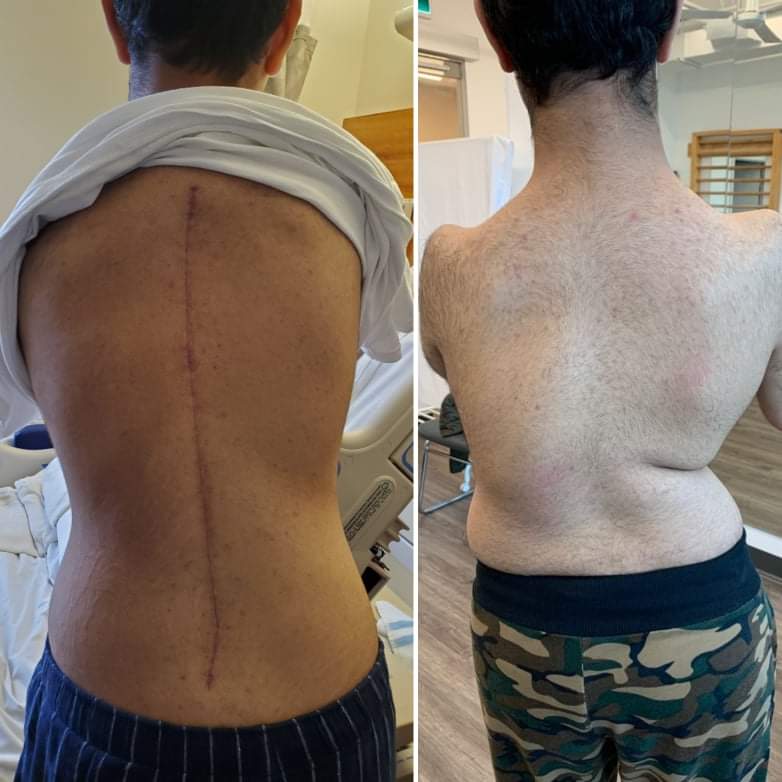
Following the surgery, my son was transferred to Holland Bloorview for a month-long rehabilitation program. The team there, along with the invaluable support from Grandview’s occupational and physical therapists, became our lifeline. They meticulously assessed his daily living needs and made numerous accommodations at home, at school, and in his wheelchair to ensure he could navigate his world more comfortably. With a straighter spine, my son gained 2.5 inches in height. This positive change brings a smile to his face every day.

After (left) and Before (right)
After (left) and Before (right) – X ray version

Today, the constant pain that once plagued my son is a thing of the past. Although his spinal flexibility has been greatly reduced, the quality of his life has improved immensely. He is a much happier boy now, freed from the constant pain that once dominated his days. Thanks to the marvels of modern medicine, his scoliosis has been significantly reduced, and our family is incredibly grateful for the life-changing impact of this surgery. Our journey has been arduous, but seeing my son smile again makes every moment of struggle worthwhile.

This Scoliosis Awareness Month, I hope our story can offer hope and encouragement to other families facing similar challenges.

Brain Injury Awareness Month, recognized each June in Canada, provides an important opportunity to bring attention to the prevention of traumatic brain injury (TBI) and to promote strategies to improve the quality of life for persons living with TBI and their families.

Claudia N., a Grandview parent and member of our Family Advisory Council (FAC), tells her son Reid’s story:

Brain injury is invisible and often misunderstood.  The scars may not be obvious, but they are there. They show up in the way you move, talk, and process information.  My son acquired a traumatic brain injury (TBI) after a rare complication of brain inflammation during influenza.

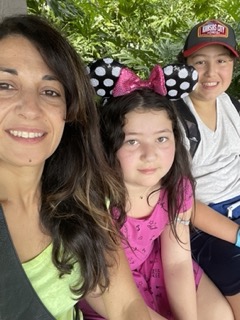
Claudia taking a selfie of herself with her two children.
Claudia N., with her children.
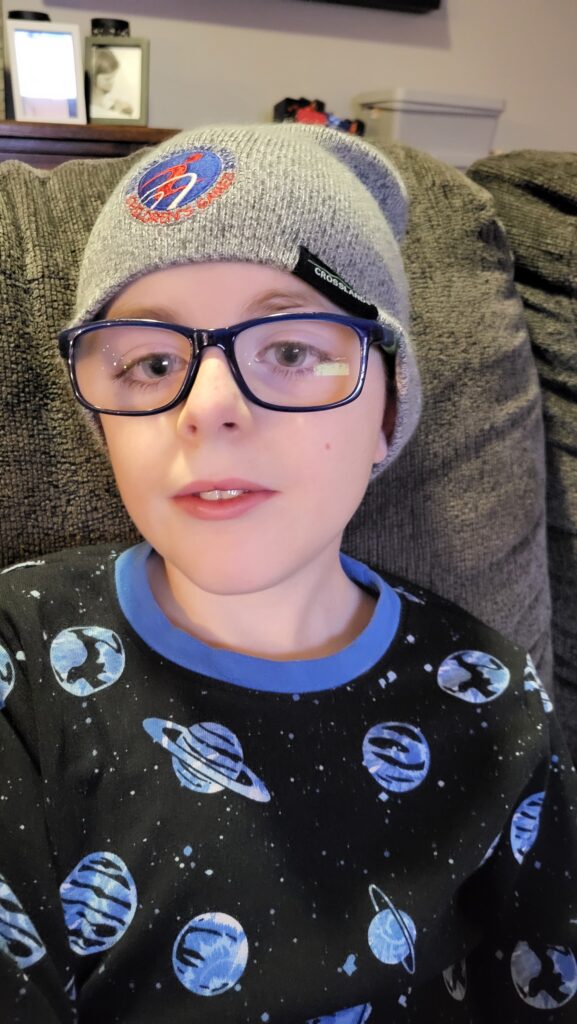
Claudia's son and daughter in a portrait like photo.
Claudia’s son and daughter.

He was a rep-athlete in hockey, basketball, soccer and baseball.  The more contact he had in sports, the better. Now he can no longer have contact. This was his identity. He had to re-learn everything, from riding a bike, walking, and running to tying his shoelaces. 

It is heartbreaking to have to answer the question, “Why doesn’t my brain or body work like it used to?” daily.  Grandview Kids showed me there is hope after a TBI, but it begins when it is taken seriously by others. Instead of hockey, they introduced him to golf. Instead of tackle football, they are teaching how to swim. He was resistant at first but is now secretly loving it. They showed him that there are different directions that can just be as fulfilling. When he wanted to give up, they simply wouldn’t let him.

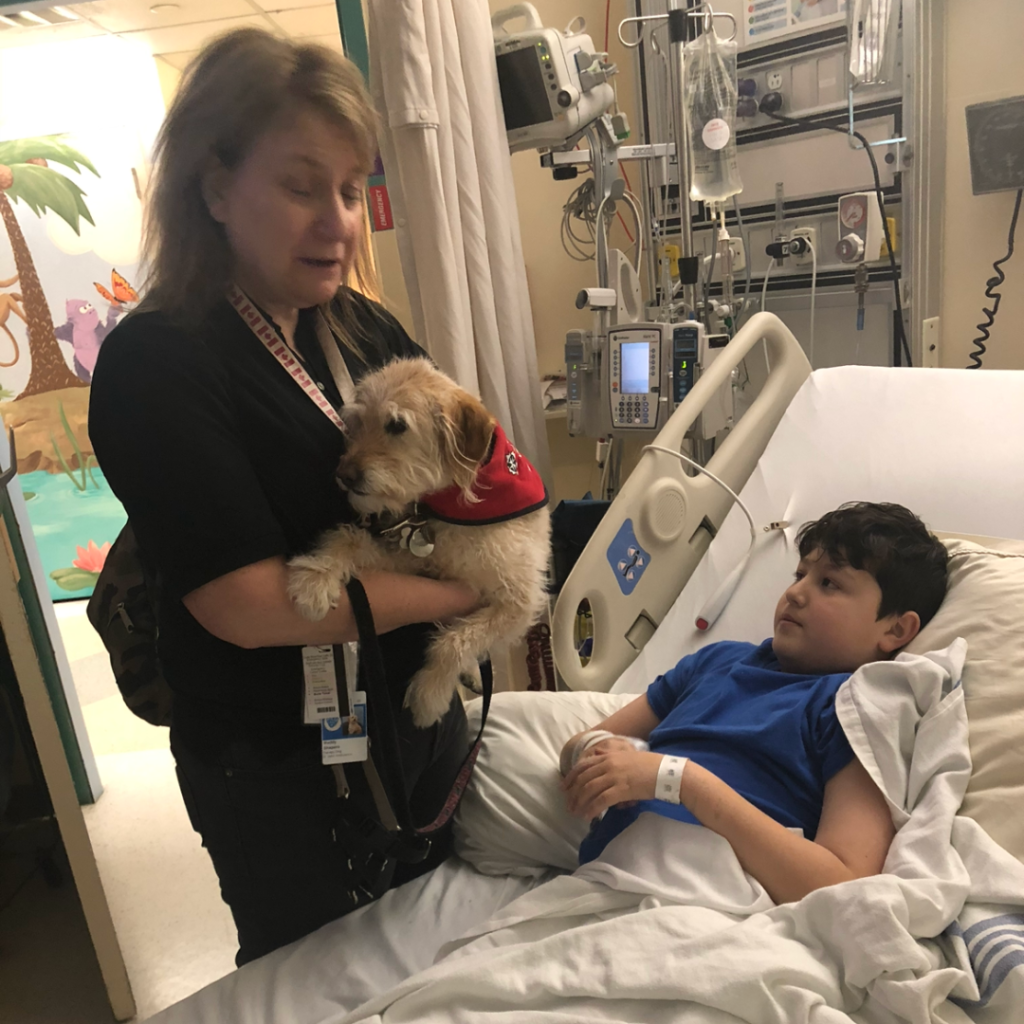
Claudia's son, Reid, sitting in the hospital bed for rehabilitation.
Reid in the hospital for rehabilitation.
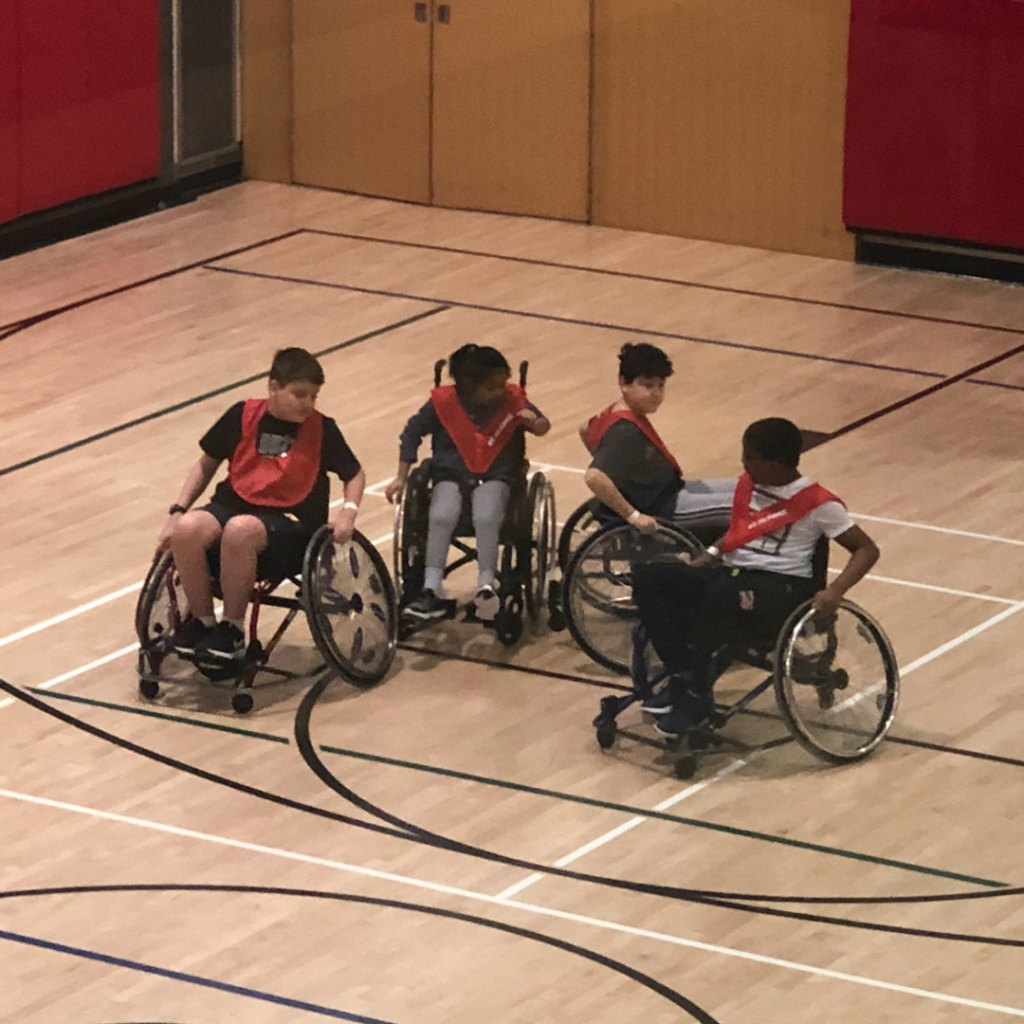
Claudia's son, Reid, playing wheelchair basketball with his friends.
Reid playing wheelchair basketball with his friends.

As his mom, seeing him feeling so lost every day is excruciating, and I wish I could trade places with him. Disabilities come in all shapes, sizes, and visibilities. Yes, this injury is invisible, but the impact and effects are as lifelong as visible ones.

The good news is that with the right support and accommodations, there is light at the end of the tunnel. Next time you meet someone with a TBI, just know how much more there is behind those sweet eyes looking back at you.

Spina Bifida Awareness Month is nationally observed in June. Spina Bifida is the most common congenital birth defect that causes disability. It is a condition that occurs when the spine and spinal cord do not form properly. Many babies born with Spina Bifida will also have or develop hydrocephalus, requiring a shunt to remove excess fluid from the brain. Although there is no cure, there are surgeries to help living and growing with Spina Bifida, and in-utero surgery designed to treat it if detected early enough.

Families like Weston’s share their stories to continue to raise awareness of living with Spina Bifida:

Weston is 13 years old and enjoys playing with Lego, reading Diary of a Wimpy Kid books and being a comedic teen. He loves to affectionately surprise his mom, Krystal, with a kiss on her cheek or hand, have pillow battles with his dad, Ganon, and play with his brother, Jase.

Weston was also born with Spina Bifida, having a hole in his lower back with his spinal cord sticking out. This was corrected through surgery shortly after birth. After further genetic testing prompted by having multiple anomalies, including a heart defect and eye issues, and not meeting many developmental milestones, he was officially diagnosed with Rubinstein Taybi Syndrome 2 (RTS2) in 2020. RTS2 is a rare genetic disorder, and in Weston’s case, caused by a partial gene deletion. He was later diagnosed with autism spectrum disorder (ASD) this past year.


Since Weston looks like a typical kid, it can be challenging for people to fully understand, respect his boundaries or forgive his lack of a filter due to his diagnosis. Grandview Kids has been a part of Weston and his family’s lives since he was a baby.

“Grandview will always hold a special place in our hearts. Weston feels right at home when he walks through the main site doors. He feels safe and comfortable there. The staff are always the sweetest with him too. Our family also feels the love of all the staff. Grandview has been one of our biggest support systems for the last 12 years,” says Krystal.

Weston has received services for physiotherapy (PT), recreational and occupational (OT) therapy, speech-language pathology, social work, hearing, eye and medical clinics, and a bike clinic. He also attended Grandview School for junior and senior kindergarten. Weston does not require the use of any assistive devices. In more recent years, his family has benefited from the Family Engagement Team’s inclusive events where whole-family care is at the forefront.

As a child with Spina Bifida, Weston also visits Holland Bloorview Kids Rehabilitation Hospital a few times a year to visit the Spina Bifida Clinic. In a single day, he may see multiple specialists, including a pediatrician, OT, PT, Urologist, ultrasound, social worker, and orthopedist.

As a parent of a child with physical, communication and developmental needs, it is sometimes difficult to track progress, especially when measured against peers. When Krystal thinks back on how far Weston has truly come, it is a marvel to wonder at. “He went from zero words to talking sentences while attending Grandview School and receiving weekly therapy and continued support from special education teachers,” says Krystal. “He still walks robotically, and his reflexes will always be an issue, but he is getting better. Weston has some physical barriers that he may never overcome just because of his body makeup. But, continuing to receive blocks of therapy and support from Grandview helps.”

In May, we acknowledge Mental Health Awareness Month, Asian Heritage Month, Neurofibromatosis Awareness Month, Food Allergy Awareness Month, Vision Health Month, National Child and Youth Mental Health Day, GBA (Gender Bias Analysis) Plus Awareness Week, World Lupus Day, Apraxia Awareness Day, International Day Against Homophobia, Transphobia & Biphobia, and Global Accessibility Awareness Day. Read more about each date of significance below, written by members of our Inclusivity, Diversity, Equity and Accessibility (IDEA) Committee.

Mental Health Awareness Month

May is Mental Health Awareness Month, and Mental Health Week is from May 6 to 12. Since 1951, the Canadian Mental Health Association (CMHA) has observed a week in May to continue building awareness and providing education about mental health within our communities.

For 2024, CMHA is focusing on kindness and compassion.  Powerful tools to help ourselves and others connect and heal. Compassion is defined as an emotional response to the struggles of others combined with a real, authentic desire to help lessen their suffering*.  While being kind and compassionate to others is healing to both those we emotionally want to support, there is also great benefit in self-compassion. The practice of self-compassion – CMHA-MHW2024.pdf

Benefits of kindness and compassion:

  • It increases our “feel good” hormone, oxytocin.
  • It is contagious; if we see others showing compassion or kindness, we are encouraged to do the same, and that helps us have a more positive outlook.
  • It can also have a positive impact on our mood and help lift feelings of depression**.

Asian Heritage Month

May is Asian Heritage Month in Canada, recognizing the rich cultural tapestry and significant contributions of Asian communities to the nation’s history and development. This month serves as an opportunity to delve into the diverse heritage of Asian Canadians, spanning from their historical struggles against discrimination to their contemporary achievements across various spheres of society, such as arts, sports and social justice.

With the 2024 theme of “Preserving the Past, Embracing the Future: Amplifying Asian Canadian Legacy,” the focus extends beyond commemoration to embracing optimism and acknowledging the ongoing journey towards inclusivity and equality. Through celebrating traditional and contemporary cultural expressions and understanding the historical struggles and triumphs of Asian Canadians, Asian Heritage Month invites Canadians to reflect on their integral role in shaping the fabric of Canadian society.

Neurofibromatosis Awareness Month

May is Neurofibromatosis Awareness Month, and May 17 is Neurofibromatosis Awareness Day. Our Peer Navigator, Fadia O., wanted to pay tribute to her friend’s son Hamza by sharing his story. He has been battling Neurofibromatosis type 1 (NF1) since birth, and I want to bring awareness to this condition, which profoundly impacts him and his family and those who have this rare disorder. NF1 is a neurological and genetic disorder which appears as light brown café au lait spots, freckles in the armpits or groin, tiny eye iris bumps, and soft skin or underskin tumours. While these tumours are generally benign, NF1 can also cause abnormal bone growth, leading to conditions like scoliosis or bowlegs, as well as optic nerve tumours. Children with NF1 often experience unique learning challenges, and may have a larger head size and shorter stature compared to their peers.

Witnessing Hamza’s journey, who has nerve tumours, bone anomalies, declining health and now a dependency on breathing machines for the past four months, has deeply moved me. Surrounded by his worried yet hopeful family, he shows immense bravery. NF1 can lead to complications such as hearing loss, cognitive difficulties, cardiovascular issues, vision impairment, and intense pain, all of which this courageous young man is enduring.

This story is shared not only to raise awareness but also to honour the hope and spirit of Hamza, his family, and the many others living with NF1. It highlights the urgent need for advanced research, comprehensive understanding, and robust support systems for those navigating the complexities of this condition. Amidst these struggles, hope keeps them driven toward finding a future where scientific breakthroughs and new possibilities await every family, including Hamza’s.

Food Allergy Awareness Month

May is Food Allergy Awareness Month, and this is an issue that impacts nearly one in two Canadian households. Food allergy is one of the leading causes of potentially life-threatening anaphylactic reactions and a public health concern in Canada, especially among children.

Over 3 million Canadians are affected by food allergies; that’s 7.5% of the population. The impact of food allergy is far greater, with an estimated 50% of households being either directly or indirectly affected by food allergy. As there is no way of predicting how severe an allergic reaction may be and no known cure for food allergy, avoiding allergenic food is required to prevent a reaction.

Vision Health Month

Vision Health Month is an invaluable opportunity to raise awareness about the importance of eye health and vision care. Throughout this month, professionals aim to educate individuals about the significance of regular eye exams, early detection of eye conditions, and the adoption of healthy habits to preserve vision. With millions of people worldwide affected by preventable vision impairment, Vision Health Month serves as a crucial reminder to prioritize our eye health and take proactive steps to safeguard our vision for a lifetime of clarity and well-being.

1 in 7 Canadians develop serious eye disease in their lifetime, and the Canadian Association of Optometrists advocates that 75% of vision loss is preventable or treatable with proper care. Through advocacy, outreach, and community engagement, Vision Health Month strives to empower individuals to make informed choices about their eye health and inspire action toward a world where everyone has access to quality eye care.

May 7: National Child and Youth Mental Health Day

The purpose of National Child and Youth Mental Health Day is to foster connections between young people and the adults in their lives who care about them. Caring, connected and supportive conversations can have a big positive impact on mental health and the well-being of children.

There is no greater cause than helping a child and saving them from suffering alone. This can protect them from living with any long-lasting crippling mental conditions. A mental health check is important for everyone, not just children. Some conditions can ruin the quality of life if not treated early. Have meaningful conversations with the youth in your life surrounding ways to support their mental health better and create an open and honest dialogue. By celebrating this day, we are effectively raising awareness to make more people undergo treatment. The general support for children will also increase.

May 6-10: GBA (Gender Bias Analysis) Plus Awareness Week

GBA Plus Awareness Week was first launched in 2012 to increase understanding among federal public servants of the relevance of GBA Plus to their work. The Government of Canada defines the term “gender-based analysis plus” as “an analytical process used to assess how diverse groups of women, men and people of all genders may experience policies, programs and initiatives. The “plus” acknowledges that GBA goes beyond biological (sex) and socio-cultural (gender) differences. We all have multiple identity factors that intersect to make us who we are; GBA+ considers many other identity factors, like race, ethnicity, religion, age and mental or physical disability.”

The theme for this year is “Intersectionality in Action: Moving Forward on an Enhanced Approach to GBA Plus.” This supports the process of advancing equality and inclusion for everyone in Canada. Events throughout GBA Plus Awareness Week help develop and support inclusive and responsive policies, programs, services, and decision-making that affect the well-being of all Canadians.

May 10: World Lupus Day

Lupus is a serious, life-altering, and fatal disease that requires in-depth understanding and support for the affected persons. Lupus is an inflammatory disease/autoimmune disease that occurs when the body system attacks its own tissues and organs. Inflammation resulting from this may affect various body organs, including the skin, kidneys, brain, blood cells, lungs, heart and joints. To help raise awareness about lupus, you might consider wearing purple and sharing lupus facts on social media. One interesting fact is that while anyone can develop lupus, 90% of people with lupus are women.

The World Lupus Federation encourages people to share the ‘Lupus Awareness Toolkit’, which includes more specific ways to spread awareness. Some of these are:

Awareness and Advocacy:

  • Contact local officially to ask them to light up a landmark, monument or building the colour purple (the colour supporting Lupus Awareness Day)

Media Tools:

  • Share stories and raise the national profile of Lupus by posting on social media

Government Proclamation:

  • Reach out to government officials to raise awareness of important priorities surrounding Lupus, such as the need for improved patient care.

Signs and Symptoms:

  • Understanding the common signs and symptoms of Lupus is critical to raising awareness. For more information, refer to the list of symptoms and risk factors on the World Lupus website.

May 14: Apraxia Awareness Day

Childhood Apraxia of Speech (CAS) is a rare but severe motor speech disorder that affects less than 1% of children. Children with Apraxia often have difficulty speaking because they have challenges learning or carrying out the complex sequenced movements necessary for intelligible speech (e.g., moving their jaw, lips, or tongue). This is a day to spread awareness of what this disorder means and how Speech-Language pathologists can best support the child and family with appropriate early intervention!

Children with CAS may also require multidisciplinary support, not only for their speech challenges but their fine and gross motor movement. Frequent therapy, along with providing ways to communicate while learning to speak clearly (e.g., Alternative and Augmentative Communication), are helpful tools to support our clients and their families. Every child deserves a voice! Visit Apraxia Awareness Day – Childhood Apraxia of Speech for more information.

May 17: International Day Against Homophobia, Transphobia & Biphobia

The International Day Against Homophobia, Transphobia and Biphobia holds significant importance as a global initiative established in 2004 to spotlight the pervasive violence and discrimination endured by individuals across diverse sexual orientations, gender identities and expressions, as well as sex characteristics. Managed collaboratively by various regional and thematic networks, the day is observed in over 130 countries, despite prevailing legal barriers in many. Its recognition extends from grassroots initiatives to official endorsements by states, international bodies like the European Parliament and numerous local authorities. This year’s theme, “Together Always: United in Diversity,” underscores the collective effort to combat discrimination and promote inclusivity. The selection of May 17th commemorates the World Health Organization’s (WHO) landmark decision in 1990 to remove homosexuality from its list of mental disorders, symbolizing a global call to action for policymakers, media, corporations and society at large to confront the challenges faced by marginalized communities.

Visit May17.org to learn more.

May 18: Global Accessibility Awareness Day

The third Thursday in May each year marks Global Accessibility Awareness Day, which falls on May 18 this year. Created in California in 2011 by a web developer, the awareness day quickly grew in popularity and was formally recognized by the technology sector a year later. This awareness day provides the opportunity to recognize the importance of increasing the use of accessible features in technology, particularly implementing accessible features into websites and computer programs.

Here in Ontario, companies are required by law through the Accessibility for Ontarians With Disabilities Act to ensure that their websites and social media accounts align with the requirements set out by the AODA.  If you are interested in learning more about how to make your social media more accessible, then be sure to check out this video for some tips and tricks.  – https://youtu.be/MKTpDOccHzg?si=nGpG9BfR2mfBWBEY

In May, we acknowledge Cinco de Mayo, Vesak and Trinity Sunday. Read more about each holiday/celebration below, written by members of our Inclusivity, Diversity, Equity and Accessibility (IDEA) Committee.

May 5: Cinco de Mayo

Cinco de Mayo, or the fifth of May, is a holiday that celebrates the date of the Mexican army’s May 5, 1862, victory over France at the Battle of Puebla during the Franco-Mexican War. The day, which falls on Sunday, May 5, 2024, is also known as Battle of Puebla Day. While it is a relatively minor holiday in Mexico, in other countries, Cinco de Mayo has evolved into a commemoration of Mexican culture and heritage, particularly in areas with large Mexican-American populations.

Cinco de Mayo is widely interpreted as a celebration of Mexican culture and heritage, particularly in areas with substantial Mexican-American populations. On Cinco de Mayo, revellers mark the occasion with parades, parties, mariachi music, Mexican folk dancing and traditional foods such as tacos and mole poblano. Some of the largest festivals are held in Los Angeles, Chicago and Houston.

May 23: Vesak

Vesak, or the Day of the Full Moon in May, is the most sacred day to millions of Buddhists around the world. Two and a half millennia ago, in the year 623 B.C., the Buddha was born on the Day of Vesak. On the Day of Vesak, the Buddha attained enlightenment and passed away in his eightieth year.

The exact date of the Day of Vesak is based on Asian lunisolar calendars and is primarily celebrated in Vaisakha, a month of both the Buddhist and Hindu calendars. Buddhism is one of the oldest religions in the world, and millions of people around the world follow the teachings of Buddha. On Vesak, followers assemble in their temples before dawn for the ceremonial hoisting of the Buddhist flag. Followers will also sing hymns in praise of the holy triple gem: the Buddha, the Dharma (his teachings), and the Sangha (his disciples).

May 26: Trinity Sunday

This year’s Trinity Sunday falls on May 26. Trinity Sunday is a Christian festival widely celebrated by Western Churches. It falls on the first Sunday after Pentecost, which is the 50th day after Easter. Trinity Sunday, in its essence, celebrates the mystery of faith and unity on and of the Holy Trinity: the Father, the Son, and the Holy Spirit. The Trinity is not mentioned in Scripture, but Christians belonging to Western Churches celebrate it and God’s love for humans because of their faith and utmost appreciation for the Trinity itself. Many Western Churches celebrate the occasion with symbols of fire, wind, and a dove.

For over a decade, the Family Engagement Team has supported families to be an active part of their child’s therapy and support team. Our lived experience has shown us that our knowledge of our own child is a powerful tool when combined with the professional knowledge of various early childhood development experts.

Research supports our hypothesis that engaged caregivers as active team members in their loved one’s healthcare leads to many positive outcomes (https://www.cfhi-fcass.ca/docs/default-source/itr/tools-and-resources/essential-together/evidence-brief-en.pdf ) including but not limited to:  

Enhanced Patient and Family Experience:  

  • Caregivers/families know their child’s medical history best. They know how their child’s journey, carry lists of medical professionals and binders of information on procedures, diagnoses, hospital visits and discharges, etc. They are well-connected and versed in their child’s medical journey. 
  • Caregivers know the details of what is typical and atypical when it comes to reactions to medications, appointment/hospital triggers/stressors, and surgery recoveries. They understand the inner workings of their child’s mind, mood, and communication, whether verbal or non-verbal. Understanding when a child has reached their limits also avoids overstimulation and overwhelm. 
  • Therapy appointments are opportunities for caregivers to learn vital tools from the therapist. This promotes the transferability of skills and techniques to be worked on by the caregivers outside of therapy sessions, providing the opportunity to do therapy with their child when they are ready. 
  • Caregivers can best determine if their child is unable to participate in therapy at any given point. As therapy time is precious, knowing when to move allows caregivers to recover the session by informing the therapist of the appropriate time to move to a mediated model, in which parents can participate in the session to continue it later at home. 
  • Encouraging caregivers to provide session modification suggestions to fit their child’s interests or abilities acknowledges caregivers as the experts of their child. They can feel confident in knowing that their thoughts are valued and that they are capable of practicing the tools they are taught in therapy sessions at home. 
  • Caregivers are given a voice to express their child’s and their own needs/concerns and goals. When acknowledged as an integral part of their child’s care, caregivers and therapists’ relationships improve through greater transparency, respect, integrity, honesty, and openness, leading to better patient care and support. 

Better Health Outcomes: 

  • Healthcare quality is increased through a professional and candour flow of communication with the child development experts and their caregivers. Working as a team maximizes time and effort. It brings comfort, order and routine to a child seeing a continuation of care from therapy sessions to home, and home to therapy sessions. 
  • Caregivers are with their child for many waking hours. This allows time to really practice the techniques learned in therapy and supports the generalization of skills. However, funding, insurance, and time in therapy can only go so far. Caregivers can take therapy much further if they integrate parts of it into their daily lives. 
  • Caregivers feel empowered, understood, and supported. Caregiver burnout and isolation may be minimized or prevented, promoting better health outcomes for children and caregivers. 

Continuity of Care:  

  • Quality of care over time can be achieved through goal setting and planning for your child’s future. It reduces fragmentation of care to improve your child’s safety and abilities. Caregivers take an active role through goal setting, giving them the ability to make goals that are meaningful to their family. This can be done by incorporating tasks, skill-building and goals that fit into the child’s everyday activities. By sharing with your clinician your child’s likes and dislikes and/or schedules and routines you have at home, opportune times to practice a particular skill keep it relevant for the child. 
  • The number of therapy sessions allotted often remains insufficient due to availability, resources, funding, and/or insurance coverage. Make the most of it. Caregivers will still be there after sessions, groups, and therapy end. Actively engaged caregivers can extend and build on the skills learned in the Centre. 

“My best advice is… you must put in the work. For every one day at Grandview Kids, you are going to have 6 days, 13 days at home where everything really happens. Grandview Kids’ is going to give you the tools to get that work in.”

– Grandview Kids Caregiver
  • ⟨
  • Page 1
  • Interim pages omitted …
  • Page 15
  • Page 16
  • Page 17
  • Page 18
  • Page 19
  • Interim pages omitted …
  • Page 26
  • ⟩

Primary Sidebar

Child Stories

ICAudGItaW1hZ2V7cG9zaXRpb246cmVsYXRpdmU7dHJhbnNpdGlvbjp0cmFuc2Zvcm0gMC4yNXMgZWFzZX0ud3AtYmxvY2staW1hZ2UgLnRiLWltYWdlLmFsaWduY2VudGVye21hcmdpbi1sZWZ0OmF1dG87bWFyZ2luLXJpZ2h0OmF1dG99LnRiLWltYWdlIGltZ3ttYXgtd2lkdGg6MTAwJTtoZWlnaHQ6YXV0bzt3aWR0aDphdXRvO3RyYW5zaXRpb246dHJhbnNmb3JtIDAuMjVzIGVhc2V9LnRiLWltYWdlIC50Yi1pbWFnZS1jYXB0aW9uLWZpdC10by1pbWFnZXtkaXNwbGF5OnRhYmxlfS50Yi1pbWFnZSAudGItaW1hZ2UtY2FwdGlvbi1maXQtdG8taW1hZ2UgLnRiLWltYWdlLWNhcHRpb257ZGlzcGxheTp0YWJsZS1jYXB0aW9uO2NhcHRpb24tc2lkZTpib3R0b219IC53cC1ibG9jay1pbWFnZS50Yi1pbWFnZVtkYXRhLXRvb2xzZXQtYmxvY2tzLWltYWdlPSJhMWJlMmUyODAwMWFkMGRlMjBhM2RlZWVlYmE5MDJhMSJdIHsgbWF4LXdpZHRoOiAxMDAlOyB9IEBtZWRpYSBvbmx5IHNjcmVlbiBhbmQgKG1heC13aWR0aDogNzgxcHgpIHsgICAudGItaW1hZ2V7cG9zaXRpb246cmVsYXRpdmU7dHJhbnNpdGlvbjp0cmFuc2Zvcm0gMC4yNXMgZWFzZX0ud3AtYmxvY2staW1hZ2UgLnRiLWltYWdlLmFsaWduY2VudGVye21hcmdpbi1sZWZ0OmF1dG87bWFyZ2luLXJpZ2h0OmF1dG99LnRiLWltYWdlIGltZ3ttYXgtd2lkdGg6MTAwJTtoZWlnaHQ6YXV0bzt3aWR0aDphdXRvO3RyYW5zaXRpb246dHJhbnNmb3JtIDAuMjVzIGVhc2V9LnRiLWltYWdlIC50Yi1pbWFnZS1jYXB0aW9uLWZpdC10by1pbWFnZXtkaXNwbGF5OnRhYmxlfS50Yi1pbWFnZSAudGItaW1hZ2UtY2FwdGlvbi1maXQtdG8taW1hZ2UgLnRiLWltYWdlLWNhcHRpb257ZGlzcGxheTp0YWJsZS1jYXB0aW9uO2NhcHRpb24tc2lkZTpib3R0b219IH0gQG1lZGlhIG9ubHkgc2NyZWVuIGFuZCAobWF4LXdpZHRoOiA1OTlweCkgeyAgIC50Yi1pbWFnZXtwb3NpdGlvbjpyZWxhdGl2ZTt0cmFuc2l0aW9uOnRyYW5zZm9ybSAwLjI1cyBlYXNlfS53cC1ibG9jay1pbWFnZSAudGItaW1hZ2UuYWxpZ25jZW50ZXJ7bWFyZ2luLWxlZnQ6YXV0bzttYXJnaW4tcmlnaHQ6YXV0b30udGItaW1hZ2UgaW1ne21heC13aWR0aDoxMDAlO2hlaWdodDphdXRvO3dpZHRoOmF1dG87dHJhbnNpdGlvbjp0cmFuc2Zvcm0gMC4yNXMgZWFzZX0udGItaW1hZ2UgLnRiLWltYWdlLWNhcHRpb24tZml0LXRvLWltYWdle2Rpc3BsYXk6dGFibGV9LnRiLWltYWdlIC50Yi1pbWFnZS1jYXB0aW9uLWZpdC10by1pbWFnZSAudGItaW1hZ2UtY2FwdGlvbntkaXNwbGF5OnRhYmxlLWNhcHRpb247Y2FwdGlvbi1zaWRlOmJvdHRvbX0gfSA=
LnRiLWhlYWRpbmcuaGFzLWJhY2tncm91bmR7cGFkZGluZzowfQ==
LnRiLWZpZWxke21hcmdpbi1ib3R0b206MC43NmVtfS50Yi1maWVsZC0tbGVmdHt0ZXh0LWFsaWduOmxlZnR9LnRiLWZpZWxkLS1jZW50ZXJ7dGV4dC1hbGlnbjpjZW50ZXJ9LnRiLWZpZWxkLS1yaWdodHt0ZXh0LWFsaWduOnJpZ2h0fS50Yi1maWVsZF9fc2t5cGVfcHJldmlld3twYWRkaW5nOjEwcHggMjBweDtib3JkZXItcmFkaXVzOjNweDtjb2xvcjojZmZmO2JhY2tncm91bmQ6IzAwYWZlZTtkaXNwbGF5OmlubGluZS1ibG9ja311bC5nbGlkZV9fc2xpZGVze21hcmdpbjowfQ==

Home is where the care is: National Epilepsy Awareness Month 

On a gloomy winter morning in Winnipeg, with clouds hanging low and snow clinging stubbornly to the ground, Vince and Michelle brought their two-and-a-half-month-old daughter, Ayla, to The Children’s Hospital of Winnipeg emergency department. They arrived at 9...

Latest Updates

  • Celebrating International Youth Day! July 31, 2026
  • Living beyond expectations: Haylee’s journey with SMA Type 1  July 31, 2026
  • Summer 2026: Dates of Significance July 30, 2026
  • “Grandview will always have my heart”: Brad’s story  July 20, 2026
  • International Pride Day Resources June 26, 2026

You Have Questions

We’d like to help you find the answers…

Contact Us Today

© Grandview Kids Built by PeaceWorks

  • About Us
  • Contact Us
  • Privacy
Accessibility Adjustments

Powered by OneTap

How long do you want to hide the toolbar?
Hide Toolbar Duration
Select your accessibility profile
Vision Impaired Mode
Enhances website's visuals
Seizure Safe Profile
Clear flashes & reduces color
ADHD Friendly Mode
Focused browsing, distraction-free
Blindness Mode
Reduces distractions, improves focus
Epilepsy Safe Mode
Dims colors and stops blinking
Content Modules
Font Size

Default

Line Height

Default

Color Modules
Orientation Modules