
• Skip to primary navigation
  • Skip to main content
  • Skip to primary sidebar
Grandview Kids Logo

Grandview Kids

Every Child And Youth Living Life At Their Full Potential

  • About Us
    • Vision, Mission and Values
    • The New Grandview Kids
      • Operational Readiness
      • Visiting Grandview Kids’ Ajax Headquarters
    • Our History
    • Leadership
    • Board of Directors and Committees
    • Annual Report
    • Strategic Plan
    • Policies
  • Calendar
  • Annual Report
  • Contact
    • Contactez – nous
    • Ajax – Headquarters
    • Bowmanville Health Centre
    • Grandview School
    • Oshawa – Dwyer
    • Port Perry
    • Whitby – Abilities Centre
  • Careers
  • Register
  • Donate
  • Instagram
  • LinkedIn
  • Facebook
  • Services and Programs
    • Audiology
    • Autism Program
      • Autism Spectrum Disorder (ASD) Diagnostic Hub
      • Caregiver-Mediated Early Years Programs
      • OAP Core Clinical Services
      • Entry to School Program
      • Foundational Family Services
    • Blind-Low Vision Program
    • Extensive Needs Service
    • Family Engagement Program
      • Adolescent Transition Program
      • Family Leader Program
        • Family Advisory Council
        • Paid Advocates
        • Youth Advisory Council
    • Infant Hearing Program
    • Medical Services
      • Autism Spectrum Disorder (ASD) Diagnostic Hub
      • Complex Care Program
      • Grandview Anesthesia Procedure (GAP) Clinic
      • Hypertonia Clinic
      • Nutrition Services
      • Orthopaedic Clinic
    • Occupational Therapy
    • Physiotherapy
    • Preschool Outreach Program
    • School Programs & Resources
      • Resources for Educators
      • School-Based Rehabilitation
    • Service Navigation
      • SmartStart Hub: Parents
      • SmartStart Hub: Partners
    • Social Work
    • Speech-Language Pathology
      • Augmentative and Alternative Communication
    • Therapeutic Recreation
  • Purchased Services
    • Inclusive Recreation
    • OAP Core Clinical Services
      • Behaviour Services
  • Research
    • Get involved in research
    • IDEA Study
      • Building knowledge and understanding of the intersection of race and disability in accessing pediatric rehabilitation services.
    • Joint Research Ethics Board
    • Research Associate: Dr. Fiona Moola
    • Research Associate: Dr. Meghann Lloyd
  • Resources
    • Ability Acceptance Program
    • Arriving at Grandview Kids
    • Community Supports & Resources
    • Family Support Fund
    • Free to Read Program
    • Frequently Asked Questions
    • Gather by Grandview Kids
    • News and Updates
    • Privacy
    • Resources for Parents and Caregivers
    • Visiting Grandview Kids
  • Support Us
    • Ways to support
    • Host a fundraiser
    • Participate in an event
      • Golf Fore Grandview Kids
      • Sponsor the Drum
      • Dream Big, Dream Brighter Awards Gala
    • Leave a legacy
      • Gifts of securities
      • Gifts of bequests
      • Gifts of life insurance
    • Your impact
    • Building a Legacy: Honouring Jerry Coughlan
  • I Want To…
    • Connect with Grandview Kids
    • Donate
    • Refer a child or youth
    • Register via My Community Hub
    • Schedule an Appointment
    • Volunteer at Grandview Kids
    • Work at Grandview Kids
  • Grandview School
    • About Our Program
    • About Our Board
    • Grandview School Social Story
    • Plans and Reports
    • Resources for Families
    • Resources for Schools – Switch It Up!
    • Careers and Volunteering
    • Contact Grandview School
  • Search

Posted February 26, 2021

Three things I wish I knew then, that I know now

Guest Written Articles

James came to Grandview Kids when he was just over a year old. Here, he met his Physiotherapist, Winnie, to improve his physical skills. In his early physiotherapy sessions, James and his mother, Hayley, practiced skills he had never worked on before. The movements were new and challenging to James. While experiencing difficulties, he would cry to let his mother know that he was outside his realm of comfort. Hearing her son vocalizing his discomfort was hard for Hayley.

After continuing to practice and seeing James’ progress, Hayley recognized the importance of not giving in. She wanted to see her son succeed. This shift in progress was the ‘turning point’ for Hayley. Moving forward, Hayley wanted to be the strong figure she knew her son needed to reach his full potential. This is a lesson Hayley wants to share with other families who may be in the same situation. She tells her story below and hopes to inspire others with her experience and James’ progress, thanks to the incredible support of his Physiotherapist, Winnie.


Things I wish I knew then, that I know now

Written by Grandview Kids parent, Hayley

From the very beginning, James had struggles, and as a mother, my instincts were to keep my baby safe, free from harm and discomfort. I began to anticipate James’ every need because he was struggling day-to-day for reasons out of my control. I did everything in my power to control whatever I could to provide him with some comfort and relief. When I met with Winnie at Grandview Kids for our first assessment, James was around 13-months-old. At this time, he was not able to sit up on his own, let alone roll over. James spent the majority of the appointment comfort nursing as I explained his first year of life.

It was apparent that James needed a significant amount of support, and that’s when our journey with Winnie began. When I think back to this time, and to where I am now, all the things I have seasoned through and how much growth James and I have had, I wish I could go back to our very first session and tell myself to be strong ‘like a rock’ and push. I wish I could tell myself that we both would get through this, and come up on the other side.

Three things I wish I knew then, that I know now

1. In the beginning, there will be crying… a lot of crying.

For our littles, this is all new to them. Physiotherapy is hard; kids don’t want to do these hard things, and crying is how they let us know. Once I realized that: a) this was not in any way hurting him, it was him telling me, “it’s hard, Mom;” and b) if I did not toughen up and be strong for him, he was going to make NO progress. It was my job as his mom to push him when he needed the push, or I was holding him back from reaching his full potential and having a better quality of life. Every time I would stop a session to comfort James, I would teach him that if he would cry, Mommy would just put an end to it. These habits are hard ones to break and can be a big downfall as you continue with care. Two years into speech therapy, and I am still trying to correct habits like this. I can assure you that as time goes on, the crying will be less and less, and then one day your child will enter a session willingly.

James learning to stand with his mother, Hayley, right behind supporting him. (Click on to watch)

2. If you do not practice what is taught in the session, progress will be slow and stagnant.

Once a week, or every two, is not enough to learn these huge skills, but repetition enables this. It’s so hard for special needs parents to stay on top of it all, but time needs to be set aside for progress to happen. I could shake my old self about this one; I still have some guilt hanging around.

James experiencing success and showing off his little smile. (Click to watch)

3. Sometimes, progress is minimal.

It is a slow, slow process, and then sometimes there will be a leap. Whatever the case, try and keep a level head. And, if you can truthfully say, with an honest heart, you are doing everything you can in that moment, then find comfort in knowing it will come. I’m so proud of James (and myself!) for how far we’ve come.
James walking his dog – he’s come so far! (Click to watch)

If you have a story about your Grandview Kids experience you’d like to share, email communications@grandviewkids.ca to be featured.

Written by Grandview Kids Physiotherapist, Corrie


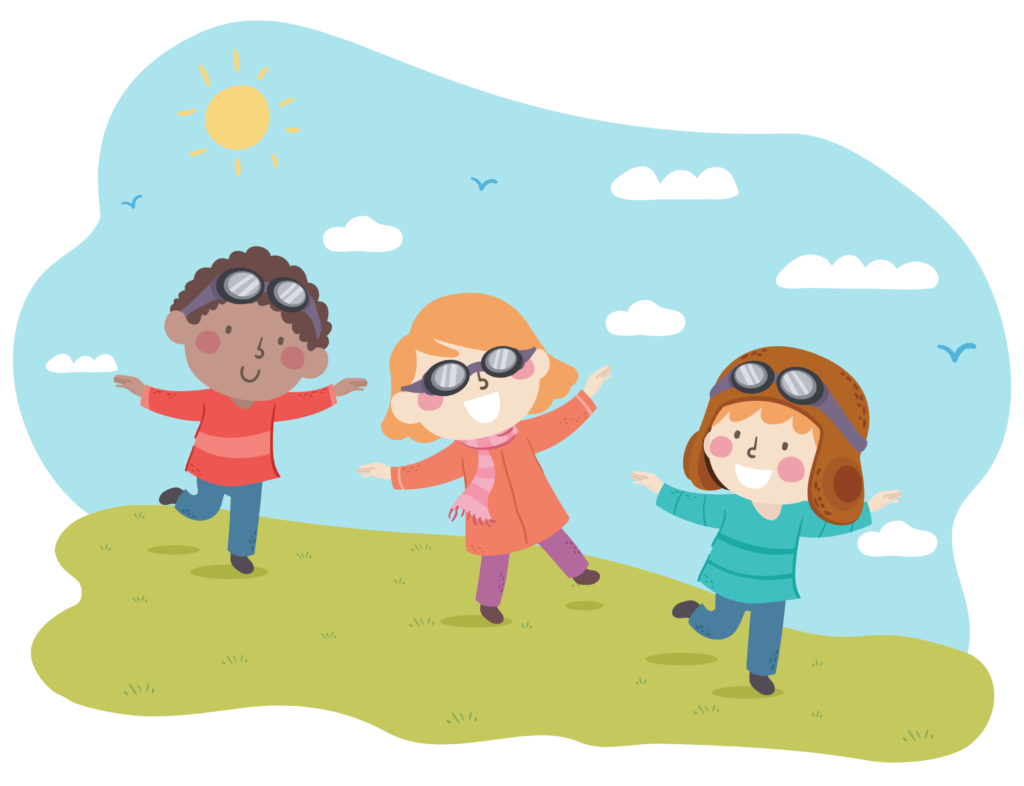
How playing outdoors makes for a more physically literate child

As any parent can attest, it often feels like as soon as children learn to move, their instinct is to move away from us and explore the world for themselves.

A child’s need to explore their surroundings intensifies as soon as they get outside. With so many new textures, obstacles, and areas to discover, the outdoors is truly a wonderland for young children.  As parents, we often cringe when we see our tiny bundles playing outside and our heads (and hearts) can get overloaded with the risks that they seem quite happy to take. 

It is important to remember that as much as we’d like to protect our little ones from ever getting hurt, exploring their world and taking risks is what helps develop much-needed gross motor skills that they will use their entire life. 

Playing outside is the best place to work on skills requiring balance and coordination and these skills help toddlers interact with the world around them and learn complex physical activities. Running, jumping, kicking, throwing, catching and climbing are all skills that toddlers are just starting to learn, and are the building blocks for becoming physically literate.

Physical literacy is described as the motivation, confidence, physical competence, knowledge and understanding to value and take responsibility for engagement in physical activities.

According to experts at Physical and Health Education Canada, Children who are physically literate move with competence and confidence in a wide variety of physical activities in multiple environments that benefit the healthy development of the whole person.

Research has shown that being physically active as an adult depends on a person’s ability to feel confident in an activity setting. Research has also shown that without the development of physical literacy, many children and youth withdraw from physical activity and sport and turn to more inactive and/or unhealthy choices during their leisure time.

There are 12 fundamental movement skills that are considered building blocks for physical literacy. They are: running, hopping, skipping, rolling, standing on one foot, jumping, kicking, dribbling, throwing, catching and swinging with arms (i.e., a bat, a stick, etc).

Children usually learn to walk indoors on smooth, level floors, which may even be carpeted.  When they start to move on their own two feet outside, they are challenged by uneven ground, funny textures and hills and holes that they might not see.  Taking a nature hike is an excellent way to teach children about the beauty of the outdoors while challenging their small legs to overcome the obstacles along the path. Think of it as a natural obstacle course.  Stepping over small sticks and tree roots helps teach children how to stand on one foot.  Ducking under low branches teaches squatting and strengthens leg muscles.  Mud puddles are always a fun way to teach jumping – either jumping over or jumping in! Even small trips or dips can help children learn how to catch their balance and prevent a fall.

Another great outdoor space is the playground. Consider walking along the sidewalk curb to get there – a great way to work on balance as the child must narrow their base of support and walk with feet in front of each other. Climbing structures strengthen both arms and legs, and swings and slides improve balance, coordination and endurance. Furthermore, it is not uncommon to see children working together at the playground to help one another succeed, which builds teamwork and an empathetic mindset.

All of these skills will help to build a toddler’s confidence, so make sure that your child is getting lots of literacy time – outdoors.

For more information on physical literacy, visit www.phecanada.ca

  • ⟨
  • Page 1
  • Page 2
  • Page 3

Primary Sidebar

Child Stories

ICAudGItaW1hZ2V7cG9zaXRpb246cmVsYXRpdmU7dHJhbnNpdGlvbjp0cmFuc2Zvcm0gMC4yNXMgZWFzZX0ud3AtYmxvY2staW1hZ2UgLnRiLWltYWdlLmFsaWduY2VudGVye21hcmdpbi1sZWZ0OmF1dG87bWFyZ2luLXJpZ2h0OmF1dG99LnRiLWltYWdlIGltZ3ttYXgtd2lkdGg6MTAwJTtoZWlnaHQ6YXV0bzt3aWR0aDphdXRvO3RyYW5zaXRpb246dHJhbnNmb3JtIDAuMjVzIGVhc2V9LnRiLWltYWdlIC50Yi1pbWFnZS1jYXB0aW9uLWZpdC10by1pbWFnZXtkaXNwbGF5OnRhYmxlfS50Yi1pbWFnZSAudGItaW1hZ2UtY2FwdGlvbi1maXQtdG8taW1hZ2UgLnRiLWltYWdlLWNhcHRpb257ZGlzcGxheTp0YWJsZS1jYXB0aW9uO2NhcHRpb24tc2lkZTpib3R0b219IC53cC1ibG9jay1pbWFnZS50Yi1pbWFnZVtkYXRhLXRvb2xzZXQtYmxvY2tzLWltYWdlPSJhMWJlMmUyODAwMWFkMGRlMjBhM2RlZWVlYmE5MDJhMSJdIHsgbWF4LXdpZHRoOiAxMDAlOyB9IEBtZWRpYSBvbmx5IHNjcmVlbiBhbmQgKG1heC13aWR0aDogNzgxcHgpIHsgICAudGItaW1hZ2V7cG9zaXRpb246cmVsYXRpdmU7dHJhbnNpdGlvbjp0cmFuc2Zvcm0gMC4yNXMgZWFzZX0ud3AtYmxvY2staW1hZ2UgLnRiLWltYWdlLmFsaWduY2VudGVye21hcmdpbi1sZWZ0OmF1dG87bWFyZ2luLXJpZ2h0OmF1dG99LnRiLWltYWdlIGltZ3ttYXgtd2lkdGg6MTAwJTtoZWlnaHQ6YXV0bzt3aWR0aDphdXRvO3RyYW5zaXRpb246dHJhbnNmb3JtIDAuMjVzIGVhc2V9LnRiLWltYWdlIC50Yi1pbWFnZS1jYXB0aW9uLWZpdC10by1pbWFnZXtkaXNwbGF5OnRhYmxlfS50Yi1pbWFnZSAudGItaW1hZ2UtY2FwdGlvbi1maXQtdG8taW1hZ2UgLnRiLWltYWdlLWNhcHRpb257ZGlzcGxheTp0YWJsZS1jYXB0aW9uO2NhcHRpb24tc2lkZTpib3R0b219IH0gQG1lZGlhIG9ubHkgc2NyZWVuIGFuZCAobWF4LXdpZHRoOiA1OTlweCkgeyAgIC50Yi1pbWFnZXtwb3NpdGlvbjpyZWxhdGl2ZTt0cmFuc2l0aW9uOnRyYW5zZm9ybSAwLjI1cyBlYXNlfS53cC1ibG9jay1pbWFnZSAudGItaW1hZ2UuYWxpZ25jZW50ZXJ7bWFyZ2luLWxlZnQ6YXV0bzttYXJnaW4tcmlnaHQ6YXV0b30udGItaW1hZ2UgaW1ne21heC13aWR0aDoxMDAlO2hlaWdodDphdXRvO3dpZHRoOmF1dG87dHJhbnNpdGlvbjp0cmFuc2Zvcm0gMC4yNXMgZWFzZX0udGItaW1hZ2UgLnRiLWltYWdlLWNhcHRpb24tZml0LXRvLWltYWdle2Rpc3BsYXk6dGFibGV9LnRiLWltYWdlIC50Yi1pbWFnZS1jYXB0aW9uLWZpdC10by1pbWFnZSAudGItaW1hZ2UtY2FwdGlvbntkaXNwbGF5OnRhYmxlLWNhcHRpb247Y2FwdGlvbi1zaWRlOmJvdHRvbX0gfSA=
LnRiLWhlYWRpbmcuaGFzLWJhY2tncm91bmR7cGFkZGluZzowfQ==
LnRiLWZpZWxke21hcmdpbi1ib3R0b206MC43NmVtfS50Yi1maWVsZC0tbGVmdHt0ZXh0LWFsaWduOmxlZnR9LnRiLWZpZWxkLS1jZW50ZXJ7dGV4dC1hbGlnbjpjZW50ZXJ9LnRiLWZpZWxkLS1yaWdodHt0ZXh0LWFsaWduOnJpZ2h0fS50Yi1maWVsZF9fc2t5cGVfcHJldmlld3twYWRkaW5nOjEwcHggMjBweDtib3JkZXItcmFkaXVzOjNweDtjb2xvcjojZmZmO2JhY2tncm91bmQ6IzAwYWZlZTtkaXNwbGF5OmlubGluZS1ibG9ja311bC5nbGlkZV9fc2xpZGVze21hcmdpbjowfQ==

Mya’s voice shines through in every smile, laugh and glance: Rett Syndrome Awareness Month

Mya is a bright, joyful 13-year-old whose presence lights up any room. Though she uses a wheelchair, communicates non-verbally and is fed through a g-tube, these details are only part...

Latest Updates

  • Building belonging through family leadership August 31, 2026
  • September 2026: Dates of Significance August 31, 2026
  • Celebrating Camp at Grandview Kids August 31, 2026
  • Celebrating International Youth Day! July 31, 2026
  • Living beyond expectations: Haylee’s journey with SMA Type 1  July 31, 2026

You Have Questions

We’d like to help you find the answers…

Contact Us Today

© Grandview Kids Built by PeaceWorks

  • About Us
  • Contact Us
  • Privacy
Accessibility Adjustments

Powered by OneTap

How long do you want to hide the toolbar?
Hide Toolbar Duration
Select your accessibility profile
Vision Impaired Mode
Enhances website's visuals
Seizure Safe Profile
Clear flashes & reduces color
ADHD Friendly Mode
Focused browsing, distraction-free
Blindness Mode
Reduces distractions, improves focus
Epilepsy Safe Mode
Dims colors and stops blinking
Content Modules
Font Size

Default

Line Height

Default

Color Modules
Orientation Modules