• Skip to primary navigation
  • Skip to main content
  • Skip to primary sidebar
Grandview Kids Logo

Grandview Kids

Every Child And Youth Living Life At Their Full Potential

  • About Us
    • Vision, Mission and Values
    • The New Grandview Kids
      • Operational Readiness
      • Visiting Grandview Kids’ Ajax Headquarters
    • Our History
    • Leadership
    • Board of Directors and Committees
      • Join our Board of Directors and Committees
    • Annual Report
    • Strategic Plan
    • Policies
  • Calendar
  • Annual Report
    • Strategic Direction 1: Deliver meaningful, efficient client and caregiver outcomes and experiences
    • Strategic Direction 2: Foster a thriving, connected Team Grandview
    • Strategic Direction 3: Collaborate with partners to maximize impact, focusing on Durham Region
    • The New Grandview Kids – The Jerry Coughlan Building
    • 2024-25 Financial Statement
    • Grandview Kids Foundation update
    • Grandview School update
  • Contact
    • Contactez – nous
    • Ajax – Headquarters
    • Bowmanville Health Centre
    • Grandview School
    • Oshawa – Dwyer
    • Port Perry
    • Whitby – Abilities Centre
  • Careers
  • Register
  • Donate
  • Instagram
  • LinkedIn
  • Facebook
  • Services and Programs
    • Audiology
    • Autism Program
      • Autism Spectrum Disorder (ASD) Diagnostic Hub
      • Caregiver-Mediated Early Years Programs
      • OAP Core Clinical Services
      • Entry to School Program
      • Foundational Family Services
    • Blind-Low Vision Program
    • Extensive Needs Service
    • Family Engagement Program
      • Adolescent Transition Program
      • Family Leader Program
        • Family Advisory Council
        • Youth Advisory Council
    • Infant Hearing Program
    • Medical Services
      • Autism Spectrum Disorder (ASD) Diagnostic Hub
      • Complex Care Program
      • Grandview Anesthesia Procedure (GAP) Clinic
      • Hypertonia Clinic
      • Nutrition Services
      • Orthopaedic Clinic
    • Occupational Therapy
    • Physiotherapy
    • Preschool Outreach Program
    • School Programs & Resources
      • Resources for Educators
      • School-Based Rehabilitation
    • Service Navigation
      • SmartStart Hub: Parents
      • SmartStart Hub: Partners
    • Social Work
    • Speech-Language Pathology
      • Augmentative and Alternative Communication
    • Therapeutic Recreation
  • Purchased Services
    • Beyond the Walls
    • Summer Camp 2026
    • OAP Core Clinical Services
      • Behaviour Services
  • Research
    • Get involved in research
    • IDEA Study
      • Building knowledge and understanding of the intersection of race and disability in accessing pediatric rehabilitation services.
    • Research Associate: Dr. Fiona Moola
    • Research Associate: Dr. Meghann Lloyd
  • Resources
    • Ability Acceptance Program
    • Arriving at Grandview Kids
    • Community Supports & Resources
    • Family Support Fund
    • Free to Read Program
    • Frequently Asked Questions
    • Gather by Grandview Kids
    • News and Updates
    • Privacy
    • Resources for Parents and Caregivers
    • Visiting Grandview Kids
  • Support Us
    • 50/50 Lottery
    • Ways to support
    • Host a fundraiser
    • Participate in an event
      • Golf Fore Grandview Kids
      • Sponsor the Drum
      • Dream Big, Dream Brighter Awards Gala
    • Leave a legacy
      • Gifts of securities
      • Gifts of bequests
      • Gifts of life insurance
    • Your impact
    • Building a Legacy: Honouring Jerry Coughlan
  • I Want To…
    • Connect with Grandview Kids
    • Donate
    • Refer a child or youth
    • Register via My Community Hub
    • Schedule an Appointment
    • Volunteer at Grandview Kids
    • Work at Grandview Kids
  • Grandview School
    • About Our Program
    • About Our Board
    • Grandview School Social Story
    • Plans and Reports
    • Resources for Families
    • Resources for Schools – Switch It Up!
    • Careers and Volunteering
    • Contact Grandview School
  • Search

Posted May 8, 2020

Changing Questions Into Comments

Adrian Polidano

Blog updated in April 2024

As parents, we often want to get as MUCH language out of our kids as possible.  Asking lots of questions seems like a natural way to get them to talk, right? Actually, asking lots of questions may not be the best way to elicit language from your child.

Think about a time where you were required to answer many questions, maybe an interview.  Were you comfortable in the situation?  What about during an exam?  How did it feel when you weren’t quite sure of the answer? Are those situations that you enjoy and seek out? Do you want to stay in an interview or an exam for a long time?

Most people find it uncomfortable to be quizzed.  You may feel pressure to respond “correctly” and may be anxious about what to say or what question will be asked next.

Now think about a time where you felt completely comfortable in a conversation. Maybe you were chatting with your best friend.  What made that conversation so comfortable? Were speaking turns balanced?  Was there a nice mix of questions and comments?

Let’s apply this to interactions with your child. Just as WE find it uncomfortable to be asked many questions (and particular “testing” questions), THEY do too!

So what should we do? Grandview Kids Speech Language Pathologist Alishia Chamney says we should take the pressure off and aim for a balanced conversation.

The first step is to NOTICE what your interaction style is.  Do you ask lots of questions?  Notice the ratio of questions to comments.  Think about how many and what type of questions you are using.  You might find that you’re using lots of “testing” questions (e.g. “What’s this?”, “What does the cow say?”, “Is this a truck?”, “Is he jumping?”).  These might be WH-questions (like who, what, where) or yes/no questions (e.g. “Is that a cow?”).

Now that you’re aware of your question-asking tendencies, it’s time to reduce the number of questions. The easiest way to do that is to change questions into comments.  Instead of asking multiple questions, provide comments based on what the child is doing, seeing, and experiencing. This tells the child that you are truly interested in what they are doing.  All those comments also provide the opportunity for your child to hear language that they might want to use themselves when the pressure is off.

Here are some examples of how to change a question into a comment:

“What’s that?” → “You have a truck” or “I see a truck!”

“What does a cow say?” → “Mooooooo says the cow.”

“Is this a truck?” → “Look I have a blue truck.”

“Is he jumping?” → “He is jumping!” or “He is jumping so high!”

“Is that a cow?” →  “Here is a cow.” 

Should you avoid questions altogether?  No – BUT we want a balanced conversation.  Ask questions when you need to know an answer.  Typically these will be about your child’s preference so you don’t know the answer already (e.g. “Do you want some more bubbles?”, “Are you hungry?”, “Do you want the blue cup or the red cup?”).  Balance the number of questions you ask with the number of comments you make – and keep in mind that questions are “heavier” so you need more comments to balance out a question!

Turning questions into comments will help support your child’s language development.  Children are more likely to stay, play, and learn with you when they are having fun and the pressure is off.  Have fun!

Written by Alishia, Speech-Language Pathologist

Looking for more speech content?

Click the links below for more speech-language pathology content from Grandview Kids clinicians.

  • Making volcanoes to work on speech and language at home
  • A reading experience
  • Give me a reason to communicate
  • Learning to say big words
  • Be a play partner for your preschooler
  • Surprise eggs… but make it speech
  • Breaking down fluency
  • Using sign language for children
  • Getting to know our Social ABCs coaches
    • About Social ABCs

In the hopes that warmer weather will be here to stay soon, Grandview Recreation Therapist, Courtney, has created some activity suggestions that you can do outside as a family. All you need is sidewalk chalk! These activities will provide an opportunity for your family to get outside and get active, creative and most importantly have FUN together!

Activity List**

  • Obstacle Course
  • Sidewalk Chalk Maze
  • Tic-Tac-Toe
  • Target Practice

** see photo examples below.

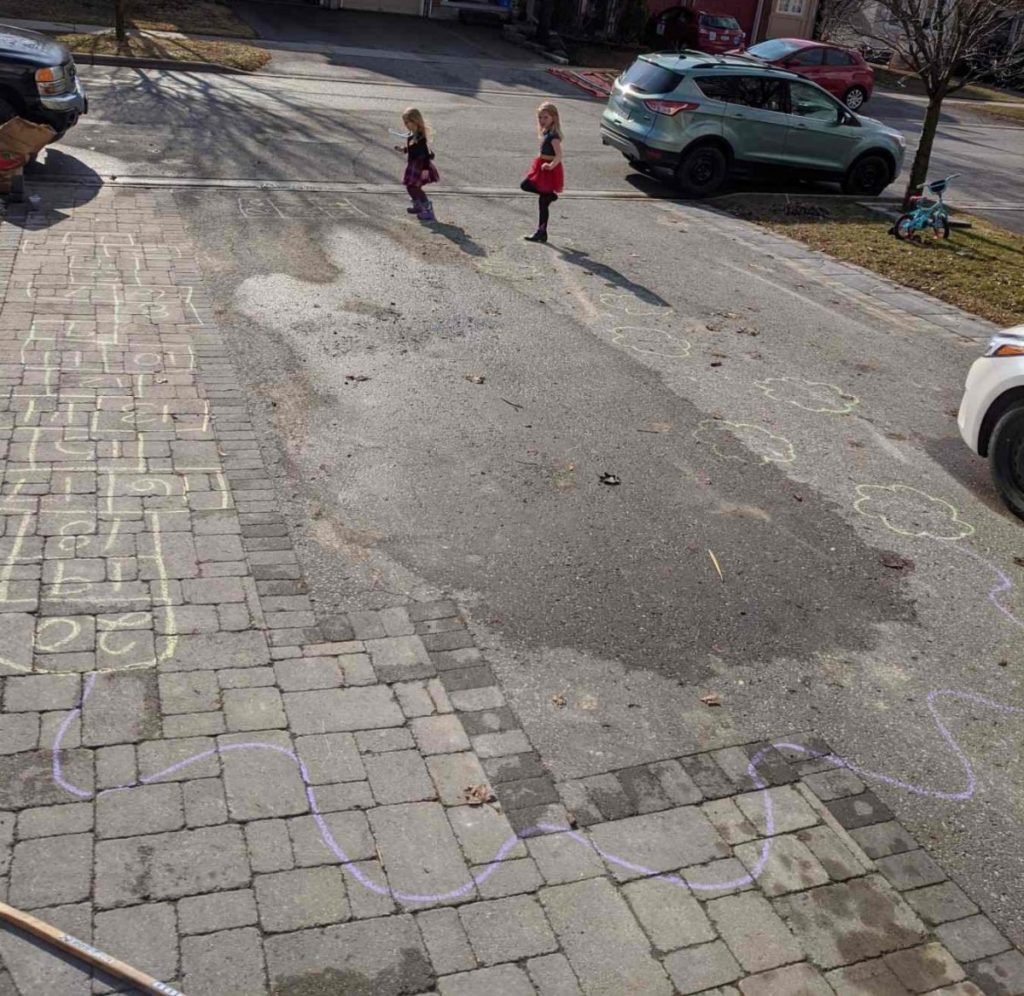
Obstacle Course

  • Draw an obstacle course with your chalk.
  • You can draw zig-zags, loops, twists, as well as “balance” beams to walk on, lines to jump over, shapes to hop/step/dance in, a hopscotch board, actions to complete and so much more!
  • Have your child move through the obstacle course.
  • You can add a competitive element to this activity by timing your child as they move through the course, and then challenging them to try and beat their previous time.
A picture of two children doing a sidewalk chalk obstacle course.

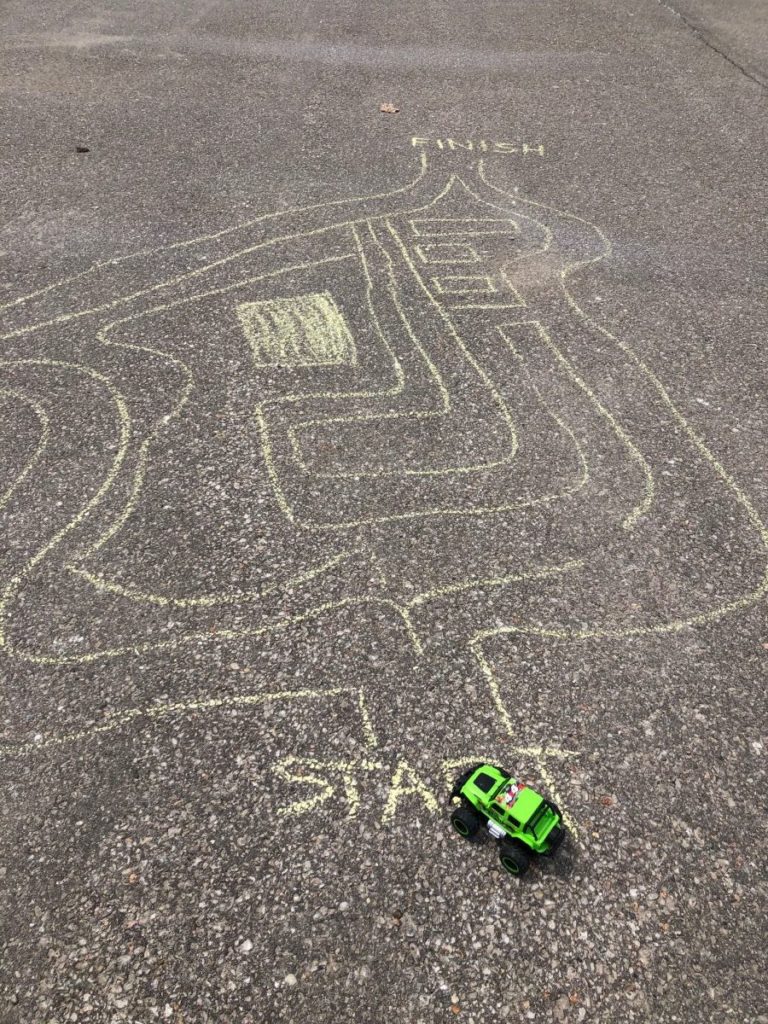
Sidewalk Chalk Maze

  • Draw out a maze using sidewalk chalk with a start and finish point for your child to find their way through, drawing the pathway with different coloured chalk.
  • Make the maze “life size” and have your child move through the maze themselves.
  • You could also bring out toy cars, toy animals or a ball to place at the start line and have your child help them through the maze from start to finish.
A picture of a sidewalk chalk maze

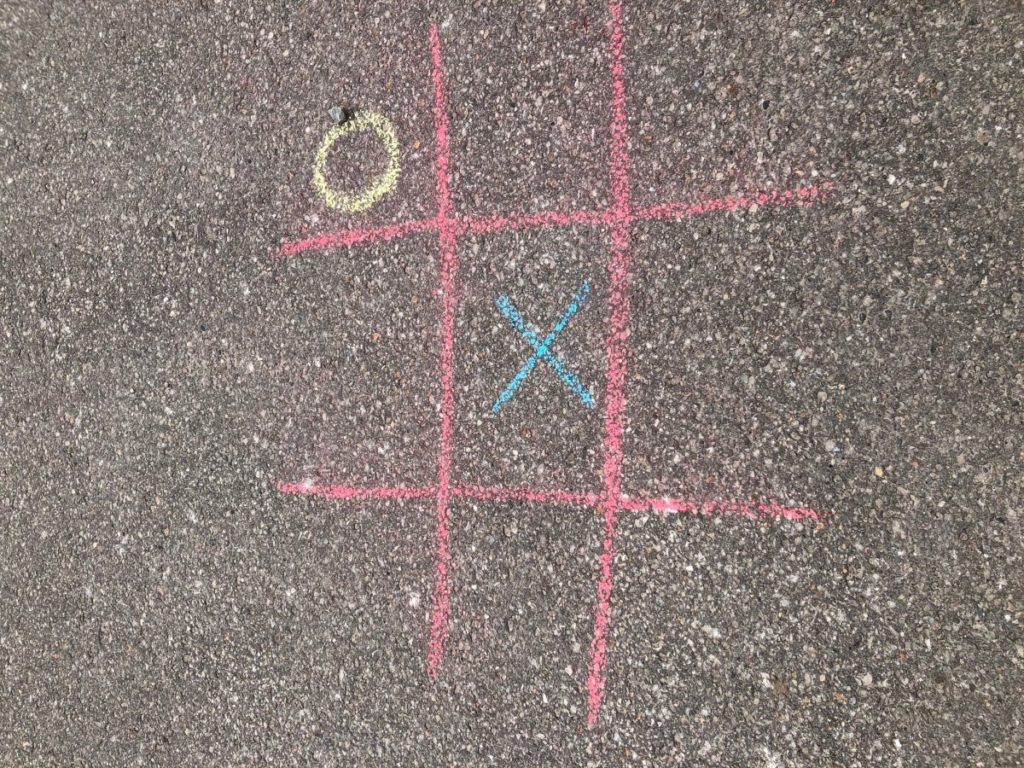
Tic-Tac-Toe

  • Draw a tic-tac-toe game board with chalk – the game can be played multiple ways.
  • Play a game by drawing your X’s and O’s onto the game board.
  • Toss a rock or bean bag (you can also use rolled-up socks or sponges) onto the tic-tac-toe board and wherever it lands is where you draw your X or O. First to get three X’s or O’s in a row wins.
  • Tic-tac-toe Team Race – Draw a START LINE away from the tic-tac-toe board. Each team has one piece of chalk and lines up behind the START line. The first players from each team have to run down to the game board and mark their designated X or O on the game board, run back and hand the chalk off to the next player on their team. The next player does the same, team players take turns until one team has three X’s or O’s in a row!
A picture of a tick-tack-toe sidewalk chalk game.

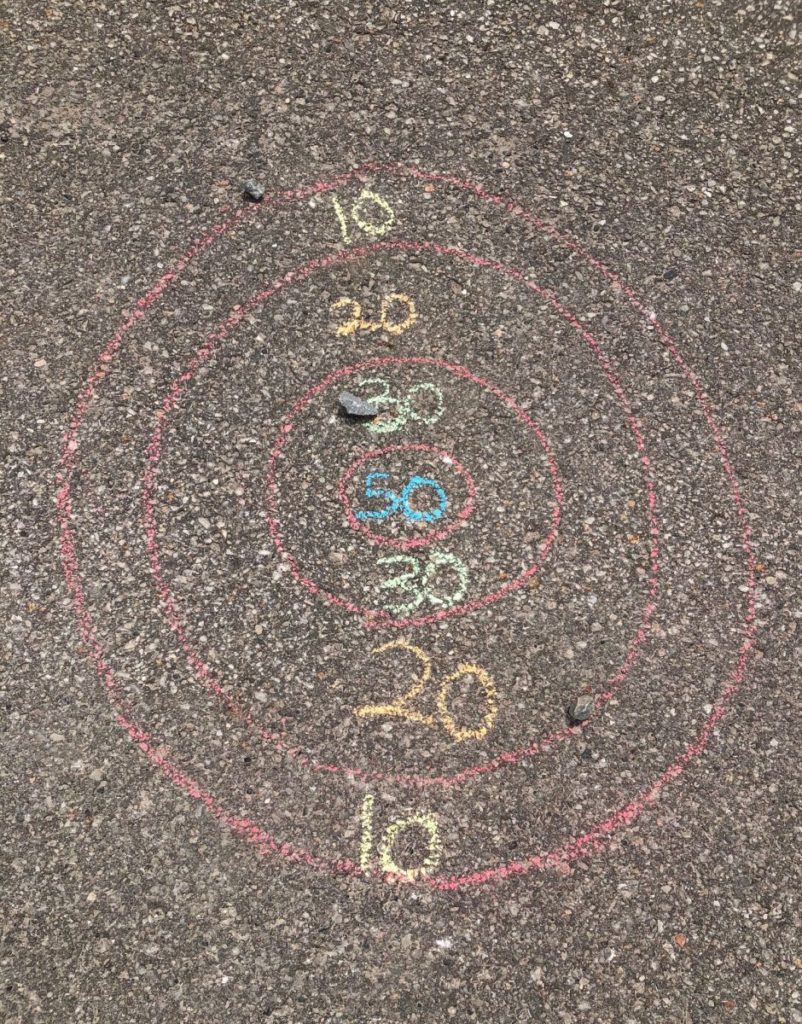
Target Practice

  • Draw a target with point values with your chalk.
  • Take turns tossing a rock or bean bag onto the target (you can also use rolled-up socks or sponges).
  • Have those playing take three turns each throwing rock or bean bag, adding up their points.
  • Whoever has the most points wins.
  • You could also have each player try to beat their own score each round.
Picture of the target practice game.

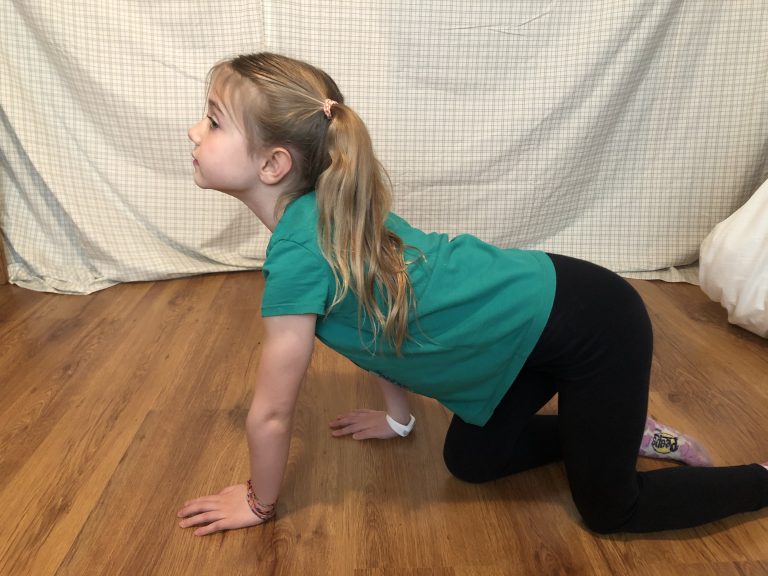
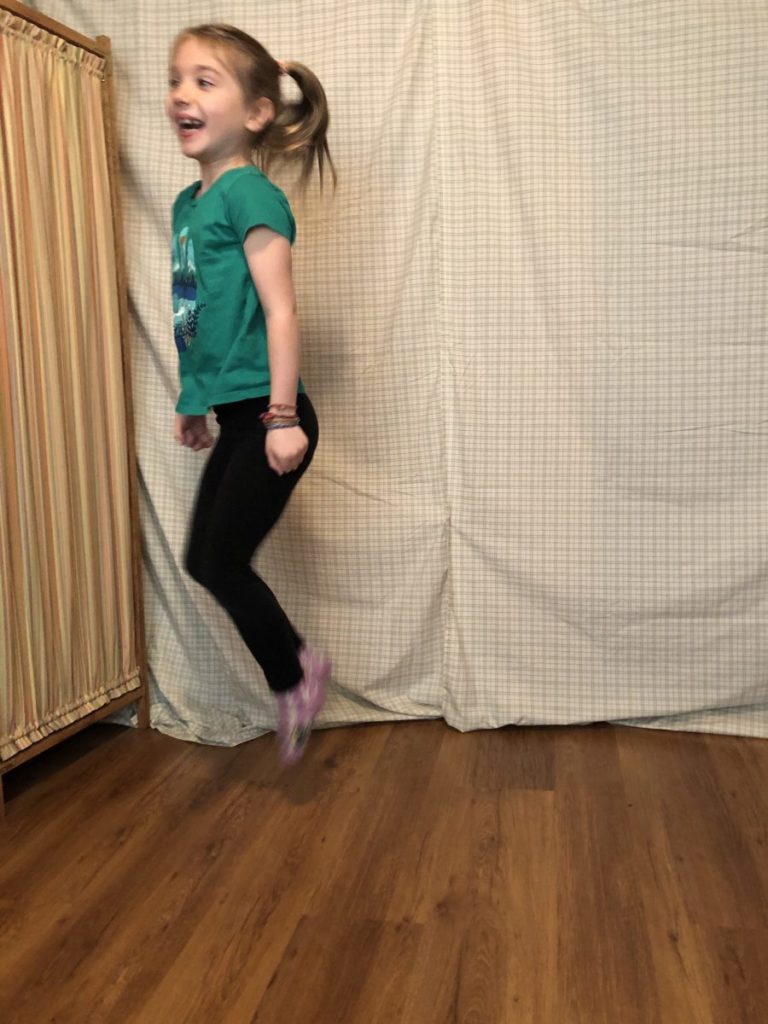
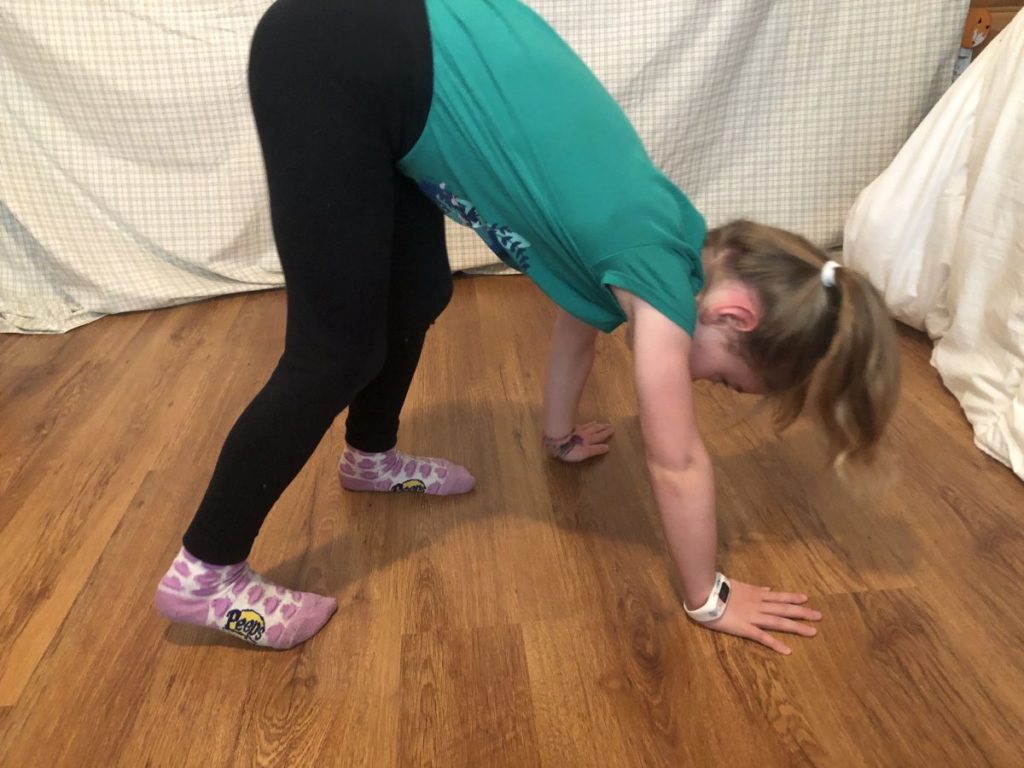
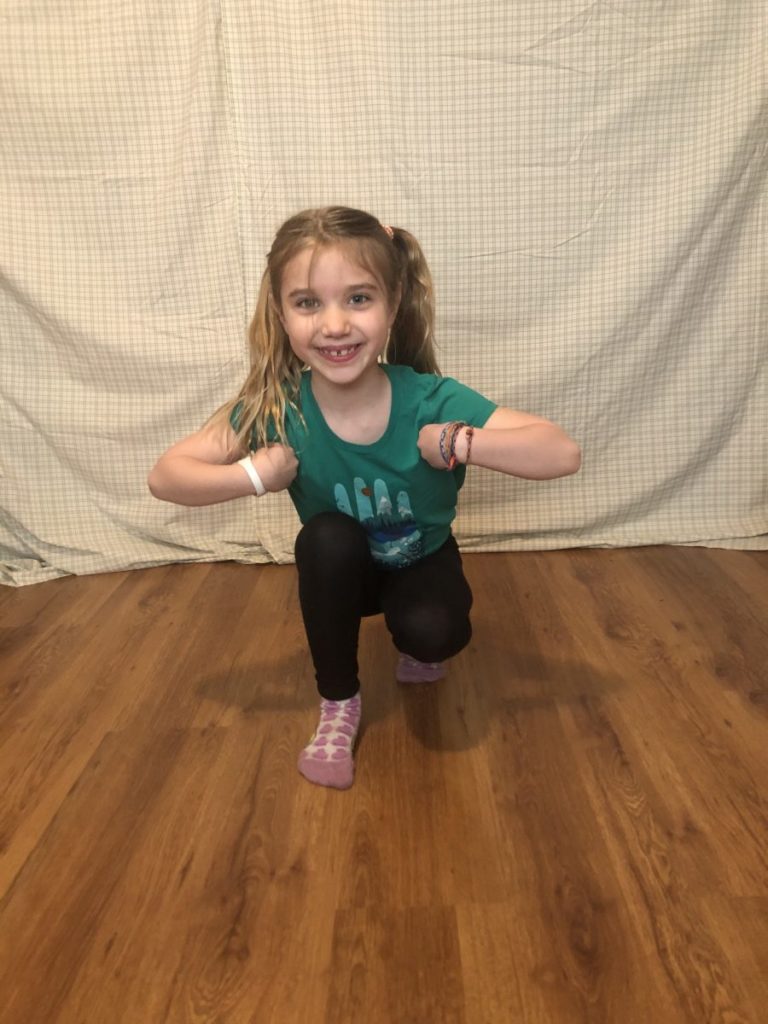
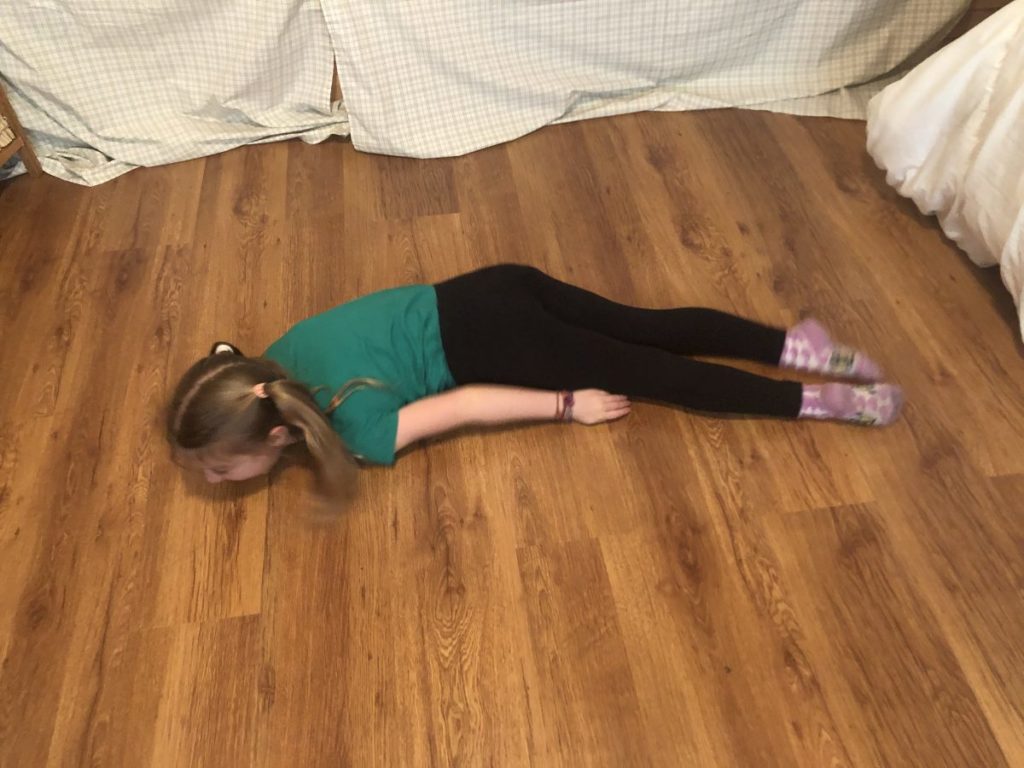
Oh no! There is a lion chasing a duck in my house!   Did the zoo just drop off their animals at my house?  Phew….it’s just my little ones being animals.  You and your littles can also create your own zoo at home.  Besides having fun, other benefits include improving strength, coordination skills, and encourage imagination and creativity.  Grandview Kids Physiotherapists, Kate and Winnie, have provided a variety of animals that you can try to imitate, and even make the animal sounds while you move.  You can also turn it into a guessing game for others.

Here are a few to try out:

Lion crawl – get down on hands and knees, and crawl quietly to sneak up on someone.

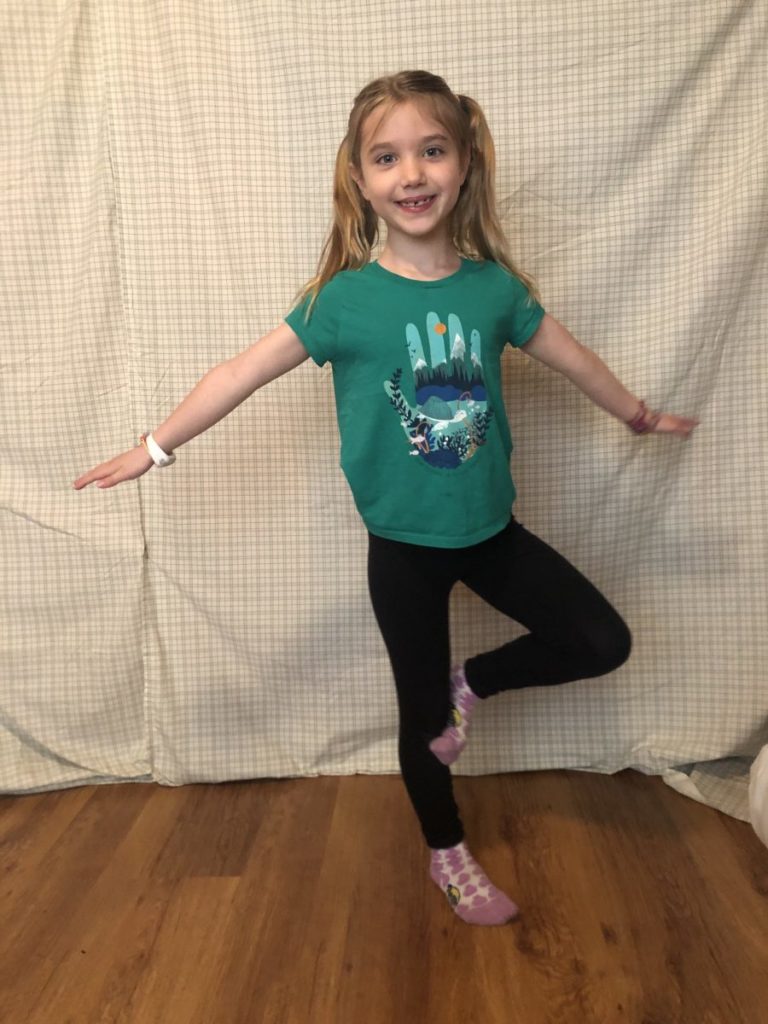
Flamingo stand – Stand, and lift up one foot and remain as still as possible.  Count up to 10 or more.

A girl doing a flamingo stand

Kangaroo jump – start with feet together and jump forward with both feet at the same time.  See how many jumps it takes to go from one side of the room to the other.

Girl acting out a kangaroo's jump.

Bear walk – Get down on hands and knees.  Then lift only the knees up, but keeping the hands and bottom of toes on the ground.  Your bum will be up in the air more.  Now walk forward only on your hands and feet to the other side of the room.

A girl displaying a bear walk

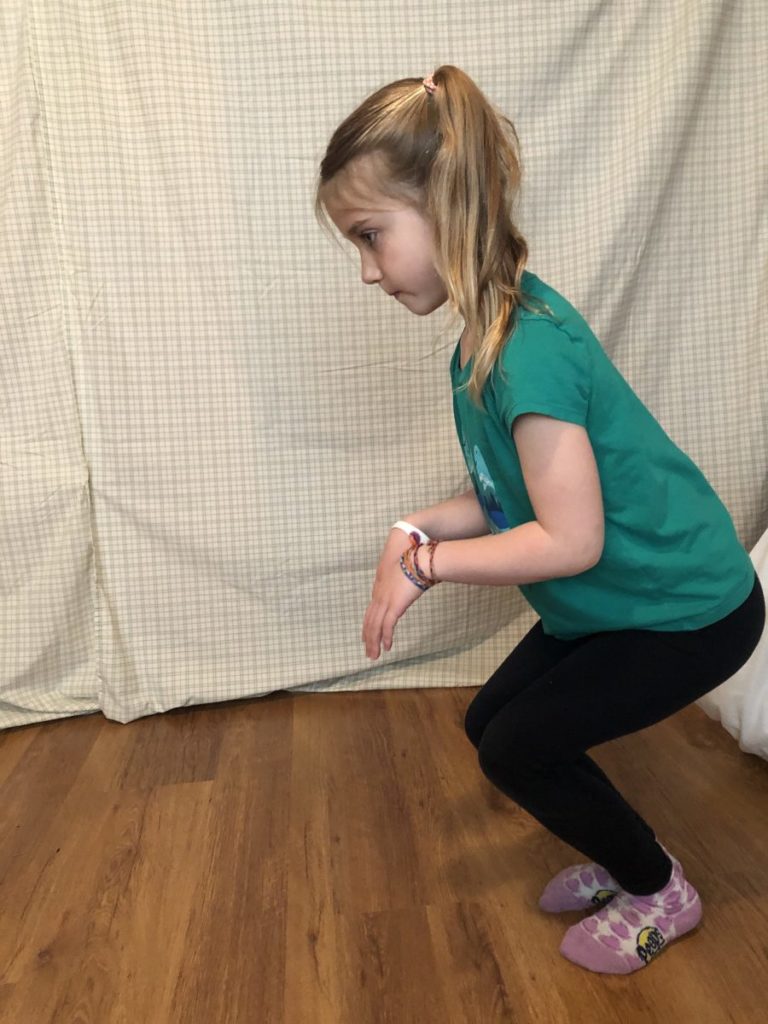
Duck waddle – From a standing position, squat down as low as possible.  Try to waddle forward by moving one foot at a time.

A girl acting out a duck waddle.

Snake slither – Lie on your tummy on the floor, with hands by your side.  Try to move forward by wiggling your body side to side.

A girl doing the snake slither exercise

Now that you have tried some of these, have your little ones come up with their own ideas.  Let the imagination run wild!

Volunteer Spotlight: Vicki Caume

Volunteer since October 2017

Favourite Activities: Golf, Pickleball, Reading, Jigsaw Puzzles, Leisurely Walks

A picture of Vicki.

In light of National Volunteer Week last week, we wanted to put a spotlight on one of our volunteers, Vicki Caume. Vicki has been volunteering with Grandview and Campbell Children’s School since October 2017 after retiring as a special education teacher. Grandview has been a part of Vicki’s life for quite some time.

“My first son was born with a number of developmental challenges and we were often involved with agencies like Grandview for his care [and] for a number of years I would bring my students to Grandview to use the therapeutic pool,” she explained.

For Vicki, to go from working in an educative setting to volunteering at our centres, just seemed natural. “When I retired from teaching, I immediately realized that I missed being around children and quickly thought of Grandview,” she said. When asked if there have been any key moments or connections that have struck a chord with her, she stated, “Of course the kids. You can see the pride they have in their accomplishments. Some of the children have so many obstacles to overcome and their enthusiasm and positivity in constantly inspiring.”

Creating positive experiences for the children and setting them up for success in their lives is what sparks joy in her volunteering experiences. At the end of the day, it is the children that she gets to work with that keep her around. “It’s the kids that make volunteering so enjoyable. Their enthusiasm, their eagerness to try new things, their perseverance. Whether I am volunteering at the Campbell School or with one of the recreational programs, the kids are always so much fun.”

When asked how she would describe Grandview to someone who does not know about our services she shared, “Grandview is a rehabilitation centre which serves the needs of children with physical, intellectual and developmental challenges and their families. The centre offers diagnostic services and follow up care and therapies (physical therapy, speech and language, occupational therapy). They also work with children on the autism spectrum. They support both the child and their families. As well as therapy, Grandview offers a wide array of therapeutic recreation programs to help children interact with other children and people in the community. Grandview is an amazing centre that helps children reach their full potential in a positive and caring manner.”

It is clear that Vicki is passionate for this type of work and excels in this environment. We would like to express our gratitude for all the good that she does: thank you, Vicki!

With all the change and uncertainty we are all experiencing these days, the last thing you need to be worrying about is providing endless complex, Pinterest-worthy activities for your children. Sometimes the simplest activities are the most engaging. Below are 5 easy activities provided by Grandview Kids Recreation Therapist, Alicia, that you can do with shaving foam to foster some interactive family fun.

Activity list:

  • Marble painting
  • Treasure hunt
  • Blank Canvas
  • Rain Clouds
  • Fluffy slime

Activity #1 – Marble Panting

Materials: shaving cream, food colouring or paint, paper, popsicle stick/butter knife/fork

Step one: make a few piles of shaving cream on a plate or craft tray

Step two: add a few drops of food coloruing  or paint

Step three: take the popsicle stick (or fork) and drag it across the tray 5-10 times from different starting points *picture

Step four: press the paper onto the shaving cream and life it carefully to reveal your art!

Colourful shaving cream on a sheet of paper.
Colourful shaving cream arranged to resemble a bouquet of flowers.

Activity #2 – Treasure Hunt

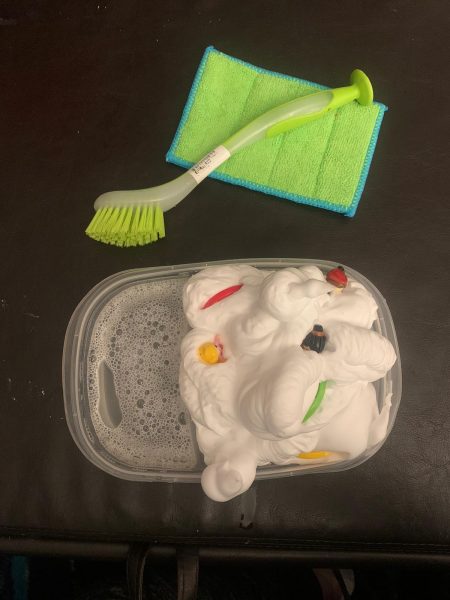
Materials: shaving cream, two containers, toys to hide, cleaning & digging tools (optional)

Step one: fill one container with clean water

Step two: fill the second container with shaving cream

Step three: hide toys in the shaving cream *picture

Step four: children can dig (with or without tools – shovels, spoons, sticks) around in the shaving cream to find all the treasure – once they locate a toy or coin, they can clean it off in the water to make it shine!

A plastic tub of soapy water with various toys and tools.

Activity #3 – Blank Canvas

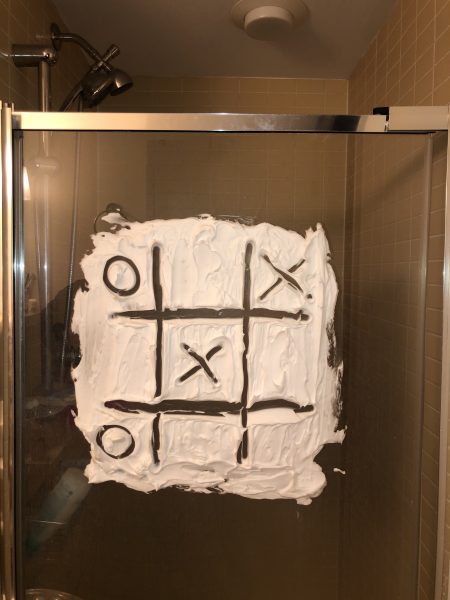
Materials: shaving cream, a shower wall

Step one: create a canvas by smoothing a layer of shaving cream on the wall inside the shower or bathtub (can be done at bath time, or dry with clothes on – the shower makes for easy clean up)

Step two: choose your game! You can play tic tac toe, hangman, draw pictures, play Pictionary, practice writing letters/numbers, draw faces/Emojis to help label feelings (happy face, sad face, don’t make this too complicated)

Step three: rinse away with the shower, and repeat!

A game of tick-tack-toe etched into shaving cream.

Activity #4 – Rain Clouds

Materials: shaving cream, clear glass, blue food colouring, a straw/syringe/dropper

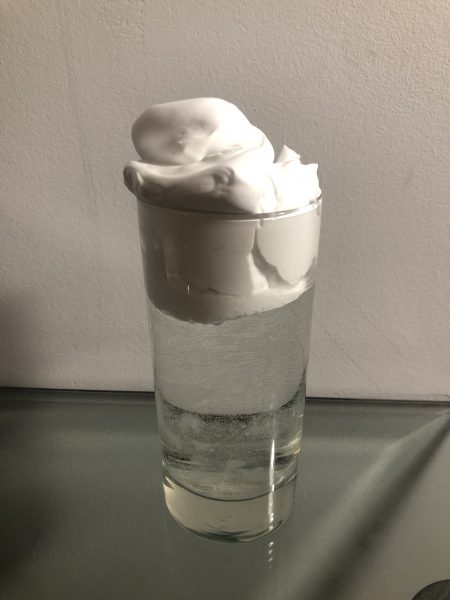
Step one: fill the glass ¾ full of water (you can add some figurines or toys that sink to make it more kid-friendly for younger kids)

Step two: add a layer of shaving cream on top of the water (these are your clouds)

Step three:  mix a few drops of food colouring with water in a separate cup

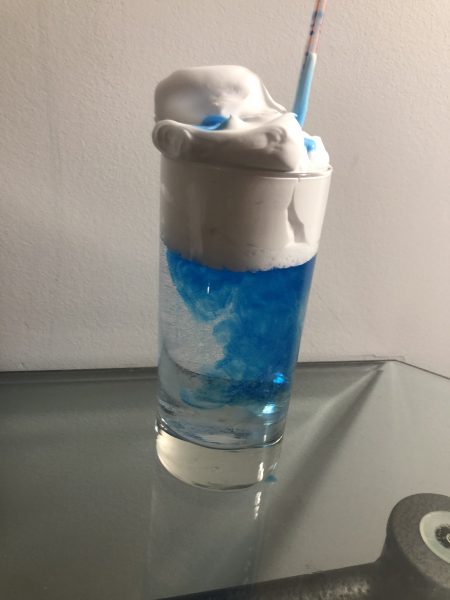
Step four: use your straw/syringe/dropper to pick up a small amount of blue water and drop it into the shaving cream about ½ way to the top of the water

Step five: this will create your rain!

*you can experiment with different liquids, oil, soap, liquid laundry detergent – mixing different liquids can create hours of experimenting and fun, this activity can easily transition into “potion” mixing*

"Rain cloud" is overflowing from the top of the glass.
Finished rain cloud craft. Overflowing clouds with below water turned a deep blue hue.

Activity #5 – Fluffy Slime

*disclaimer – this activity is less simple and messier than the others. It might not always turn out perfectly – but that is okay!*

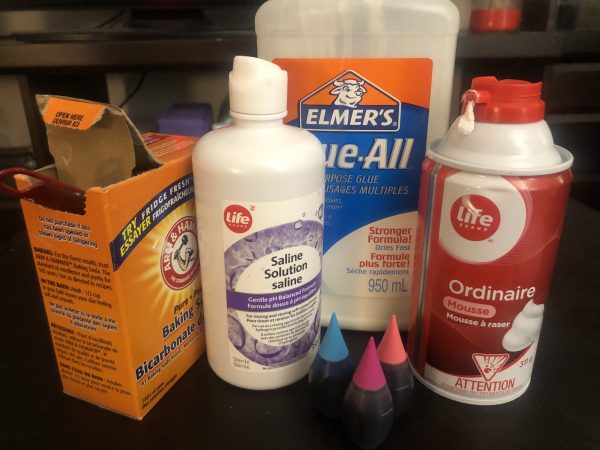
Materials:  3 cups of shaving cream, 2/3 cup white glue, ½ teaspoon baking soda, ¼ cup water, food colouring, 1 tablespoon of saline solution (check ingredients – make sure it contains boric acid and sodium borate, otherwise slime with not form)

A picture of baking soda, saline solution, Elmer's glue, shaving cream, and food colouring—all the indigents needed to make slime!

Step one: mix water, glue and baking soda

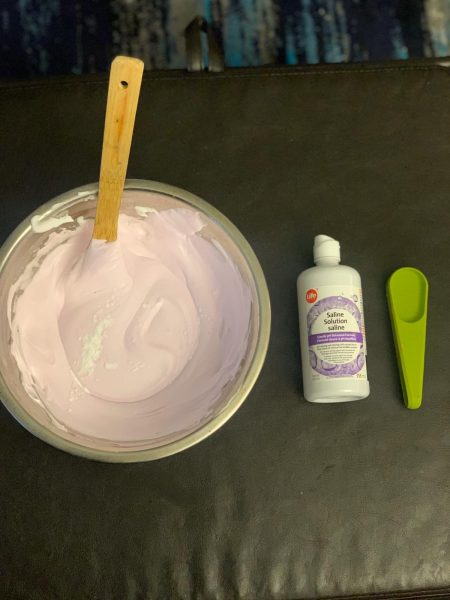
The mixture of the slime ingredients in a clear bowl.

Step two: add shaving cream

Step three: add food colouring

Step four: slowly add contact solution/saline

Step five: add a few drops to your hands (can wear gloves)

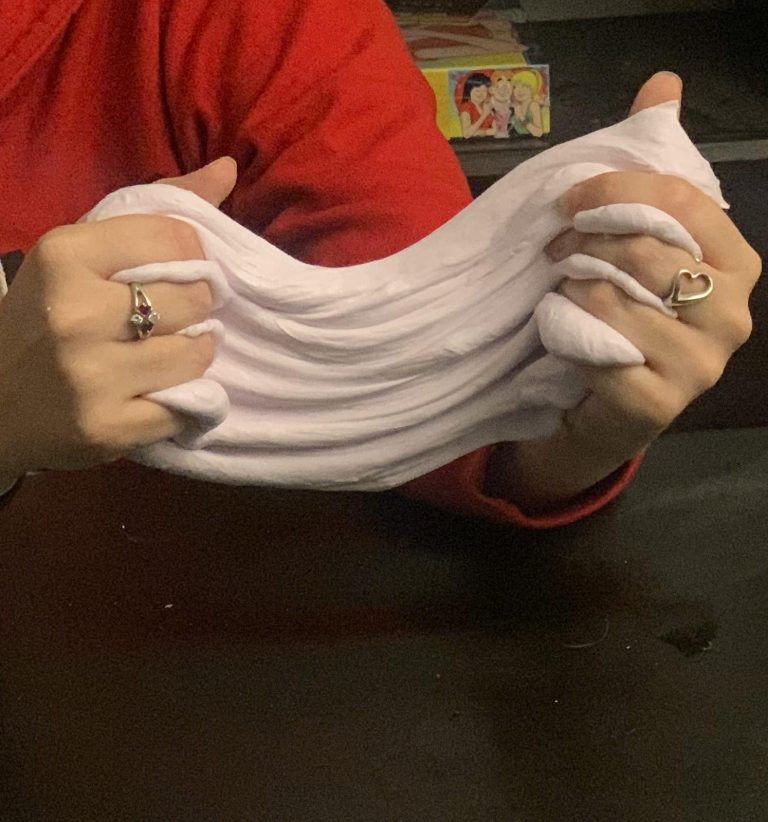
Step six: knead your slime for at least 5 minutes – the slime will start out very sticky but will soften as you knead (if your children are young or mouth their hands – it is better for the adult to do this step – slime should NOT be ingested – saline is a chemical – if ingested contact a doctor) if the slime is still too sticky – you can add another ½ tablespoon of saline – add slowly

A person stretching fluffy slime with their hands.

Special Services at Home (SSAH) has temporarily expanded their list of eligible expenses for families while community-based activities and settings are closed. This includes sensory items that can assist with anxiety, stress and can support any clinical or behavioural plans.
With this information, families are wondering what to purchase, what can be most helpful to their child(ren) during this time, as well as where to purchase these items. Grandview Kids Occupational Therapists Pamela Lam and Samantha Milligan have compiled a list of common sensory items and a brief explanation. This blog post is by no means a recommendations list, but it may give you an idea about what’s out there!
For larger pieces of equipment (e.g. swings, weighted equipment), we highly recommend you consult with an OT or medical professional to determine if this equipment would benefit your child, and they can also provide guidance on safe usage.

Movement/Proprioception

Trampolines – Whether it’s an indoor trampoline (for children over the age of 4) or outdoor trampoline (for children over the age of 6), trampolines are great for providing vestibular and proprioceptive input. Bounce on your feet, your bottom, bounce together while holding your child’s hands to work on language (more! again!). Endless hours of fun!
Scooter boards – These are great fun for children working on core strength and also provides proprioceptive input. Propel in a prone position (child lies on tummy to propel with hands/feet), or pull the child with a rope. Take turns pulling and being pulled! Scooter board races are also a hit with siblings!

Alternative seating for older kids – Alternative seating provides movement, whether it’s rocking or bouncing. These can be especially helpful for older kids who have difficulty sitting still and focusing for long periods of time. Use during “home school” time!  Examples: classroom rocker chair such as Zuma or Explorer rocking chairs, ball chairs, wedge wiggle seat, wiggle disc (great for younger kids!).

Swings – First, ensure you have enough space and clearance in a room before installing a swing, and that the ceiling/beams can support the weight! Some families may opt to hire a contractor for safe installation. Mats or pillows underneath the swing are also a great idea for safety reasons. Does your child like to rock and swing back and forth to calm? Does he/she like to spin in circles or go upside down? This will affect parents’ decisions in which type of swing they purchase. Some swings only allow for linear movement, while other types of swings allow for some rotary input. Swings also come in different fabrics (e.g. cotton, lycra), which may be something to think about if a child is tactile sensitive. Always supervise the child in the swing, as he/she can easily become overstimulated!

Deep Pressure

These items provide deep pressure input to calm a child or to help him/her focus for short periods of time. Remember weighted vests should not weigh more than 5% of a child’s body weight, and weighted blankets should not weigh more than 10% of a child’s body weight. Always use with supervision and for no longer than 30 minutes at a time (30 mins on, 60 mins off). It should be noted that the research on the benefits of weighted items is not conclusive and there are safety risks associated with use of weighted items (e.g., overheating, muscle fatigue).

Weighted vests – Weights are typically at the shoulders in weighted vests, and sometimes at the bottom of the vest. Removable weights are usually a safer option since children can’t try it on or trial it before buying during these times and that way parents can gradually increase the weight as their child becomes accustomed, up to 5% of the child’s body weight.

Compression vests – These are typically a neoprene material with Velcro closures on both sides. They provide deep pressure (a “hugging” feeling) in the torso and abdominal areas when the Velcro is fastened tightly. The amount of compression can be adjusted to suit the individual child’s needs.

Weighted blankets – These can be used during “sensory breaks”, quiet time, or when reading a book. If a child is tactile sensitive, blankets are offered in a variety of fabrics. Remember never to cover a child’s face with the blanket and ensure it is not wrapped around the child! It is not recommended that children sleep or be unsupervised with weighted blankets for safety reasons.

Weighted lap pads or animals – During seated activities, these can be placed on a child’s lap or shoulders to help them focus. They come in a variety of animals and colours so kids can pick their favourite!

Beanbag chairs – Beanbag chairs can provide a cozy space for children to take a break, relax, read a book, or calm down.

Auditory

Noise cancelling/reduction – Children who are sensitive to loud noises, are easily distracted and/or can’t seem to filter out environmental noises when they are doing homework typically benefit from noise cancelling headphones. There are larger noise cancelling headphones for younger kids – these can be purchased from a specialty store or even from a hardware store! Older kids who do not like the look of large headphones may respond better to regular earplugs or the Vibes Hi-Fidelity Earplugs.
Sound/white noise machines – These can help children sleep at night by reducing his/her sensitivity to other sounds in the home environment. A white noise/sound machine may also be helpful for children who are often distracted while in a busy environment.

Tents

When thinking about creating a quiet corner for a child, a tent can be a great way to provide a calming and private space!  Parents may want to put their child’s favourite calming activities inside the tent – such as books, colouring pages, puzzles, blankets, etc.

For more information on sensory processing and regulation, please feel free to register for our upcoming webinar on Wednesday, April 29th at 2PM. https://zoom.us/meeting/register/tJErc-6prz0pEtenc6FZrczXyN9rLmj_4AVJ

Can’t make it? No worries! The recording will be posted on the Grandview website https://grandviewkids.ca/programs-services/services/parent-caregiver-education/

Where Can You Buy Sensory Equipment?

Flaghouse www.flaghouse.ca
School Specialty www.schoolspecialty.com
FDMT www.fdmt.ca
Special Needs Toys www.specialneedstoys.com
Scholar’s Choice www.scholarschoice.ca
Toys, Tools and Treasures www.toystoolsandtreasures.com
Weighted For You www.weightedforyou.com
Amazon www.amazon.ca
Canadian Tire www.canadiantire.ca
Ikea www.ikea.com/ca/en/

  • ⟨
  • Page 1
  • Interim pages omitted …
  • Page 36
  • Page 37
  • Page 38
  • Page 39
  • Page 40
  • Interim pages omitted …
  • Page 51
  • ⟩

Primary Sidebar

Child Stories

LnRiLWZpZWxke21hcmdpbi1ib3R0b206MC43NmVtfS50Yi1maWVsZC0tbGVmdHt0ZXh0LWFsaWduOmxlZnR9LnRiLWZpZWxkLS1jZW50ZXJ7dGV4dC1hbGlnbjpjZW50ZXJ9LnRiLWZpZWxkLS1yaWdodHt0ZXh0LWFsaWduOnJpZ2h0fS50Yi1maWVsZF9fc2t5cGVfcHJldmlld3twYWRkaW5nOjEwcHggMjBweDtib3JkZXItcmFkaXVzOjNweDtjb2xvcjojZmZmO2JhY2tncm91bmQ6IzAwYWZlZTtkaXNwbGF5OmlubGluZS1ibG9ja311bC5nbGlkZV9fc2xpZGVze21hcmdpbjowfQ==
LnRiLWhlYWRpbmcuaGFzLWJhY2tncm91bmR7cGFkZGluZzowfQ==
ICAudGItaW1hZ2V7cG9zaXRpb246cmVsYXRpdmU7dHJhbnNpdGlvbjp0cmFuc2Zvcm0gMC4yNXMgZWFzZX0ud3AtYmxvY2staW1hZ2UgLnRiLWltYWdlLmFsaWduY2VudGVye21hcmdpbi1sZWZ0OmF1dG87bWFyZ2luLXJpZ2h0OmF1dG99LnRiLWltYWdlIGltZ3ttYXgtd2lkdGg6MTAwJTtoZWlnaHQ6YXV0bzt3aWR0aDphdXRvO3RyYW5zaXRpb246dHJhbnNmb3JtIDAuMjVzIGVhc2V9LnRiLWltYWdlIC50Yi1pbWFnZS1jYXB0aW9uLWZpdC10by1pbWFnZXtkaXNwbGF5OnRhYmxlfS50Yi1pbWFnZSAudGItaW1hZ2UtY2FwdGlvbi1maXQtdG8taW1hZ2UgLnRiLWltYWdlLWNhcHRpb257ZGlzcGxheTp0YWJsZS1jYXB0aW9uO2NhcHRpb24tc2lkZTpib3R0b219IC53cC1ibG9jay1pbWFnZS50Yi1pbWFnZVtkYXRhLXRvb2xzZXQtYmxvY2tzLWltYWdlPSJhMWJlMmUyODAwMWFkMGRlMjBhM2RlZWVlYmE5MDJhMSJdIHsgbWF4LXdpZHRoOiAxMDAlOyB9IEBtZWRpYSBvbmx5IHNjcmVlbiBhbmQgKG1heC13aWR0aDogNzgxcHgpIHsgICAudGItaW1hZ2V7cG9zaXRpb246cmVsYXRpdmU7dHJhbnNpdGlvbjp0cmFuc2Zvcm0gMC4yNXMgZWFzZX0ud3AtYmxvY2staW1hZ2UgLnRiLWltYWdlLmFsaWduY2VudGVye21hcmdpbi1sZWZ0OmF1dG87bWFyZ2luLXJpZ2h0OmF1dG99LnRiLWltYWdlIGltZ3ttYXgtd2lkdGg6MTAwJTtoZWlnaHQ6YXV0bzt3aWR0aDphdXRvO3RyYW5zaXRpb246dHJhbnNmb3JtIDAuMjVzIGVhc2V9LnRiLWltYWdlIC50Yi1pbWFnZS1jYXB0aW9uLWZpdC10by1pbWFnZXtkaXNwbGF5OnRhYmxlfS50Yi1pbWFnZSAudGItaW1hZ2UtY2FwdGlvbi1maXQtdG8taW1hZ2UgLnRiLWltYWdlLWNhcHRpb257ZGlzcGxheTp0YWJsZS1jYXB0aW9uO2NhcHRpb24tc2lkZTpib3R0b219IH0gQG1lZGlhIG9ubHkgc2NyZWVuIGFuZCAobWF4LXdpZHRoOiA1OTlweCkgeyAgIC50Yi1pbWFnZXtwb3NpdGlvbjpyZWxhdGl2ZTt0cmFuc2l0aW9uOnRyYW5zZm9ybSAwLjI1cyBlYXNlfS53cC1ibG9jay1pbWFnZSAudGItaW1hZ2UuYWxpZ25jZW50ZXJ7bWFyZ2luLWxlZnQ6YXV0bzttYXJnaW4tcmlnaHQ6YXV0b30udGItaW1hZ2UgaW1ne21heC13aWR0aDoxMDAlO2hlaWdodDphdXRvO3dpZHRoOmF1dG87dHJhbnNpdGlvbjp0cmFuc2Zvcm0gMC4yNXMgZWFzZX0udGItaW1hZ2UgLnRiLWltYWdlLWNhcHRpb24tZml0LXRvLWltYWdle2Rpc3BsYXk6dGFibGV9LnRiLWltYWdlIC50Yi1pbWFnZS1jYXB0aW9uLWZpdC10by1pbWFnZSAudGItaW1hZ2UtY2FwdGlvbntkaXNwbGF5OnRhYmxlLWNhcHRpb247Y2FwdGlvbi1zaWRlOmJvdHRvbX0gfSA=

Colton’s Story: Dravet Syndrome Awareness Day

June 23 is International Dravet Syndrome Awareness Day. This day gives families affected by Dravet Syndrome a chance to share stories, build support and increase public knowledge about this rare...

Latest Updates

  • Grandview Kids and Lakeridge Health open Canada’s first anesthesia procedure clinic in a Children’s Treatment Centre May 6, 2026
  • Ahaana’s magic ears: Speech and Hearing Month May 5, 2026
  • May: Dates of Significance April 30, 2026
  • Building confidence through the power of giving: Norah’s story April 30, 2026
  • A Place Where S Shines: Williams Syndrome Awareness Month April 29, 2026

You Have Questions

We’d like to help you find the answers…

Contact Us Today

© Grandview Kids Built by PeaceWorks

  • About Us
  • Contact Us
  • Privacy
Accessibility Adjustments

Powered by OneTap

How long do you want to hide the toolbar?
Hide Toolbar Duration
Select your accessibility profile
Vision Impaired Mode
Enhances website's visuals
Seizure Safe Profile
Clear flashes & reduces color
ADHD Friendly Mode
Focused browsing, distraction-free
Blindness Mode
Reduces distractions, improves focus
Epilepsy Safe Mode
Dims colors and stops blinking
Content Modules
Font Size

Default

Line Height

Default

Color Modules
Orientation Modules