• Skip to primary navigation
  • Skip to main content
  • Skip to primary sidebar
Grandview Kids Logo

Grandview Kids

Every Child And Youth Living Life At Their Full Potential

  • About Us
    • Vision, Mission and Values
    • The New Grandview Kids
      • Operational Readiness
      • Visiting Grandview Kids’ Ajax Headquarters
    • Our History
    • Leadership
    • Board of Directors and Committees
    • Annual Report
    • Strategic Plan
    • Policies
  • Calendar
  • Annual Report
    • Strategic Direction 1: Deliver meaningful, efficient client and caregiver outcomes and experiences
    • Strategic Direction 2: Foster a thriving, connected Team Grandview
    • Strategic Direction 3: Collaborate with partners to maximize impact, focusing on Durham Region
    • The New Grandview Kids – The Jerry Coughlan Building
    • 2024-25 Financial Statement
    • Grandview Kids Foundation update
    • Grandview School update
  • Contact
    • Contactez – nous
    • Ajax – Headquarters
    • Bowmanville Health Centre
    • Grandview School
    • Oshawa – Dwyer
    • Port Perry
    • Whitby – Abilities Centre
  • Careers
  • Register
  • Donate
  • Instagram
  • Twitter
  • Facebook
  • Services and Programs
    • Audiology
    • Autism Program
      • Caregiver-Mediated Early Years Programs
      • OAP Core Clinical Services
      • Entry to School Program
      • Foundational Family Services
    • Blind-Low Vision Program
    • Extensive Needs Service
    • Family Engagement Program
      • Adolescent Transition Program
      • Family Leader Program
        • Family Advisory Council
        • Youth Advisory Council
    • Infant Hearing Program
    • Medical Services
      • Hypertonia Clinic
      • Complex Care Program
      • Nutrition Services
      • Orthopaedic Clinic
    • Occupational Therapy
    • Physiotherapy
    • Preschool Outreach Program
    • School Programs & Resources
      • Resources for Educators
      • School-Based Rehabilitation
    • Service Navigation
      • SmartStart Hub: Parents
      • SmartStart Hub: Partners
    • Social Work
    • Speech-Language Pathology
      • Augmentative and Alternative Communication
    • Therapeutic Recreation
  • Purchased Services
    • OAP Core Clinical Services
      • Behaviour Services
  • Research
    • 2023-24 Research Portfolio
    • Get involved in research
    • IDEA Study
      • Building knowledge and understanding of the intersection of race and disability in accessing pediatric rehabilitation services.
    • Research Associate: Dr. Fiona Moola
    • Research Associate: Dr. Meghann Lloyd
    • Studies in Progress and Results
  • Resources
    • Ability Acceptance Program
    • Arriving at Grandview Kids
    • Community Supports & Resources
    • Family Support Fund
    • Free to Read Program
    • Frequently Asked Questions
    • Gather by Grandview Kids
    • News and Updates
    • Privacy
    • Resources for Parents and Caregivers
    • Visiting Grandview Kids
  • Support Us
    • Ways to support
    • Host a fundraiser
    • Participate in an event
      • Golf Fore Grandview Kids
      • Sponsor the Drum
      • Dream Big, Dream Brighter Awards Gala
    • Leave a legacy
      • Gifts of securities
      • Gifts of bequests
      • Gifts of life insurance
    • Your impact
    • Building a Legacy: Honouring Jerry Coughlan
  • I Want To…
    • Connect with Grandview Kids
    • Donate
    • Refer a child or youth
    • Register via My Community Hub
    • Schedule an Appointment
    • Volunteer at Grandview Kids
    • Work at Grandview Kids
  • Grandview School
    • About Our Program
    • About Our Board
    • Grandview School Social Story
    • Plans and Reports
    • Resources for Families
    • Resources for Schools – Switch It Up!
    • Careers and Volunteering
    • Contact Grandview School
  • Search

Posted June 3, 2020

Grandview Kids in the time of COVID-19

Adrian Polidano

While the doors of Grandview Children’s Centre were closed in mid-March due to the COVID-19 pandemic, the work to support and care for Grandview kids and their families did not stop.

#TeamGrandview has worked tirelessly, around the clock to retool their practices and therapies to ensure children and youth were able to receive the care they needed and continue working on the goals they are working hard to achieve, albeit in a completely different and new way.

Prior to COVID-19, the heart of Grandview Kids could often be seen and heard in the halls of the Centre; with smiles and laughter booming from wall-to-wall. Over the last 12 weeks, that heart kept beating; as close to 200 clinicians were set up at home with the technology required to deliver services virtually.

Grandview’s team of Physicians even reconfigured their usual methods to partner with the Vanderbilt Institute out of Tennessee, U.S.A. to receive training on how to virtually diagnose Autism Spectrum Disorder, making Grandview Children’s Centre one of the leaders in Ontario, along with Holland Bloorview Children’s Hospital to be using this intervention.

“It has been well-received by families who’ve been waiting long periods of time to get a diagnosis for their children,” explained Grandview Kids CEO, Lorraine Sunstrum-Mann.

“We are ramping up each week. Families are getting more comfortable, clinicians are getting more comfortable and so we are seeing these virtual telepractice activities increase.”

In addition, Grandview has also provided critical in-person appointments at its main Oshawa headquarters. The team developed a prioritised ranking to determine which children would come into the centre to receive therapy in-person. Up until this time it has been only a very select group of children who predominantly have had an increase or an exacerbation of pain or loss of function. These children and youth have been coming in for an intervention at the Botox clinic.

“Staff used recommended PPE and took all the necessary precautions to be able to support those kids,” said Sunstrum-Mann.

As the Province reopens in phases, so too is Grandview. Beginning Monday, June 8 the number of in-person appointments will grow.

Schedulers are reaching out to families with children and youth with urgent needs to book therapy appointments at Grandview’s main headquarters.

The increase in in-person therapy has caused Grandview to have to retool the organisation once again, reconsidering almost every aspect of how the team delivers services.

“Working with children and the work we do is very high contact,” explained Sunstrum-Mann. “We have to think from a health and safety lens first and foremost so we have redesigned almost every process at Grandview.”

What to expect at appointment in Centre:

  • Appointments will be scheduled with a COVID-19 health screen for both the client and caregiver.
  • Main waiting room eliminated.
  • Only one parent/caregiver allowed to accompany child to appointment.
  • Screener/greeter will meet families upon arrival to their appointment and another COVID-19 health screen will occur.
  • Families will be asked to wait in their vehicles (if that is a possibility) until their clinician is ready and then they’ll be escorted directly to a treatment room.
  • If arriving by transit or by walking, families will be health screened and greeted then asked to wait in a private, designated waiting space until their appointment time when they’ll be escorted directly to the treatment room.
  • Staff and families will don the appropriate PPE based on Public Health Ontario’s recommendations.

Children under 2 years old, people with breathing difficulties and those unable to remove a face mask on their own are not recommended to wear a mask or face covering.

“This can be tricky. Many kids at Grandview might struggle to wear a mask because of sensory challenges or other concerns and so our staff in that case would not require the child to mask but staff themselves would increase their level of PPE so in addition to a mask they would don a face shield for example.”

Grandview has a priority ranking for clients to return to the Centre.

“Just like we’ve been seeing a very select children in-person all during COVID, the ranking will increase the number of kids based on urgent requirement to come in and see a therapist.”

This new priority ranking system is part of Phase 1 of Grandview’s reopening. This is expected to continue over the summer, gradually increasing to more groups of children as required based on their need and Grandview’s ability to maintain safety.

“There won’t be hundreds of kids next week but we plan to start gradually increasing the number of appointments over the month of June and then into the summer,” said Sunstrum-Mann. “This means for some families they’ll continue with virtual services until September and for other families, depending on the need of the child and the kind of intervention required, that they will be given an option of returning to the Centre for that in-person care.”

Sunstrum-Mann acknowledges for some families neither of those options will work and so a break in therapy may be what’s best, with plans to resume in September or whenever is best for the family.

Fast Facts:

  • Grandview has conducted close to 13,000 appointments during the time period of COVID, which includes telephone calls, virtual sessions and a small number of in-person interventions.
  • Grandview has 7 locations but will begin the reopening stage at the main Oshawa headquarters only.
  • In Centre staff to work limited 4-5 hour shifts, alternating schedules due to elimination of staff lunchroom and areas where people could congregate.
  • The maintenance team has undergone extensive training to prepare for heightened cleaning.
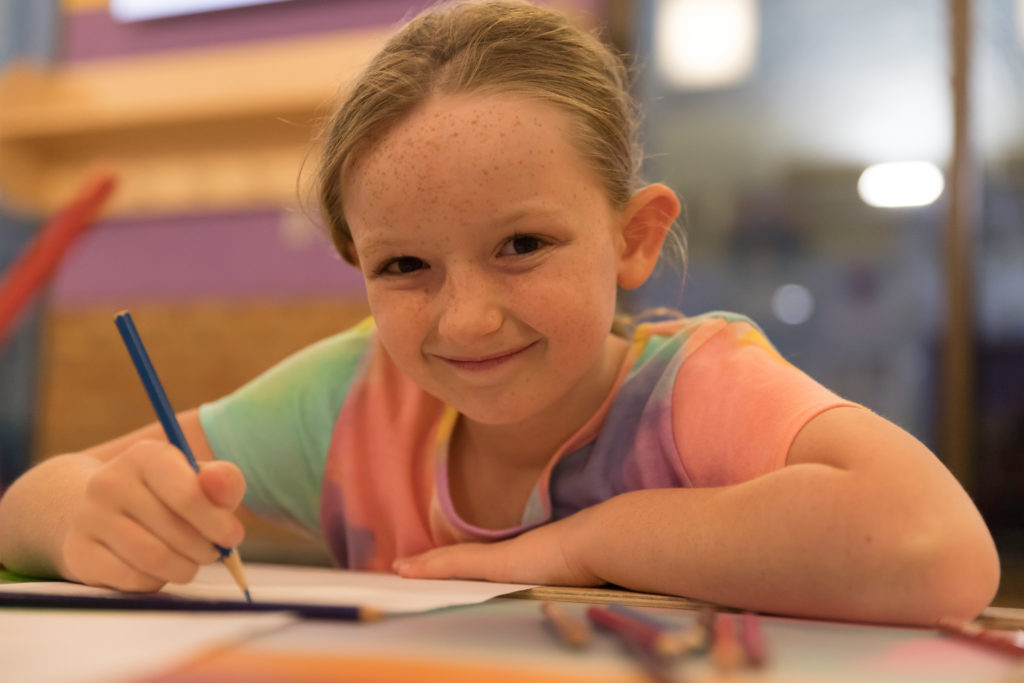
Meet Grandview Kids sisters, 10-year-old Teagan and 5-year-old Logan!

Both girls are long-term members of the Grandview Kids family –– Teagan first came to Grandview in 2012 and Logan in late 2016. Teagan is a bubbly and active social butterfly who loves politics, staying up to date on current events and making new friends. Logan loves to sing and dance; she is a huge bookworm, easy-going, and although she is commonly quiet, she maintains an outgoing nature. Both girls can’t get enough of travelling together on planes (especially when the destination is Disney World)! They do a lot of print work together for autism awareness, and they love to see the final project when it comes out.

Teagan smiling and drawing

Upon first meeting Teagan, you will notice that her chatty and social demeanour comes so easy to her. Upon first meeting Teagan, you will notice that her chatty and social demeanour comes easily to her. Through her time at Grandview Kids and her strong desire to thrive, learn, and grow, Teagan has become entirely verbal and can certainly strike up a conversation with anyone! In September 2012, she was officially diagnosed with autism/ADHD. You would have never guessed that, at an early age, she was given the diagnosis that she would not be able to talk. According to her parents, she showed signs indicating that she has autism and ended up receiving a referral to Grandview Kids from their Paediatrician, who noted that Grandview “would be the perfect opportunity to help them unlock and achieve all their possibilities and potential.”

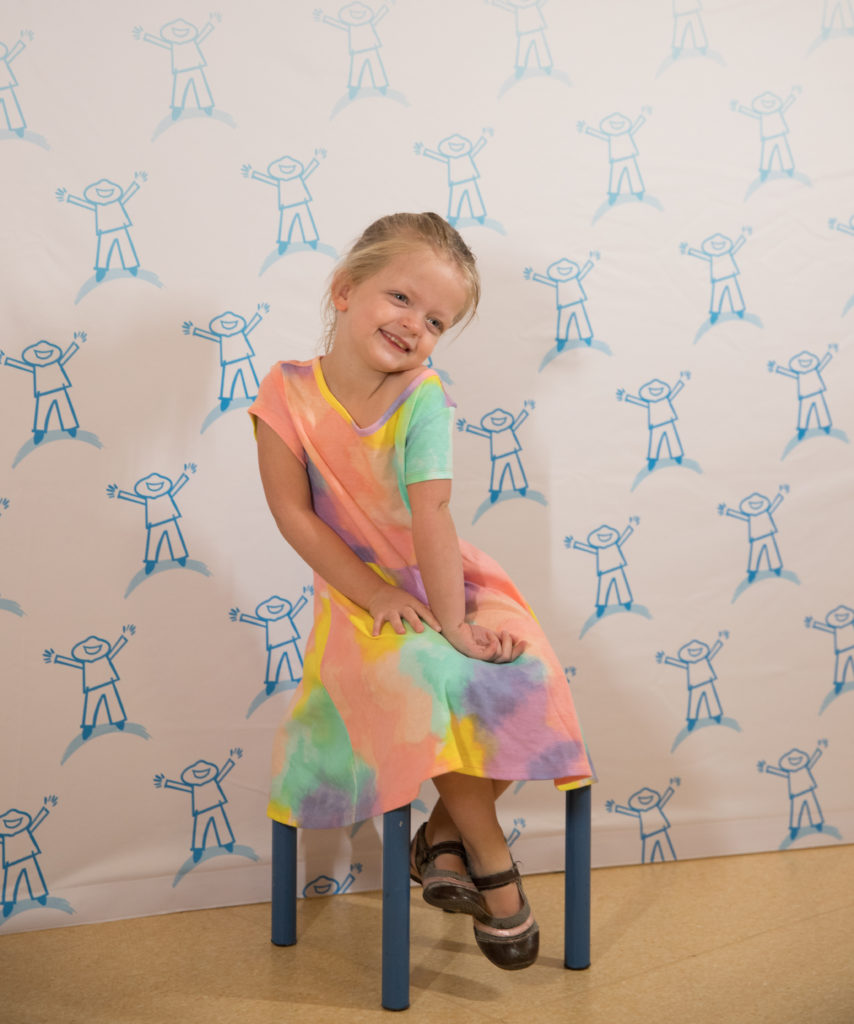
Logan smiling big for the camera!

According to her mother, Logan and her sister differentiate in that Logan tends to be a little shy and quiet. However, she is coming into her own more every day! She was diagnosed with autism/ADHD when she first came to Grandview. Like her big sister, Logan is fully verbal and enjoys a wide range of activities and services that Grandview offers. Her favourites are taking advantage of the Free-to-Read program and swimming lessons.

Teagan and Logan “have grown tremendously over the years past and continue to grow in the years ahead, and we have Grandview Kids to be thankful for,” their parents say. “[The] Parent Support Groups, our Social Workers for six-plus years, all of the many countless therapy blocks of Occupational Therapy, Physiotherapy, Speech Therapy… and all of the appointments with Dr. Hunt, they would not be where they are today!”

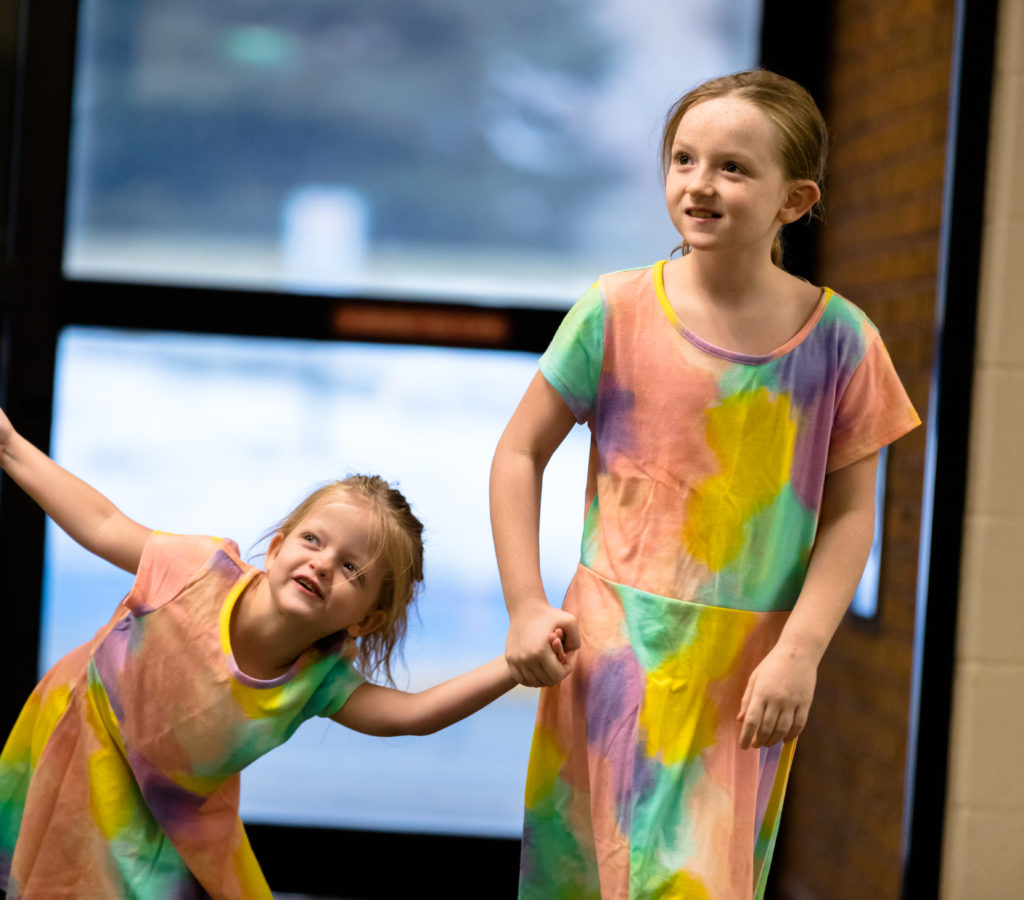
Sisters Teagan and Logan holding hands

Family is a term that comes up often when their mother refers to their experiences at Grandview. “Just walking in the doors at Grandview equals home and family… knowing that it is ok to act as themselves is the biggest thing, knowing that they are feeling secure in their environment”, she describes. Being a part of a welcoming and knowledgeable environment where no one is left behind makes Grandview Kids a place where they feel the most secure.

Note: This blog was originally posted in 2020.

Every family is different, but daily chores are universal.  Let’s talk about laundry. We all wear clothes and we all have to wash them. The laundry pile NEVER ENDS.

What if we could get this chore done AND teach our children tons of language at the same time? The possibilities are endless!

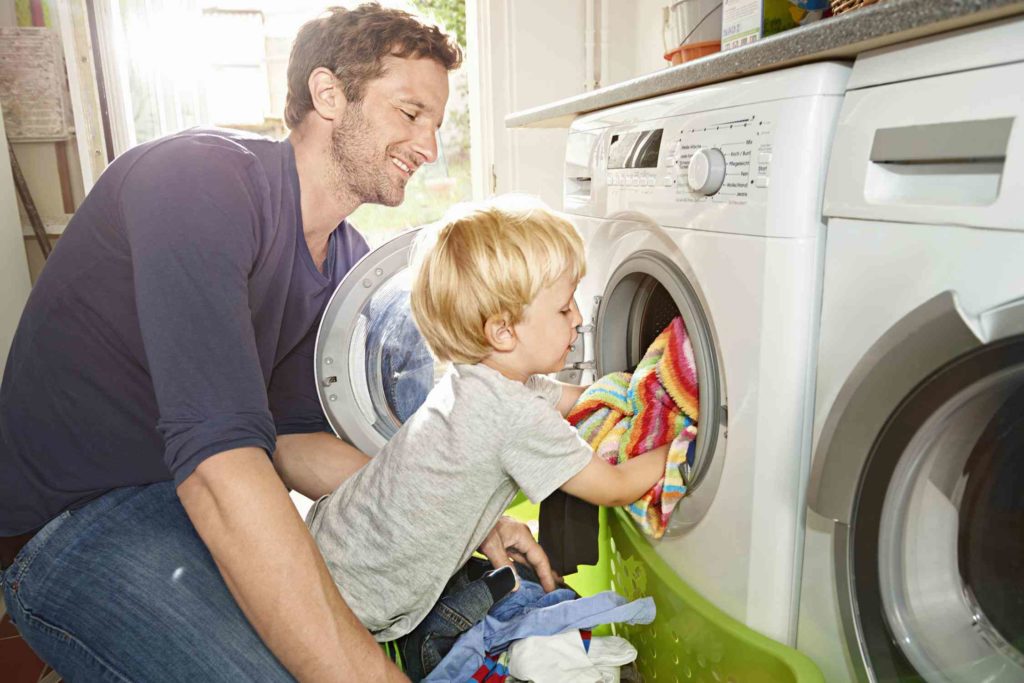
Father and child doing laundry

A few tips to remember:

1.     Interaction is key. Before you start layering lots of new language, let your child get used to the fun of “helping” with laundry – pulling the clothes basket, pouring, soap. When the activity is fun, they will want to come back.

2.     Teach, teach, teach before you test. Your child will leave quickly if you start asking them to identify the name of every item you show them. Comment about what is happening, and model keywords when you have your child’s attention. After you say something, remember to WAIT to give your child a chance to take a turn in the conversation.

3.     Use a variety of word types including: object labels (e.g. soap, washing machine, dryer, basket, clothing labels, action words (e.g. pour, carry, open, sort, fold, wash), and descriptive words (e.g. colours) –  Tip:  Many descriptive words  can be taught as opposite-pairs (dirty/clean, empty/ full, wet/dry, same/different when matching socks!)


How can I apply early language strategies to laundry?

Here are some tried and true strategies that you can use to build your child’s early communication skills:

Join in! Do the laundry TOGETHER!

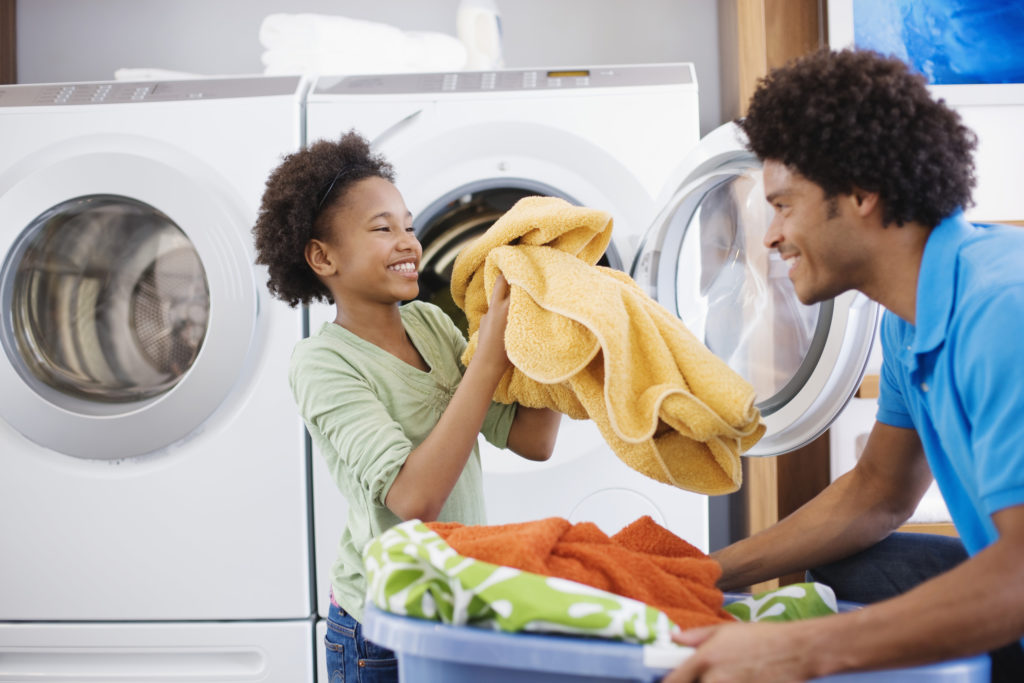
A father and child doing laundry.

Let your child take a turn – do or say something and then WAIT to give your child an opportunity to take a turn. When your child says something, looks at you, holds something up, reaches for the soap etc., he or she has taken a in the conversation.

Respond immediately when your child takes a turn. You can:

IMITATE – copy your child’s gesture or word

INTERPRET – model a word or phrase that you think he/she means

EXPAND – if your child uses a word, copy and add a word or two (e.g. if your child says “soap” you could say “Pour the soap”)


How can I target other areas of communication for children who already have a large vocabulary?

Model grammar structures:      

Pronouns: This is MY shirt, these are YOUR socks, this is daddy’s shirt – HIS shirt is bigger, here’s Emma’s dress – SHE loves this one!

Plurals: Here are my socks.

Possessive nouns: This is Evan’s sock, This is mommy’s shirt, these pants go in Aidan’s pile.

Is/are: The clothes ARE drying, the washing machine IS full, these socks ARE daddy’s, my shirt IS blue.

A little motivation goes a long way! When a child is motivated to ask for something, we can use that opportunity to teach them a more efficient and effective way to communicate. We call these opportunities “communication temptations”.

How to teach new words using Communication Temptations:

Step 1:  Create a need for your child to communicate by showing them an interesting or desirable item or activity (e.g. juice, puzzle piece, bubble container).

Keep that desired item available but out of reach of the child (e.g. put it in a clear container out of their reach, place it on a higher shelf).

Step 2: Wait expectantly (and know what you’re waiting for!)

The child will have to engage in some kind of communication attempt in order to access that item or activity. Wait for it!

–        Use your best “I’m waiting” face and body language to cue your child (e.g. lean forward, smile, eyes wide)

Remember:  We want our children to be successful. Always wait for something you know your child can consistently do.

For example:

–        For a child who has no words or only a few words, you might be waiting for them to look at you, reach and/or make a sound.

–        For a child who consistently uses a relevant word (e.g. can say “blueberry” most of the time when presented some blueberries), you might be waiting for the child to say that word (e.g. “blueberry!”)

(Watch out!  If your goal is to expand your child’s language, avoid asking a yes/no question like “Do you want blueberries?” because the answer is likely to just be “yes” or “no”.   While “yes” and “no” are fantastic functional words, we want to expand the child’s vocabulary by teaching new words like the names for things or action words.)

Step 3: Deliver the goods!

Respond immediately when your child has made his or her communication attempt. Provide the desired item/action and model what they could say next time. Hand it over while you say the word(s) you want your child to say.  This is a great opportunity to teach your child a new word or a new phrase.

(Caution: don’t keep waiting – your child doesn’t have to imitate you. He or she already communicated.  You are just showing them a better way to ask next time).

–        Tip: Giving just one piece or one little bit can help you keep it going! If your child only got a tiny bit of something, he or she still has a need to communicate – to get some more!  The more opportunities you create, the more opportunities your child has to learn!

–        Tip: Responding right away helps reward your child’s communication attempt. Modelling the appropriate word(s) helps teach your child what they could be saying. You can use this as an opportunity to teach your child a specific word or later to show your child how to combine words together.

What does this look like in action?

Example 1: Waiting for a sound or gesture and teaching a new word

Your child loves blueberries. You have some in a container they can see but not reach. You might comment “mmm, blueberries” or show the container to your child.

You wait with an expectant look on your face.

Your child looks at you and at the blueberry.

You show the blueberries (still out of reach) and wait some more while giving your best expectant look (it may feel like a long time).

Your child reaches.

Immediately, you model “blueberry!” AS you hand your child one blueberry.

You wait expectantly.

Your child reaches AND says “buh!”

Immediately you hand over another blueberry AS you model “blueberry!”.

Continue to Repeat!

Example 2: Waiting for a single word and teaching how to combine words

Your child loves wind-up toys but can’t operate them independently. You put a windup toy on the floor between you and wait with your best expectant look.

Your child hands you the toy and says “help!”

You model “help please” as you wind up the toy and set it down.

Once the toy stops you again wait expectantly.

Your child hands you the toy and says “help!”

You model “help please” as you wind up the toy and set it down.

Repeat!

When you use Communication Temptations, you can create a need to communicate in many different ways.

Try being the…

Keeper:

–        The child will have the opportunity to practice requesting many times with:

·       Puzzles, blocks: hold all of the pieces and give the child one at a time.

·       Snack: do this bit-by-bit, give a tiny bit of juice and one small cookie/cracker/blueberry, etc.

·       Bubbles: you hold the bubbles and the wand, blow the bubbles once

Blocker:

–        The child will need to communicate for the activity to continue with:

·       Wind-up toys: wind them up once and let them finish

·       Pop-up toys: place your hand over the top to stop the object from popping up

·       Shape sorters: block the hole with your hand

·       Snack: give the child a sealed juice bottle or unopened cookies/cracker

·       Song: start a favourite song or nursery rhyme (like wheels on the bus) and pause in the middle

Hider:

–        You may pique the child’s curiosity if you play the “hider” with:

·       Puzzles, Mr. Potato Head: hide the last piece and the child will realize it is incomplete

·       Snack: give the child the bottle of juice, but no cup

·       Cups: hide an object under one of the 2-4 cups and have the child try to find it

·       Container: Hide a toy that makes noise in a container or bag and shake it to make noise then hold it up and wait

Joker:

–        You can tempt the child to communicate by doing silly things with:

·       Shape sorters: give an object that does not belong

·       Craft time: offer a hairbrush instead of a paintbrush

·       Snack: try to pour the juice with the lid still on, or try pouring an empty bottle

With “communication temptations” you can harness the power of your child’s motivation to teach him or her new words.

Written by:

Alishia, Speech-Language Pathologist

As announced by Premier Ford Thursday, the province is gradually permitting services delivered by health professionals to resume as long as health and safety preconditions are met.

As part of stage 1 reopening of the province, regulated health professionals such as Speech-Language Pathologists, Occupational Therapists and Physiotherapists, as well as Board Certified Behaviour Analysts (BCBAs), are considered health professionals.

Services delivered by these professionals may resume if specified pre-conditions are met, and provided they operate in compliance with the advice, recommendations and instructions of public health officials.

Grandview has been offering many services virtually since March 18th, through telepractice – telephone and video applications. The Government is encouraging us to continue to provide virtual and alternative service models, where appropriate.

As we begin to make thorough and thoughtful plans for resuming in-person services, we will continue to offer pragmatic and innovative approaches to keep Grandview families, clients, staff and volunteers safe and supported. We will follow the guidance of our local public health authorities to ensure compliance with health and safety precautions.

It is going to take time to plan full reopening. We need to ensure access to appropriate Personal Protective Equipment (PPE). We also need to organize the logistics of our staff resources, given schools and child care centres remain closed and many of your beloved clinicians (our talented staff) are also parents of young children.

We miss seeing you and your children in-person and Thursday’s news is welcomed and uplifting.

We ask for your ongoing patience as we finalize the safest plan to welcome you back into Grandview sites. For now, we will continue telepractice virtual services until we are confident that we are ready to resume safe in-person services. We do anticipate a phased approach. I commit to keeping you up to date over the next week.   Please know we will be working as hard as we can to “see” you soon.

Hand strengthening and grasp

Bath time

  • Squeezing sponges or wringing out washcloth during bath
  • Playing with squirt toys at bath time

Housekeeping

  • Squeezing spray bottles to help water plants or clean table/counter tops
  • Crumpling paper and folding up boxes for recycling
  • Lifting, carrying or dragging a full toy bin or laundry bin with handles
  • Squeezing clothes pegs to hang up towels/clothing items to dry
  • Pulling linens off the bed

Meal Prep/ Mealtime

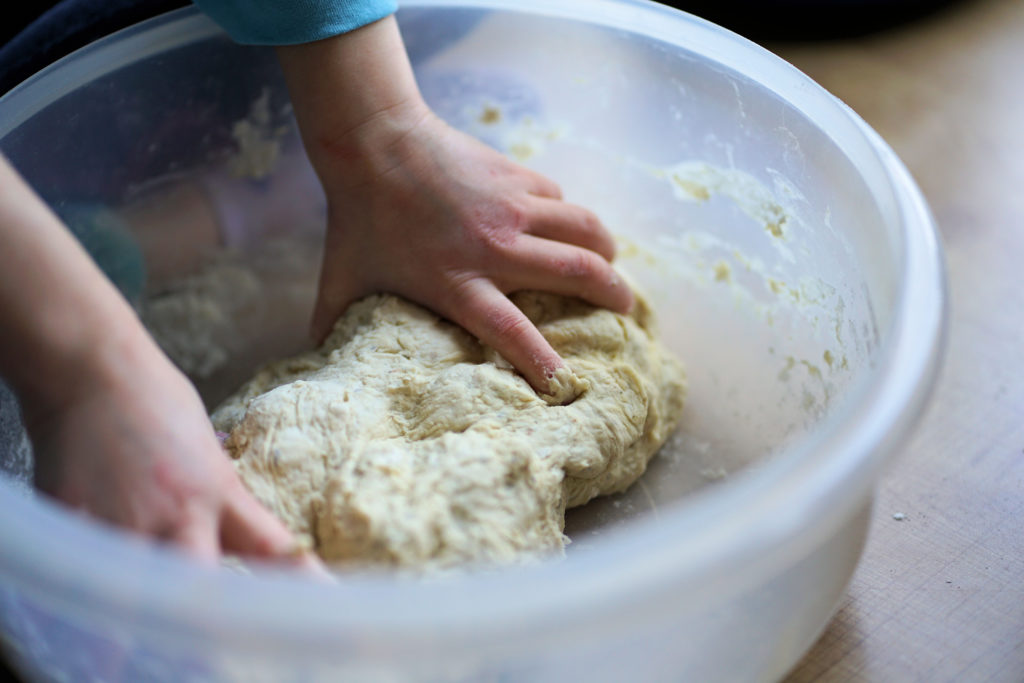
  • Helping with kneading cookie/bread dough when making baked goods
  • Using kitchen tongs to help serve food at mealtime
  • Scooping out mashed potatoes or cooked rice onto family member’s plates
Picture of a person kneading dough.

Outdoor time

  • Doing animal walks on the grass e.g. bear, crab, seal etc.
  • Storing and translating small rocks/pebbles from palm to finger pads to throw rocks into the lake

Pre-printing and printing

Bath time

  • Drawing and/or printing with soap or soap crayons on the wall

Housekeeping

  • Helping to hand write the grocery list

Meal prep/ Mealtime

  • Making letters out of cooked spaghetti noodles
  • Printing out meal menu or drawing items for a meal and posting it on the fridge

Outdoor time

  • Finding sticks in the park and making letters with them, or drawing letters in gravel/sandbox using a stick
  • Forming letters or drawing a picture using rocks
  • Sidewalk chalk

Self care

Bath time

  • Participating in dressing and undressing
  • Participating in scrubbing body with a loofah and body wash, or washing hair

Housekeeping

  • Using a toothbrush to scrub objects clean
  • Grooming toys such as doll’s hair

Meal/Meal prep

  • Playing tea party with dolls i.e. setting up plates, serving snacks
  • Participating in cooking activities

Outdoor time

  • Participation in dressing and undressing to go outside
  • Putting snacks into a container or zip lock bag
  • Making mini sandwiches
  • Filling up a water bottle

Miscellaneous

  • Take advantage of the time you have at home for potty training

Executive functioning/organization

Bath time

  • Set up a bath towel, clothing to be changed into, and bath toys
  • Follow a routine or part of a routine – i.e. lay out clean clothes, bathe, get dressed, place dirty clothes in the hamper, brush teeth

Housekeeping

  • Encourage making their own bed each morning
  • Doing and folding laundry, sorting then putting them back in the respective drawers
  • Sorting the garbage, recycling and compost
  • Vacuuming, sweeping, mopping, wiping windows/mirrors
Child's clothes folded on table

Meal prep/mealtime

  • Gather and organize ingredients for a recipe
  • Assisting with set up and clean up of all meals  

Outdoor time

  • Set up instructions for a scavenger hunt
  • Plan a route to the park
  • Build a figure using sticks and rocks
  • Build a fort or set up an obstacle course

Self-regulation/sensory-based activities

Bath time

  • Blowing bubbles during bath time
  • Wading through the bath water
  • Filling and pouring water with a pail

Housekeeping

  • Taking out the garbage/recycling/compost
  • Carrying the laundry basket to the laundry machine

Meal prep/mealtime

  • Stirring cake, pancake, cake/cookie batter
  • Eating a crunchy snack
  • Sipping liquids from a straw

Outdoor

  • Running
  • Biking
  • Scootering
  • Playing catch
  • Handball
  • Kicking a soccer ball
  • Street hockey

Miscellaneous

  • Climbing stairs
  • Playing Simon stays
  • Rough-housing with parent or sibling
  • Making an obstacle course
  • Having a dance party
  • Tortilla roll in a blanket (with supervision)
  • ⟨
  • Page 1
  • Interim pages omitted …
  • Page 18
  • Page 19
  • Page 20
  • Page 21
  • Page 22
  • Interim pages omitted …
  • Page 35
  • ⟩

Primary Sidebar

Child Stories

LnRiLWZpZWxke21hcmdpbi1ib3R0b206MC43NmVtfS50Yi1maWVsZC0tbGVmdHt0ZXh0LWFsaWduOmxlZnR9LnRiLWZpZWxkLS1jZW50ZXJ7dGV4dC1hbGlnbjpjZW50ZXJ9LnRiLWZpZWxkLS1yaWdodHt0ZXh0LWFsaWduOnJpZ2h0fS50Yi1maWVsZF9fc2t5cGVfcHJldmlld3twYWRkaW5nOjEwcHggMjBweDtib3JkZXItcmFkaXVzOjNweDtjb2xvcjojZmZmO2JhY2tncm91bmQ6IzAwYWZlZTtkaXNwbGF5OmlubGluZS1ibG9ja311bC5nbGlkZV9fc2xpZGVze21hcmdpbjowfQ==
LnRiLWhlYWRpbmcuaGFzLWJhY2tncm91bmR7cGFkZGluZzowfQ==
ICAudGItaW1hZ2V7cG9zaXRpb246cmVsYXRpdmU7dHJhbnNpdGlvbjp0cmFuc2Zvcm0gMC4yNXMgZWFzZX0ud3AtYmxvY2staW1hZ2UgLnRiLWltYWdlLmFsaWduY2VudGVye21hcmdpbi1sZWZ0OmF1dG87bWFyZ2luLXJpZ2h0OmF1dG99LnRiLWltYWdlIGltZ3ttYXgtd2lkdGg6MTAwJTtoZWlnaHQ6YXV0bzt3aWR0aDphdXRvO3RyYW5zaXRpb246dHJhbnNmb3JtIDAuMjVzIGVhc2V9LnRiLWltYWdlIC50Yi1pbWFnZS1jYXB0aW9uLWZpdC10by1pbWFnZXtkaXNwbGF5OnRhYmxlfS50Yi1pbWFnZSAudGItaW1hZ2UtY2FwdGlvbi1maXQtdG8taW1hZ2UgLnRiLWltYWdlLWNhcHRpb257ZGlzcGxheTp0YWJsZS1jYXB0aW9uO2NhcHRpb24tc2lkZTpib3R0b219IC53cC1ibG9jay1pbWFnZS50Yi1pbWFnZVtkYXRhLXRvb2xzZXQtYmxvY2tzLWltYWdlPSJhMWJlMmUyODAwMWFkMGRlMjBhM2RlZWVlYmE5MDJhMSJdIHsgbWF4LXdpZHRoOiAxMDAlOyB9IEBtZWRpYSBvbmx5IHNjcmVlbiBhbmQgKG1heC13aWR0aDogNzgxcHgpIHsgICAudGItaW1hZ2V7cG9zaXRpb246cmVsYXRpdmU7dHJhbnNpdGlvbjp0cmFuc2Zvcm0gMC4yNXMgZWFzZX0ud3AtYmxvY2staW1hZ2UgLnRiLWltYWdlLmFsaWduY2VudGVye21hcmdpbi1sZWZ0OmF1dG87bWFyZ2luLXJpZ2h0OmF1dG99LnRiLWltYWdlIGltZ3ttYXgtd2lkdGg6MTAwJTtoZWlnaHQ6YXV0bzt3aWR0aDphdXRvO3RyYW5zaXRpb246dHJhbnNmb3JtIDAuMjVzIGVhc2V9LnRiLWltYWdlIC50Yi1pbWFnZS1jYXB0aW9uLWZpdC10by1pbWFnZXtkaXNwbGF5OnRhYmxlfS50Yi1pbWFnZSAudGItaW1hZ2UtY2FwdGlvbi1maXQtdG8taW1hZ2UgLnRiLWltYWdlLWNhcHRpb257ZGlzcGxheTp0YWJsZS1jYXB0aW9uO2NhcHRpb24tc2lkZTpib3R0b219IH0gQG1lZGlhIG9ubHkgc2NyZWVuIGFuZCAobWF4LXdpZHRoOiA1OTlweCkgeyAgIC50Yi1pbWFnZXtwb3NpdGlvbjpyZWxhdGl2ZTt0cmFuc2l0aW9uOnRyYW5zZm9ybSAwLjI1cyBlYXNlfS53cC1ibG9jay1pbWFnZSAudGItaW1hZ2UuYWxpZ25jZW50ZXJ7bWFyZ2luLWxlZnQ6YXV0bzttYXJnaW4tcmlnaHQ6YXV0b30udGItaW1hZ2UgaW1ne21heC13aWR0aDoxMDAlO2hlaWdodDphdXRvO3dpZHRoOmF1dG87dHJhbnNpdGlvbjp0cmFuc2Zvcm0gMC4yNXMgZWFzZX0udGItaW1hZ2UgLnRiLWltYWdlLWNhcHRpb24tZml0LXRvLWltYWdle2Rpc3BsYXk6dGFibGV9LnRiLWltYWdlIC50Yi1pbWFnZS1jYXB0aW9uLWZpdC10by1pbWFnZSAudGItaW1hZ2UtY2FwdGlvbntkaXNwbGF5OnRhYmxlLWNhcHRpb247Y2FwdGlvbi1zaWRlOmJvdHRvbX0gfSA=

International Volunteer Day – December 5

International Volunteer Day (IVD) is a global celebration of volunteers. It takes place every year on December 5 to shine a light on the impact of volunteer efforts everywhere. Volunteers...

Latest Updates

  • Celebrating Ahaana: Finding sound, strength and community on Cochlear Implant Day  January 30, 2026
  • Navigating the intersection of disability and race as a caregiver: Honouring Black History Month January 30, 2026
  • Embracing hope through every challenge: Brock’s journey January 30, 2026
  • Jack’s resilience shines through every step: Rare Disease Day January 30, 2026
  • February: Dates of Significance January 29, 2026

You Have Questions

We’d like to help you find the answers…

Contact Us Today

© Grandview Kids Built by PeaceWorks

  • About Us
  • Contact Us
  • Privacy
Accessibility Adjustments

Powered by OneTap

How long do you want to hide the toolbar?
Hide Toolbar Duration
Select your accessibility profile
Vision Impaired Mode
Enhances website's visuals
Seizure Safe Profile
Clear flashes & reduces color
ADHD Friendly Mode
Focused browsing, distraction-free
Blindness Mode
Reduces distractions, improves focus
Epilepsy Safe Mode
Dims colors and stops blinking
Content Modules
Font Size

Default

Line Height

Default

Color Modules
Orientation Modules