Written by Grandview Kids Peer Navigator, Sam K. and Ability Acceptance Presenter and Archivist, Mitchell D.
About the Ability Acceptance Program at Grandview Kids
If you have been following Grandview Kids’ Gather newsletter and social media, you may have heard of our Ability Acceptance Program, led by our Ability Acceptance Presenter and Archivist, Mitchell Daniels. Through our Ability Acceptance Program, we deliver presentations to schools, community organizations and local businesses to improve accessibility and acceptance for people of all abilities. As part of the Ability Acceptance Program, we often collaborate with other Team Grandview members to share their lived experiences, as some of our staff are former clients or family members of former clients.
Acceptance is something everyone deserves
Unfortunately, some may not feel accepted in their communities, or fear they will not be.
For anyone, this can be difficult, and for those with a disability, their diagnosis can become a focus in social settings. This can lead to fears of not being accepted. These experiences are often unseen. It can take a harsh, often silent toll on a person’s self-esteem and may lead them to feel “invisible.” It could progress into painful internal questions, including “Is it my fault?” or “Why won’t anyone accept me?”
Over time, toxic self-inquiries like these can manifest into a deeper, silent suffering, which can lead to someone feeling trapped in their own mind. They may start overanalyzing what they perceive as “wrong” because they may be searching for a possible cause of why they have not found the social connection they long for.
When parents or caregivers witness this invisible, silent pain experienced by their youth or child, it can lead them to feel heartbroken and helpless. It might feel like there is no easy remedy. However, even the smallest acts of kindness and acceptance can be catalysts for hope and change.
That is the heart of Ability Acceptance: seeing and valuing people for who they are, not for their diagnosis—visible or invisible.
So, what happens when an individual or a group of people reaches out and ignites a light in another person’s story that once seemed dark, with a fear of a lack of acceptance?
Sam’s personal experience in finding a strong bond
Sam is a former Grandview Kids client who is now a Peer Navigator in the Adolescent Transition Program. He is a college graduate and has a diagnosis of Cerebral Palsy. From an early age, Sam knew that life would not be easy; many challenges came, and others were always on the way. Even while overcoming the physical, mental and emotional trauma that is faced by those with a diagnosis, he greatly feared social ostracization by his peers before attending college. It happened, leaving him feeling unwanted and craving acceptance.
Thankfully, a door can open, and for Sam, one literally did. When they do, the trauma can vanish, and unbreakable friendships and bonds can often bloom.
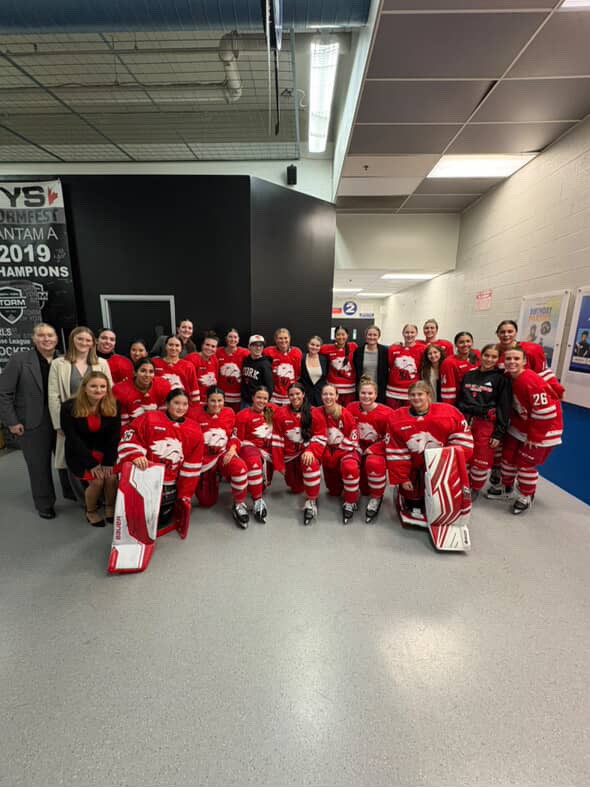
For Sam, these powerful bonds were formed with the Women’s Hockey Team at York University during the 2023/24 season when Sam was at a game at York’s home rink, and two of the players happened to hold a door for him in the lobby of the arena. A brief conversation between them ended with Sam saying a simple yet unknowingly powerful “thank you.” Following this, Sam reached out to the team’s official Instagram account to share what had happened, express his gratitude for the kindness and let the coaching staff know they had incredible players who represented the team so well.
Little did Sam know that the staff managing this account would later read his message to the players before their next game. His simple note of appreciation would leave a lasting mark on the Lions’ locker room.
In response to this message, the team’s Captain at the time reached out to him personally to thank him for his kind words. Several months later, after Sam’s final regular-season game at York that year, he had a brief conversation with the captain and her sister to express his gratitude for their kindness as they held the door. Sam had no idea that this interaction would not be the last time he would speak to or see them or the team.
York would later make the play-offs that season for a first-round series against the Nipissing University Lakers, and Sam ended up watching the Lions sweep the series!
Following the two games played at York, Sam would meet many more players, which marked the start of a new and powerful bond he did not see coming. Though the two players have since graduated from the team, they remain close friends with Sam and talk as often as their busy schedules allow. The impact of the initial friendship and the ones developed since, including those currently on the team, are among Sam’s strongest.
He remains close with the team, becoming their biggest fan and even earning the moniker of “superfan,” which Sam wears on his sleeve proudly. Sam always shows up for his friends and cheers for them louder than anyone attending the games. Alongside these bonds, Sam and the team have had many meaningful, transformational conversations about what it means to be “inclusion allies.”
For Sam, in-person ones take place at the rinks before and after their games, and online, he texts every player individually a variation of “good luck” on the morning of every game day, without fail. They will often talk about their lives when chatting.
These interactions can carry a lot of power. Some on the outside may view them as “just a conversation” or “just words on a smartphone.” However, to Sam and those like him, such honest efforts mean a world to them. They read as “We see, hear and accept you. We are your friends.”
Parents and caregivers of children and youth with disabilities can find peace in these experiences, too. These bonds and friendships have a lasting impact. They can also deepen their existing understanding and perspectives while continuing to accept others. Sam notes that this is vividly felt across York University’s Women’s Hockey.
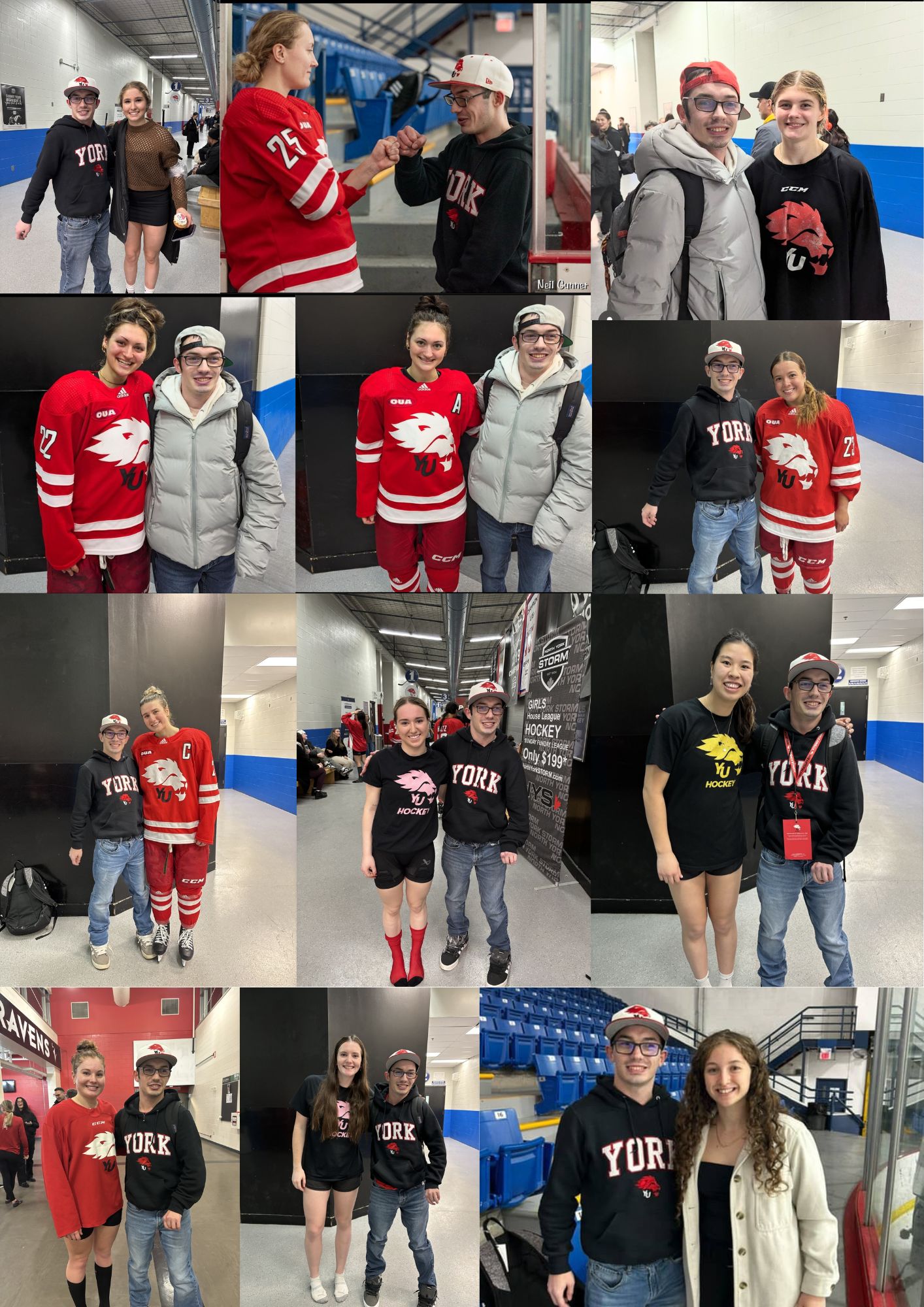
Thoughts from Sam’s friends on how their friendships and bonds with him impacted them and their concepts of ability acceptance
When asked about Sam’s impact on her personally, York University Women’s Hockey forward Lola M. shares, “Sam has taught me about positivity and perseverance. He has also shown me that disability is a spectrum and looks different for everyone… Treating those with different abilities as people first is critical. Understanding how those with disabilities may have a different way of moving through the world is important to push back against institutions and preconceived notions that further disadvantage those with disabilities.”
Forward, Trynity T., echoes the positive influence through her friendship with Sam, stating, “Sam has been a great influence on my understanding and awareness of ability acceptance. I understand that people with disabilities, visible or not, are just as human as the rest of the population and deserve the same treatment. Disabilities do not define who a person is; they’re just a part of them. This will help me to be more understanding of how individuals with disabilities think and feel and allow me to do my best to include everyone and see who people truly are, despite these disabilities.”
Further advocating the impact, defender Abby H. weighs in, “My relationship with Sam has been nothing short of amazing. While Sam is a person with a disability, he is so much more than that. He is a caring and amazing person and friend; his disability has not limited our interactions or relationship at or away from the rink. He has influenced my awareness of ability acceptance by enlightening me that there is so much more to him than his disability, and his personality shows that at the rink every day. This experience can positively impact future interactions with individuals with visible and invisible disabilities by encouraging myself and others to acknowledge their disability, but look further into who they are as a person.”
Conveying the lasting impact that her friendship with Sam has had on her, forward Abbey M., offers her thoughts, “Being friends with Sam has reaffirmed my beliefs that those with visible/invisible disabilities are not defined by their disabilities. I can positively impact my relationship with future individuals with disabilities by taking the time to get to know them on a personal level and create true and meaningful connections.” Part of acceptance is being an inclusive ally; several of Sam’s friends expressed what that means to them.
Goaltender Emma W. says, “Being an ‘Inclusion Ally’ to me is more than just supporting inclusion; it frames around the way you act, speak, and listen. I think it comes down to creating spaces where EVERYONE feels welcomed through traits like respect, empathy, and kindness, allowing individuals to know they can be their true selves and feel valued without facing judgment.”
Forward Emise G. adds her thoughts, “[An inclusion ally is] someone who makes people feel welcomed and accepted when first meeting them. Also, someone who actively supports and advocates for people in marginalized communities.”
It is also vital to recognize that there is much more to someone than their diagnosis, and that must always be understood. When speaking to it, defender Nicole Y. said, “A person’s worth isn’t defined by their disability, visible or not. True acceptance means treating everyone with the same respect and openness, without pity or assumptions. We’d create a more welcoming world by listening, learning, and seeing people for who they are, not just their challenges.”
When asked how someone without a diagnosis may interact socially with someone who does, more of Sam’s friends offer their advice. Former defender and Captain Ava R. advises, “Show love and kindness as you would with anyone and do not focus on the disability because they are not the disability, focus on the wonderful person they are and treat them as the wonderful person they are.”
Former defender and Alternate Captain, Ilena R. recommends, “Be kind, make eye contact and have a conversation! Smile!!! It can start a friendship that will change your life!” Forward Courtenay B. adds, “My advice is to not make any assumptions about what someone can or can’t do and approach all interactions with the same respect and openness that you would show anyone else. Treating people as PEOPLE first; not defining or labelling them with a condition, making eye contact, and asking questions about their interests is how we make people feel included and respected.”
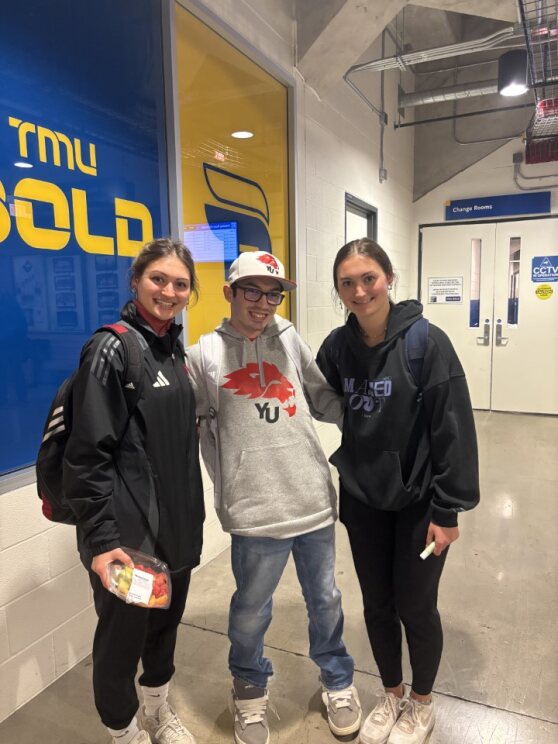
Captain and defender Sara M. says, “Be patient and treat them with respect that you would with anyone else.”
Thoughts from the team’s Head Coach on how Acceptance is interwoven into the team’s culture
The power behind inclusive bonds is felt not only by the players but also by those who witness it, leaving a lasting impression.
For the team: Head Coach Dan C. He shares, “One of the pillars of the Women’s Hockey Program at York University is the concept of ‘Whanau.’ Whanau is a Maori word which means ‘family.’ However, the beauty of the word is that it also encompasses immediate family, extended family, community, and ancestry. It truly is a beautiful word. We work hard for our daily environment to be a ‘family.’ We honour the players who wore the jersey before us and laid the foundation for the program to be where it is today. We value the sisterhood created by our current players on and off the ice. We appreciate the support from our family at every game. Finally, we reflect the values of our extended family and the community that surrounds us. I think to us, being ‘inclusion allies’ means respecting the diverse backgrounds of our whanau. We all come from different and diverse backgrounds, but all of our whanau is important to us. It makes us stronger. As the saying on our dressing room wall says, ‘For the strength of the Pride is the Lion, and the strength of the Lion is the PRIDE.’ An inclusive environment and culture make us a stronger team.”
Sometimes the door that is held open for you reveals a world where you can roar the loudest and proudest.
Check out more Grandview Kids articles
- Celebrating Ahaana: Finding sound, strength and community on Cochlear Implant Day
- Navigating the intersection of disability and race as a caregiver: Honouring Black History Month
- Embracing hope through every challenge: Brock’s journey
- Jack’s resilience shines through every step: Rare Disease Day
- February: Dates of Significance